
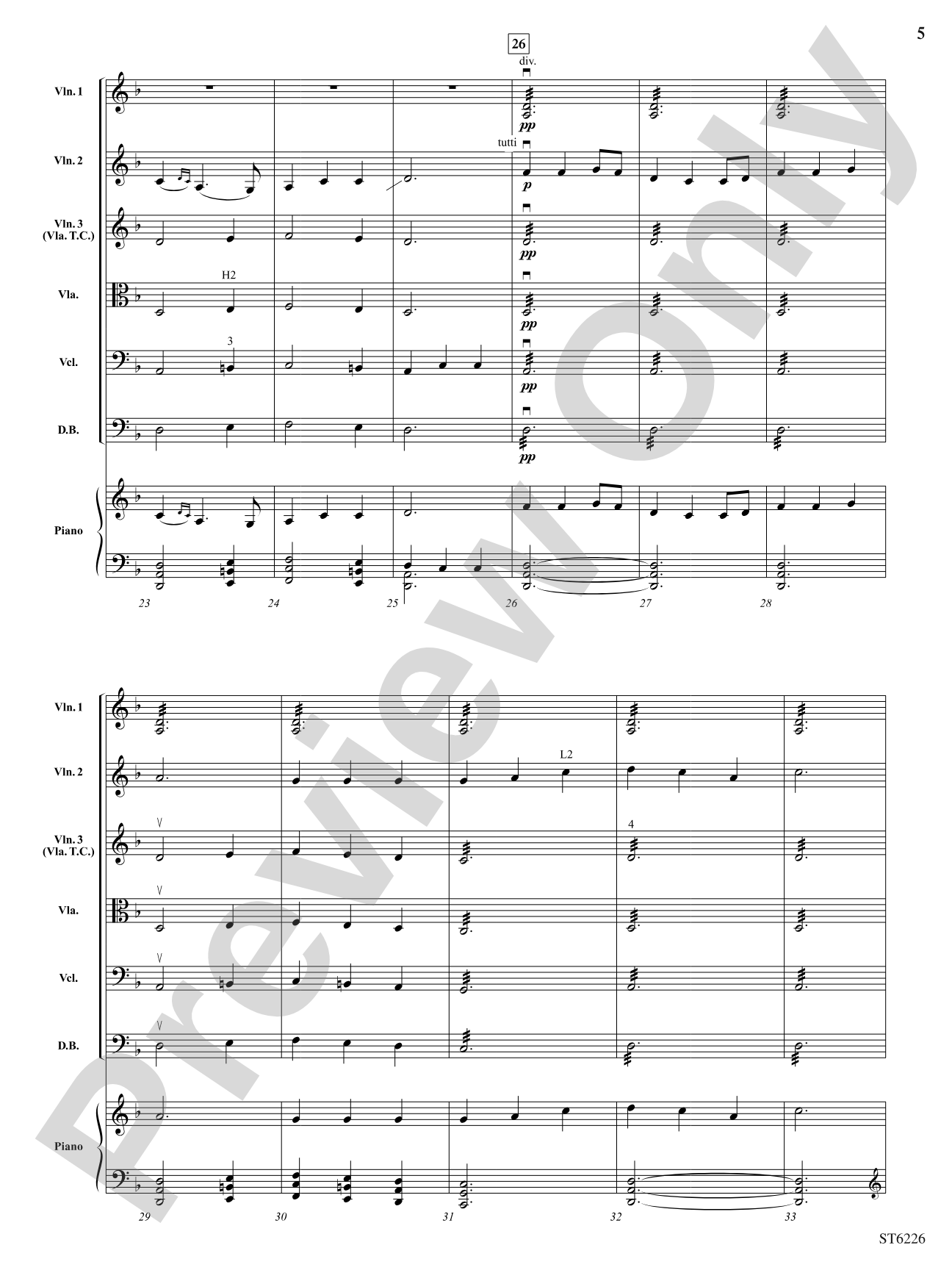
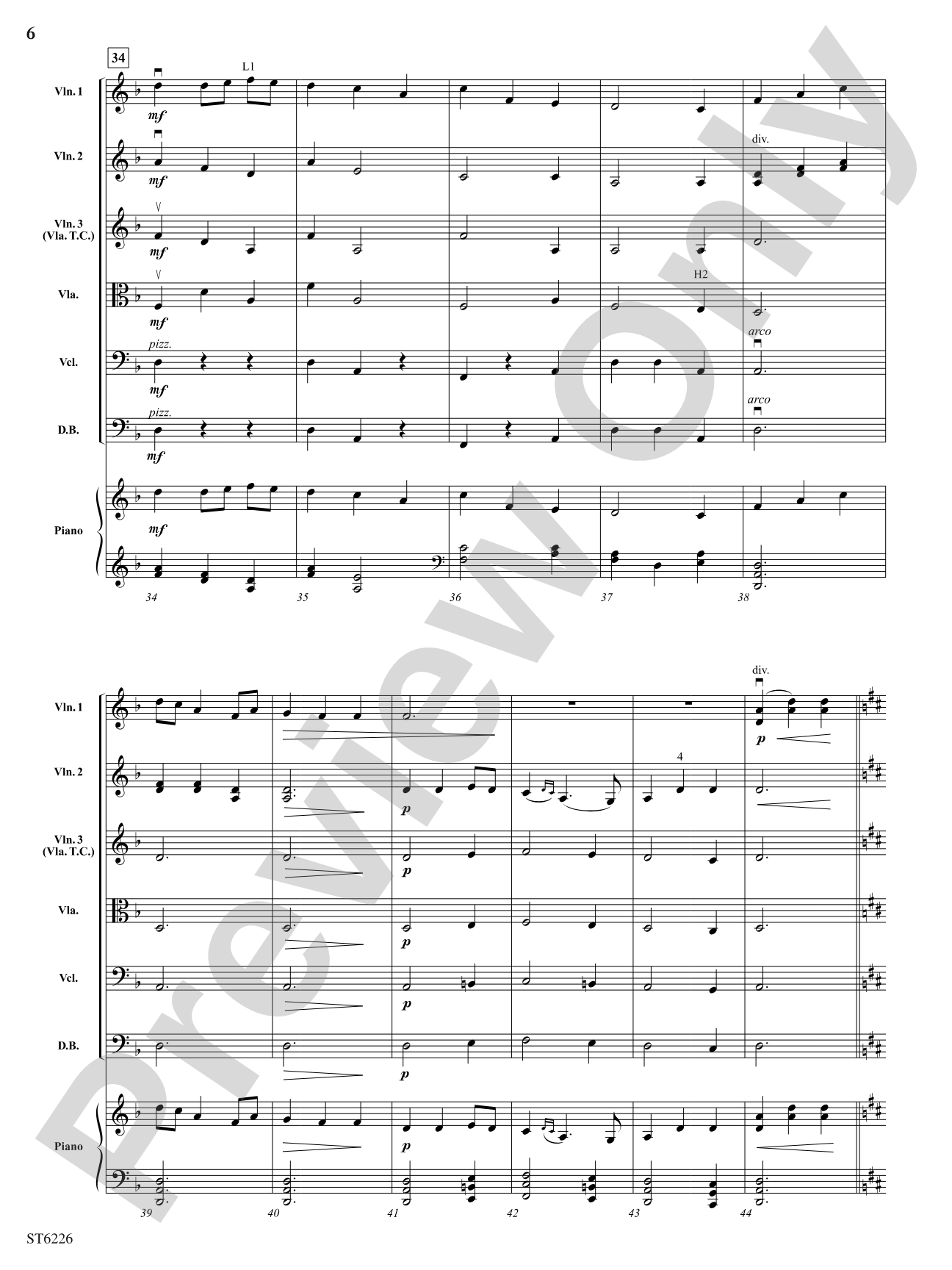
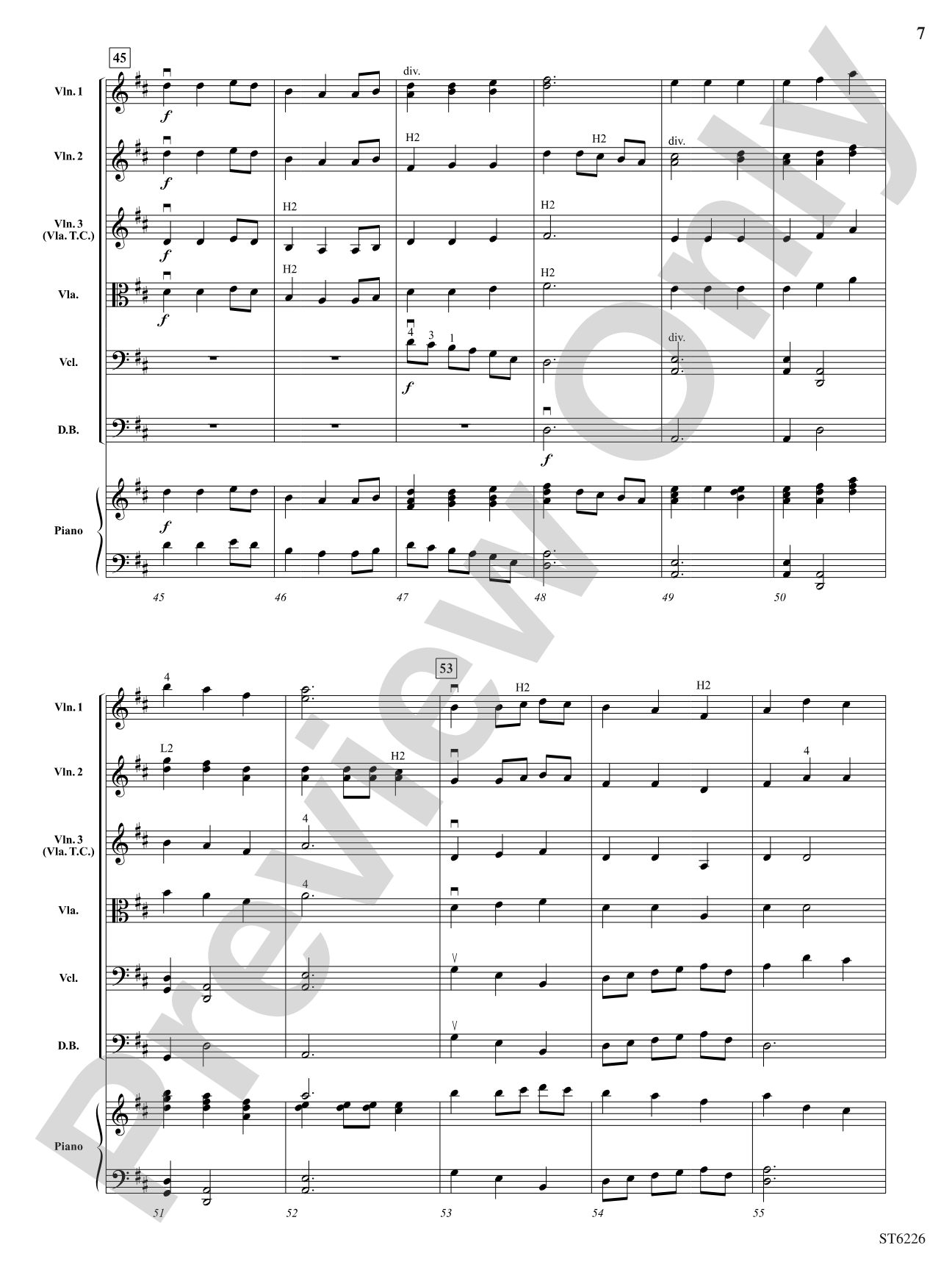
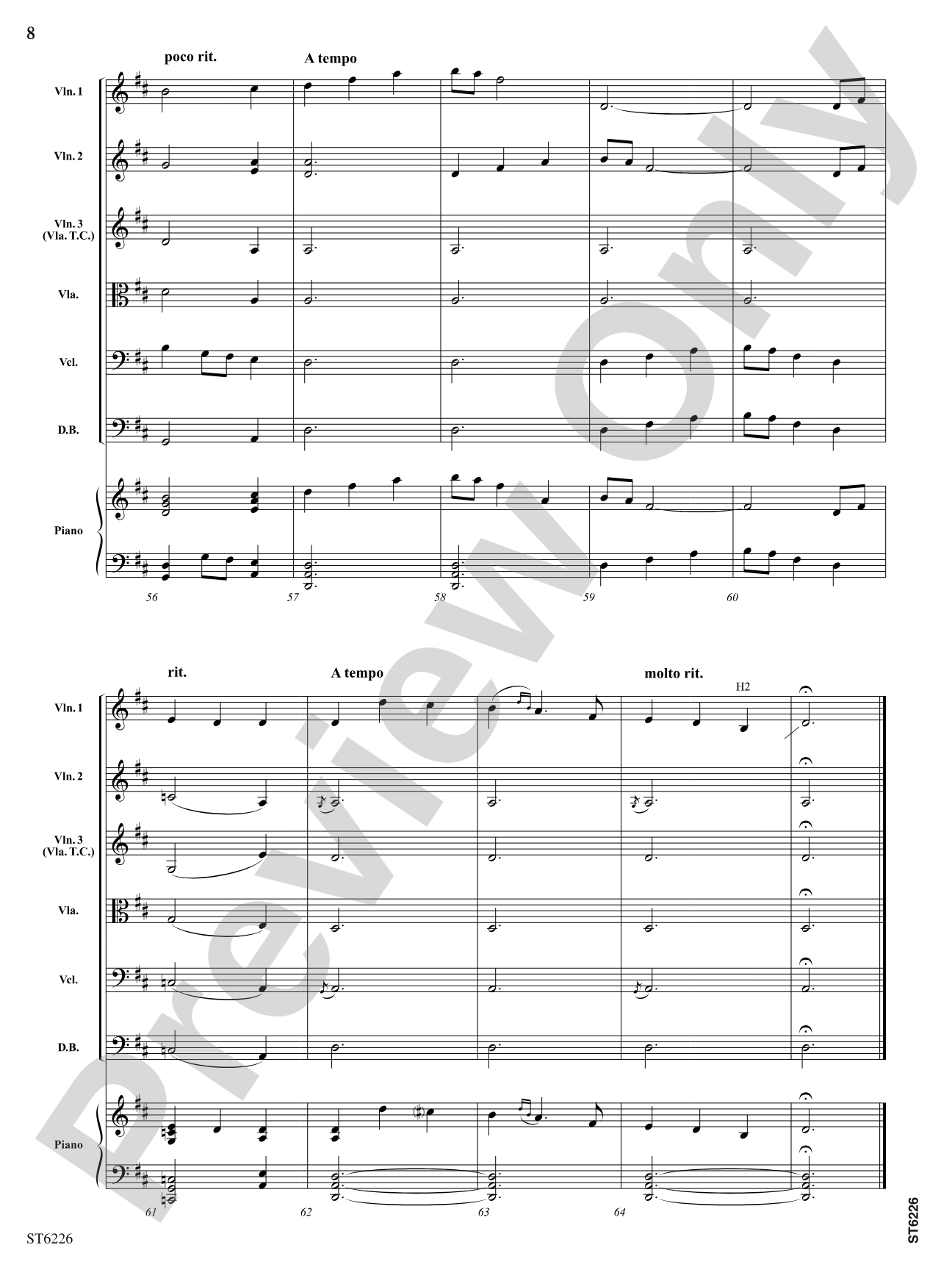

Slane (Be Thou My Vision): String Orchestra Conductor Score & Parts
Be Thou My Vision
By Soon Hee Newbold
Grade: 2
Item: 98-DST6226
$60.00
Pickup currently not available
Buy Extra Parts (Digital PDF Download)
| Product | Price | Quantity |
|---|---|---|
| Slane (Be Thou My Vision): Score | $10.00 | |
| Slane (Be Thou My Vision): Violin 1 | $7.00 | |
| Slane (Be Thou My Vision): Violin 2 | $7.00 | |
| Slane (Be Thou My Vision): Violin 3 (Viola T.C.) | $7.00 | |
| Slane (Be Thou My Vision): Viola | $7.00 | |
| Slane (Be Thou My Vision): Violoncello | $7.00 | |
| Slane (Be Thou My Vision): Double Bass | $7.00 | |
| Slane (Be Thou My Vision): Piano | $7.00 |
Parts Added to Cart!
Description
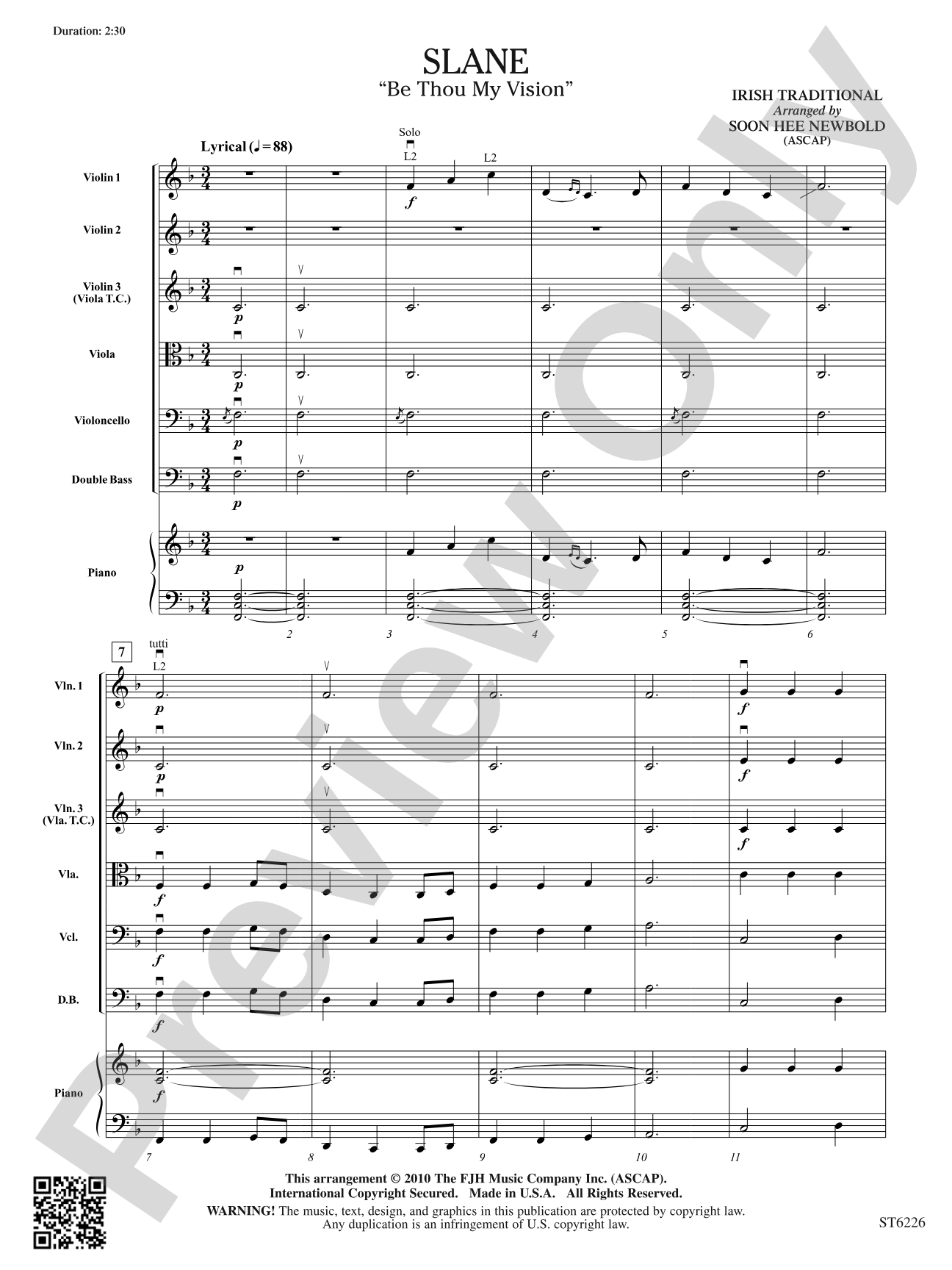
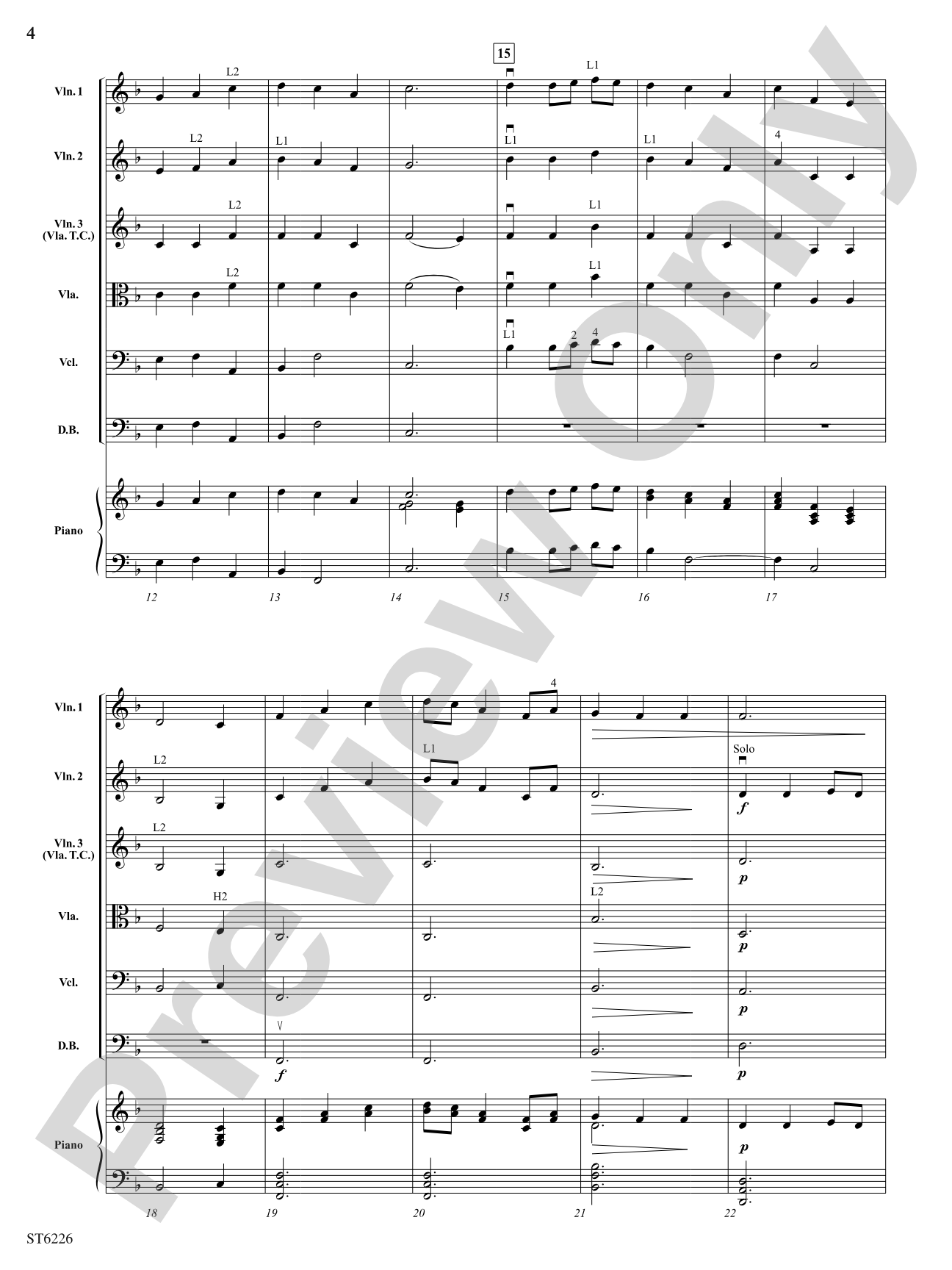
Based on one of Ireland's most beloved melodies, this arrangement includes moments of solitude along with amazing expressions of passion. Brief solo opportunities exist for both Violin 1 and 2 before the entire ensemble comes together in a final, powerful statement. Absolutely stunning!


Slane (Be Thou My Vision): String Orchestra Conductor Score & Parts isn't in MakeMusic Cloud just yet...but it could be. Let us know you'd like to see it, and you'll help shape what comes next. In the meantime, start a free trial and dive into thousands of interactive titles your students can play along with today.
Request This Title
Tell us you want it.
Start Your Free Trial
Explore everything that's ready to play right now.
Sample Audio
1
Audio File
--:--
0:00
0:00
Sample Video
No sample videos found.
Additional Details
Series:
FJH Developing Strings
Publisher:
The FJH Music Company, Inc.
SKU:
98-DST6226
More about this title
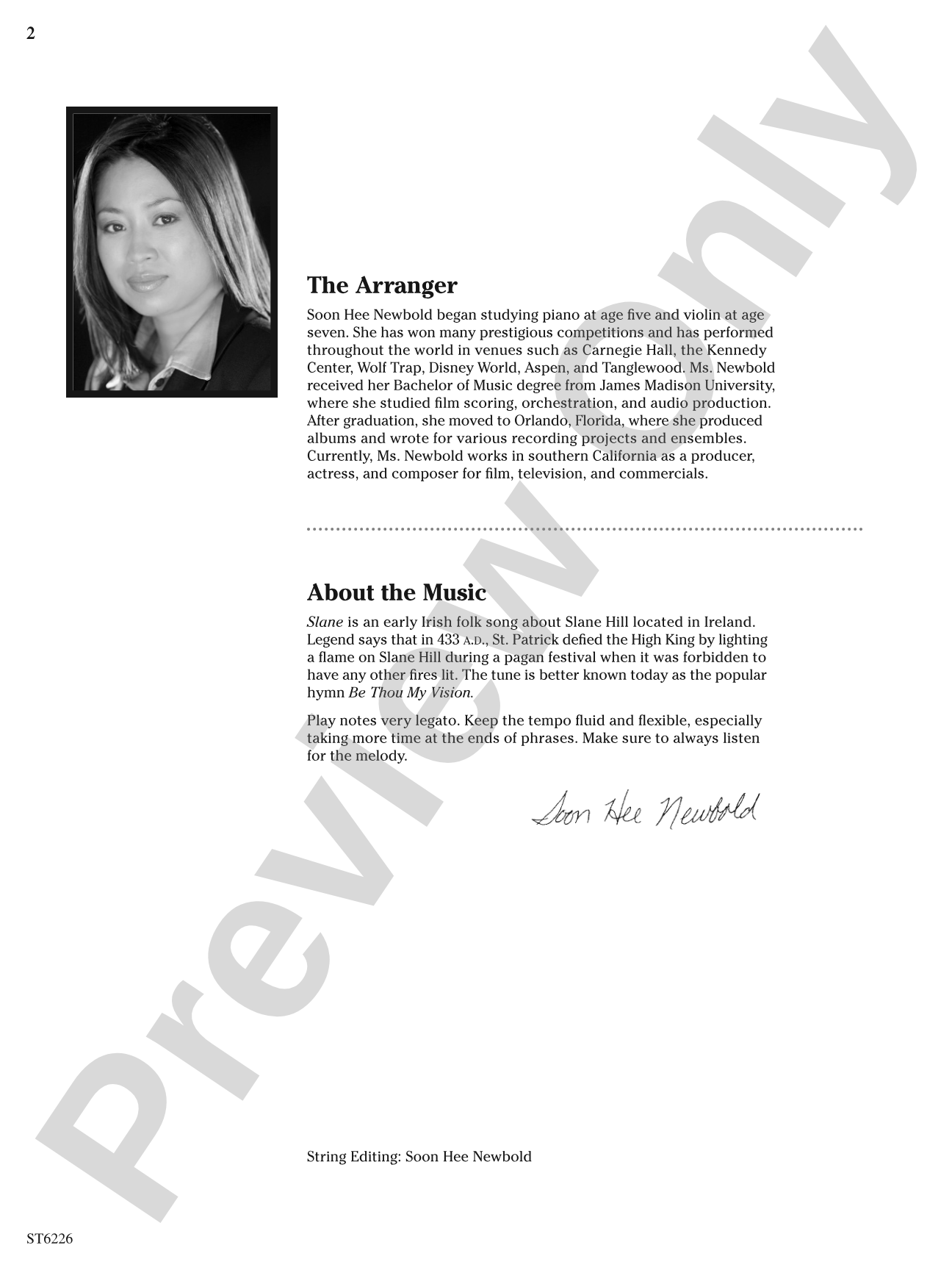
About the Composer: Soon Hee Newbold

Soon Hee Newbold brings a global perspective to orchestral music, shaped by decades of performance and composition across multiple continents. Beginning her studies on piano at age five and violin at seven, she developed into a concert artist before establishing herself as a composer whose works span from elementary ensembles to professional orchestras performing at Carnegie Hall, the Kennedy Center, Lincoln Center, and beyond.
Newbold's compositions deliberately weave cultural and ethnic traditions into contemporary orchestral writing, a practice informed by her extensive guest conducting and clinician work throughout the United States, Europe, Asia, and Australia. Her versatility extends to film composition and multimedia projects, but her core commitment remains bringing quality, culturally rich music to developing ensembles at all levels.
Why we love this
Newbold captures the emotional arc of the Slane melody without overwhelming young string players. The Grade 2 writing respects both the tune's stature and the ensemble's developing technique, and those strategic solo moments for first and second violins give your musicians something personal to work toward while keeping focus on the collective power of the final statement.
What to expect
The Slane melody carries quiet reverence and spiritual depth, especially in those early moments when the soloists step forward with space around them. As the piece unfolds, it builds toward something transcendent; the entire orchestra comes together with genuine passion, transforming the hymn tune into a declaration rather than a whisper.
Who it's for
String orchestras at the high end of Grade 2 or the lower end of Grade 3 will find this arrangement ideally suited to their developing technique and growing musicality. Directors seeking repertoire that honors a culturally significant melody while offering solo opportunities and ensemble satisfaction will return to this piece year after year.
How to get the most out of it
- Shape the opening solo passages with rubato to allow the soloists space for genuine expression without rushing the melody's contours.
- Balance the cello and bass foundation carefully in the buildup sections; they anchor the harmonic movement and must sit steadily underneath the violin voices.
- Bring intensity gradually into that final ensemble statement by gradually widening the dynamic range in the measures leading up to it rather than hitting full power abruptly.
- Let the rest of the violin section listen to their soloists; this creates a sense of the piece blooming outward from individual voices to collective sound.
How to use it
This works beautifully as a centerpiece for a concert devoted to folk traditions and world music, or as a moment of reflection paired with livelier selections. Consider programming it near the end of a set where its accumulated energy provides a natural climax; it also performs well in festival contexts where judges appreciate both technical control and expressive maturity.
Skills your students will build
- Playing sustained lines with consistent intonation under changing harmonic movement
- Solo playing within an ensemble context (Violin 1 and 2 featured passages)
- Ensemble balance and blend as the texture expands from solos to full orchestra
- Phrasing and shaping melody lines across longer phrases
- Dynamic contrast and building intensity toward a climactic statement