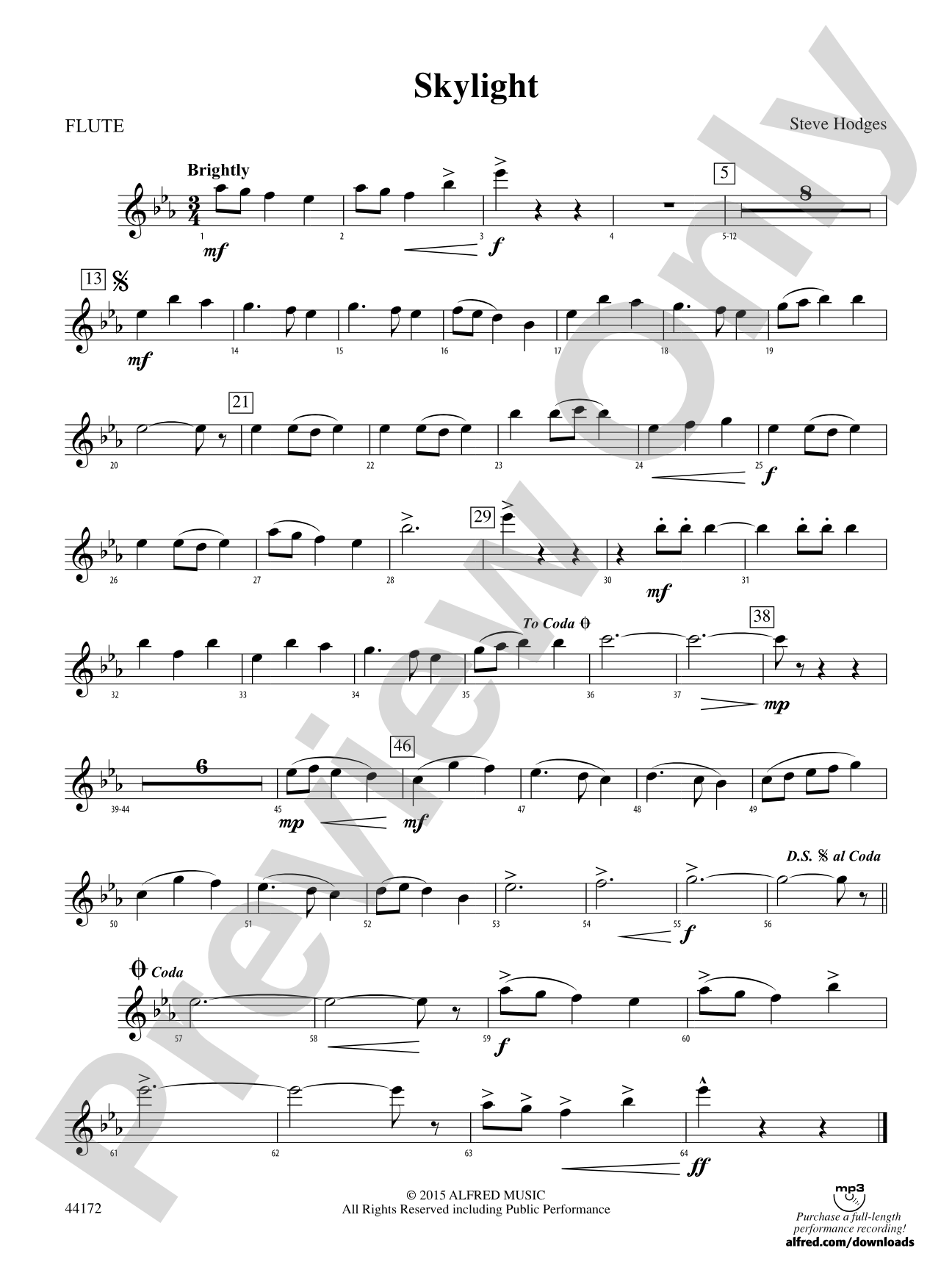
Skylight: Flute Sheet Music Preview

Skylight: Flute

By Steve Hodges

Grade: 1 (Very Easy)

Item: 00-PC-0017022_F1

Digital Download
$3.00
Description
The warmth and brightness of the sun are depicted in this smooth flowing piece in 3/4 time. Each section of the band has an opportunity to present the bold melody as the bass instruments and percussion provide a solid foundation throughout. Following a presentation in the minor mode, the piece moves to an exciting conclusion. (2:10)

Don't just read it, hear it, play along with it, and watch your students grow with it. In MakeMusic Cloud, Skylight: Flute comes alive with professional accompaniment, adjustable tempo, and built-in practice tools that turn solo practice into real progress.

Sample Audio
0:00
0:00
Sample Video
Additional Details
Series: Alfred Debut Series
Publisher: Alfred Music
Page Count: 122
SKU: 00-PC-0017022_F1

More about this title

About the Composer: Steve Hodges

Steve Hodges

Steve Hodges brings four decades of public school music direction to his compositions. He earned his Bachelor of Science from Western Oregon University and a Master of Music Education from Central Washington University, applying that training across all levels of bands, choirs, and ensembles before retiring from full-time teaching.

Since 1986, Hodges has created over 120 concert band works published by Alfred Music, with additional choral arrangements through Staff Music and Shawnee Press. His music has appeared at state conventions and festivals across North America, been commissioned by honor bands and schools from Virginia to British Columbia, and reached audiences through TBS and ESPN broadcasts. A member of ASCAP, Hodges remains active in community music in The Dalles, Oregon, and takes particular joy in hearing his grandchildren perform his compositions in their school bands.

Why we love this

Skylight delivers immediate musical satisfaction without demanding extensive rehearsal time. The writing gives every section the chance to lead the melody while maintaining a secure harmonic foundation, making students feel accomplished rather than stretched, and the shift from minor to a celebratory conclusion provides natural dramatic arc that keeps audiences engaged.

What to expect

Warm sunlight breaking through clouds. The melody flows with unhurried grace, inviting players to shape phrases rather than rush through them, while the steady foundation beneath feels grounded and dependable. A brief shadow passes in the minor section before the music returns to brightness with renewed energy.

Who it's for

Skylight suits beginning concert bands exploring melodic writing and sectional balance. Directors seeking accessible material for contest or concert performance will find a piece that builds student confidence while maintaining musical substance.

How to get the most out of it

  • Balance the bold melody across sections so each instrumental group feels ownership of the tune. Encourage soloists to sing through their parts rather than merely play the notes.
  • Keep the 3/4 meter gently lilting. Avoid over-conducting the beat; let the smooth flow settle into a natural rhythmic groove.
  • Use the minor key section as a moment to shift color and intention. A slight reduction in volume and softer articulation creates contrast before the bright final push.
  • Support the bass and percussion foundation with steady conducting. These voices anchor the piece, so they need clear visual confirmation of your pulse.

How to use it

Program Skylight early in a concert to establish an accessible yet substantive tone, or pair it with other Grade 1 works to create a programming block that demonstrates student growth without asking for dramatic stylistic range. Its two-minute length fits naturally into festival schedules or as a confident opener that draws the audience in.

Skills your students will build

  • Playing sustained melodic lines with consistent tone and phrasing
  • Maintaining steady pulse in 3/4 meter
  • Balancing volume between melody and accompaniment
  • Listening to bass and percussion voices as harmonic anchor
  • Executing smooth transitions between major and minor tonalities

You May Also Like