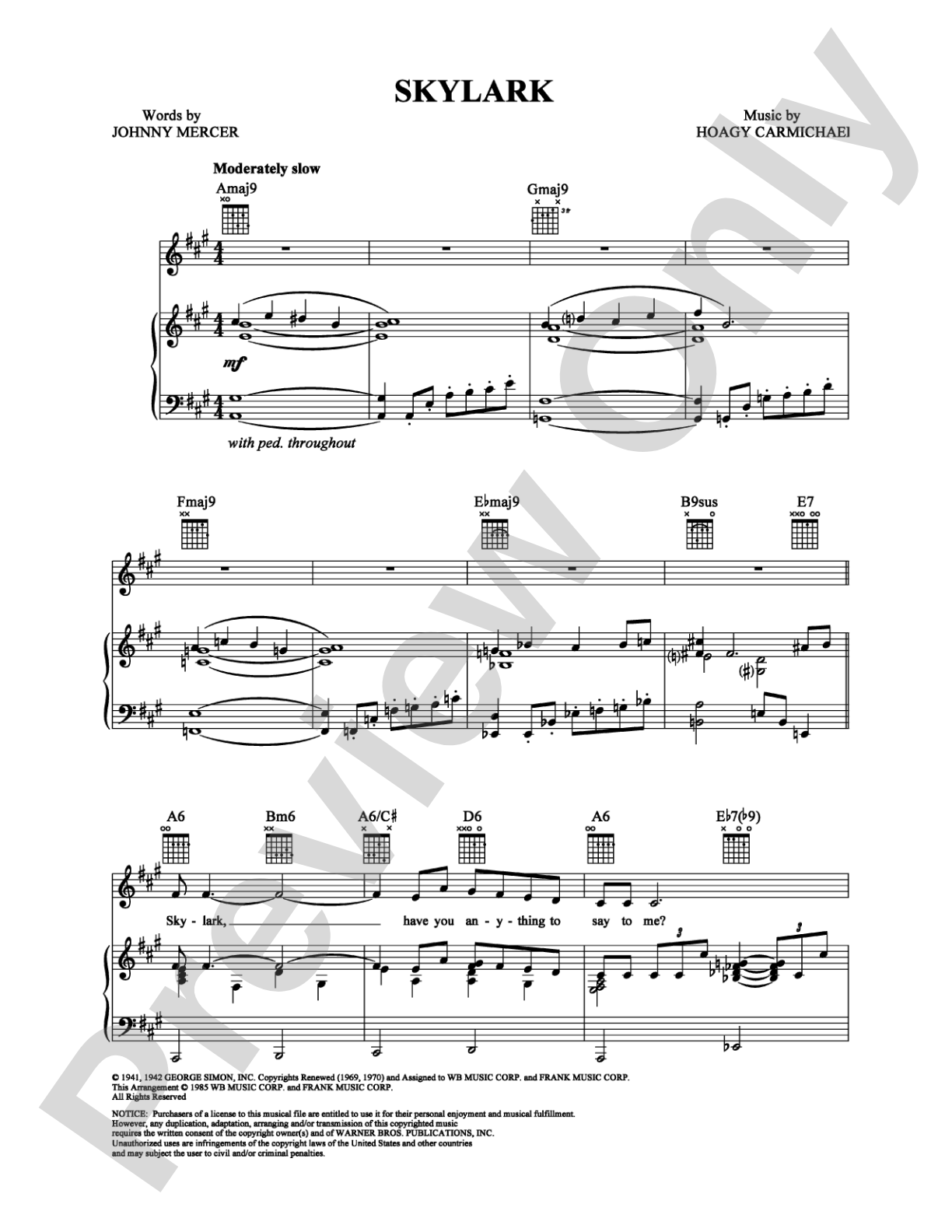
Skylark: Piano/Vocal/Chords Digital Sheet Music

Skylark: Piano/Vocal/Chords Digital Sheet Music

Hoagy Carmichael, Glenn Miller, Ray Eberle

Item: 00-PS-0004283

Digital Download
$3.99
Description

Skylark: Piano/Vocal/Chords Digital Sheet Music isn't in MakeMusic Cloud just yet...but it could be. Let us know you'd like to see it, and you'll help shape what comes next. In the meantime, start a free trial and dive into thousands of interactive titles your students can play along with today.

Sample Audio
No sample audio found.
Sample Video
Additional Details
SKU: 00-PS-0004283

More about this title

About the Artist: Glenn Miller

Glenn Miller led one of the most commercially successful orchestras of the swing era, recording dozens of chart-topping hits between 1939 and 1942. His distinctive sound, featuring a clarinet melody line over saxophones, became the blueprint for big band arranging and remains instantly recognizable. Miller's approach to orchestration and his gift for crafting memorable melodies made him a standard-bearer for American popular music during its golden age.

Why we love this

This is a standard that sits perfectly in the vocabulary of any jazz or popular music program, and the piano/vocal/chords format gives students direct access to how this song actually functions as a vehicle for both singing and accompaniment. The piece balances melodic elegance with harmonic sophistication in a way that rewards careful listening and performance.

What to expect

Skylark flows with gentle melancholy and nostalgic grace, inviting unhurried phrasing and intimate connection between singer and accompanist. The melody soars and dips with romantic restraint, never pushing for drama but conveying quiet longing. The harmonic language, typical of the golden age standard, creates moments of mild tension and resolution that reward thoughtful attention to chord quality and voice leading.

Who it's for

Vocalists studying jazz standards and popular repertoire will find this an essential piece for learning how melody and harmony dialogue in mid-twentieth-century songwriting. Pianists building jazz comping and arranged music skills benefit from the chord changes and the challenge of balancing accompaniment with textural restraint. Students in popular music and vocal jazz ensembles can use this to develop sensitivity to the song's lyrical contour and harmonic movement.

How to get the most out of it

  • Shape the melody with rubato that follows the lyric's natural phrasing rather than mechanically strict time; the harmony underneath can flex slightly to accommodate genuine expression.
  • Voice the piano chords to support the vocal line without overwhelming it; lean toward transparent, well-spaced voicings in the middle and upper registers.
  • Listen closely to how the melody and harmony interact over the chord changes, especially during turnarounds and secondary dominants, which reward unhurried articulation.
  • Use the accompaniment pattern to establish a relaxed swing feel if performing in that style, or choose a tempo that allows the lyric to breathe and the chords to resonate.

How to use it

This works beautifully as a jazz vocal feature or as a bridge piece in a concert mixing standards with more contemporary material. Include it in a recital of American popular song to give students and audiences context for the vocal and instrumental idioms that shaped generations of musicians. It can also anchor a lesson on how professional arrangers balance vocal melody with piano accompaniment.

Skills your students will build

  • Reading and interpreting lead sheets with chord symbols and melody line
  • Balancing vocal melody with tasteful piano accompaniment
  • Understanding harmonic movement and chord substitution in American standards
  • Developing interpretive choices in tempo, rubato, and dynamic shaping
  • Singing or playing with lyrical sensitivity and jazz-inflected phrasing

You May Also Like