
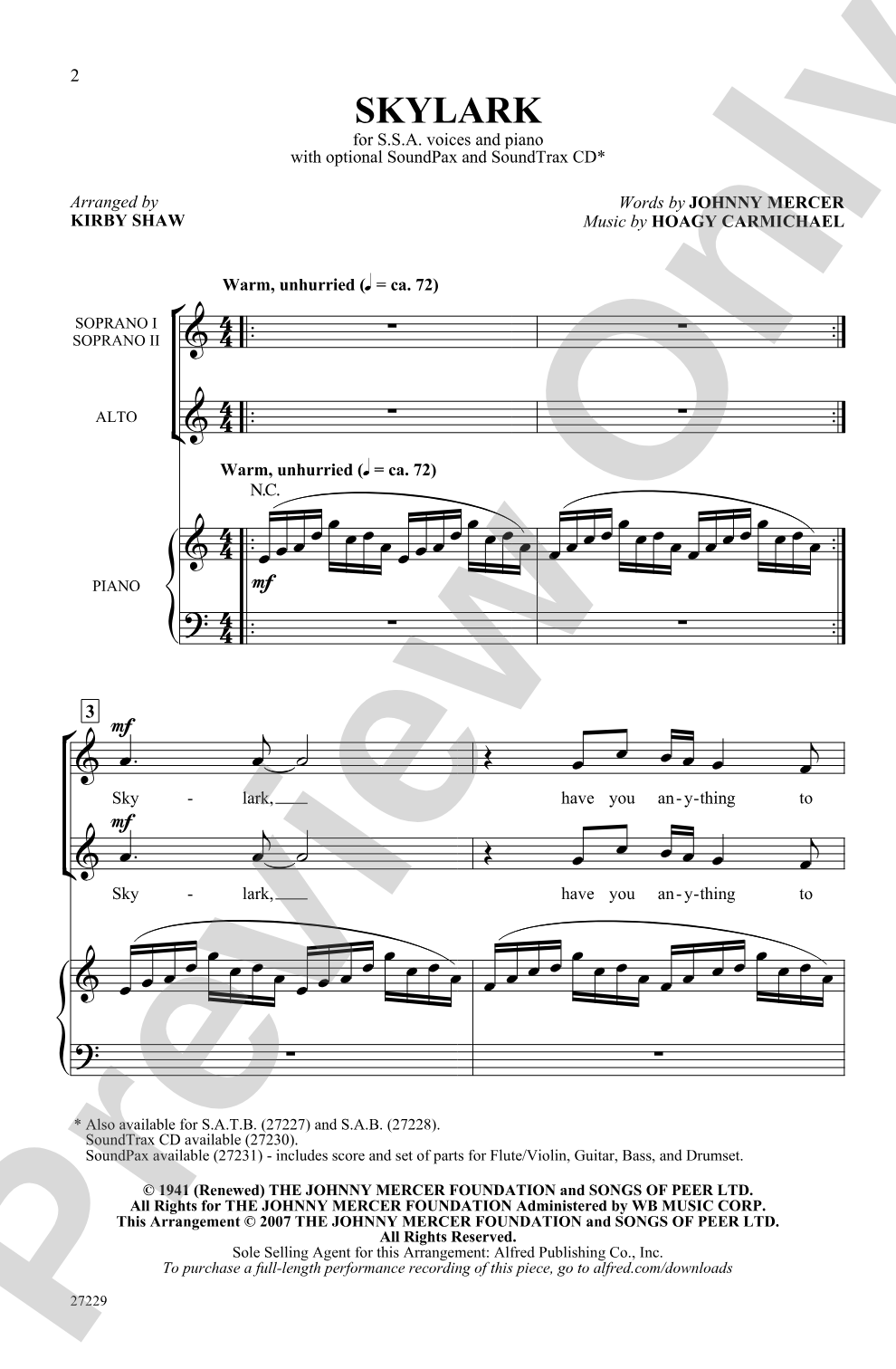
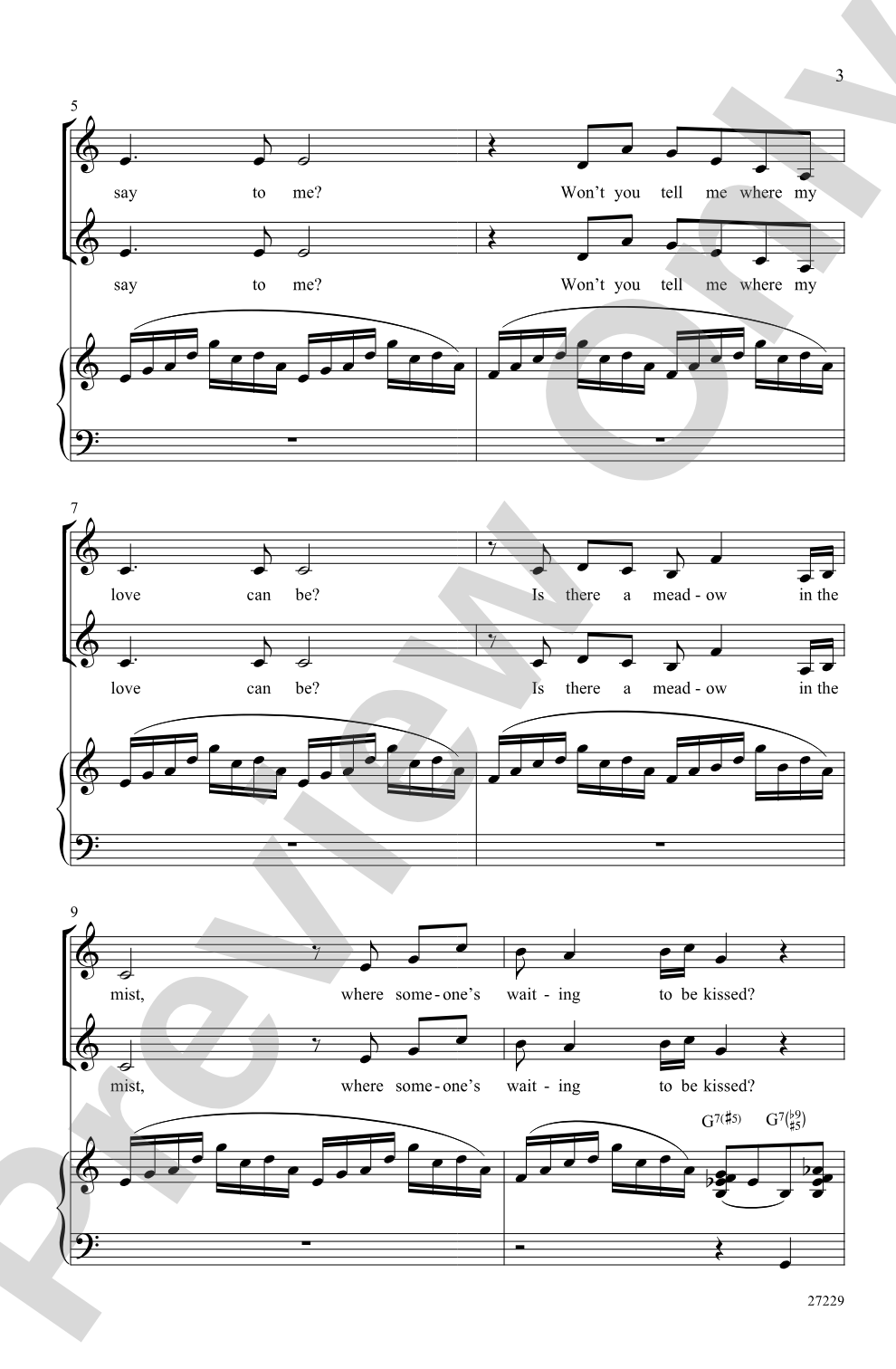

Skylark: SSA Choral Octavo
Words by Johnny Mercer, music by Hoagy Carmichael / arr. Kirby Shaw
Item: 00-PO-0007971
$1.85
Minimum order quantity: 20 copies
Pickup currently not available
Related Items
Skylark: SoundTrax Digital Audio Download |
$22.95
|
View | |
Skylark: SATB Choral Octavo |
$1.85
|
View | |
Skylark: Choral SoundPax |
$25.00
|
View | |
Skylark: SATB Choral Octavo |
$1.85
|
View | |
Skylark: SAB Choral Octavo |
$1.85
|
View | |
Skylark: SSA Choral Octavo |
$1.85
|
View | |
Skylark: Choral Octavo SoundTrax CD |
$22.95
|
View | |
Skylark: Choral SoundPax |
$25.00
|
View |
Description
This jazz standard has been recorded by everyone from Ella Fitzgerald to Bette Midler. Now your groups can perform it with this well crafted arrangement by Kirby Shaw. The optional flute (or violin) part in the SoundPax adds a lilting quality. The voice writing is surprisingly uncomplicated for such a sophisticated melody. Logical voice writing.


Discover MakeMusic Cloud: thousands of interactive titles your students can play along with today.
Sample Audio
1
Audio File
--:--
0:00
0:00
Sample Video
No sample videos found.
Additional Details
Series:
Alfred Pop Choral Series
Publisher:
Alfred Music
Page Count:
8
SKU:
00-PO-0007971
More about this title
About the Composer: Hoagy Carmichael
Hoagy Carmichael was a prolific composer and pianist who helped define American popular song during the 1920s and 1930s. He had an instinctive gift for melody that bridged classical sensibility with vernacular accessibility, composing standards like "Stardust," "Georgia on My Mind," and "Skylark" that have endured across generations of performers.
Beyond his songwriting, Carmichael understood orchestration and arrangement deeply enough to make his compositions work across jazz ensembles, big bands, and intimate vocal settings. For choral directors, his melodies remain ideal teaching material because they reward careful phrasing while remaining singable for groups at multiple levels.
Why we love this
Kirby Shaw has distilled everything that makes Skylark special into an arrangement that respects the song's sophistication without overwhelming your singers. The SSA voicing sits naturally on the voice, the part writing moves with genuine elegance, and the optional flute or violin part gives you flexibility to enhance ensemble sound or keep things intimate depending on your performance space.
What to expect
Skylark floats. The melody drifts across registers with an introspective quality, never rushing, always reaching slightly upward. There's nostalgia without sentimentality, swing without aggression, and a quiet confidence that comes from melodies written by someone who understood both orchestral color and human voices completely.
Who it's for
Intermediate to advanced SSA choirs looking for repertoire that feels contemporary in approach while drawing from the Great American Songbook. Groups that value careful voice leading and want their singers to experience what sophisticated jazz-pop writing sounds like from the inside.
How to get the most out of it
- Shape the melodic line through sustained vowel control rather than relying on text for momentum; this tune rewards singers who understand the difference between singing words and singing music.
- Balance the accompaniment track so singers can hear their own blend while still feeling supported, then gradually reduce reliance on it during final rehearsals.
- If you include the instrumental part, let it breathe independently rather than doubling it with voices; the interplay between singers and flute or violin is what creates the arrangement's elegance.
- Treat the bridge as a moment for subtle dynamic expansion; even small changes in ensemble intensity highlight the harmonic shifts Carmichael wrote into the original song.
How to use it
This works beautifully on a concert that mixes standards with contemporary pop, or as the centerpiece of a program exploring American songwriting from the mid-20th century. It's substantial enough to anchor a set but refined enough to pair with other jazz arrangements without overwhelming the program's balance.
Skills your students will build
- Sustaining legit singing through jazz idiom
- Interpreting swing rhythm and lyrical phrasing
- Blending three-part harmony with moving inner voices
- Balancing ensemble sound without losing individual voice definition
- Responding to instrumental accompaniment and optional soloists