
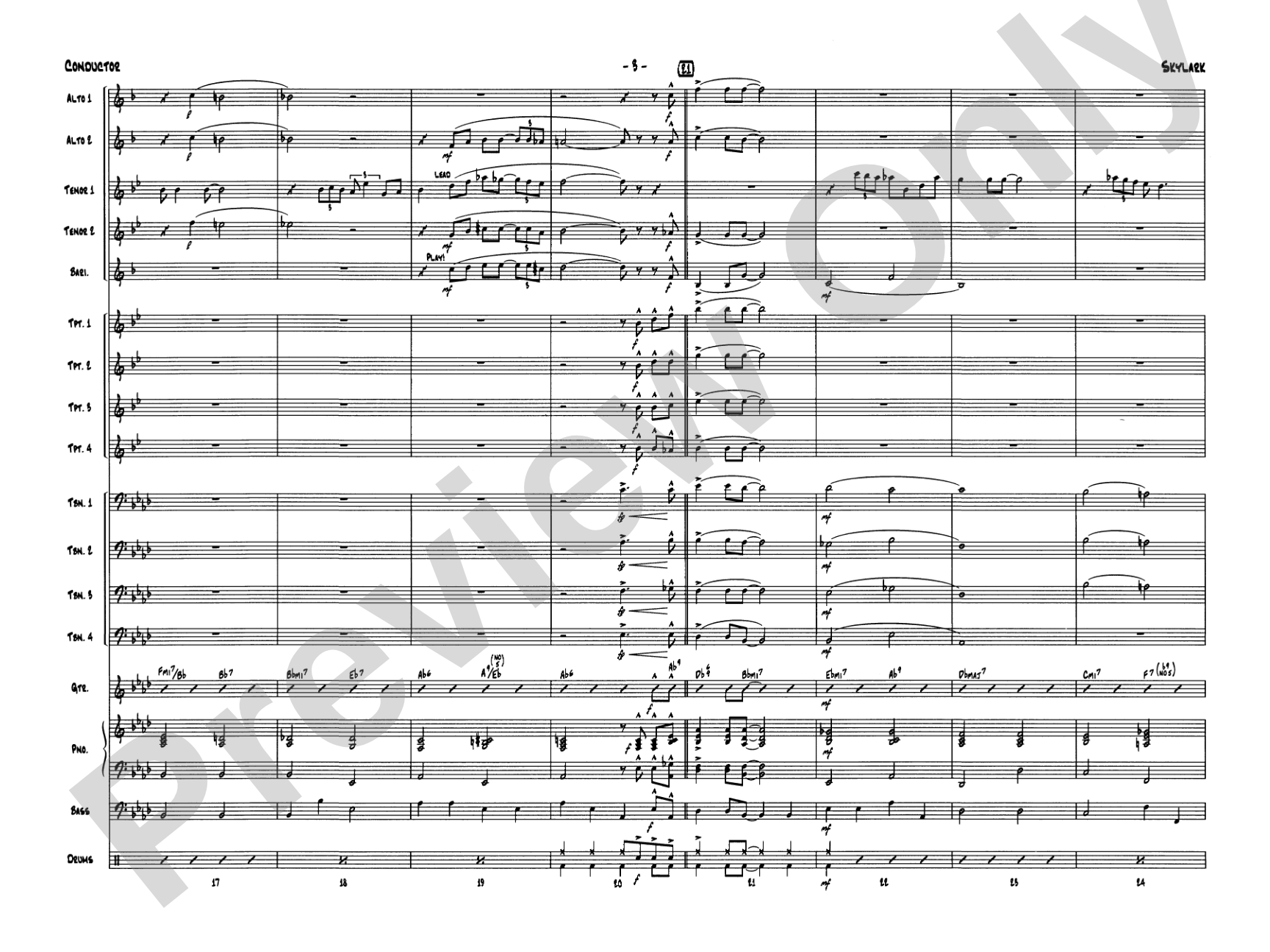
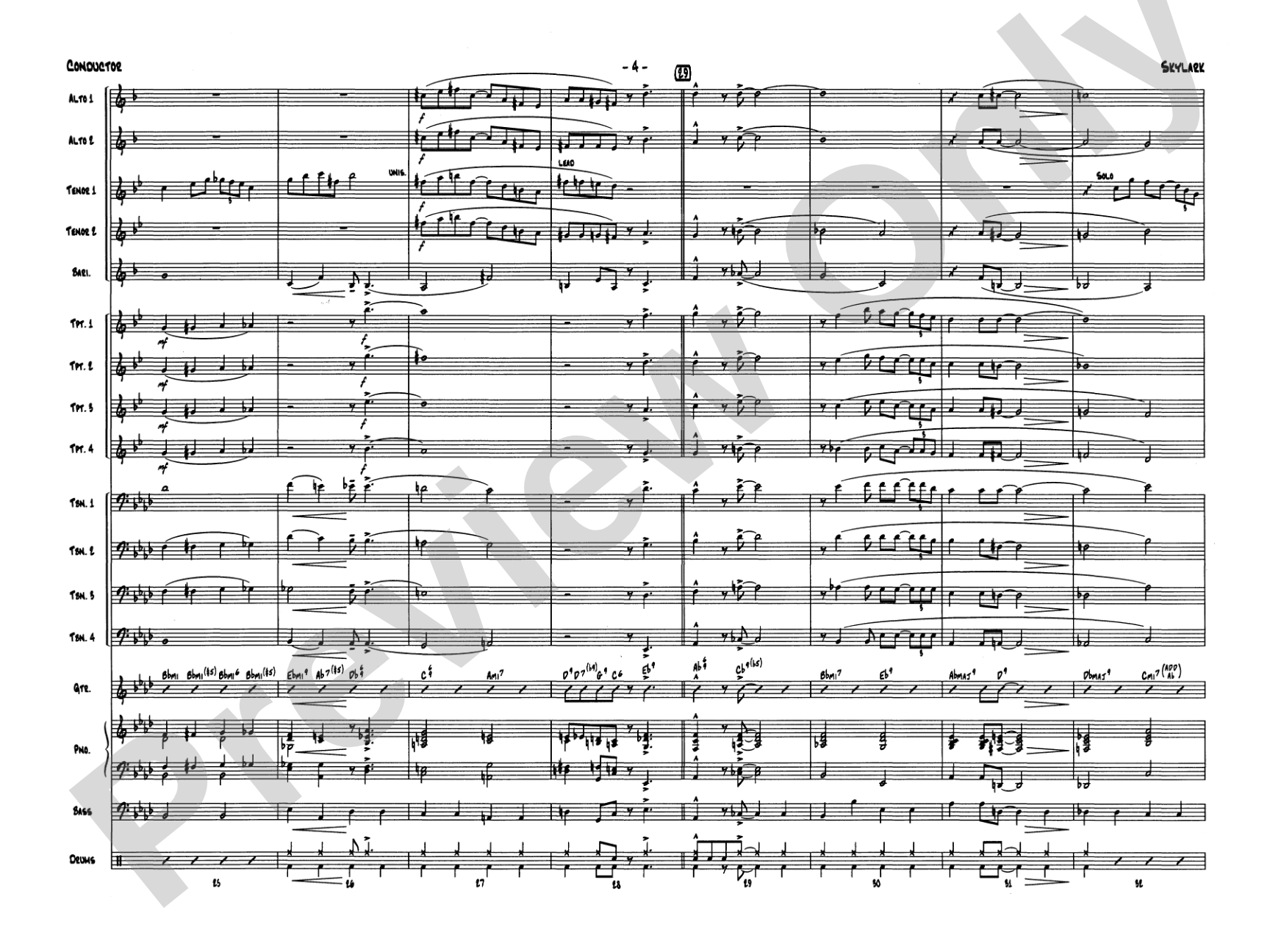
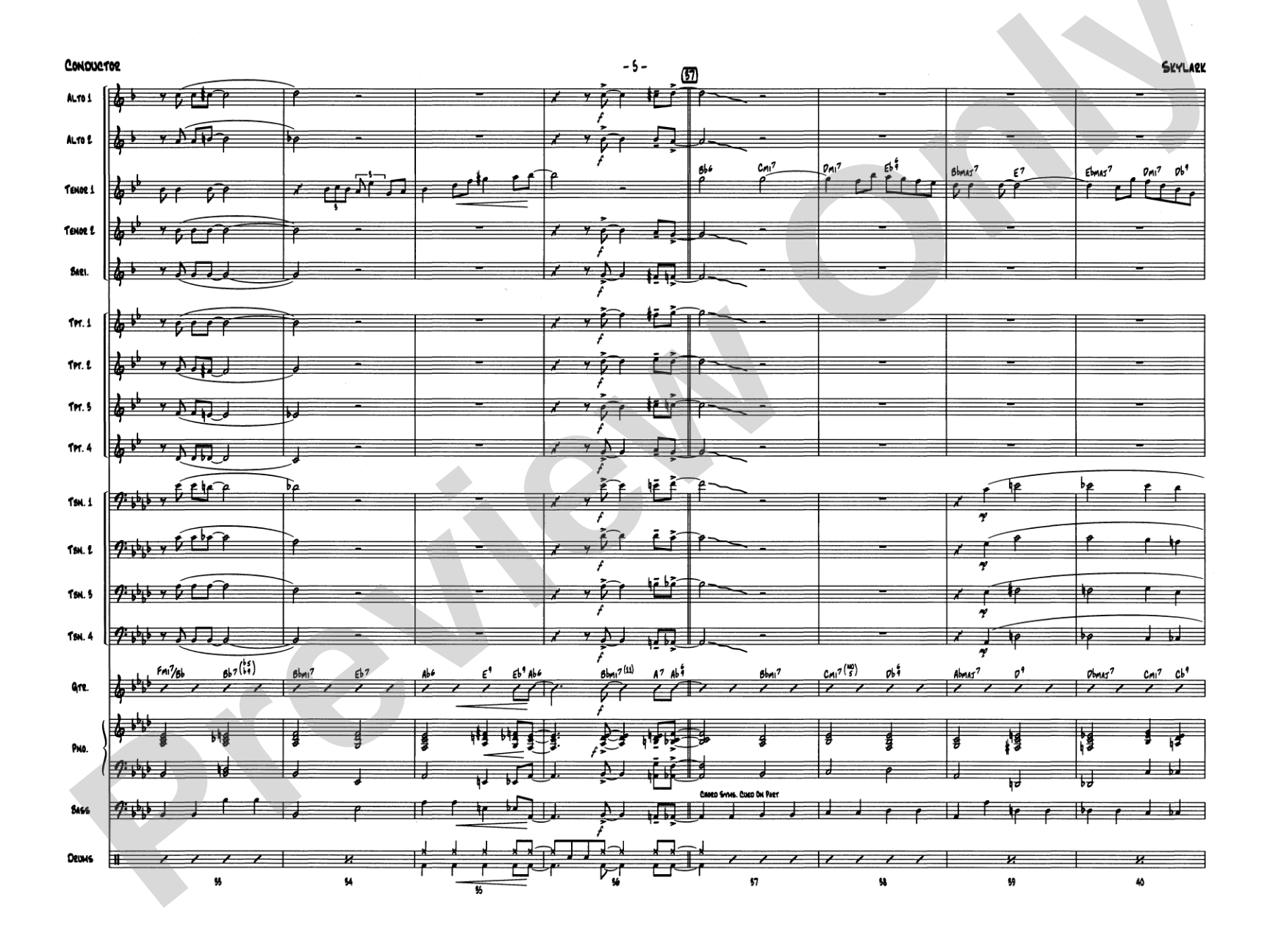
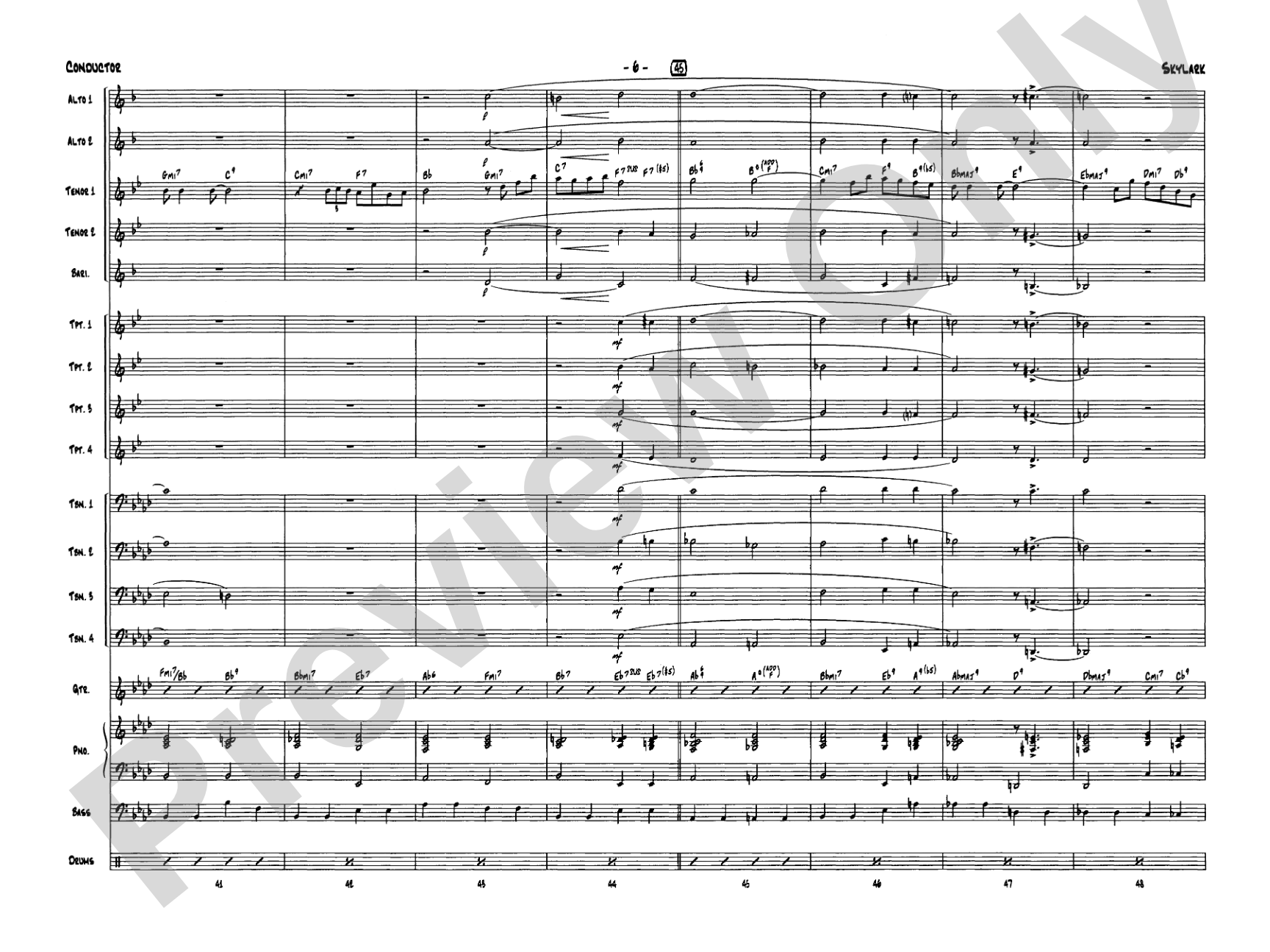
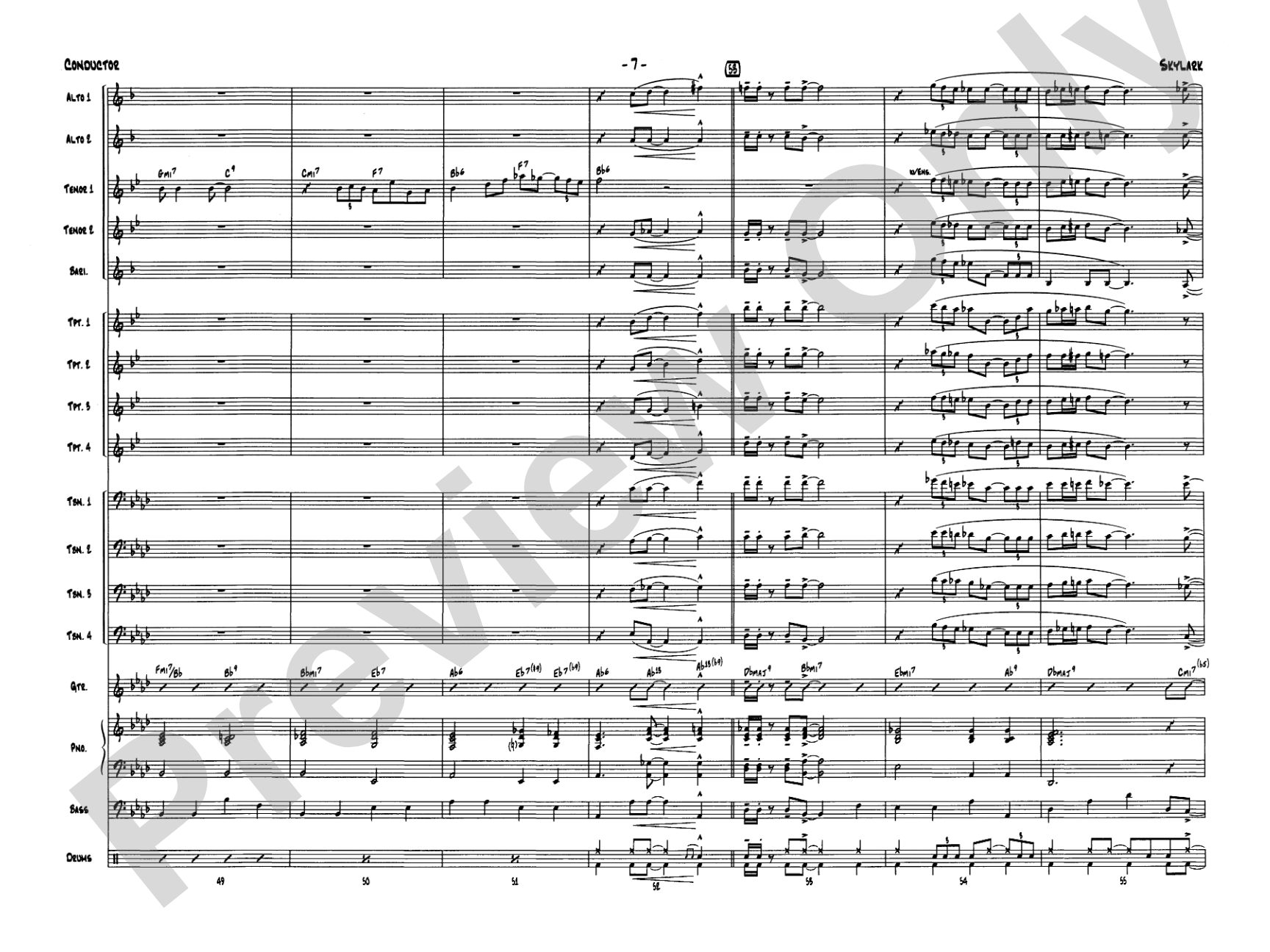
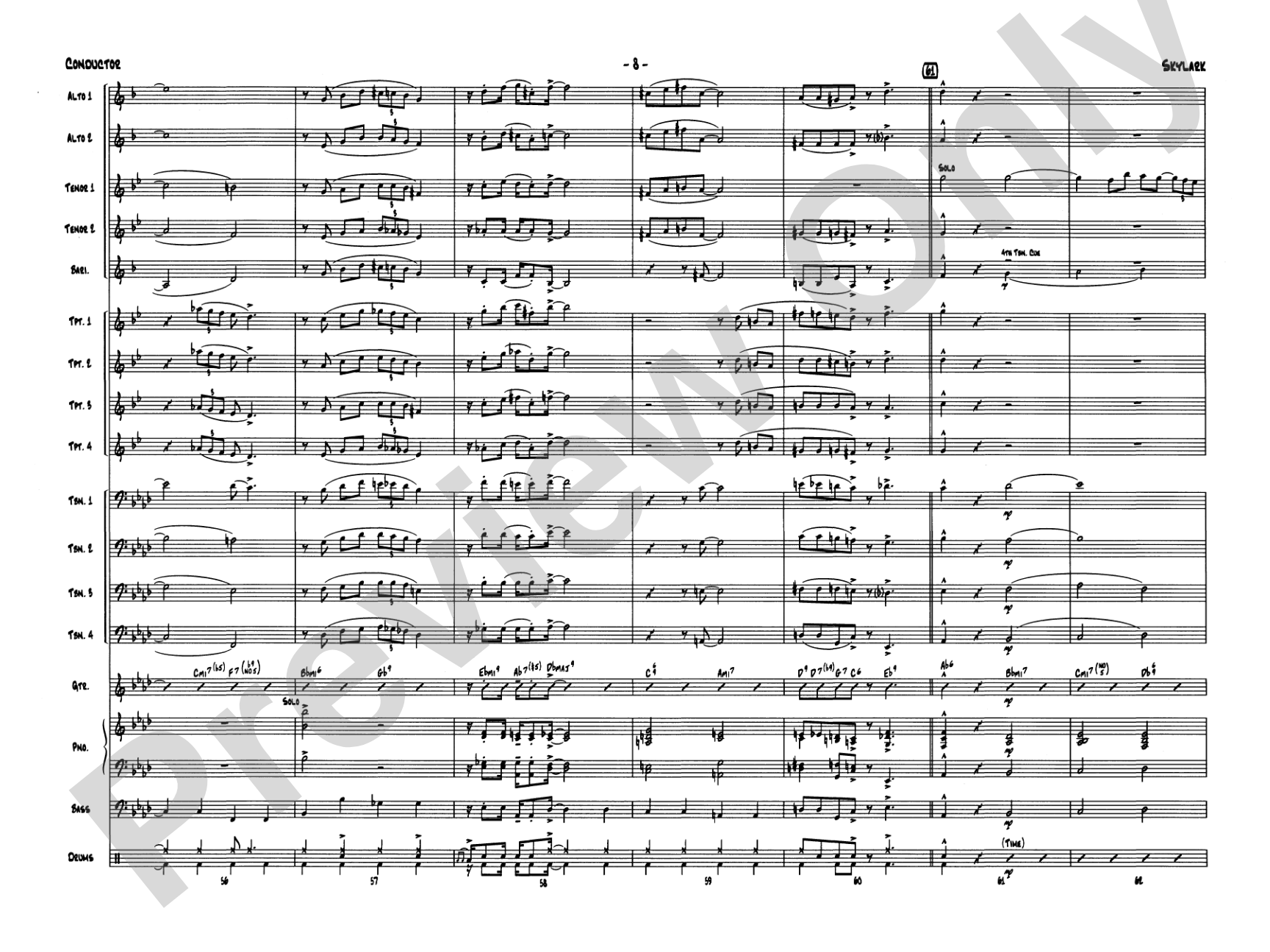
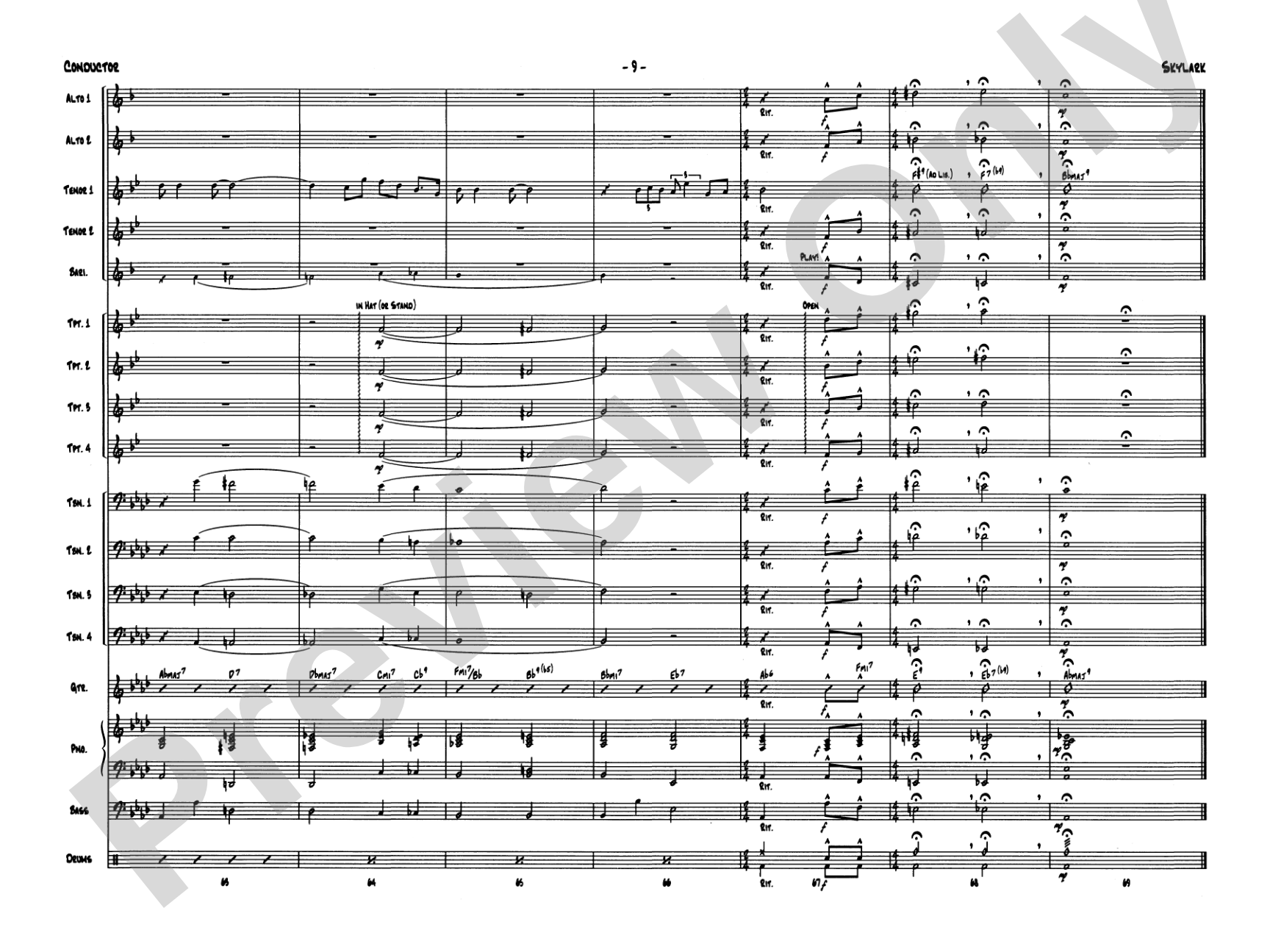


Skylark: Jazz Ensemble Conductor Score & Parts
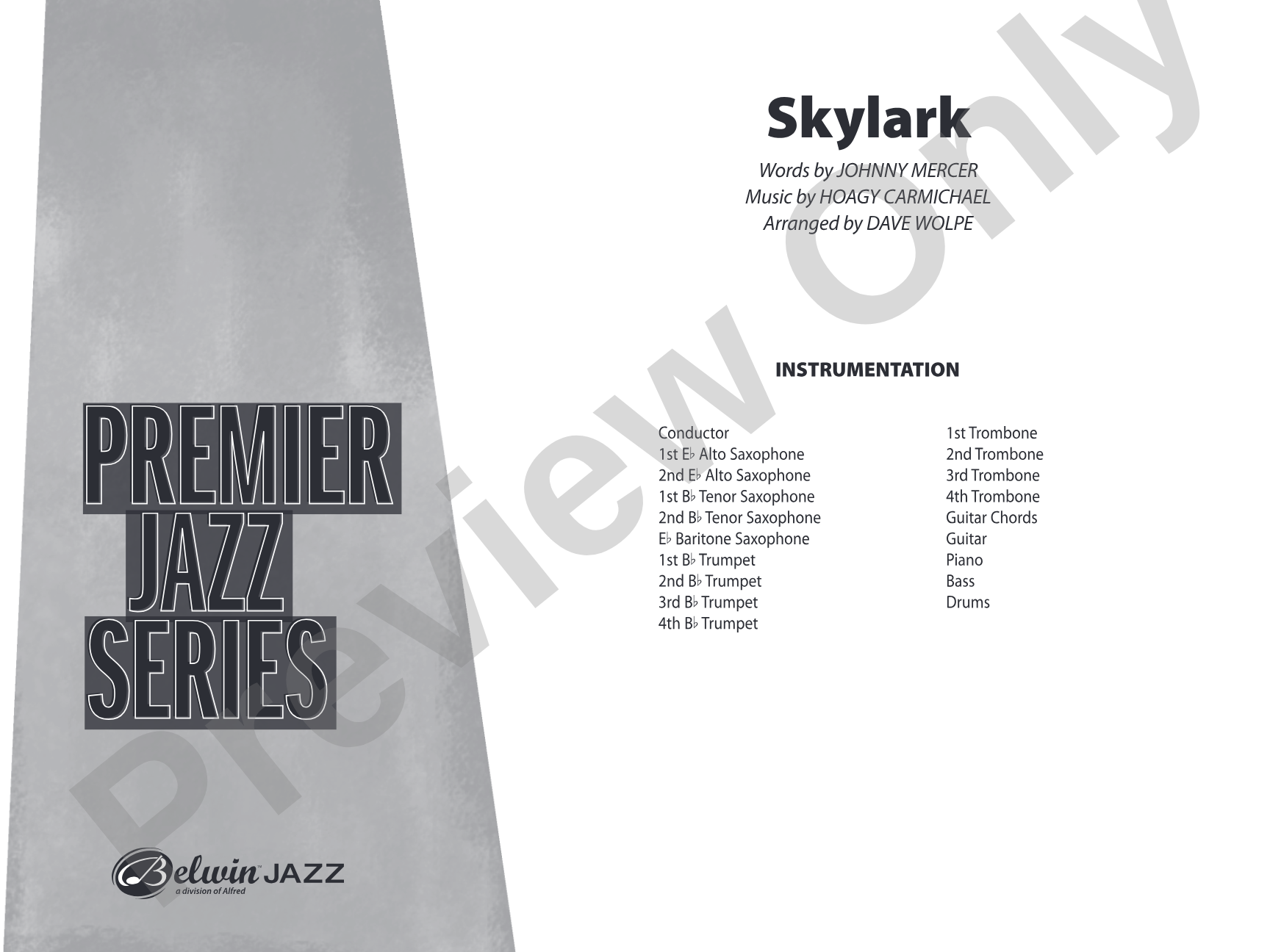
Words by Johnny Mercer, music by Hoagy Carmichael / arr. Dave Wolpe
Grade: 4.5 (Medium Advanced / Difficult)
Item: 00-PK-0004433

$60.00
One moment…
Description
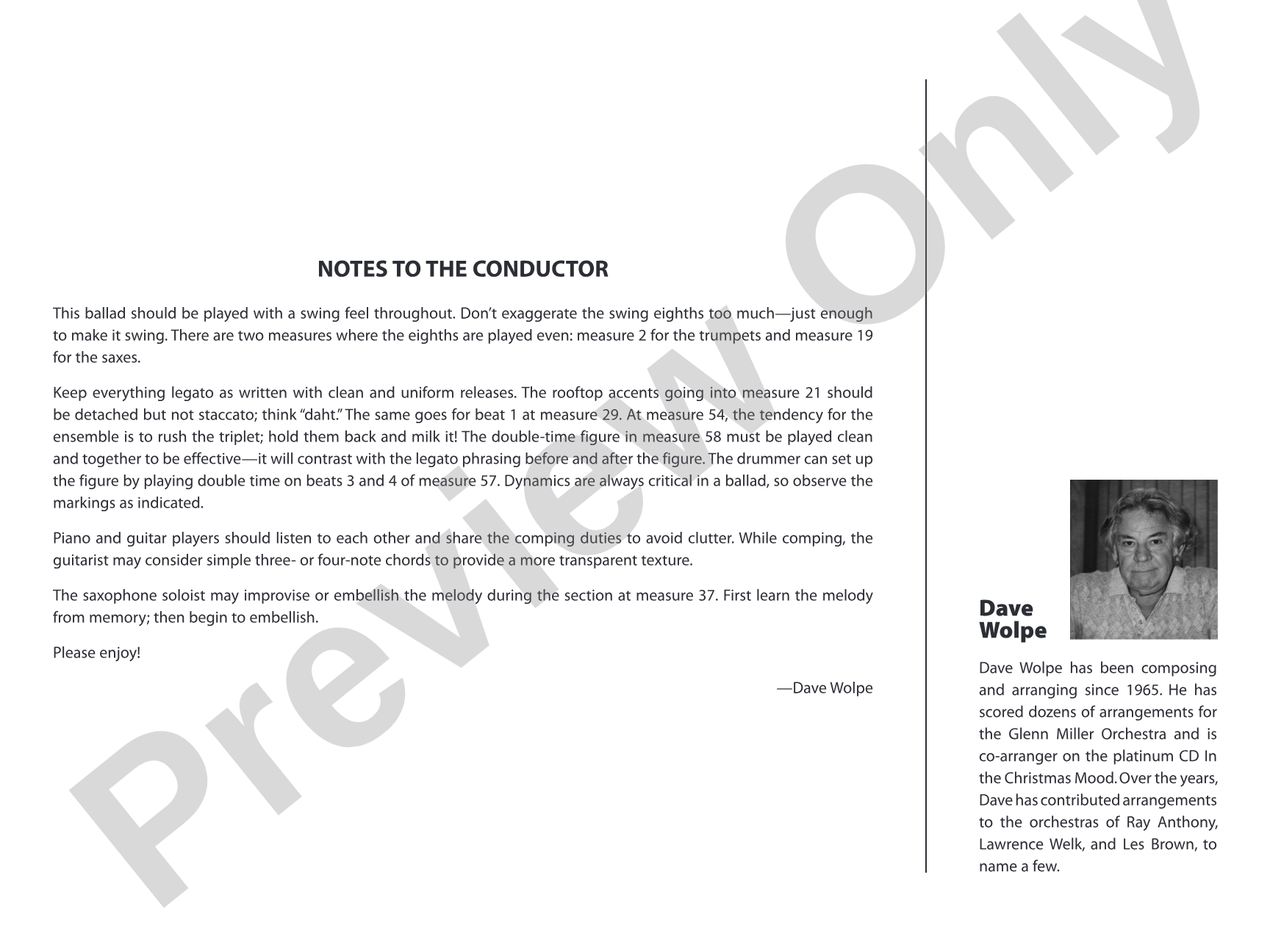
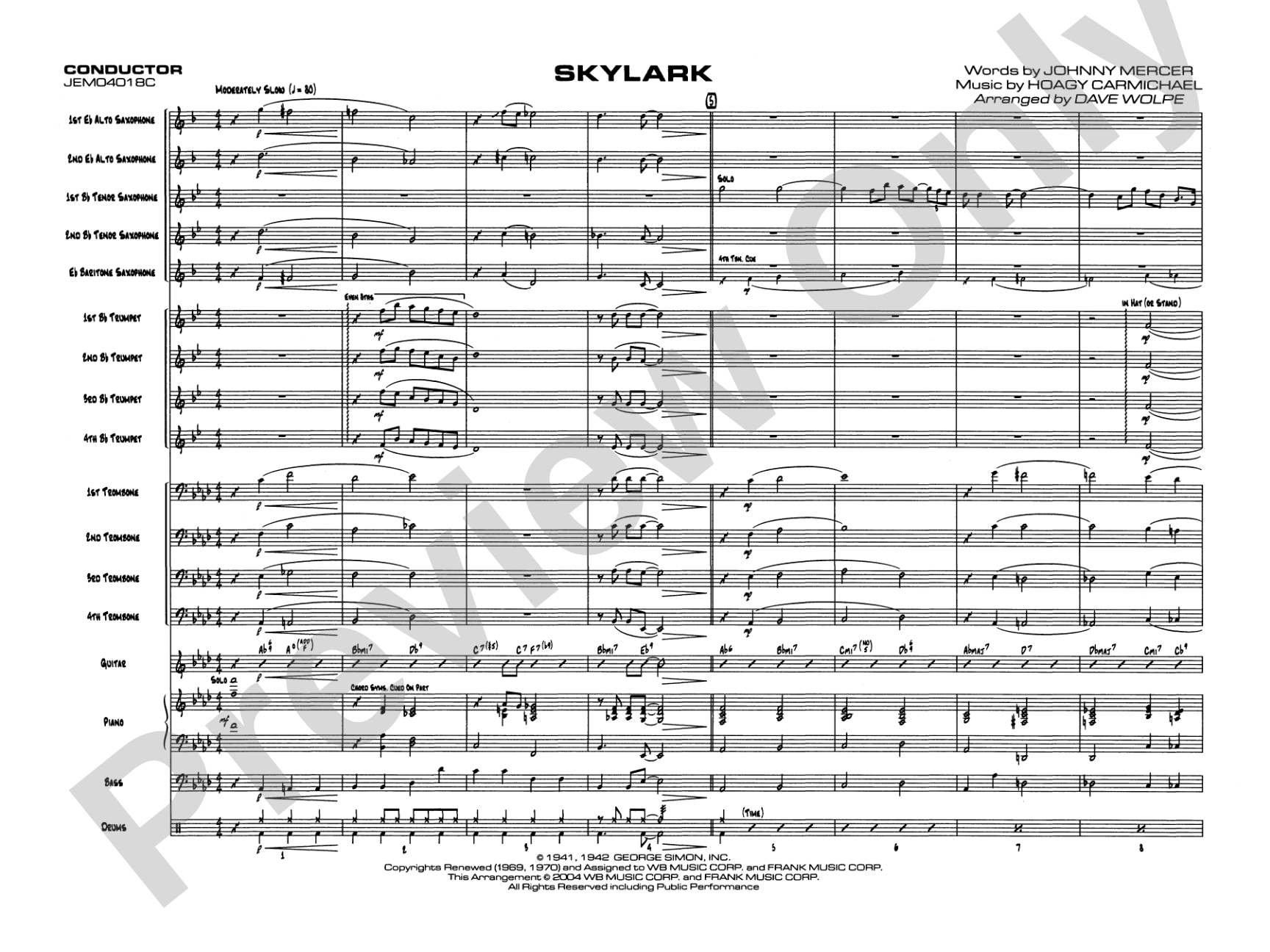
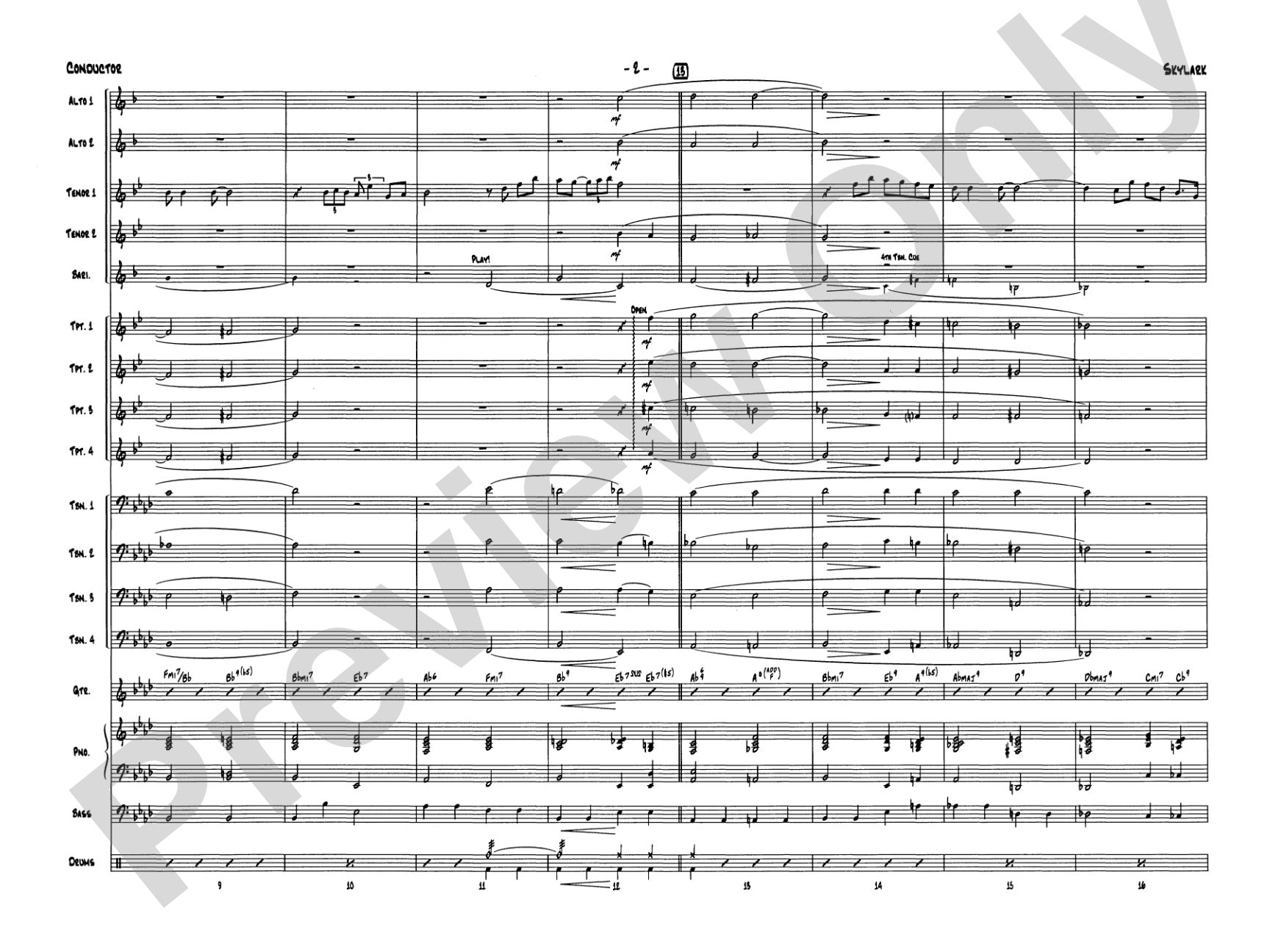
A marvelous tune by Hoagy Carmichael arranged by one the best in the business, Dave Wolpe. Treated as a ballad, this chart features your tenor sax player throughout with plenty of solo space. There is wonderful ensemble writing top to bottom and a beautiful ensemble chorus with some double time figures. Lead trumpet goes to written high C. Every note of every part fits together perfectly---Excellent! (4:07)


Don't just read it, hear it, play along with it, and watch your students grow with it. In MakeMusic Cloud, Skylark: Jazz Ensemble Conductor Score & Parts comes alive with professional accompaniment, adjustable tempo, and built-in practice tools that turn solo practice into real progress.
Open in the Player
Jump straight in and assign it today.
Start Your Free Trial
Open this title and explore the full library in minutes.
Sample Audio
1
Audio File
--:--
0:00
0:00
Sample Video
No sample videos found.
Additional Details
Series:
Premier Jazz Series
Publisher:
Alfred Music
Page Count:
56
SKU:
00-PK-0004433
More about this title
About the Composer: Hoagy Carmichael
Hoagy Carmichael (1899-1981) was an American composer, pianist, and singer who helped define the Great American Songbook. His melodies combined jazz sensibility with popular appeal, and his songs became standards recorded by countless artists across decades. "Skylark" stands as one of his most enduring compositions, recorded by everyone from Billie Holiday to John Coltrane.
Carmichael's gift for memorable melody and his deep understanding of jazz harmony made his work a natural fit for ensemble arrangements. His compositions remain central to jazz education because they balance accessibility with harmonic sophistication and because they showcase the swing era's musical values.
Why we love this
Dave Wolpe's arrangement respects the ballad's introspective quality while giving your ensemble room to breathe and shine. The tenor sax spotlight is genuinely satisfying to feature, the ensemble writing is clean and playable across all sections, and that high C in the lead trumpet part challenges your soloists without becoming a barrier to performance. This is the kind of chart that sounds sophisticated because it is sophisticated, not because it's overstuffed.
What to expect
"Skylark" unfolds like a quiet conversation between musicians. The ballad opens with restraint, inviting the tenor to tell the story while the ensemble listens and responds. Energy builds gradually through the double-time figures, but the arrangement never loses its graceful character. The result feels intimate even when played by a full ensemble.
Who it's for
Jazz ensembles at the intermediate-advanced level ready to tackle a standard that demands musicality alongside technical facility. Your ensemble needs a capable tenor sax soloist comfortable with space and phrasing, a secure lead trumpet, and a rhythm section that understands swing. This works equally well for a group preparing contest material or building a concert program around Great American Songbook classics.
How to get the most out of it
- Shape the ballad's opening with rubato from your rhythm section; the written tempo provides a home base, but space allows singers and soloists to find the lyrical quality the melody demands.
- Balance the tenor sax solo so it sits slightly ahead of the ensemble without drowning the comping. Wolpe's voicings are designed to support, not compete.
- Approach the double-time ensemble figures as a shift in energy rather than a tempo change. Precision matters here; lock the rhythm section first, then layer horns.
- Work the lead trumpet's approach to the high C passages in sectionals; approaching from below builds security and keeps the register change musical rather than athletic.
How to use it
Program this as a centerpiece in a ballad or standards-focused set, where it can anchor a concert segment with poise. It also serves as an excellent contest selection at the 4.5 level, giving judges a clear view of your ensemble's musicianship and individual soloists. Consider pairing it with other Carmichael works or with charts that complement its lyrical approach to swing.
Skills your students will build
- Balancing solo and ensemble voices within a single chart
- Phrasing and rubato in ballad contexts
- Reading and executing double-time figures in ensemble
- Supporting a tenor sax soloist with comping that enhances rather than fills space
- Approaching high register passages with musicality and control