
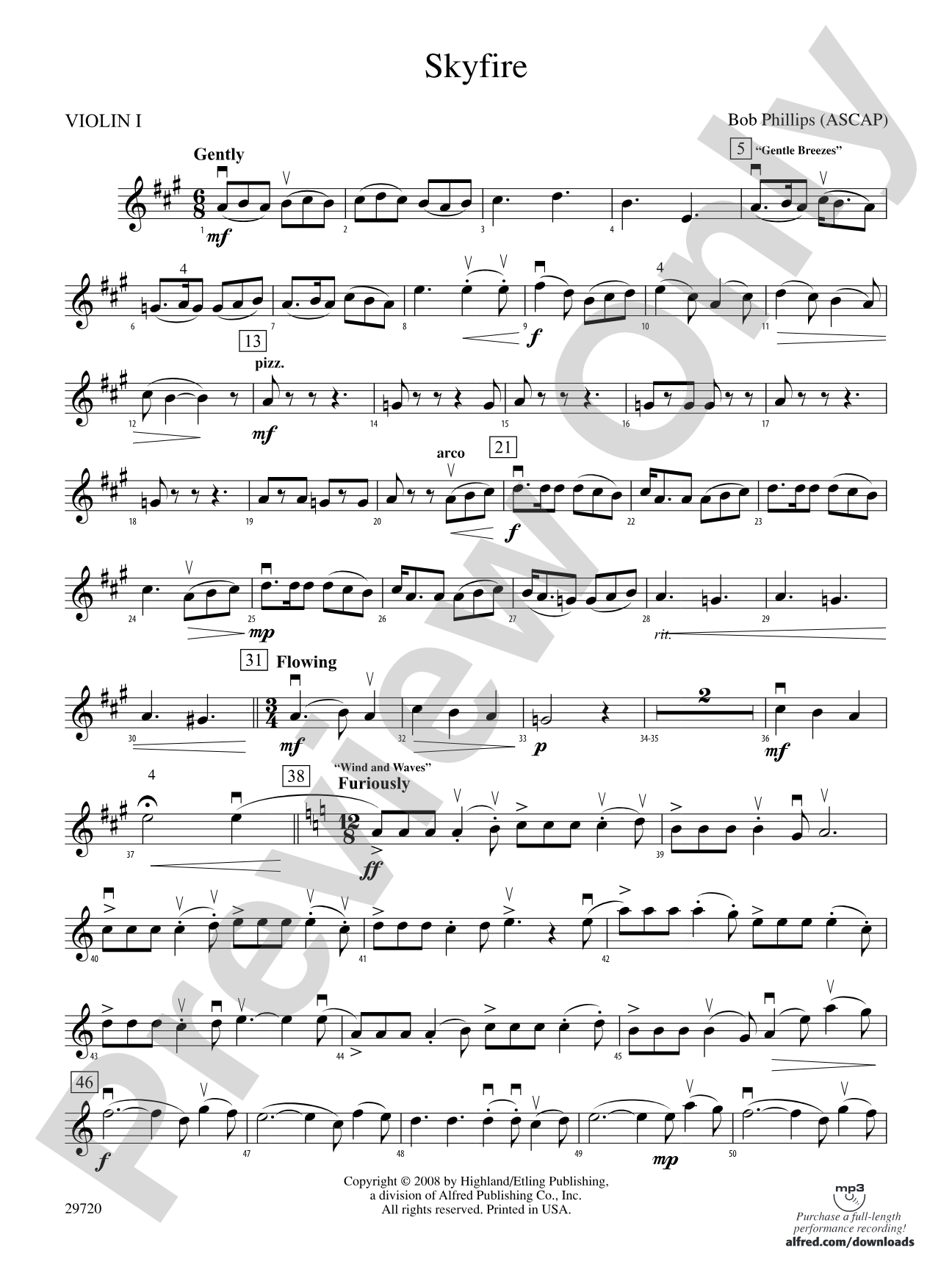

Skyfire: 1st Violin
By Bob Phillips
Grade: 3
Item: 00-PC-0001573_VN1
$5.99
Pickup currently not available
Description
A programmatic piece based on the changing character of that vast inland sea, Lake Michigan, this original composition will remind the listener of the folk-based tunes of Holst. Written for a school located near the beaches, the music reflects the serene mornings, days of large waves and the spectacularly brilliant sunsets. The majestic finish reflects the wonder of a sky full of fire as the sun sets. (3:45)


Don't just read it, hear it, play along with it, and watch your students grow with it. In MakeMusic Cloud, Skyfire: 1st Violin comes alive with professional accompaniment, adjustable tempo, and built-in practice tools that turn solo practice into real progress.
Open in the Player
Jump straight in and assign it today.
Start Your Free Trial
Open this title and explore the full library in minutes.
Sample Audio
1
Audio File
--:--
0:00
0:00
Sample Video
No sample videos found.
Additional Details
Series:
Highland/Etling String Orchestra
Publisher:
Alfred Music
Page Count:
124
SKU:
00-PC-0001573_VN1
More about this title
About the Composer: Bob Phillips

Bob Phillips has shaped string education for decades through both composition and large-ensemble pedagogy. Since the 1980s, he has authored 25+ instructional series (including Sound Innovations across all six levels) and created groundbreaking eclectic style publications from Fiddlers Philharmonic to Latin Philharmonic. Over 200 of his orchestral and band works have been published, and his pieces are performed annually by thousands of student musicians.
Phillips built a national model string program in Saline, Michigan, where he taught for 27 years and developed ensembles that performed at state and national conferences. He founded the Saline Fiddlers Philharmonic, which gained international recognition through 80+ annual performances, including appearances at the White House and the Midwest Clinic. His conducting experience spans youth symphonies, all-state orchestras, and prestigious summer programs including Interlochen and Blue Lake Fine Arts Camp. He is an award-winning ASCAP composer and has served as resident conductor and arranger for festivals across the country.
Why we love this
Phillips writes with the confidence of someone who knows exactly how school orchestras sound and what they can achieve. The folk-inspired idiom, rooted in his decades building eclectic string programs, gives this piece authentic character without sacrificing accessibility. A Grade 3 work that programs beautifully in a spring concert and engages students through vivid, concrete imagery tied to a real place.
What to expect
Water and light in constant conversation: serene morning stillness gives way to energetic, churning waves, then dissolves into a sunset so vivid and expansive it feels almost transcendent. The music evokes the folk sensibilities of early 20th-century string writing while maintaining a contemporary clarity of orchestration.
Who it's for
String orchestras at the intermediate level (grades 6-9) ready to tackle a substantial work with dramatic arc and programmatic depth. Directors seeking a Grade 3 piece that challenges students musically while remaining within their technical grasp and rewarding to perform in concert.
How to get the most out of it
- Shape the serene morning sections with sustained, warm tone; let the accompaniment voices breathe gently beneath the melody line
- Build the wave passages with clear rhythmic drive and dynamic control; avoid letting energy flatten during the crescendos
- Balance the lower strings during the sunset sequence so the harmonic shifts register without overpowering the melody
- Bring out the majesty of the final section through deliberate tempo and full, resonant sound from all sections
How to use it
Pair this as a centerpiece in a spring or outdoor concert celebrating your region's natural character; it works equally well as a festival entry or as the emotional heart of a mixed program. The 3:45 duration and programmatic arc make it substantial enough to anchor a set without overwhelming younger or less experienced players.
Skills your students will build
- Sustaining warm, lyrical tone across extended melodic phrases
- Balancing melodic and accompaniment roles within the string choir
- Responding to programmatic intent through dynamic shape and articulation
- Maintaining rhythmic clarity and precision during moderate tempo changes
- Building crescendos with control and releasing them intentionally rather than collapsing