
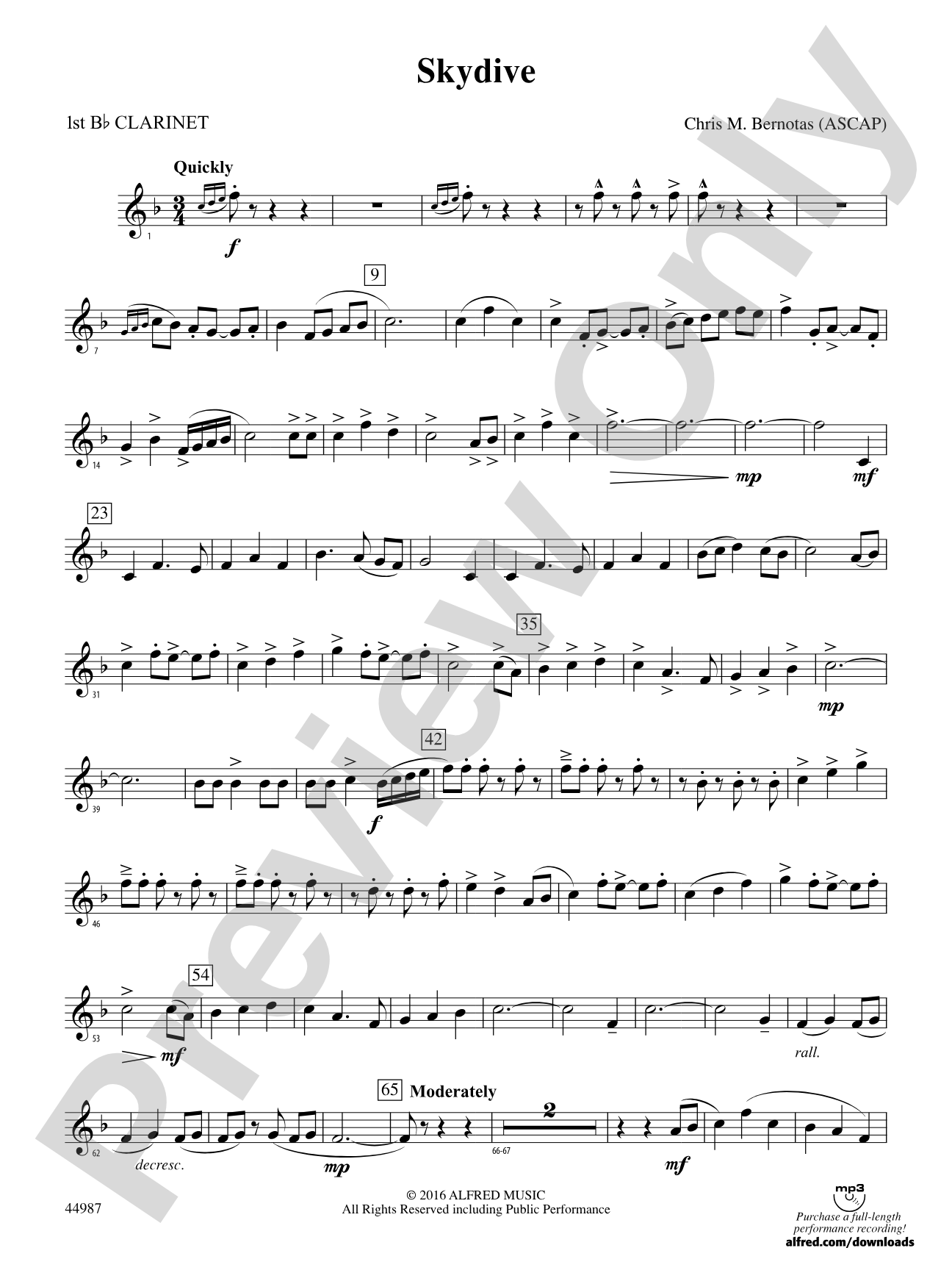

Skydive: 1st B-flat Clarinet
By Chris M. Bernotas
Grade: 3 (Medium)
Item: 00-PC-0017452_C1
$3.00
Pickup currently not available
Description
This piece starts with immediate exhilaration and velocity, and is full of energy, with uplifting syncopated rhythms and strong melodic lines that will engage both the students and audience. The legato section is representative of the time when a skydiver enjoys the beauty of the scenery. The energy and thrill come back and drive to the end with non-stop excitement. (3:40)


Don't just read it, hear it, play along with it, and watch your students grow with it. In MakeMusic Cloud, Skydive: 1st B-flat Clarinet comes alive with professional accompaniment, adjustable tempo, and built-in practice tools that turn solo practice into real progress.
Open in the Player
Jump straight in and assign it today.
Start Your Free Trial
Open this title and explore the full library in minutes.
Sample Audio
1
Audio File
--:--
0:00
0:00
Sample Video
Additional Details
Series:
Young Symphonic
Publisher:
Alfred Music
Page Count:
276
SKU:
00-PC-0017452_C1
More about this title
About the Composer: Chris M. Bernotas

Chris M. Bernotas brings over 25 years of experience as a composer, conductor, and music educator to every work he creates. Currently serving as Director of Instrumental Publications for Alfred Music, he has shaped band and orchestra repertoire for programs across the globe, from emerging ensembles to advanced groups seeking compelling, well-crafted material.
Bernotas draws on extensive classroom experience to write music that speaks to both students and audiences. He regularly guests as a conductor and clinician, leading honor bands and workshops while continuing to advocate for thoughtful pedagogy through composition and publication. His catalog has become essential concert literature, recognized for its blend of musicality, accessibility, and genuine educational value.
Why we love this
Bernotas captures the emotional arc of an experience with surprising sophistication at Grade 3. The opening energy hooks listeners immediately, the legato midsection gives your band genuine interpretive depth, and the closing drive leaves no doubt about the impact of the piece. Programming this means your students get a concert work that feels genuinely theatrical, not simplified.
What to expect
The opening plunges you into velocity and forward motion, syncopated rhythms propelling everything forward with controlled abandon. The legato section arrives like a moment of weightlessness, where you can appreciate the landscape below before the thrill returns for a final rush to the ground. It's exhilaration paired with beauty, then exhilaration again.
Who it's for
This piece belongs in the library of any Grade 3 band director seeking concert repertoire with genuine dramatic arc. Students at this level can execute the technical and rhythmic demands while gaining experience with dynamic contrast and stylistic variety. Audiences recognize it as a polished, engaging work rather than a student piece.
How to get the most out of it
- Attack the opening unison figure with crisp articulation and committed tempo to establish the adrenaline from measure one. This gesture sets the tone for everything that follows.
- Shape the legato section with long phrase lines and dynamic sensitivity, treating it as genuine contrast rather than a soft interlude. This is where your ensemble demonstrates musicianship beyond enthusiasm.
- Bring the final energy return with building intensity and precision. Ensure the rhythm section locks in tight during the driving sections so syncopated lines pop without sounding rushed.
- Use dynamics to clarify the form. The contrast between the thrill sections and the contemplative middle will feel more powerful if your band commits fully to each character.
How to use it
Program this as your opener or as a featured concert piece when you want to command attention and set an energetic tone. It works equally well in a contest setting where judges want to hear confident playing and clear phrasing. The 3:40 duration fits concert formats without dominating a program.
Skills your students will build
- Executing syncopated rhythms with precision and confidence
- Sustaining legato phrasing over longer musical phrases
- Balancing ensemble blend during dynamic and textural shifts
- Responding to the conductor's interpretation of dramatic contrast
- Reading and executing a full conductor score and parts efficiently