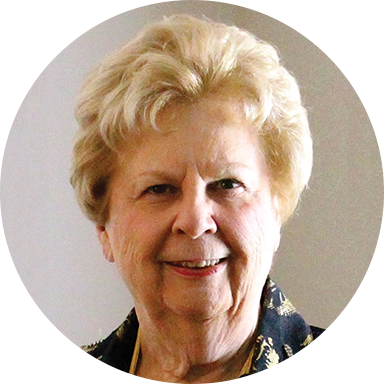
Elvina Pearce trained at the highest levels of piano performance and pedagogy, studying with Isabelle Vengerova in New York (a teacher whose lineage included Samuel Barber, Gary Graffman, and Leonard Bernstein) and with Frances Clark, the pioneering keyboard pedagogue. She was instrumental in founding the New School for Music Study and the Frances Center for Keyboard Pedagogy in Princeton, and spent fourteen years teaching piano and pedagogy at Northwestern University. Her own concert career took her to Carnegie Recital Hall and the National Gallery of Art, and included a performance of the Liszt Concerto in E-flat with the Chicago Symphony.
Beyond performance, Pearce has shaped music education through composition, teaching, and scholarship. She served as Editor-in-Chief of Keyboard Companion Magazine from 2000 to 2006 and has published more than 25 collections of piano music. Her book "The Success Factor in Piano Teaching: Making Practice Perfect" became a widely adopted resource for instructors. Recognition of her influence includes a 2008 MTNA Foundation Fellowship nomination, the 2011 Lifetime Achievement Award from the National Conference on Keyboard Pedagogy, and induction into the Illinois Fox Valley Arts Hall of Fame in 2014. With a career spanning more than 50 years, she remains a trusted voice in both pedagogy and composition.
Why we love this
Pearce writes for the student pianist with the insight of someone who has spent decades in the teaching studio, and it shows. The title itself invites curiosity and playfulness rather than intimidation, and the music inside delivers genuine musicality within a carefully scaffolded technical framework that your students can grasp and succeed with immediately.
What to expect
Gentle and contemplative, with moments of lightness. The music captures the visual and kinetic sense of movement across water, unfolding naturally without dramatic gestures. There's an invitation to listen closely to tone quality and phrasing.
Who it's for
Intermediate piano students working on lyrical playing and refined technique. Teachers seeking a short, engaging piece that builds musicianship alongside finger facility without requiring dramatic technical leaps.
How to get the most out of it
Shape the melodic contours with gentle dynamic breathing rather than sudden changes; let the "skipping" quality emerge from articulation and touch rather than volume shifts
Maintain evenness in hand position during the passage work; relaxation through the wrist allows the fingers to move efficiently and prevents the rhythm from tightening
Listen to the harmonic rhythm underneath; understanding how the chords progress will help you phrase through the larger musical ideas rather than note by note
How to use it
Feature this as a solo recital piece where its modest length works as part of a varied program, or pair it with other works by Pearce to highlight the composer's approach to student repertoire. It works equally well in a studio class or lesson showcase where you want students to experience the satisfaction of performing a complete, musically coherent work.
Skills your students will build
Legato touch and tone control
Melodic phrasing and shaping
Hand independence and coordination
Reading mixed registers (treble and bass clefs)
Rhythmic evenness in passage work
You May Also Like
Scan to Complete Your Purchase
Use your phone's camera to scan the code below
You'll log in on your phone and the order will be added to your account