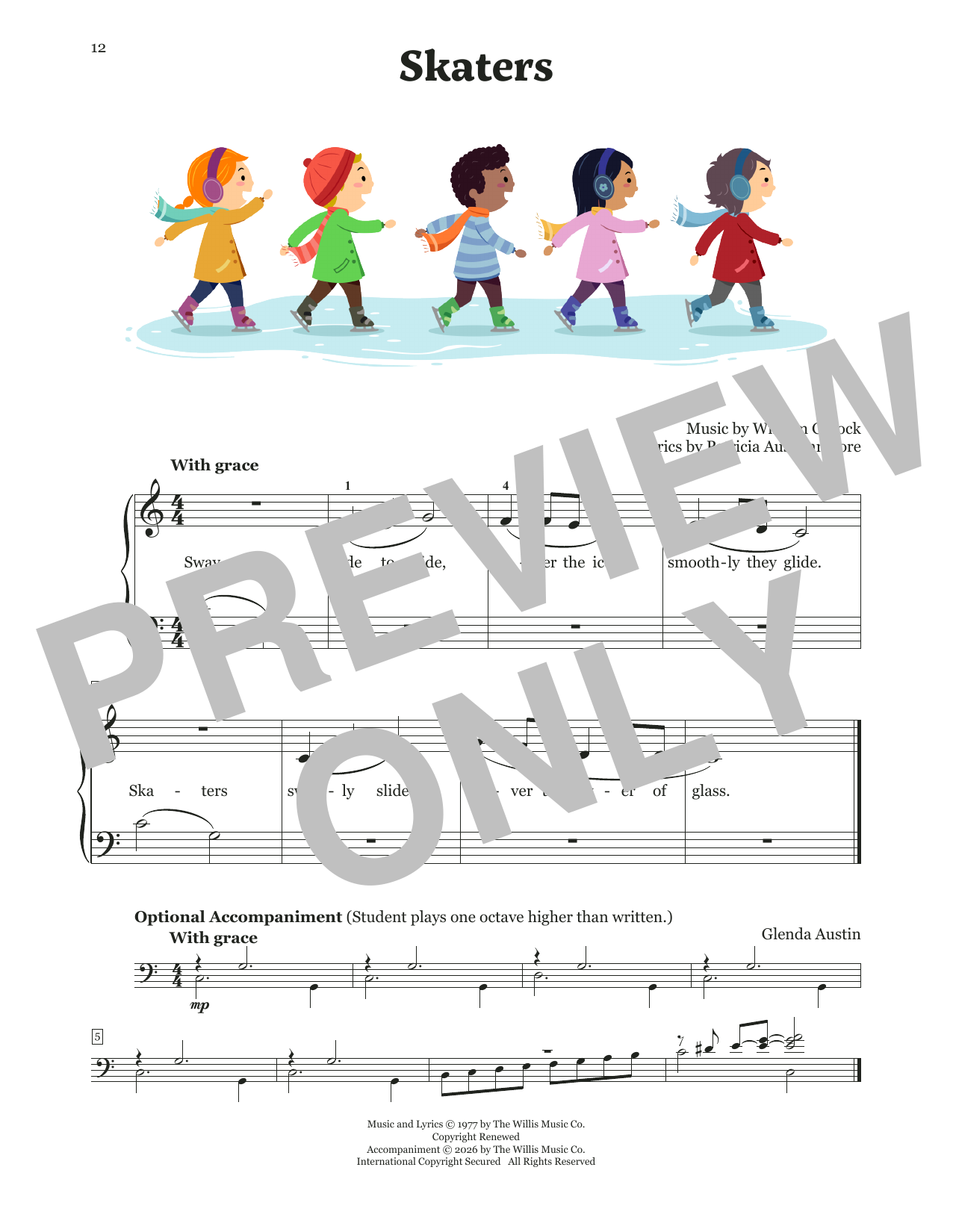
William Gillock (1917–2002) shaped generations of piano students through his prolific output of educational works that never sacrificed musical substance for pedagogical simplicity. His pieces occupy a distinctive space in the student repertoire: they teach genuine compositional technique and musical storytelling while remaining accessible to young pianists navigating early intermediate levels.
Why we love this
Gillock's ability to conjure vivid imagery through minimal harmonic language makes this piece irresistible in a student recital. The skating motion emerges naturally from the figuration rather than feeling imposed, giving students a sense of authentic compositional logic at work.
What to expect
Gliding across ice with lightness and grace. The repetitive accompaniment creates a sense of continuous forward motion while the melody traces smooth, connected lines overhead, evoking the gentle, almost meditative quality of skating in solitude.
Who it's for
This single page works beautifully for early intermediate pianists building confidence in program pieces and learning to shape simple melodies over repeating accompaniments. It's equally valuable in group classes where students benefit from observing how focused musical characterization operates without complex harmony.
How to get the most out of it
Shape the accompaniment figure with gentle contour; treat each repetition as a subtle variation rather than mechanical repetition, which keeps the ice feeling fresh throughout.
Balance the melody so it floats effortlessly above the accompaniment without requiring excessive hand height changes or tension in the wrist.
Maintain an even, unhurried tempo that allows the skating character to emerge without sounding rushed or labored.
How to use it
Include this as a mood piece between heavier works on a recital, or pair it with other Gillock character pieces to showcase student progress in depicting concrete images through music. Its modest length and clear visual appeal make it ideal for young students' first formal performance opportunities.
Skills your students will build
Legato playing across hand positions
Independence between melody and accompaniment
Maintaining consistent rhythmic pulse in repeating figures
Musical characterization and narrative shaping
Balance and voicing in simple two-part texture
You May Also Like
Scan to Complete Your Purchase
Use your phone's camera to scan the code below
You'll log in on your phone and the order will be added to your account