Sitting On The Dock Of The Bay (arr. Gitika Partington) Sheet Music Preview

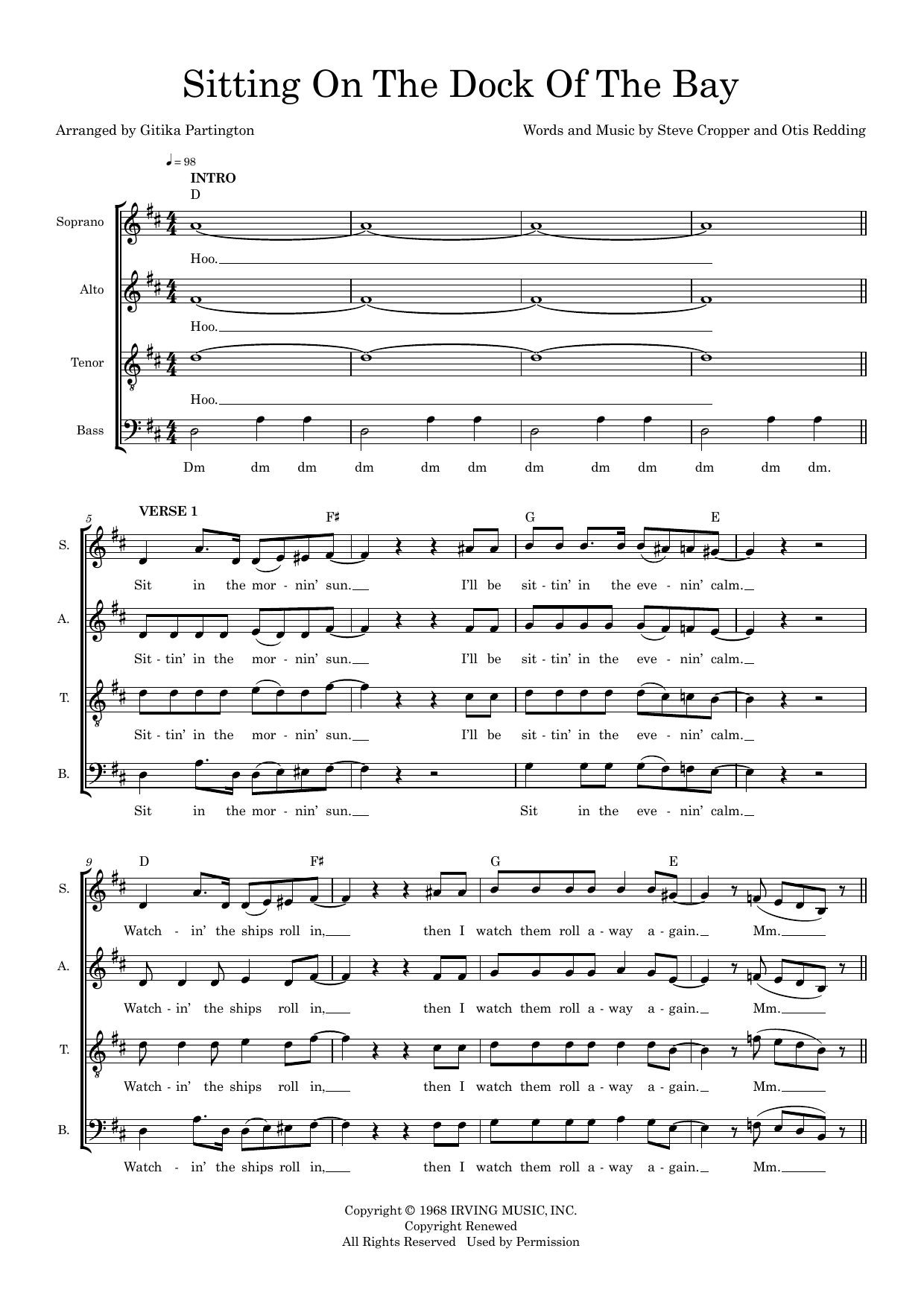
Sitting On The Dock Of The Bay (arr. Gitika Partington): SATB Choral Octavo

As performed by Otis Redding / Arranged by Gitika Partington

Item: 35-DS01532959

Digital Download
$1.99
Description

Sitting On The Dock Of The Bay (arr. Gitika Partington): SATB Choral Octavo isn't in MakeMusic Cloud just yet...but it could be. Let us know you'd like to see it, and you'll help shape what comes next. In the meantime, start a free trial and dive into thousands of interactive titles your students can play along with today.

Sample Audio
No sample audio found.
Sample Video
Additional Details
Publisher: Hal Leonard
Page Count: 5
SKU: 35-DS01532959

More about this title

About the Artist: Otis Redding

Otis Redding redefined soul music in the 1960s with his raw vocal delivery and emotional directness. His influence extends far beyond his era; his recordings remain touchstones for understanding how to sing with conviction and vulnerability, making him essential listening for any vocalist serious about the genre.

Redding's catalog offers educators a goldmine of material that teaches authenticity. His approach to phrasing, dynamics, and emotional communication translates directly into the rehearsal room, showing singers how to inhabit a song rather than simply perform it.

Why we love this

Gitika Partington's arrangement captures the song's soul essence while making it accessible to SATB ensembles. The writing respects the original's emotional core; it doesn't sand away the blues sensibility that makes this song resonate across generations. Choirs genuinely enjoy performing this piece because the vocal lines feel singable yet expressive.

What to expect

Contemplative and wistful, with an undercurrent of quiet resilience. The arrangement preserves that iconic finger-picking guitar feel through its harmonic language while giving voices room to express the song's reflective mood. It's the sound of someone alone with their thoughts, trusting that simplicity can hold great emotion.

Who it's for

Choirs looking to expand beyond traditional classical repertoire without sacrificing musicality or craft. This works equally well for high school chamber choirs, college ensembles, and community groups ready to tackle a piece with genuine stylistic demands.

How to get the most out of it

  • Honor the rubato. This song breathes; resist the urge to lock into a metronomic groove. Let the ensemble follow the natural ebb and flow of the lyrical content.
  • Balance the inner voices carefully during harmonic moments. Soul arrangements often rely on rich voicing, so make sure altos and tenors aren't buried beneath sopranos and basses.
  • Lean into the swing feel if the arrangement indicates it. Even if you're not an experienced soul ensemble, small amounts of rhythmic relaxation on the backbeat will open up the style.
  • Invest in the text. This lyric carries weight; singers who understand the melancholy and resignation in the words will naturally find the right tone color and dynamic shape.

How to use it

Place this in a concert exploring 20th-century American song or as a standout moment in a program mixing classical and contemporary work. Its five pages and moderate difficulty make it efficient to learn, so it works well as a mid-season addition or as a cultural bridge piece that engages audiences outside your typical classical listeners.

Skills your students will build

  • Stylistic expression in soul and R&B idioms
  • Rhythmic flexibility and rubato control
  • Four-part voice balance in jazz and contemporary harmonies
  • Text interpretation and emotional connection to lyrics
  • Blend across register changes

You May Also Like