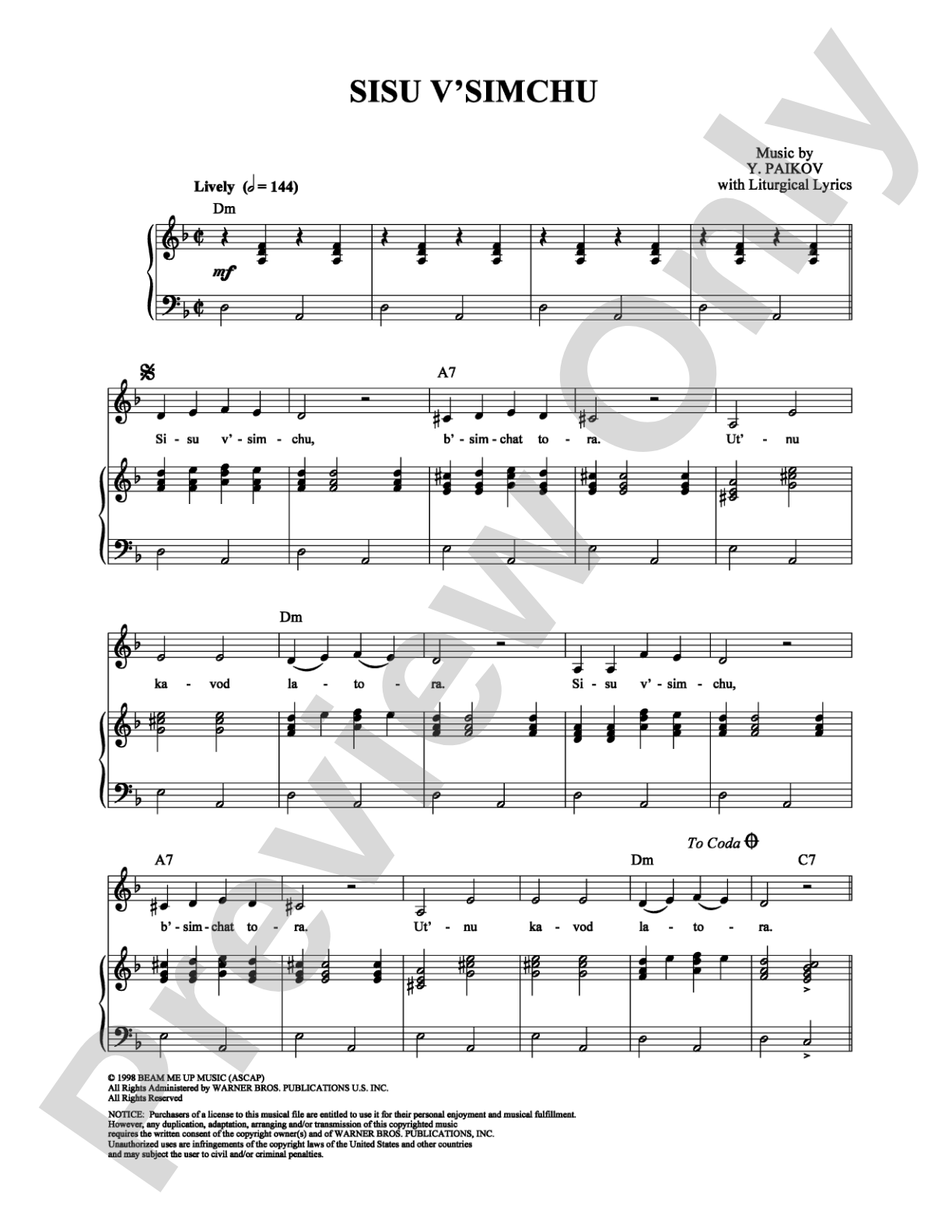
Sisu V'simchu: Piano/Vocal/Chords Digital Sheet Music

Sisu V'simchu: Piano/Vocal/Chords Digital Sheet Music

Y. Paikov

Item: 00-PS-0009891

Digital Download
$3.99
Description

Sisu V'simchu: Piano/Vocal/Chords Digital Sheet Music isn't in MakeMusic Cloud just yet...but it could be. Let us know you'd like to see it, and you'll help shape what comes next. In the meantime, start a free trial and dive into thousands of interactive titles your students can play along with today.

Sample Audio
No sample audio found.
Sample Video
Additional Details
SKU: 00-PS-0009891

More about this title

Why we love this

This piece captures the joy and celebration central to Jewish musical tradition, making it a meaningful addition to any interfaith or multicultural concert. The piano/vocal/chords format gives singers and pianists immediate flexibility to perform together or to create an accompaniment arrangement suited to your ensemble's strengths.

What to expect

Sisu V'simchu radiates celebration and spiritual affirmation, with the kind of accessible melodic warmth that invites singers and listeners into a moment of shared joy. The piano and vocal parts work together to create an intimate yet generous musical expression, rooted in Jewish musical tradition.

Who it's for

Solo singers preparing a recital or concert selection, pianists accompanying vocalists in rehearsal or performance, and music educators designing programs that celebrate Jewish heritage and global musical traditions. This digital format works well for singers who want to learn the piece independently or for accompanists building a diverse repertoire.

How to get the most out of it

  • Balance the vocal line with the piano part so lyrics remain clear while the instrumental support stays engaged and rhythmically present.
  • Draw on the energy of the title (Sisu V'simchu translates to 'Rejoice and Be Happy') to shape dynamics and phrasing with genuine warmth rather than forcing brightness.
  • Use the chord symbols to adapt the arrangement if a guitarist or other accompanist needs to substitute for or double the piano part.

How to use it

Feature this as a solo in a cultural celebration concert, interfaith service, or diverse repertoire recital where it can stand beside other heritage music traditions. Its joyful character makes it equally fitting as a closing piece or as part of a thematic program exploring global musical expressions of celebration.

Skills your students will build

  • Singing with Hebrew or transliterated text and maintaining clear diction
  • Following piano accompaniment while maintaining independent vocal phrasing
  • Interpreting chord symbols to understand harmonic context and potential arrangement options
  • Projecting emotional authenticity in celebratory musical contexts

You May Also Like