

Singing Peace Canon: 2-Part Choral Octavo
Traditional Melody / arr., with new words and music, by Donald Moore
Item: 00-PO-0005535
$1.90
Minimum order quantity: 20 copies
Pickup currently not available
Description
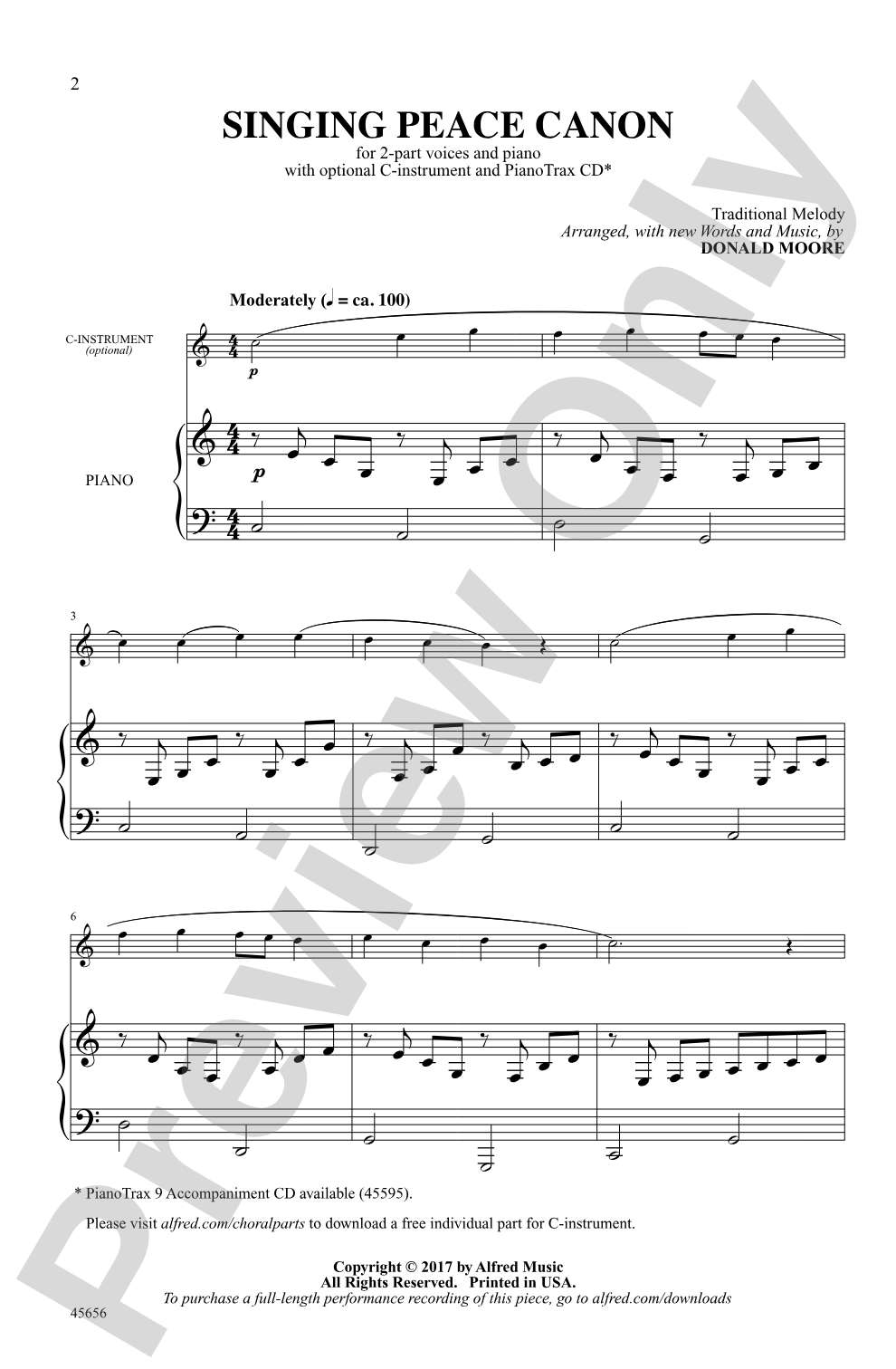
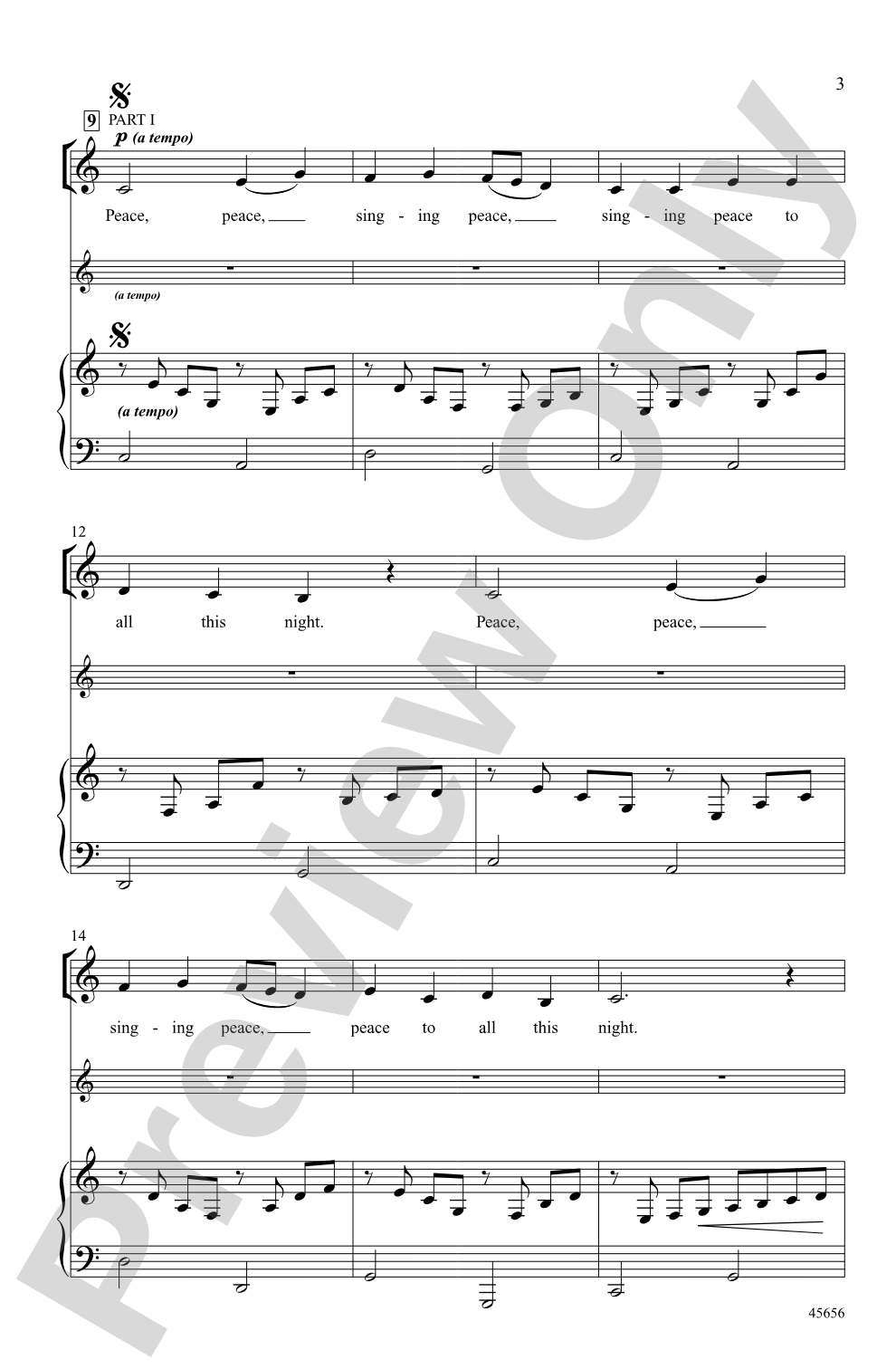
It's a snap. Teach the melody (built around the tonic triad) in unison first and then the canonic choral parts will easily fall in place. Conservative vocal ranges fit singers of any age. An optional C-instrument adds a third voice to the graceful round.


Singing Peace Canon: 2-Part Choral Octavo isn't in MakeMusic Cloud just yet...but it could be. Let us know you'd like to see it, and you'll help shape what comes next. In the meantime, start a free trial and dive into thousands of interactive titles your students can play along with today.
Request This Title
Tell us you want it.
Start Your Free Trial
Explore everything that's ready to play right now.
Sample Audio
1
Audio File
--:--
0:00
0:00
Sample Video
Additional Details
Series:
Alfred Choral Designs
Publisher:
Alfred Music
Page Count:
8
SKU:
00-PO-0005535
Instrumentation:
Opt. C Instrument
More about this title
About the Arranger: Donald Moore

Donald Moore earned his Bachelor of Music in organ performance and Master of Arts in Teaching from Kent State University. He has served as Organist-Choirmaster at Pilgrim United Church of Christ in Cuyahoga Falls, Ohio, while building an extraordinary catalog of over 500 published works across sacred, secular, educational, and pop idioms for choral ensembles, organ, and piano.
Moore's compositions have become fixtures at state contests and festivals nationwide and have been performed at state, regional, national, and international music conventions. A seventeen-time winner of the ASCAP Composers Standard Award, he was recently recognized by the American Choral Directors Association Choral Journal as one of 400 elite composers of significance in American choral music history. His publications span Alfred Music, BriLee Music, Warner Brothers, Hal Leonard, Heritage Music Press, and Coronet Press.
Why we love this
This arrangement strips away the complexity that often trips up emerging choirs. The unison introduction lets singers hear and internalize the melody before the canon unfolds, making a potentially confusing form feel inevitable rather than imposed. The optional C-instrument part gives you flexibility: perform it as a pure vocal canon, add an instrument for blend and support, or layer both to create a fuller texture.
What to expect
Singing Peace Canon embodies its title through gentle, graceful writing built on the stability of the tonic triad. The canonic form creates a sense of unity and dialogue, voices weaving together in pursuit of a common melody. It feels both contemplative and collaborative.
Who it's for
This arrangement serves mixed-age choirs at all levels. The conservative vocal ranges and straightforward canonic structure make it accessible for elementary through adult singers, whether you're rehearsing a school choir, community ensemble, or church group.
How to get the most out of it
- Establish the unison melody with confidence and clarity before introducing the second part. A solid foundation makes the canon feel secure rather than chaotic.
- Consider how the optional C-instrument part functions in your specific arrangement. It can double one vocal line for reinforcement, provide a melodic counterline, or serve as an independent voice that deepens harmonic color.
- Balance the two parts so neither overwhelms the other. In a canon, both voices deserve equal presence; if one group dominates, the form becomes obscured.
- Shape phrases with attention to text and breath points. Even in a round, musical phrasing prevents the piece from becoming mechanical.
How to use it
Pair this with other peace-themed pieces to create a concert segment on brotherhood and unity, or program it as a palate-cleansing moment between more complex works. Its modest length and accessible demands make it ideal for festivals and contests where you want a piece that showcases ensemble singing without excessive technical demands.
Skills your students will build
- Reading and singing canonic form (leader and follower entrances)
- Maintaining independent vocal lines while listening to other parts
- Singing from a triad-based melody with secure intonation
- Blending treble voices within a narrow, accessible range
- Coordinating with optional instrumental doubling or countermelody