

Singing A-Round: 3-Part, any combination Choral Octavo
Words and music by Sally K. Albrecht
Item: 00-PO-0000904
$1.80
Minimum order quantity: 20 copies
Pickup currently not available
Description
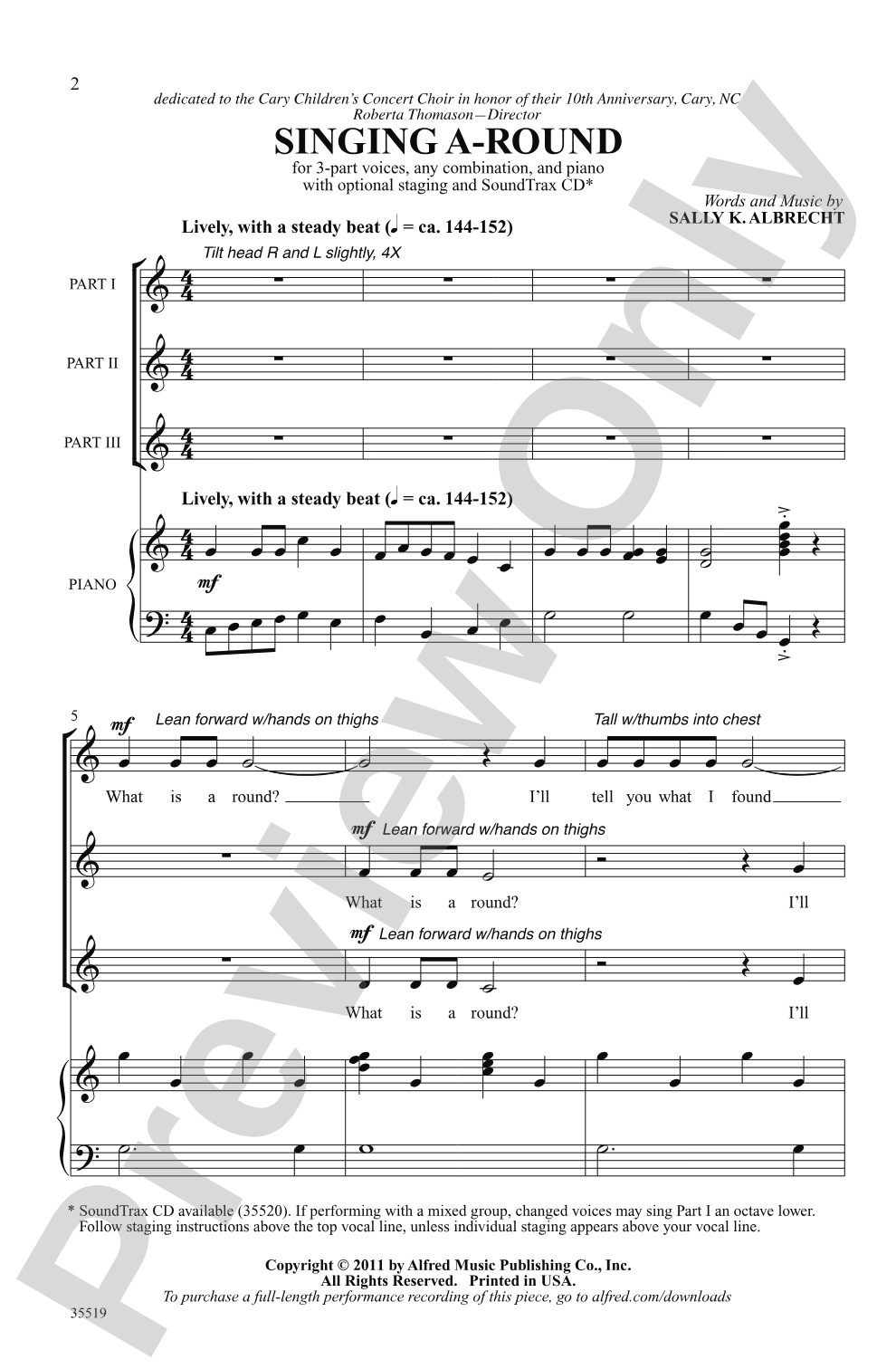
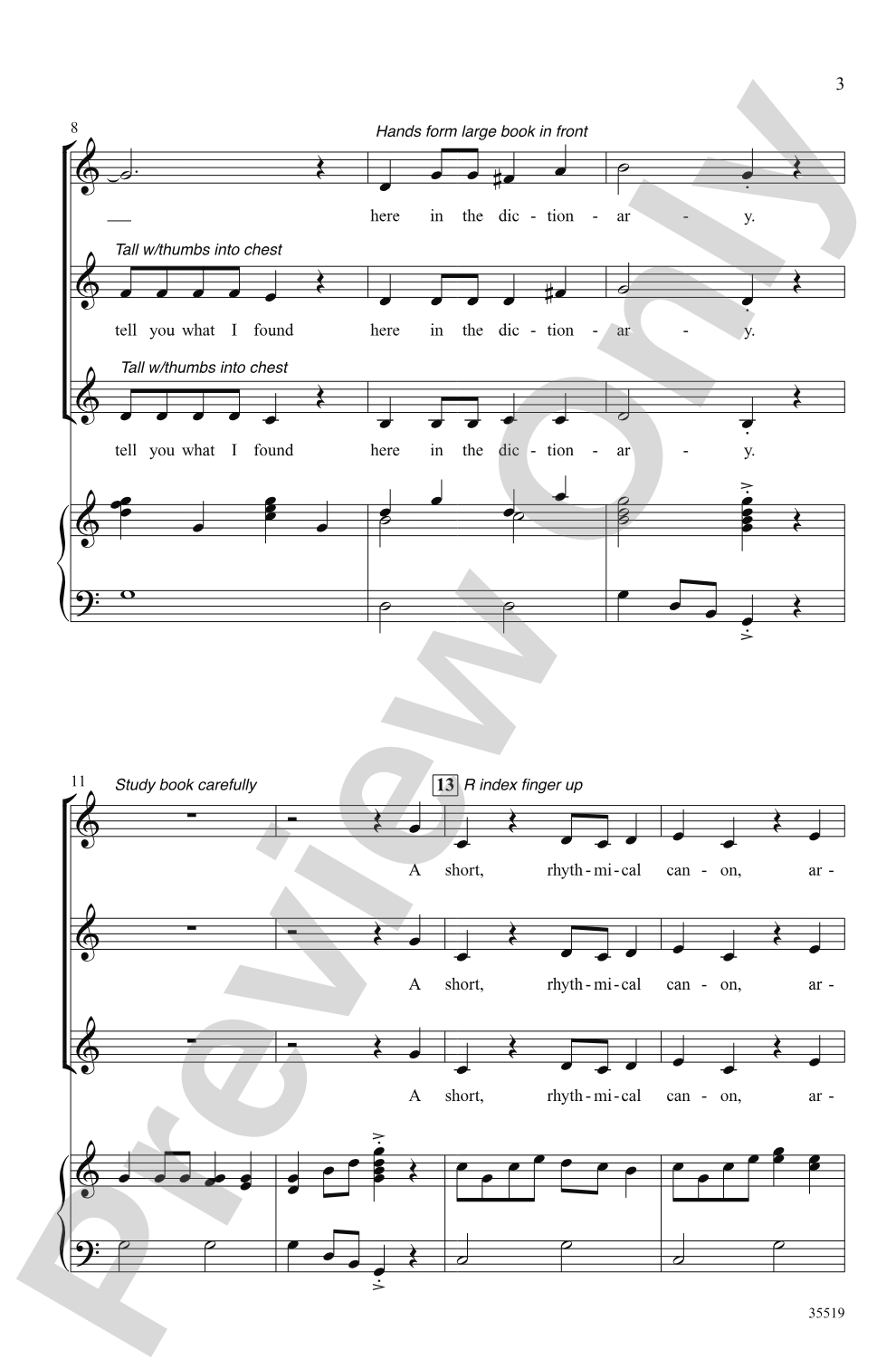
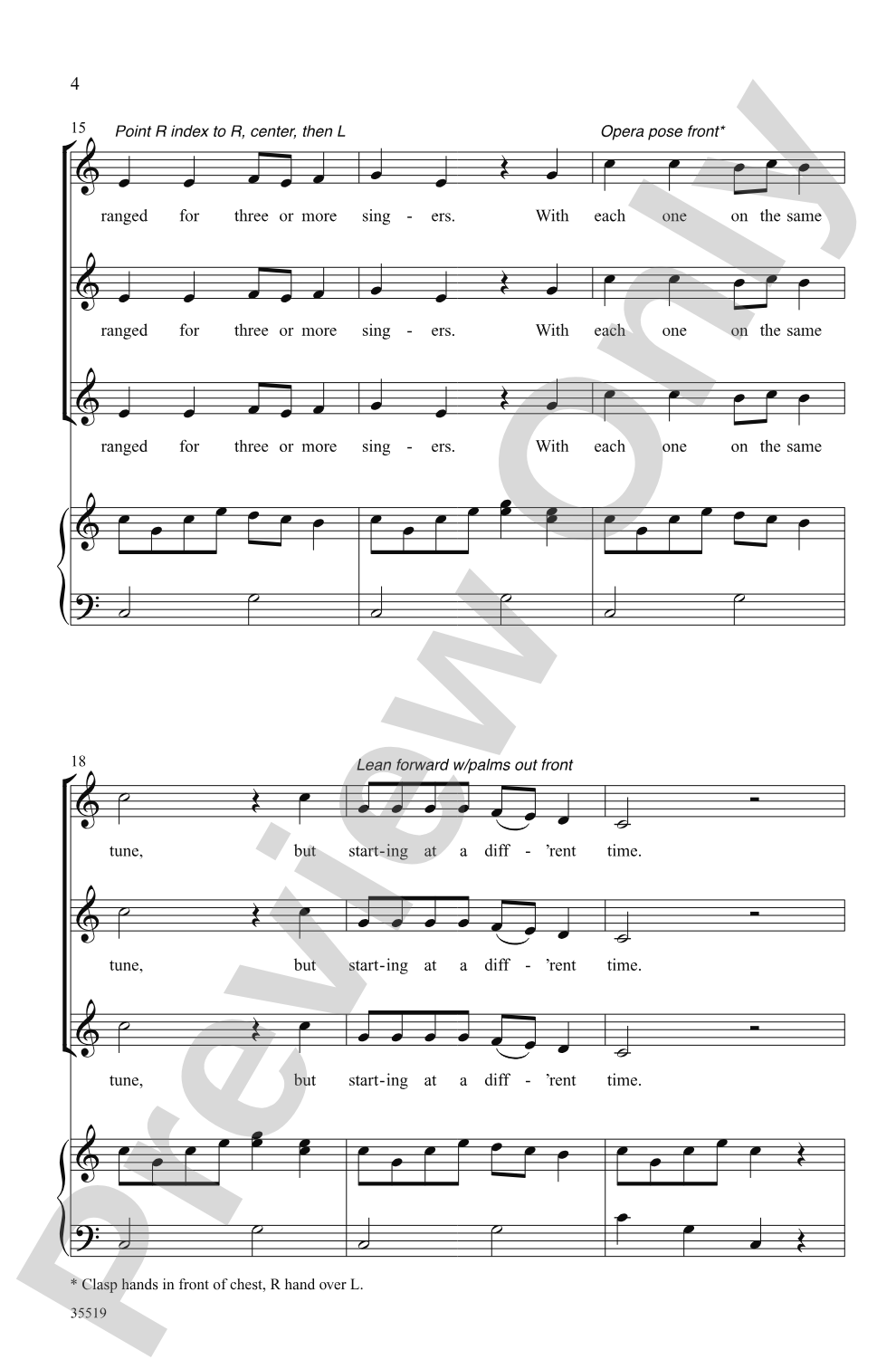
Written for any combination of 3-part voices, this special choral will teach your singers all about singing a round! Listen for a touch of the most famous round of all time in the accompaniment. Some simple staging suggestions are included in the publication. Featured on Showbiz! choral movement DVD (00-35858).


Singing A-Round: 3-Part, any combination Choral Octavo isn't in MakeMusic Cloud just yet...but it could be. Let us know you'd like to see it, and you'll help shape what comes next. In the meantime, start a free trial and dive into thousands of interactive titles your students can play along with today.
Request This Title
Tell us you want it.
Start Your Free Trial
Explore everything that's ready to play right now.
Sample Audio
1
Audio File
--:--
0:00
0:00
Sample Video
No sample videos found.
Additional Details
Series:
Alfred Choral Designs
Publisher:
Alfred Music
Page Count:
12
SKU:
00-PO-0000904
More about this title
About the Composer: Sally K. Albrecht

Sally K. Albrecht has shaped choral music education for over three decades, serving as Director of School Choral, Vocal, and Elementary Publications at Alfred Music and other major publishers. A prolific composer with more than 600 published works and 75 songbooks and musicals to her name, she has received the ASCAP Special Music Award annually since 1987 and conducted honor choirs at prestigious venues including Lincoln Center, Carnegie Hall, and The Kennedy Center.
Albrecht holds degrees from Rollins College (B.A. in Music and Theater, 1976), the University of Miami (M.A. in Drama, 1977; M.M. in Accompanying, 1979), and has taught at Oakland University, Jersey City State College, and Meredith College. Her expertise in choral movement and staging distinguishes her work in the field. A Cleveland native, she currently resides in Wake Forest, North Carolina, and serves on the Board of Trustees at Rollins College.
Why we love this
Albrecht tackles a concept many directors sidestep by making round-singing instruction feel organic rather than didactic. The touch of "Frere Jacques" woven into the accompaniment gives singers an auditory anchor while they navigate the canon form, and the included staging suggestions transform what could be a dry exercise into an engaging choral moment that holds an audience.
What to expect
Playful and pedagogical, yet musically rewarding. The canon form creates an organic interweaving of voices that builds momentum as each part enters, and the familiar echo of the world's most recognizable round lends a satisfying sense of musical tradition and shared knowledge.
Who it's for
This piece works beautifully for middle school, high school, or community choirs encountering round-singing for the first time. Any combination of three voice parts means you can cast singers flexibly based on your ensemble's needs, making it inclusive for choirs of varying sizes and ability levels.
How to get the most out of it
- Start with a brief explanation of round structure during rehearsal. Have singers listen to the recorded accompaniment first to hear how the melody sits within the fuller texture, then have them identify where each voice enters.
- Use the staging suggestions included in the score to give the piece physical dimension. Movement reinforces the staggered entries and keeps singers visually engaged with one another.
- Stagger your entrances deliberately in early rehearsals. Begin with just one part alone, add the second part at the marked entry point, then bring in the third. This builds confidence before singing all parts simultaneously.
- Balance the parts by reminding singers that the later entries must hear and follow the established melody rather than dominate it. A lighter dynamic on later entries often helps clarity.
How to use it
Program this as a concert opener or centerpiece where you want to highlight ensemble cohesion and part independence. It also serves well in a pops or family concert context where audiences enjoy recognizing the canon structure. The movement elements make it particularly effective for concert shows or choral festivals where staging is expected.
Skills your students will build
- Understanding and performing canon form and staggered melodic entries
- Maintaining independent vocal lines while listening to simultaneous parts
- Following conductor cues across multiple voice entries
- Coordinating singing with stage movement and blocking
- Recognizing and responding to melodic phrases in a three-part texture