

Sing with Joy!: 2-Part Choral Octavo
Music by Lowell Mason / arr. Donald Moore
Item: 00-PO-0003805
$2.25
Minimum order quantity: 20 copies
Pickup currently not available
Description
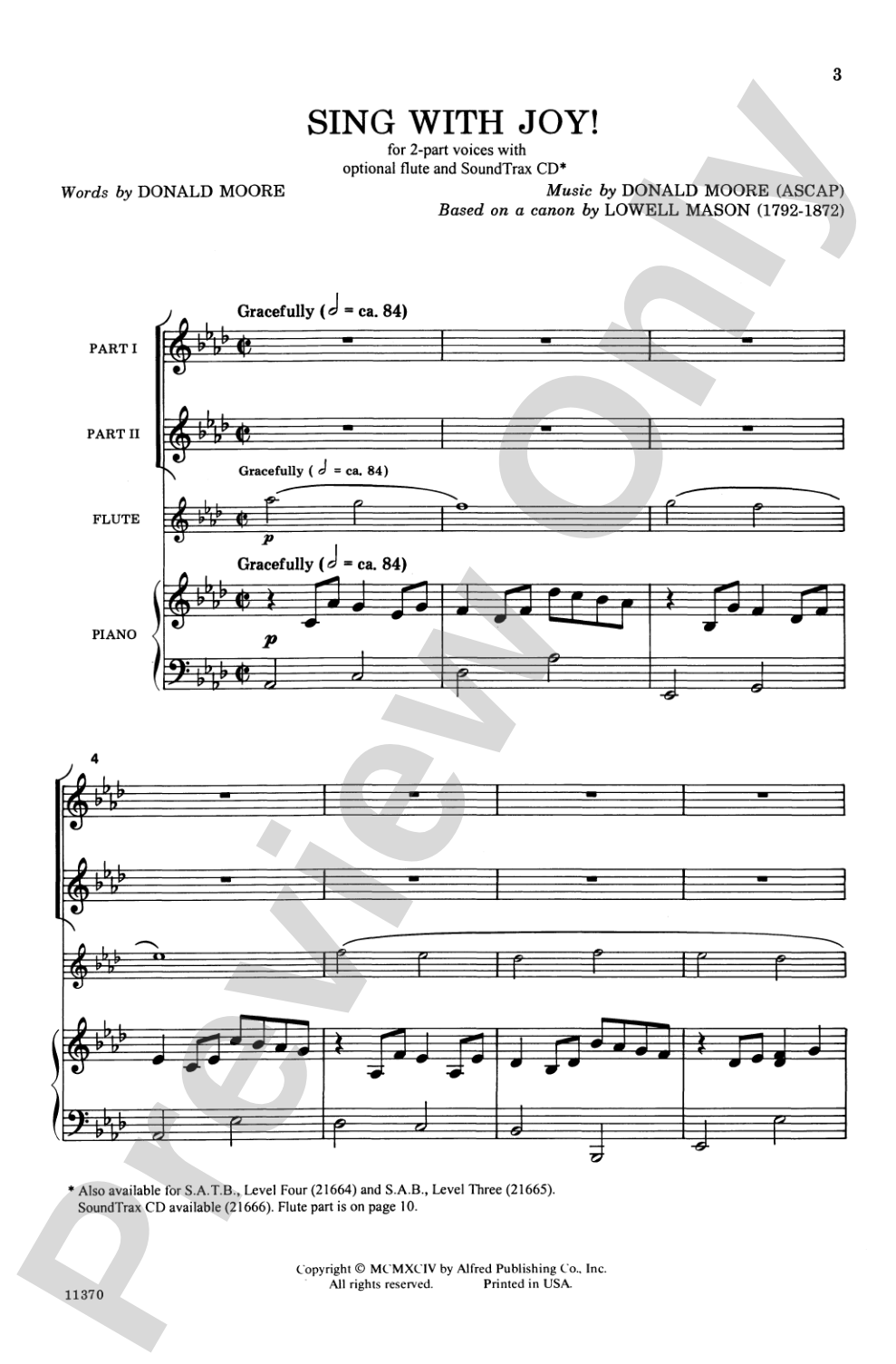
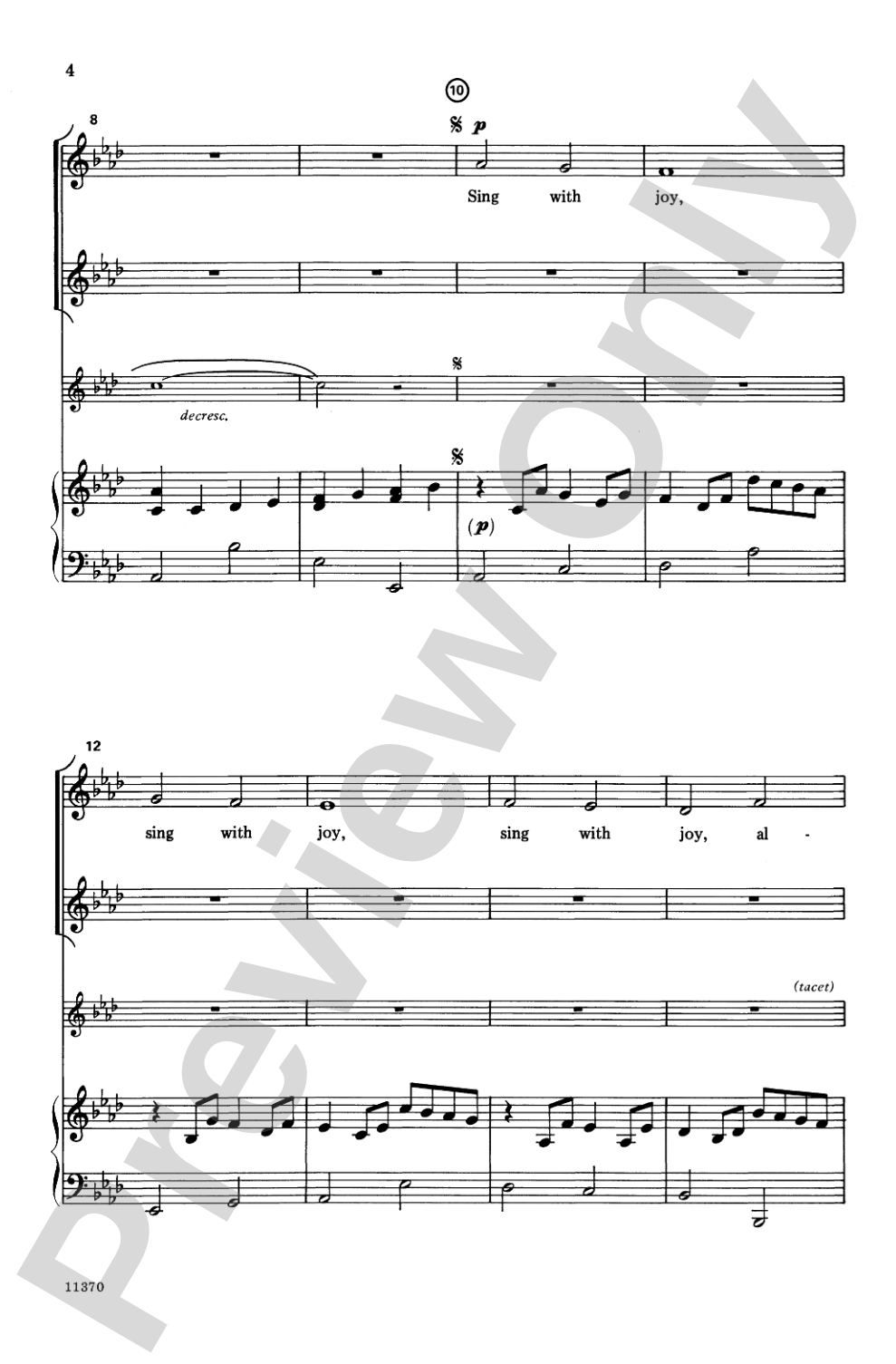
Don Moore has crafted a superb 2-part choral work based on a canon by Lowell Mason (1792-1872), often called the "father of music education in America." (Wouldn't this be great for "Music In Our Schools Month?") SING WITH JOY! is a follow up to Don's highly successful Simply Alleluia. The optional flute acts as a third "voice" in the canon. Perfect for young choirs just learning part singing. Suitable for Christmas use, too.


Sing with Joy!: 2-Part Choral Octavo isn't in MakeMusic Cloud just yet...but it could be. Let us know you'd like to see it, and you'll help shape what comes next. In the meantime, start a free trial and dive into thousands of interactive titles your students can play along with today.
Request This Title
Tell us you want it.
Start Your Free Trial
Explore everything that's ready to play right now.
Sample Audio
1
Audio File
--:--
0:00
0:00
Sample Video
No sample videos found.
Additional Details
Series:
Alfred Archive Edition: Alfred Choral Designs
Publisher:
Alfred Music
Page Count:
12
SKU:
00-PO-0003805
Instrumentation:
Opt. Flute
More about this title
About the Composer: Lowell Mason
Lowell Mason (1792-1872) fundamentally shaped music education in America through his conviction that singing belonged in every schoolroom. A composer, conductor, and tireless advocate, Mason developed accessible vocal music for young singers and created pedagogical frameworks that positioned music as essential rather than ornamental in public education. His legacy extends far beyond his 1,200+ compositions; he established the Boston Academy of Music, championed music teacher training, and demonstrated that quality music and educational accessibility were not opposing forces.
Why we love this
Don Moore's arrangement honors Mason's pedagogical genius by taking a canon concept and structuring it for singers still developing part independence. The optional flute line adds textural interest without complicating the choral foundation, and the piece works equally well in a spring concert or a December program, giving you real scheduling flexibility. This is the kind of repertoire that builds confidence in young singers because it sounds fuller and more sophisticated than its technical demands suggest.
What to expect
The piece radiates warmth and simplicity, with the overlapping canon lines creating gentle rhythmic interest. There is an earnestness to the text and music that feels timeless, rooted in the American pedagogical tradition yet entirely fresh in performance.
Who it's for
Young choirs transitioning from unison to part singing will find this piece approachable yet rewarding. Directors seeking repertoire that teaches part independence without overwhelming students will appreciate Moore's craftsmanship and Mason's enduring melodic gift.
How to get the most out of it
- Introduce the canon concept by having both parts learn the entire melody first, then divide and overlap. This demystifies the form and helps singers understand their role within the larger texture.
- If using the optional flute part, let it enter after the choir has established both parts securely. The flute then functions as a reinforcing third voice rather than a competing element.
- Shape the piece with gentle dynamic contours rather than singing it uniformly. Young choirs benefit from the clarity that comes with slight volume changes across phrases.
- Balance the parts by occasionally having singers stand or sit based on their voice line during rehearsal; this spatial separation clarifies who is singing what and strengthens individual part security.
How to use it
Include this during Music In Our Schools Month celebrations to honor both Mason's educational legacy and your students' developing artistry. Its dual seasonal applicability means you can schedule it confidently in either spring or winter programs without feeling forced into a theme.
Skills your students will build
- Part independence and part singing in 2-part canon texture
- Maintaining a steady melodic line while listening to a different line simultaneously
- Canon form recognition and structural listening
- Breath control and phrasing in a sacred context