
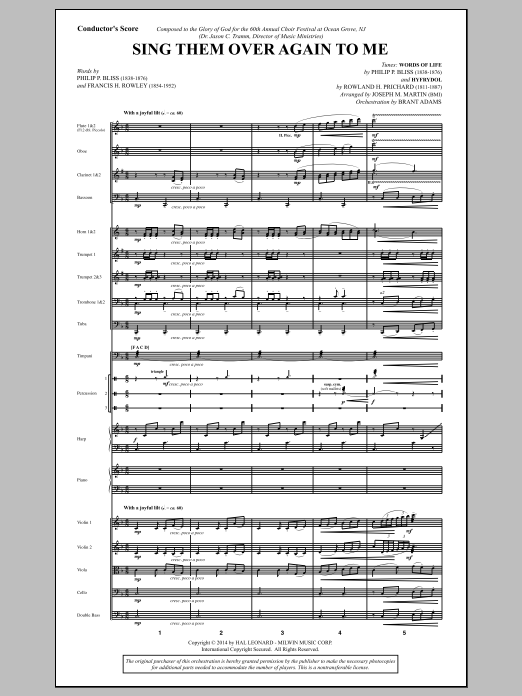

Sing Them Over Again to Me: Choral Instrumental Pak
As performed by Philip P. Bliss / Arranged by Joseph M. Martin
Item: 35-PK00301000
$75.00
Pickup currently not available
Buy Extra Parts (Digital PDF Download)
Parts Added to Cart!
Description
Uses: General, Concert, Revival, Missions, Evangelism
Scripture: John 1:1-2; II Timothy 3:16-17
Take a step back in time and experience the joy and nostalgia of a great hymn of the faith! Sweeping across the heartstrings, this lilting arrangement is
truly captivating! The accompaniment echoes the old-style revival piano playing that is our heritage of sacred song. A tour de force for the choir, the writing offers each section a chance to shine, and the ending "Amen" moment will give a satisfying conclusion to this winner!


Sing Them Over Again to Me: Choral Instrumental Pak isn't in MakeMusic Cloud just yet...but it could be. Let us know you'd like to see it, and you'll help shape what comes next. In the meantime, start a free trial and dive into thousands of interactive titles your students can play along with today.
Request This Title
Tell us you want it.
Start Your Free Trial
Explore everything that's ready to play right now.
Sample Audio
No sample audio found.
Sample Video
No sample videos found.
Additional Details
Publisher:
Hal Leonard
SKU:
35-PK00301000
More about this title
About the Artist: Philip P. Bliss
Philip P. Bliss (1838-1876) shaped American sacred music during the nineteenth century as a composer, hymn writer, and evangelist. His melodies combined accessibility with emotional depth, making them natural choices for revival meetings and congregational singing. Bliss wrote over 150 hymns and gospel songs, many of which remain standard repertoire in churches today.
Why we love this
Joseph M. Martin's arrangement strips away nothing essential from Bliss's beloved tune while adding sophisticated harmonic color and textural variety that keeps singers engaged throughout. The revival piano idiom grounds the piece in authentic historical context, and the generous space given to each voice part means even smaller choirs can feel the architecture of the arrangement. That final Amen provides real dramatic closure, turning what could be a simple hymn into a concert moment worth programming.
What to expect
Warmth and sincerity flow through this arrangement like candlelight in a nineteenth-century chapel. The melody moves with grace and gentle momentum while the piano textures evoke decades of revivals and testimony singing, creating an emotional landscape that feels both nostalgic and alive.
Who it's for
Church choirs and festival ensembles seeking meaningful repertoire rooted in sacred tradition will find immediate connection here. Directors working with singers of moderate ability can trust that Martin's arrangement supports their voices while offering enough musical substance to engage more experienced choirs.
How to get the most out of it
- Lean into the lilting character of the melody; resist the urge to make it too stately. The piece thrives on forward motion and rhythmic buoyancy.
- Balance the accompaniment so the old-style piano figures enhance rather than overshadow the vocal lines. These figures are commentary, not competition.
- Shape the harmonic movement in the inner voices. Sopranos and altos carry the primary tune, but tenors and basses have interesting counter-motion that adds richness when heard clearly.
- Prepare the final Amen with deliberate control. This moment needs space and weight to land as the satisfying conclusion it promises.
How to use it
This works brilliantly as a bridge between contemporary service music and classical hymn arrangements, making it ideal for mixed concerts that span centuries of sacred tradition. Position it where you need a moment of genuine connection before or after more complex repertoire, or use it as the centerpiece of a revival or missions-themed program.
Skills your students will build
- Singing in four-part harmony with independent voice leading
- Responding to stylistic context in sacred music (understanding revival idiom)
- Balancing choir with accompaniment while maintaining musical independence
- Shaping phrase endings with sensitivity and control
- Interpreting harmonic color across different voice combinations