
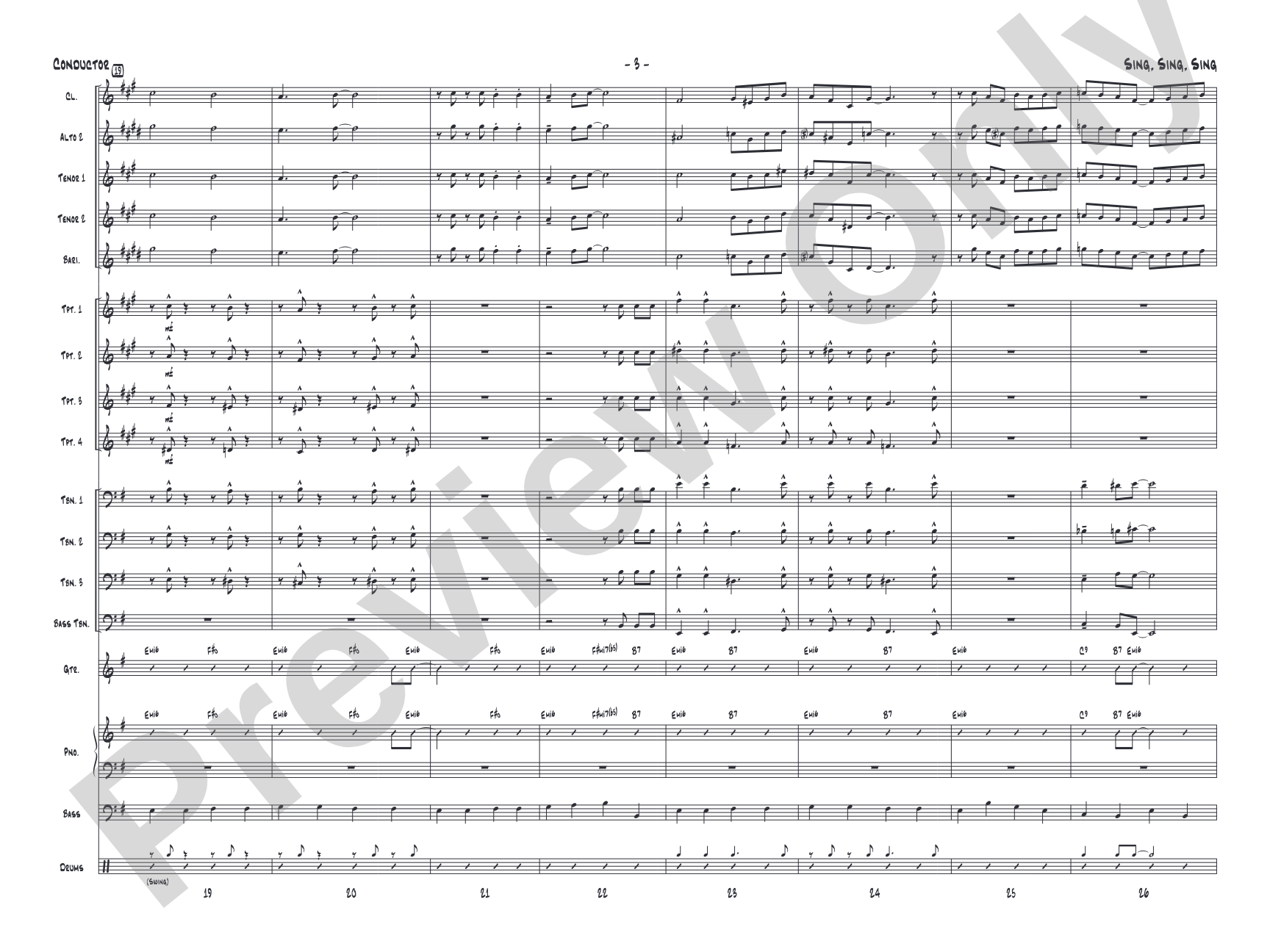
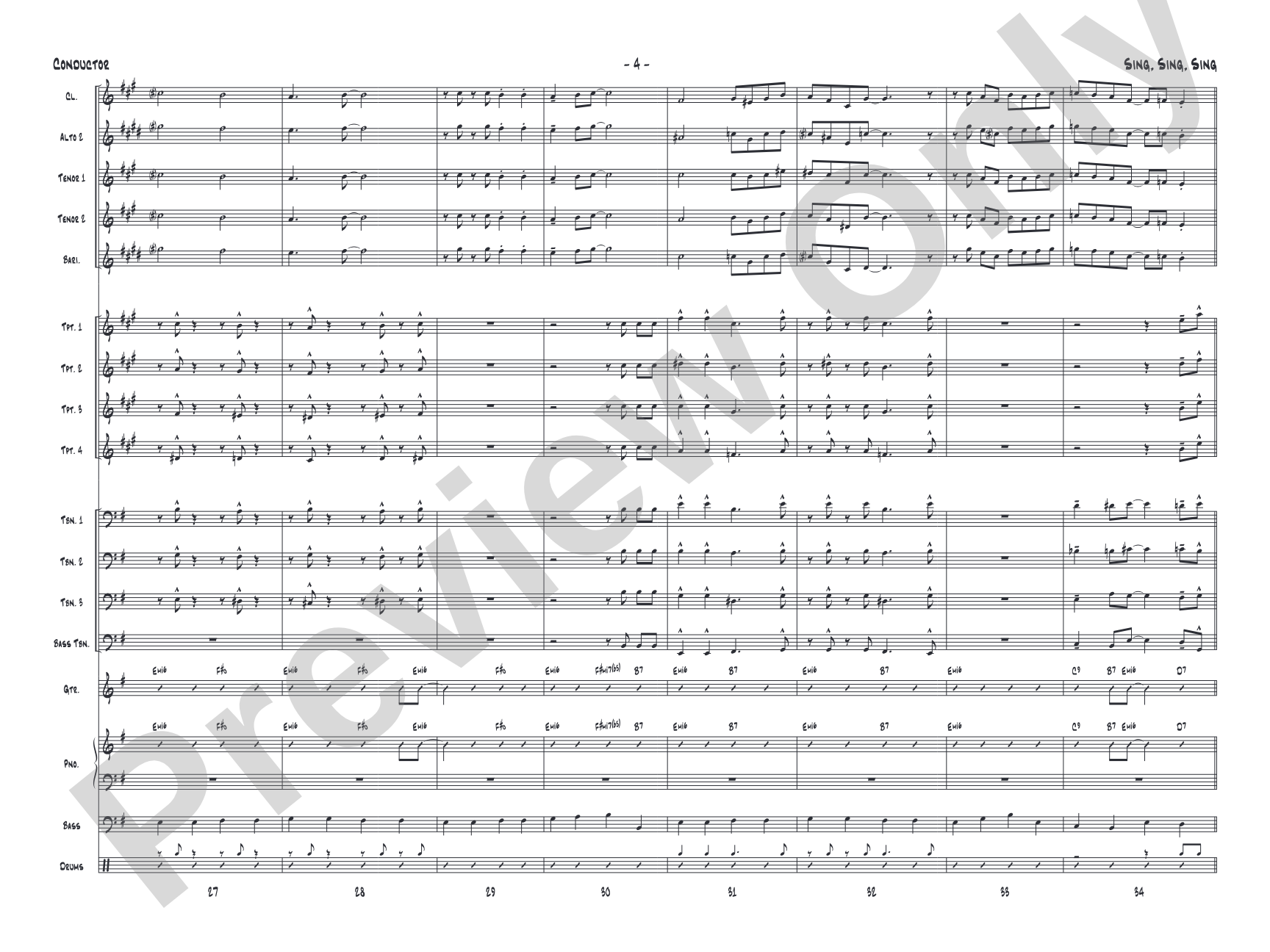
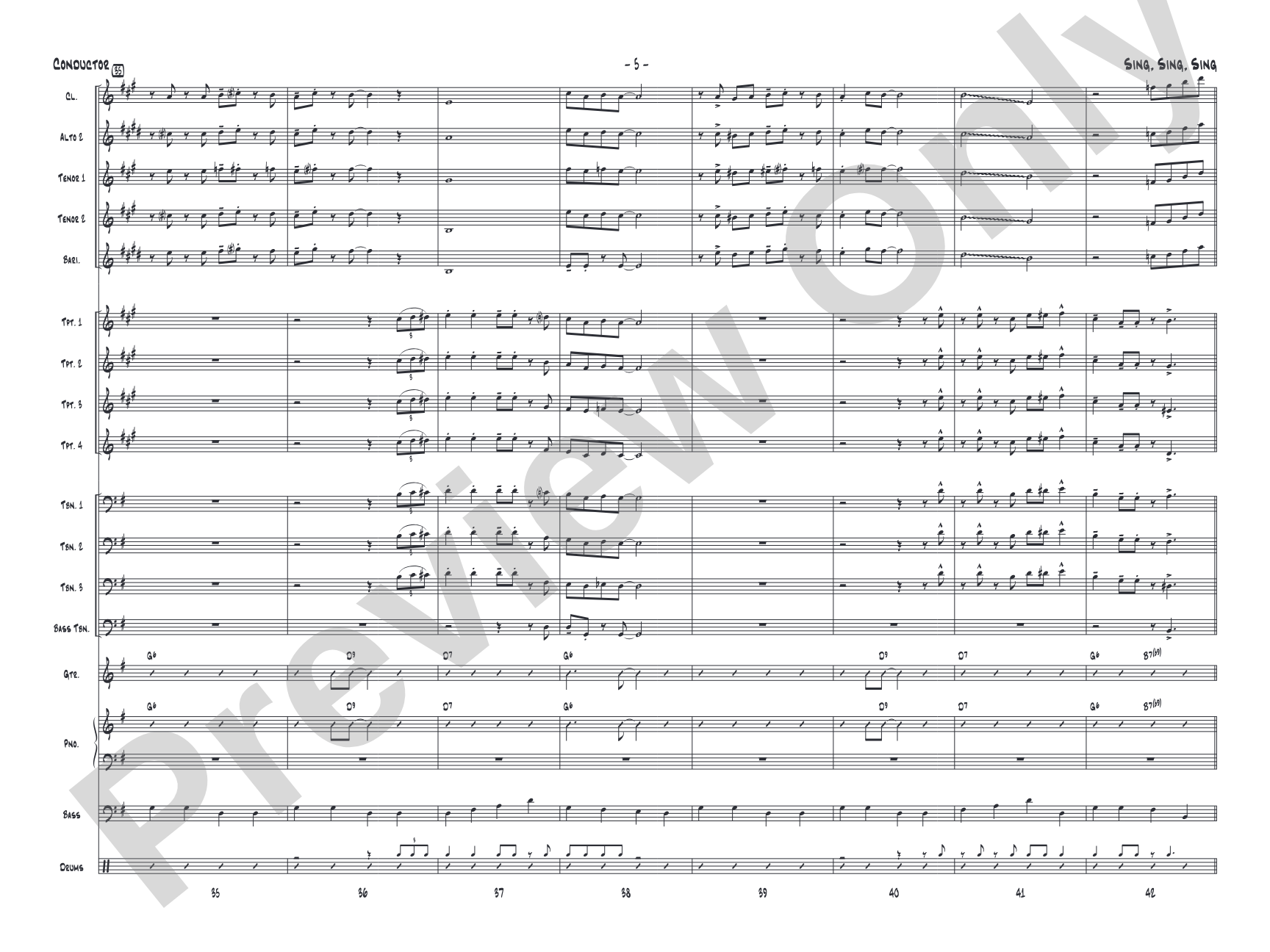
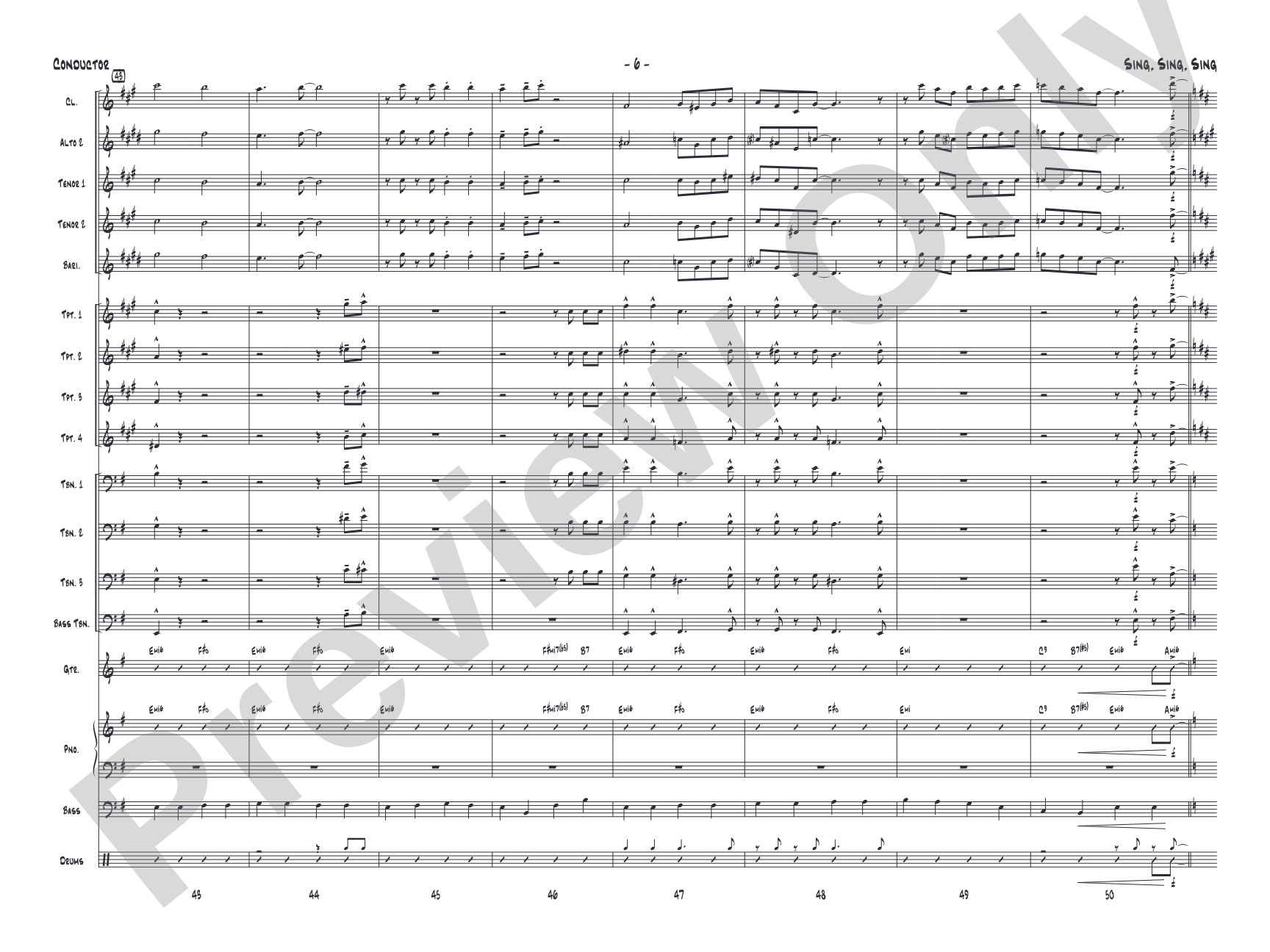
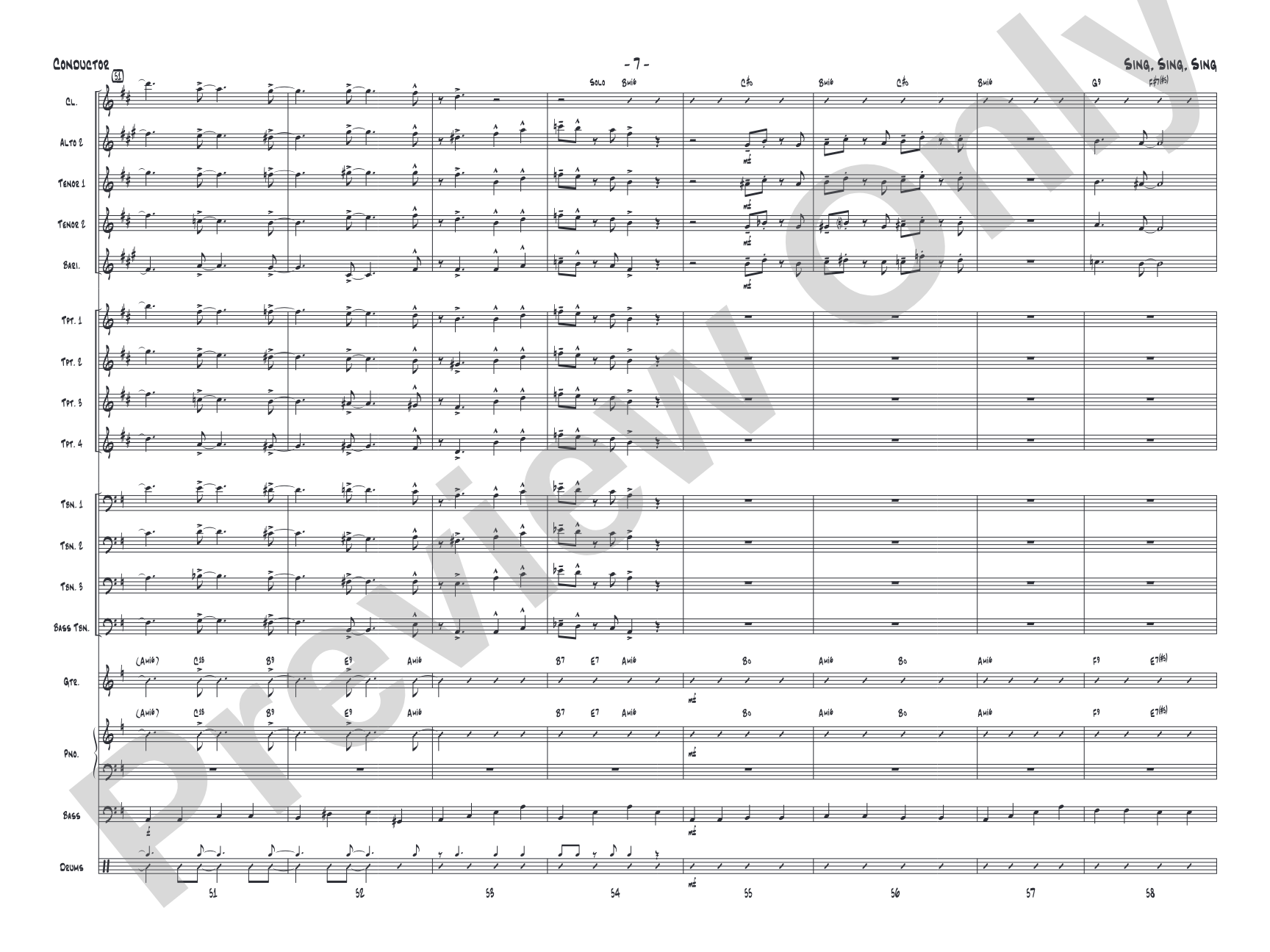
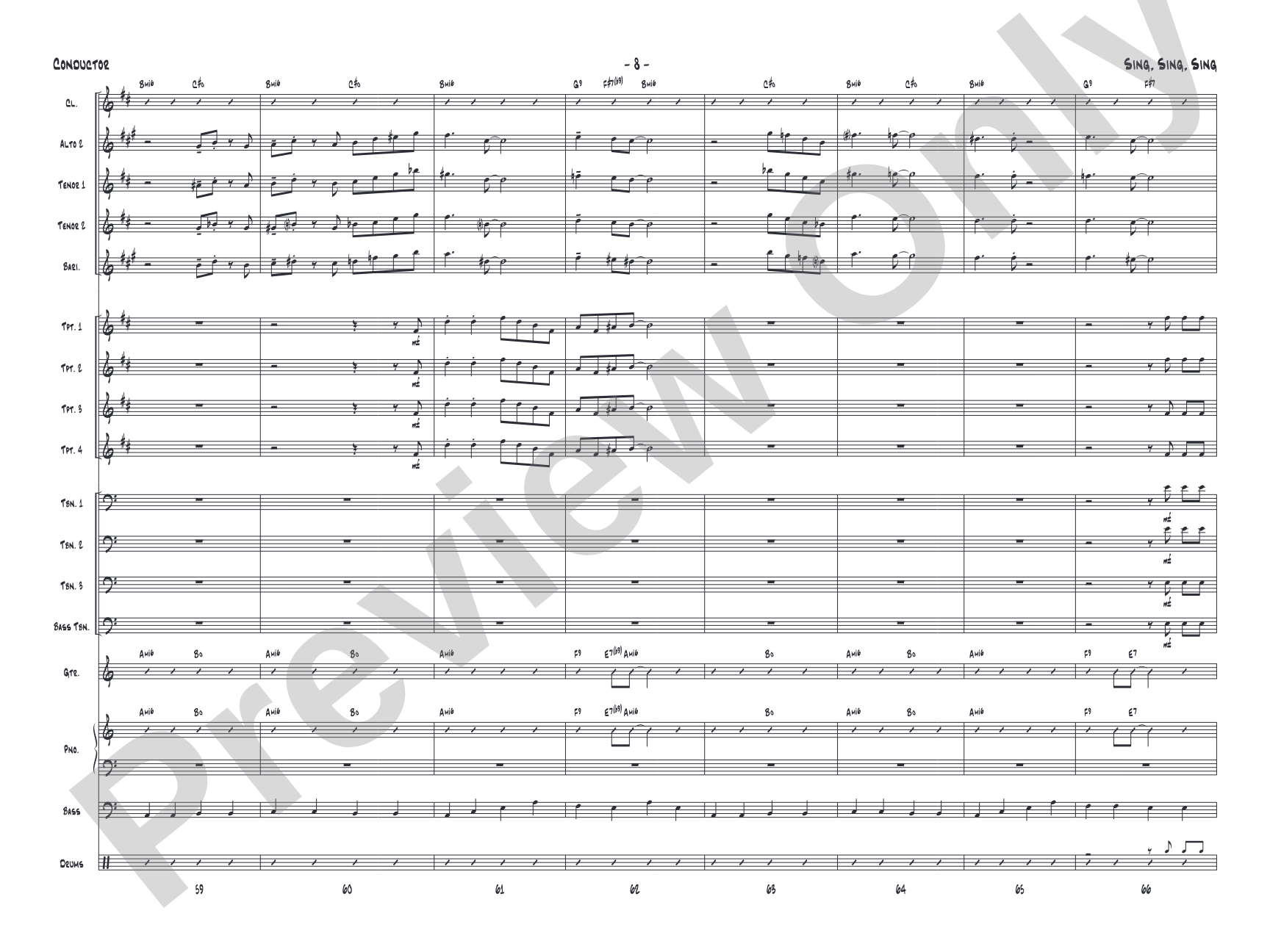
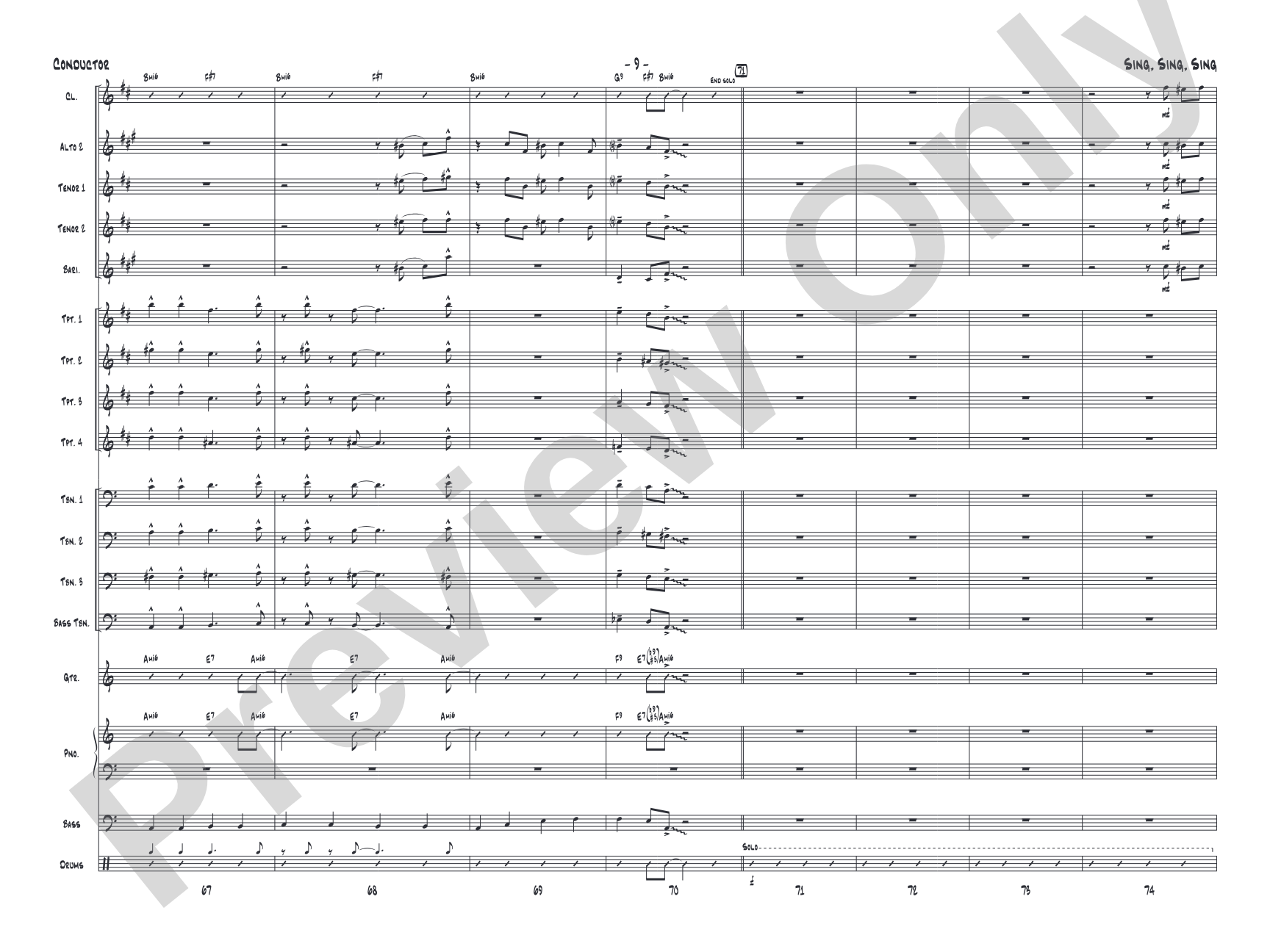
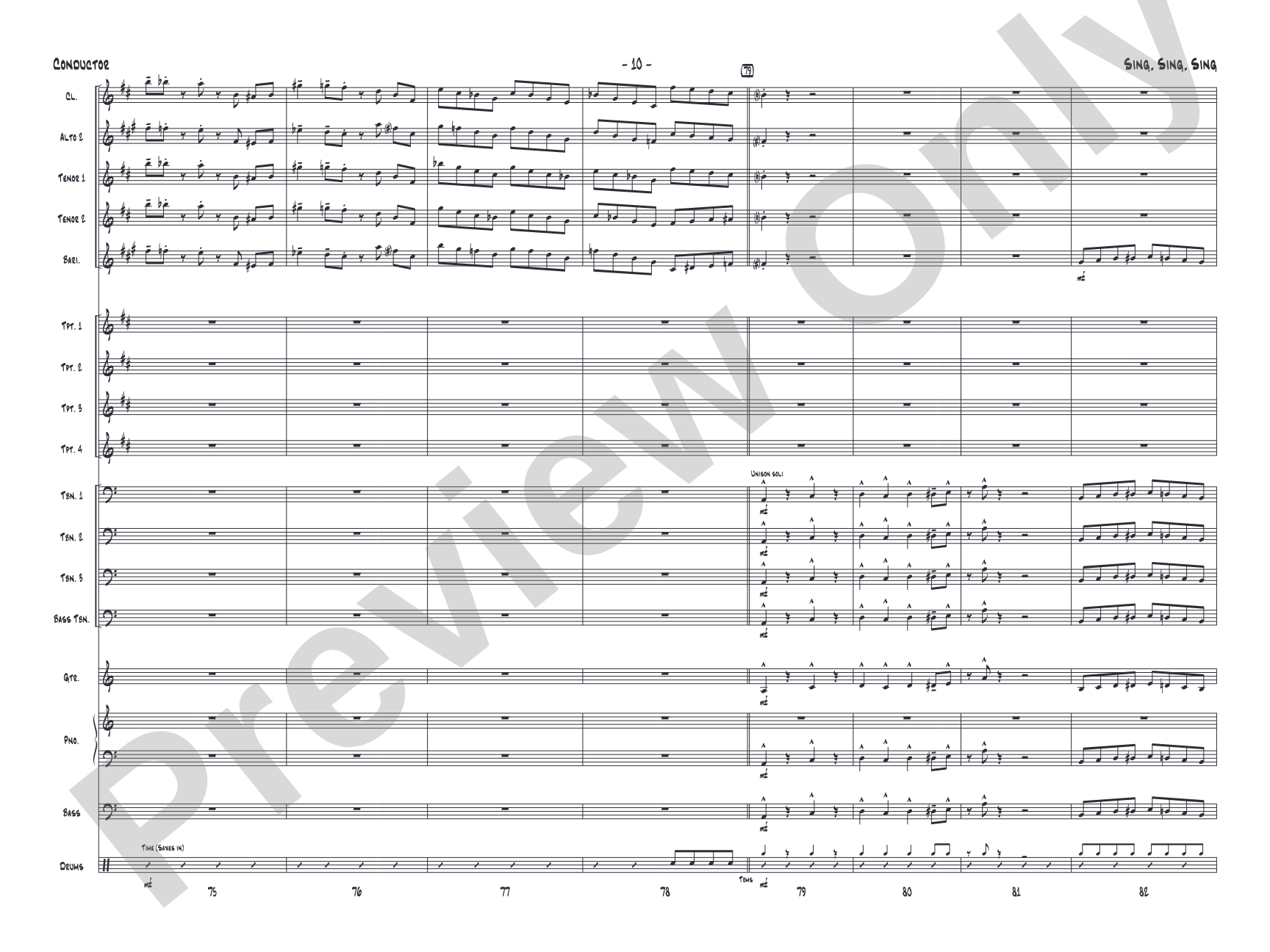
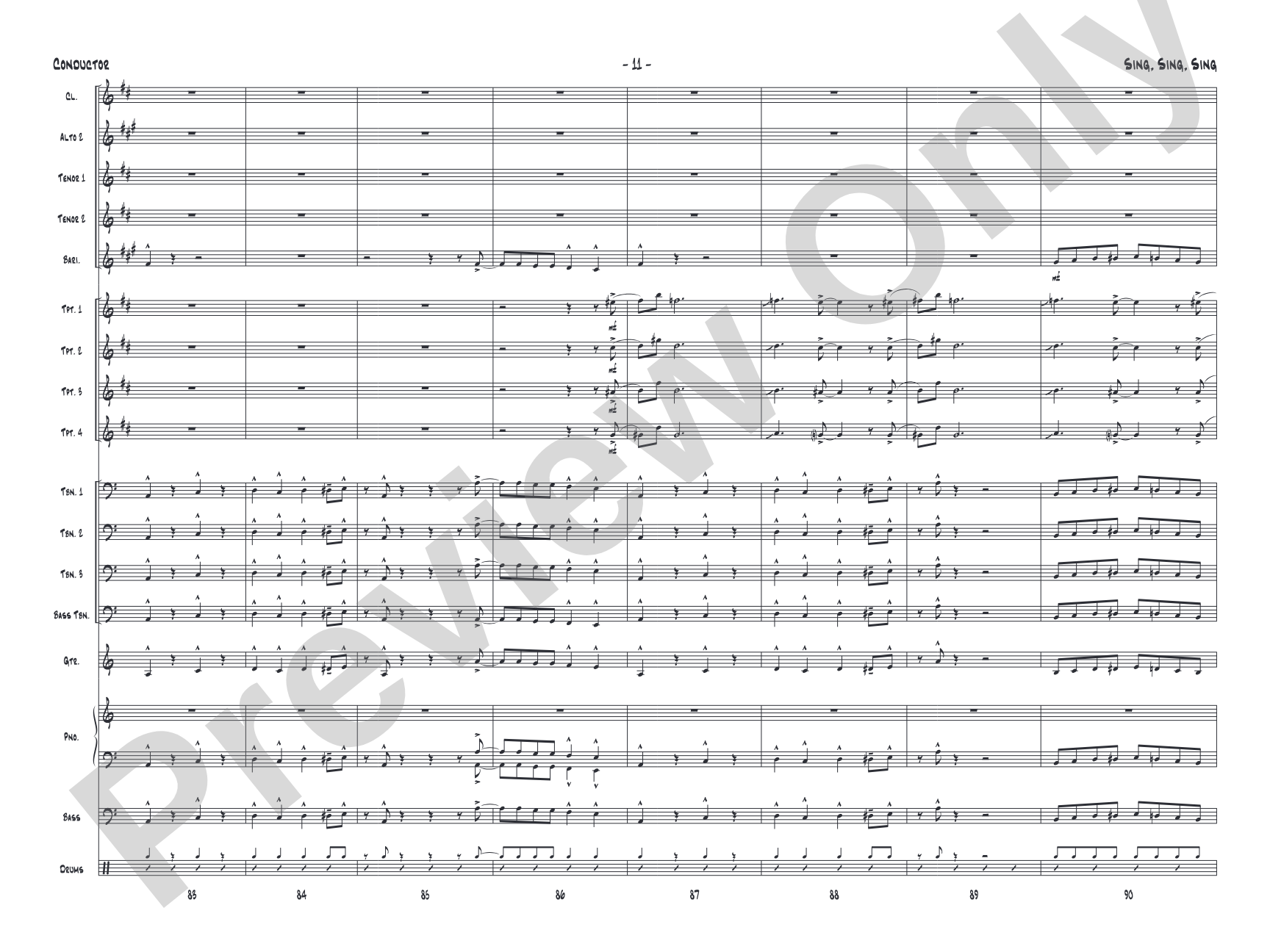
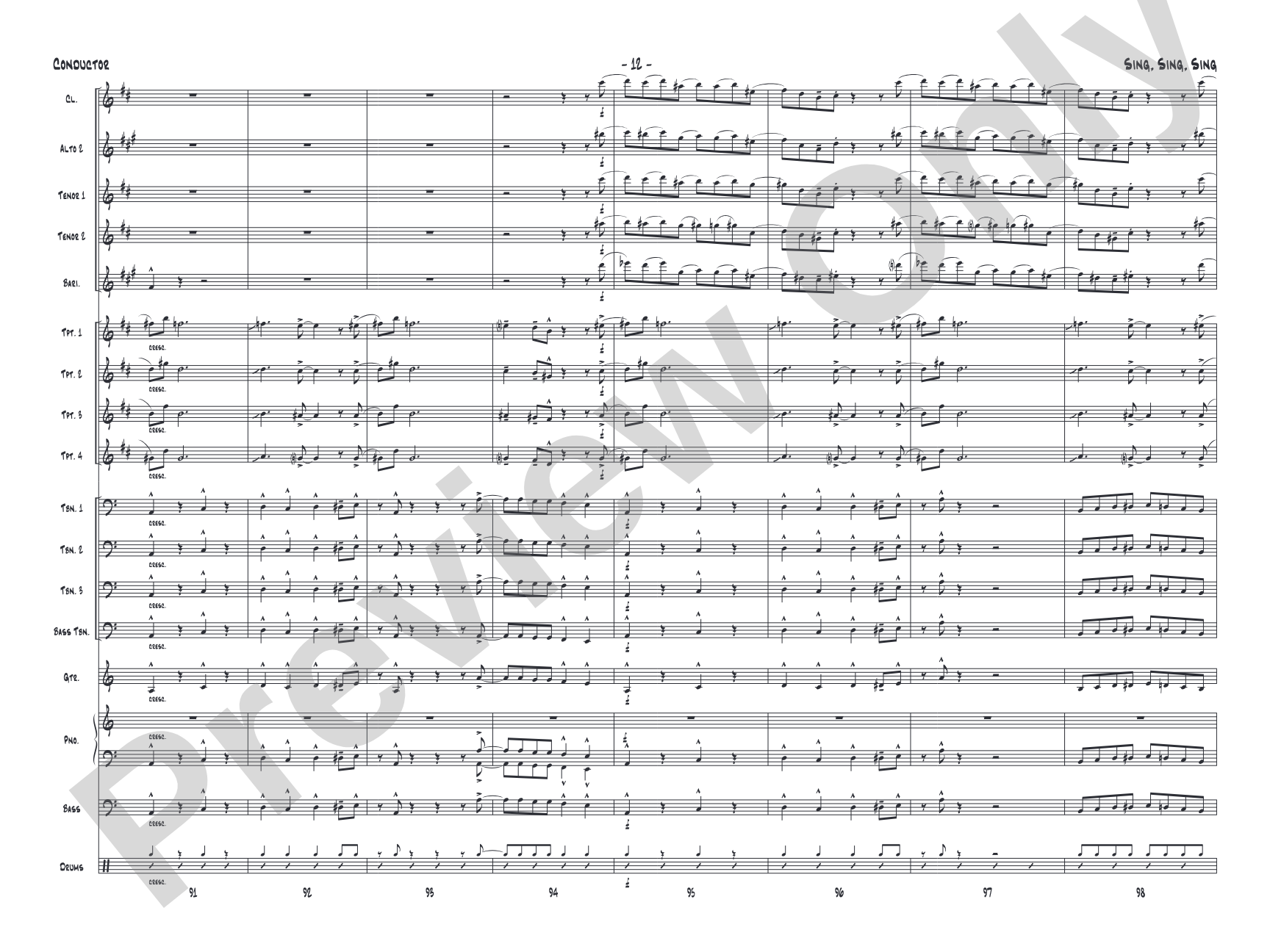
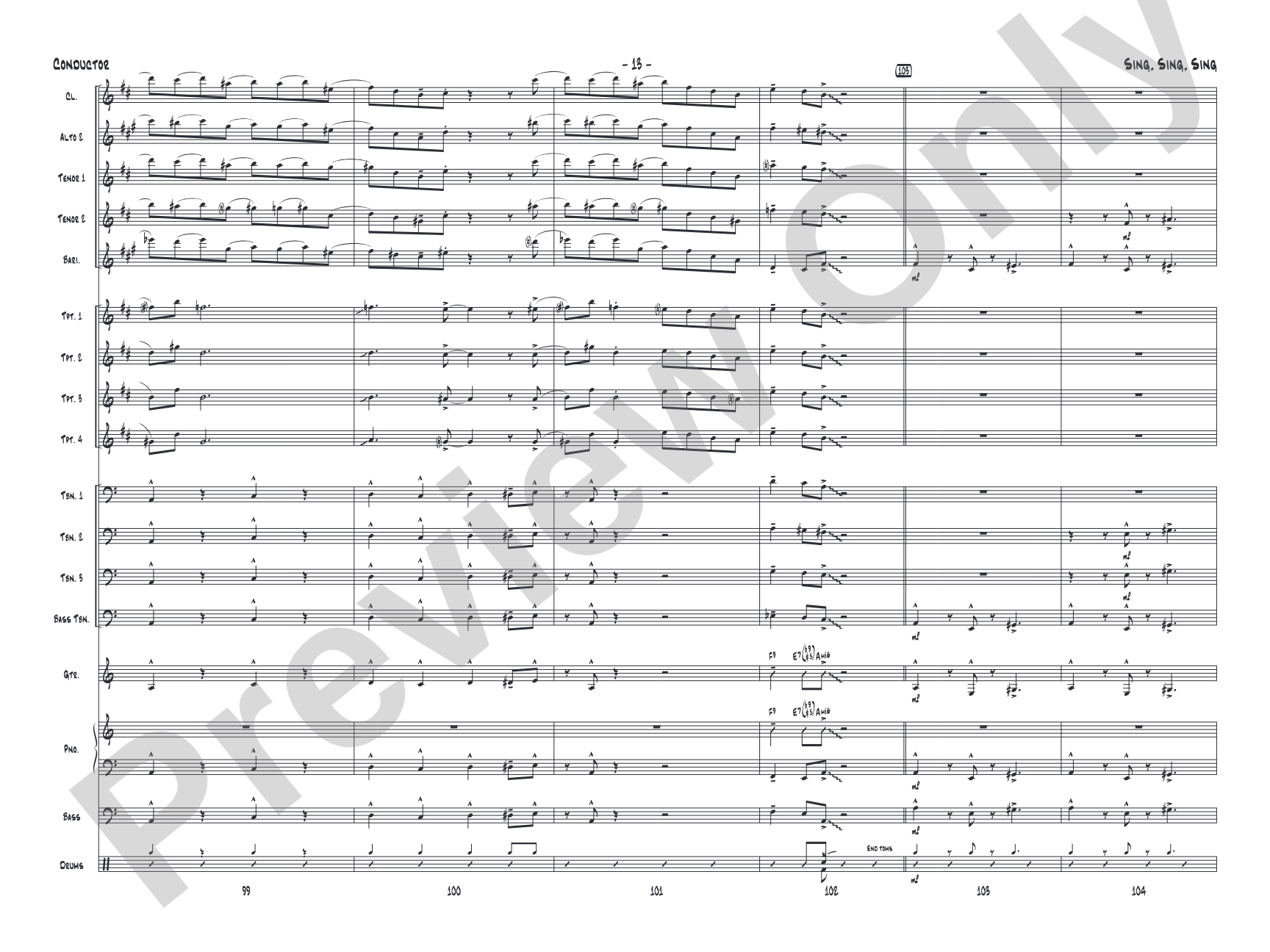
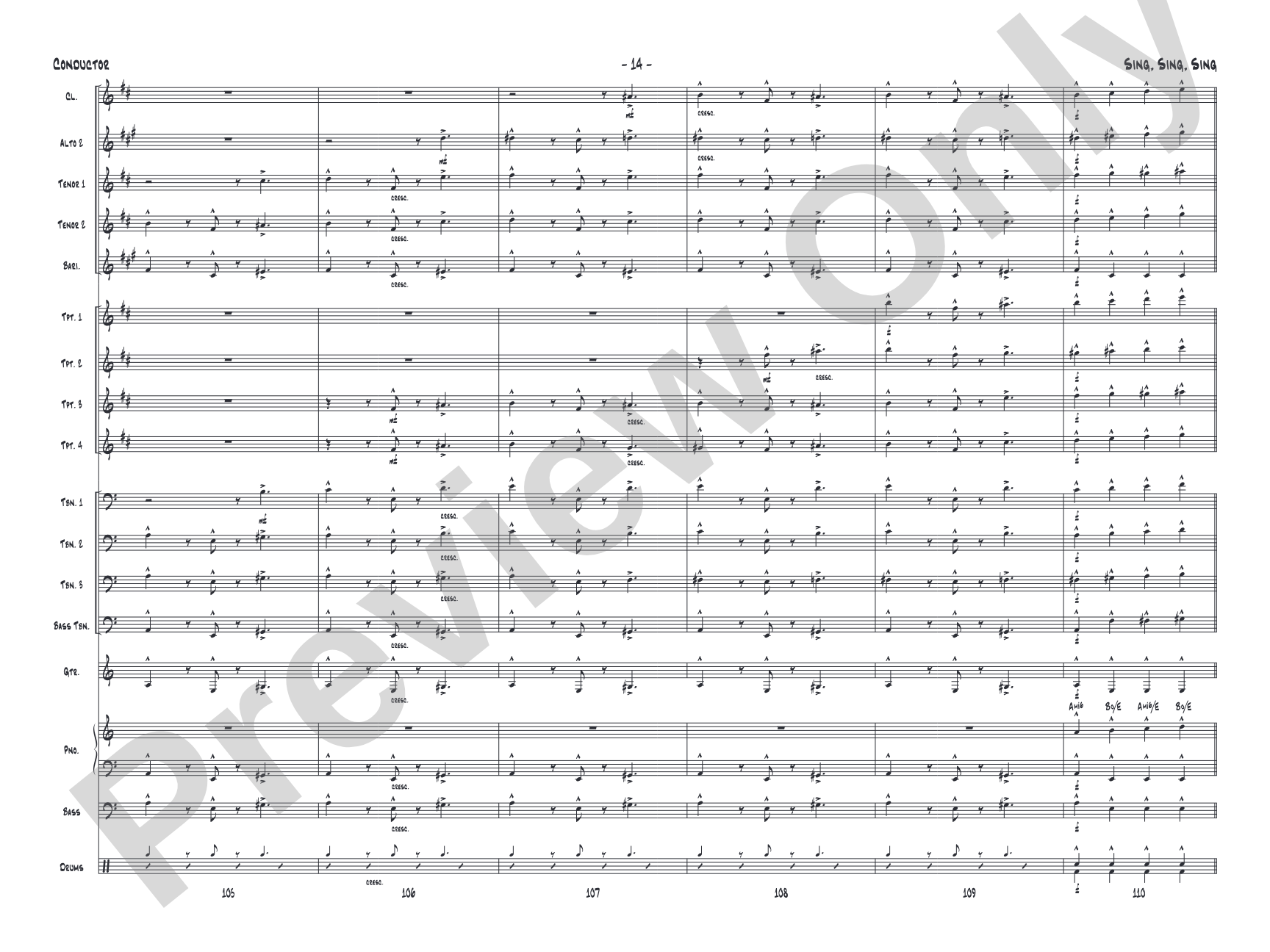
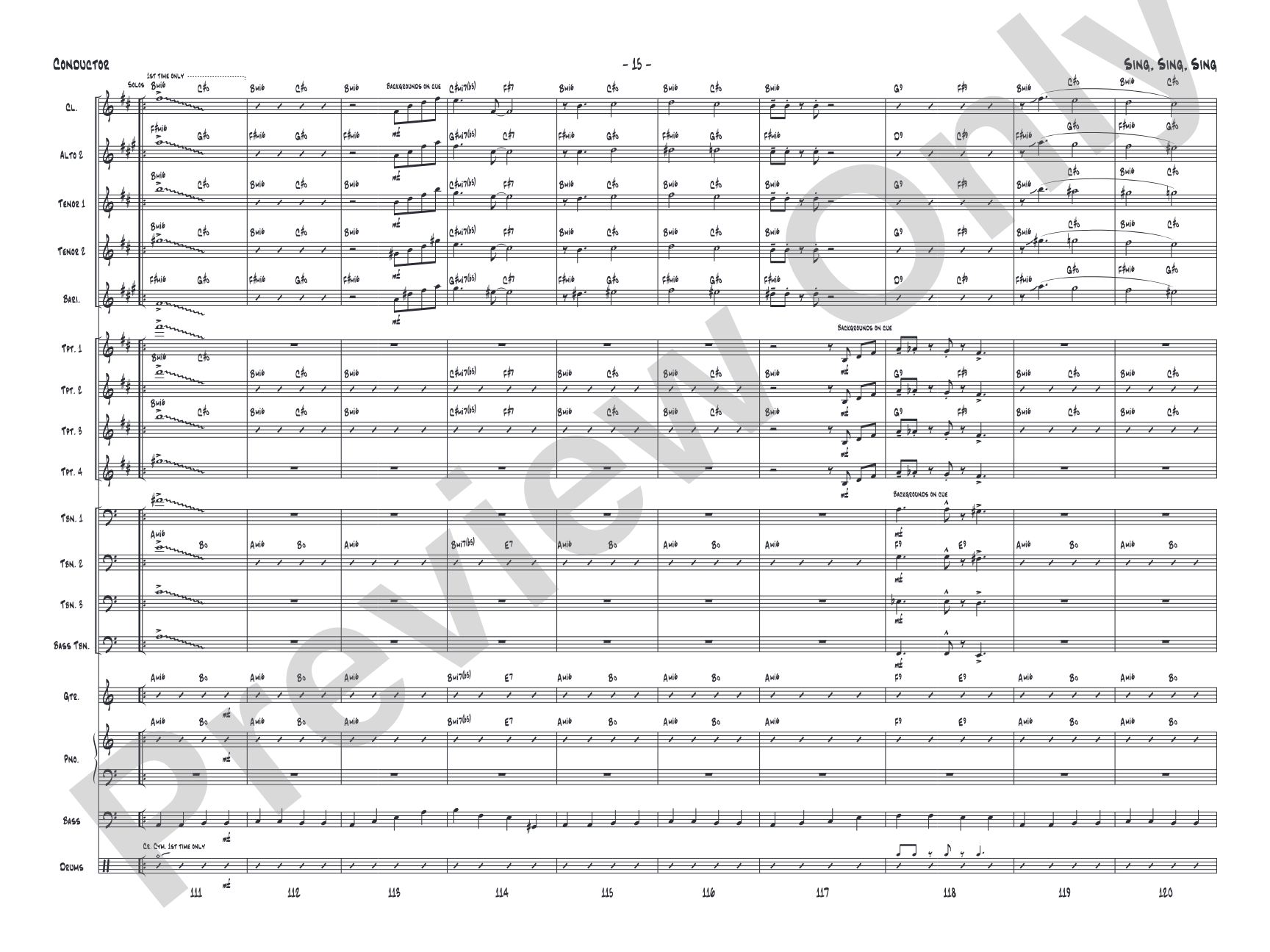
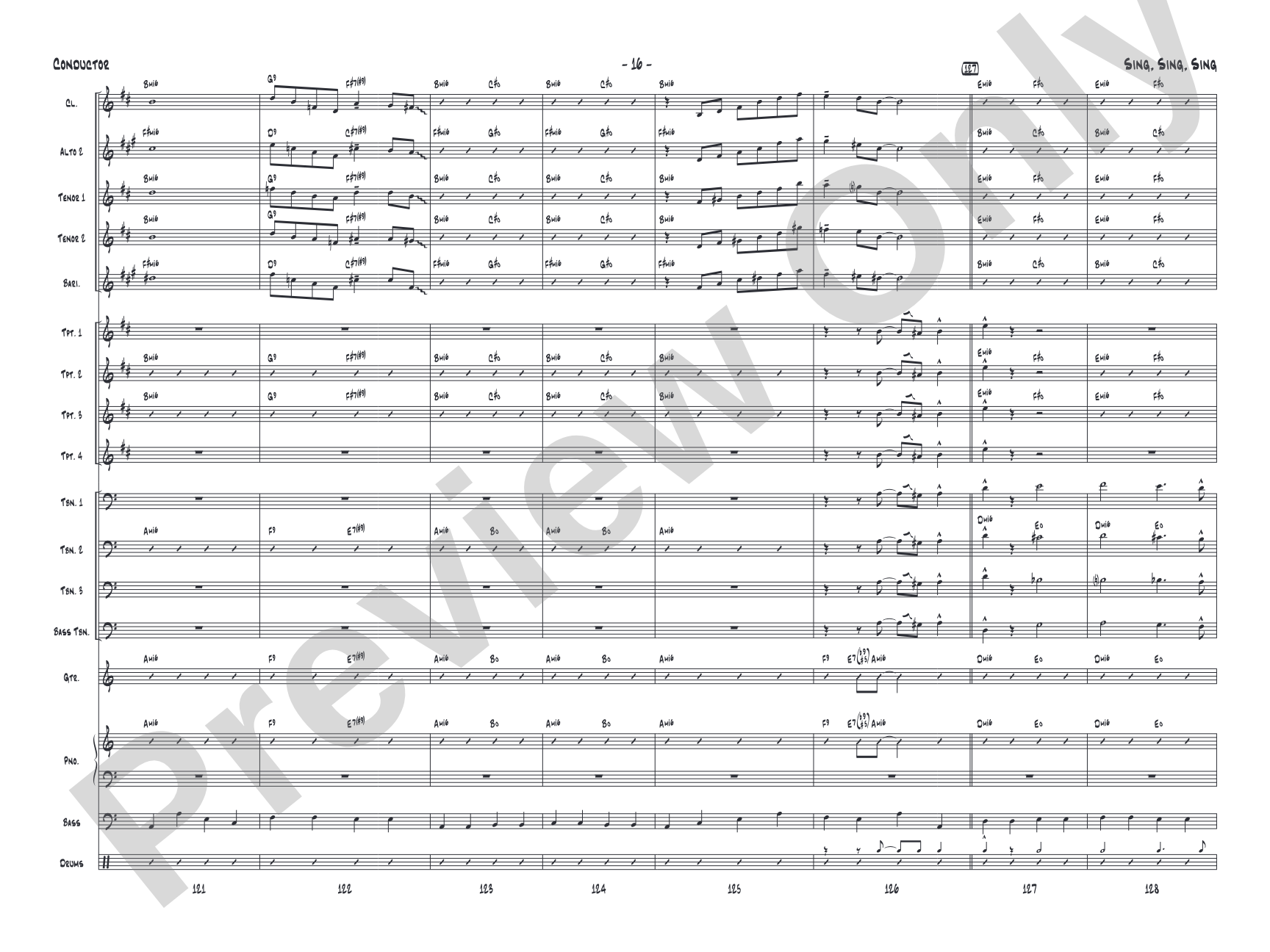
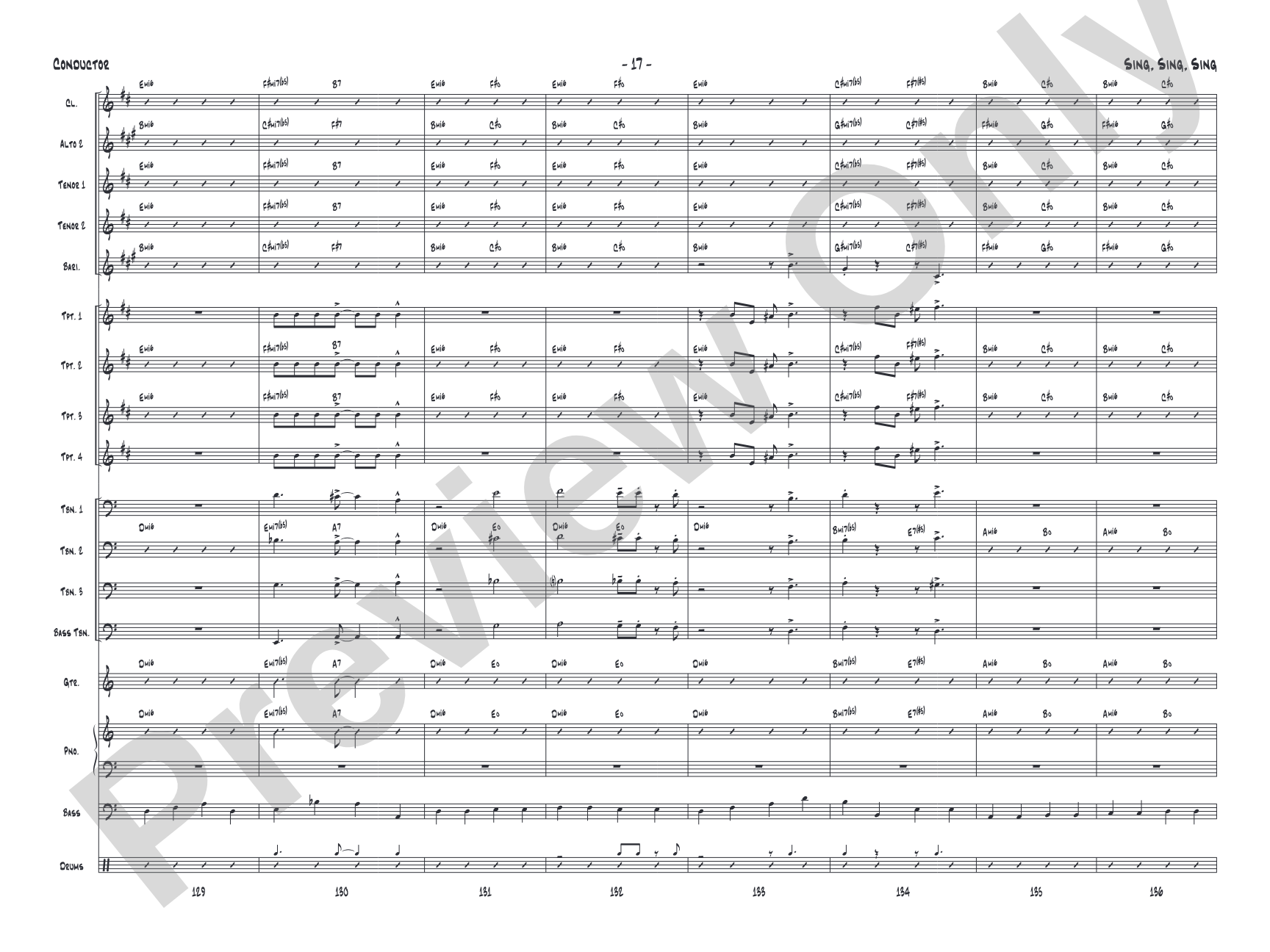
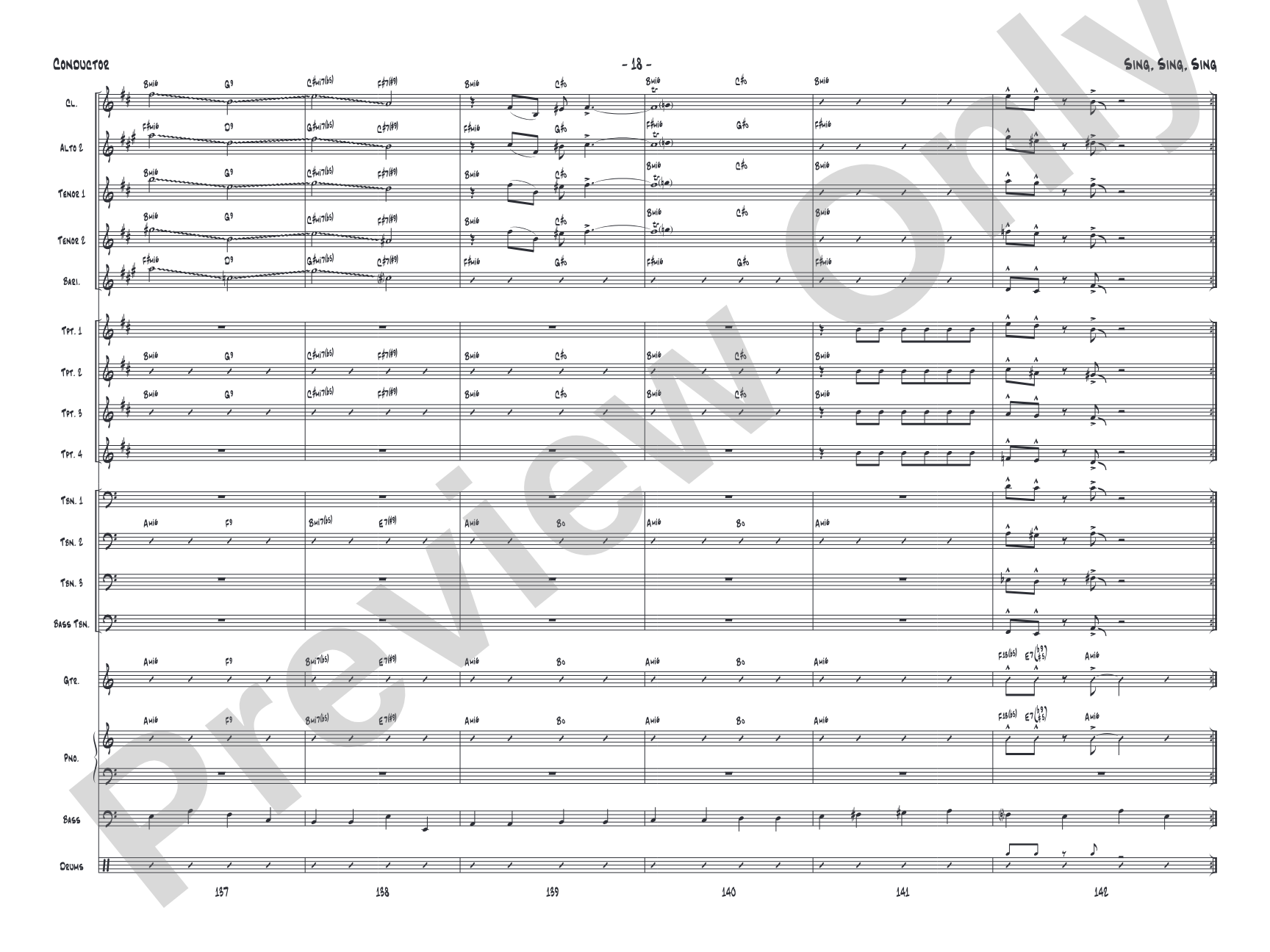
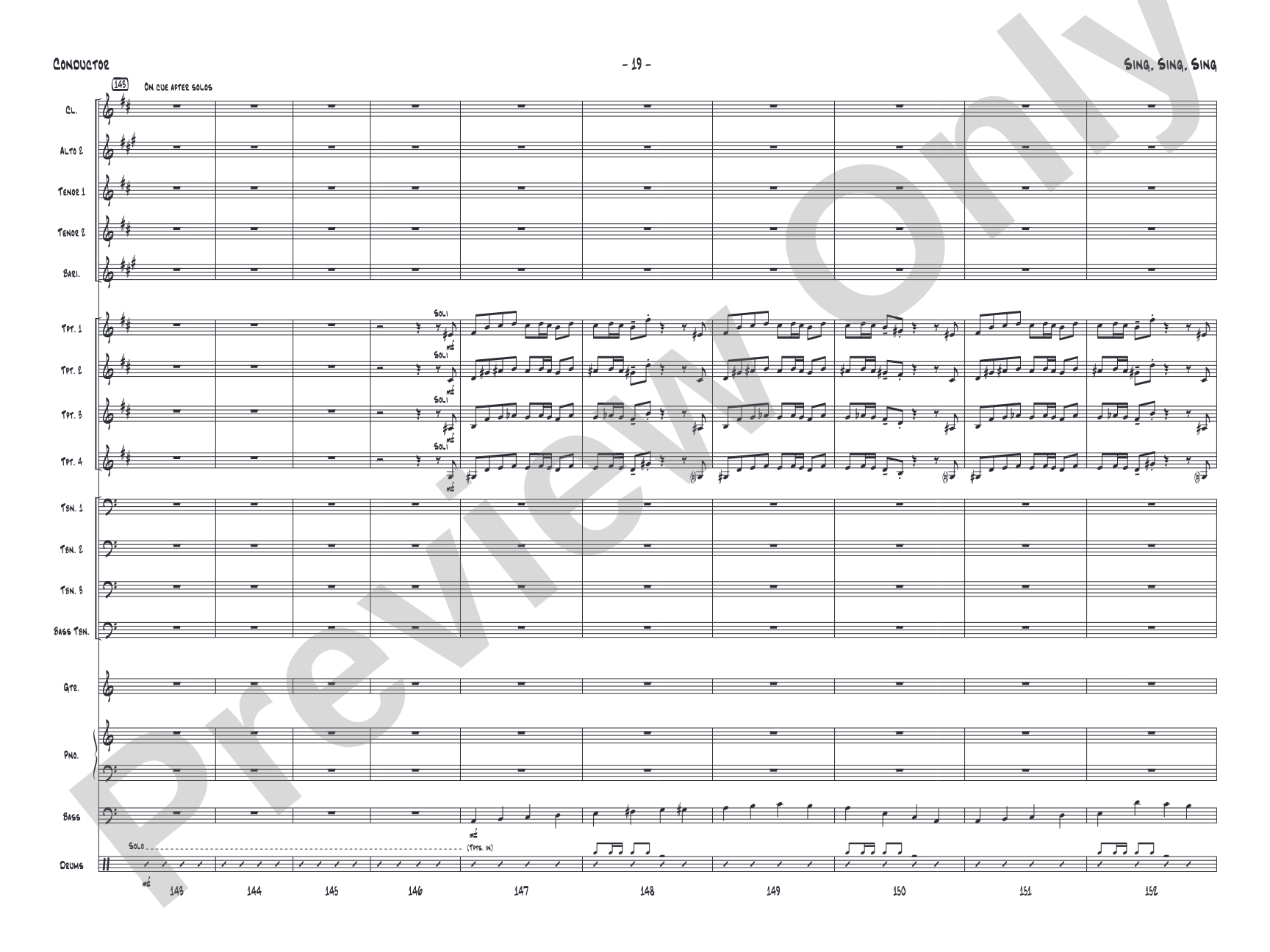
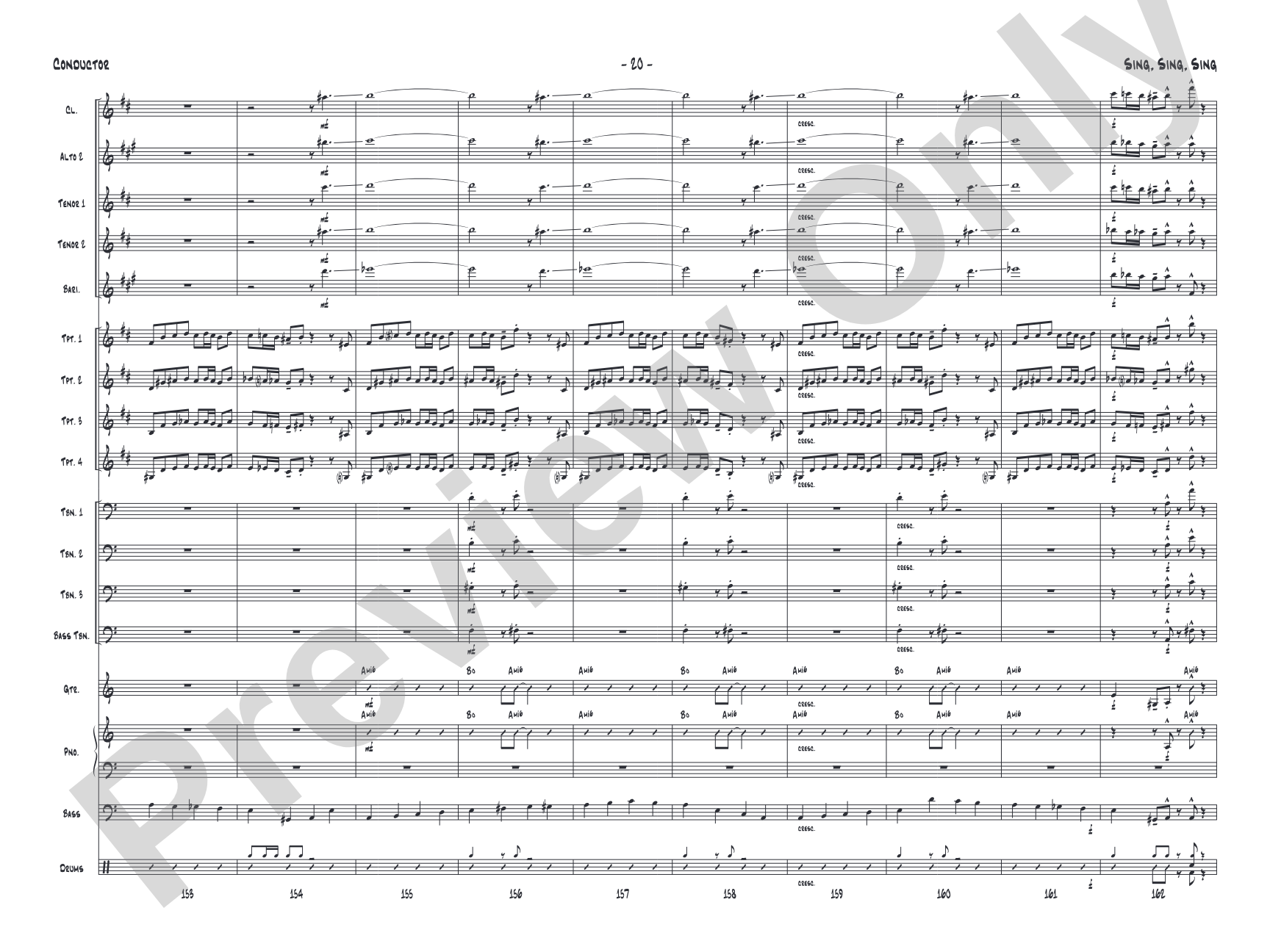
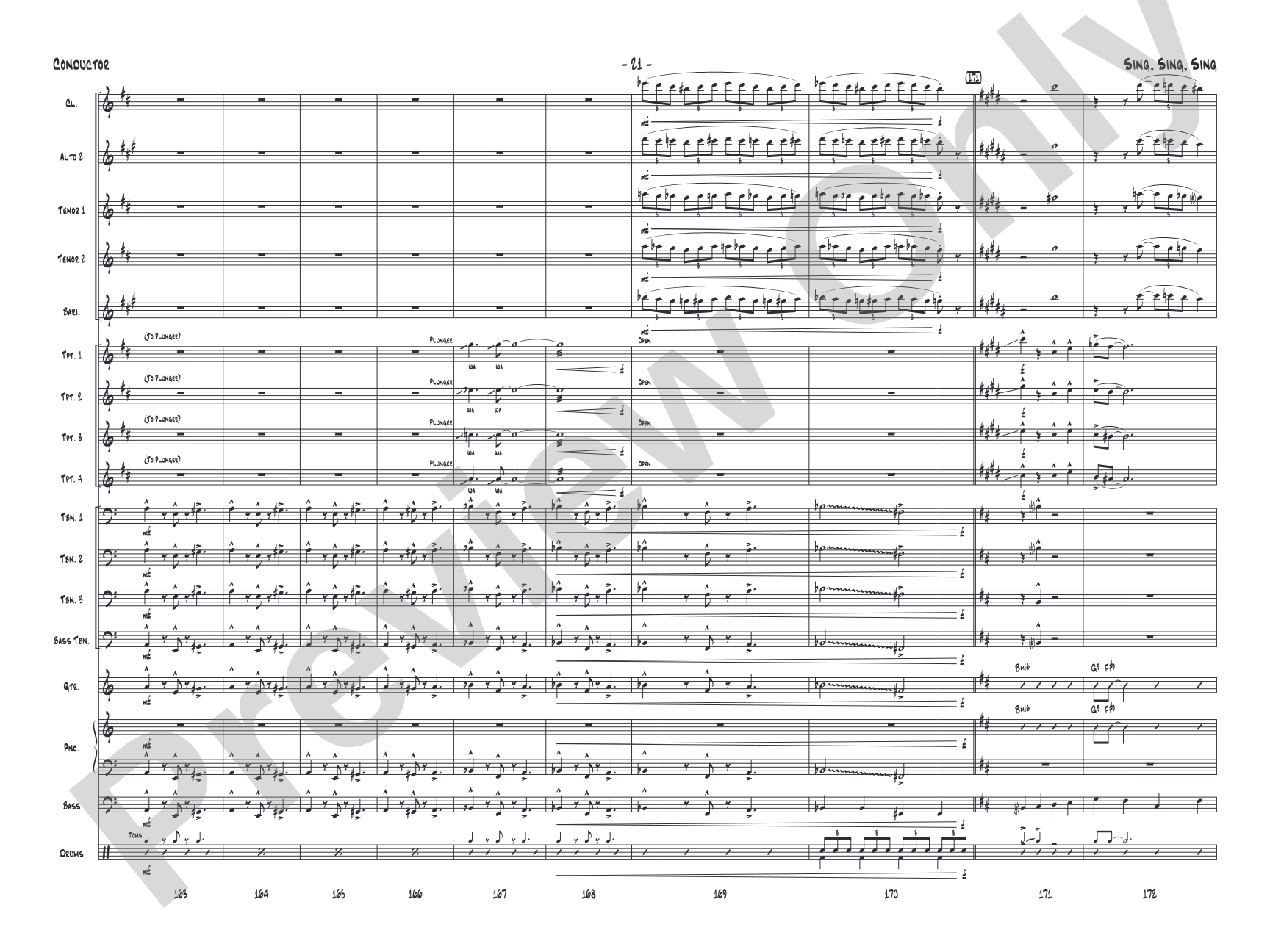
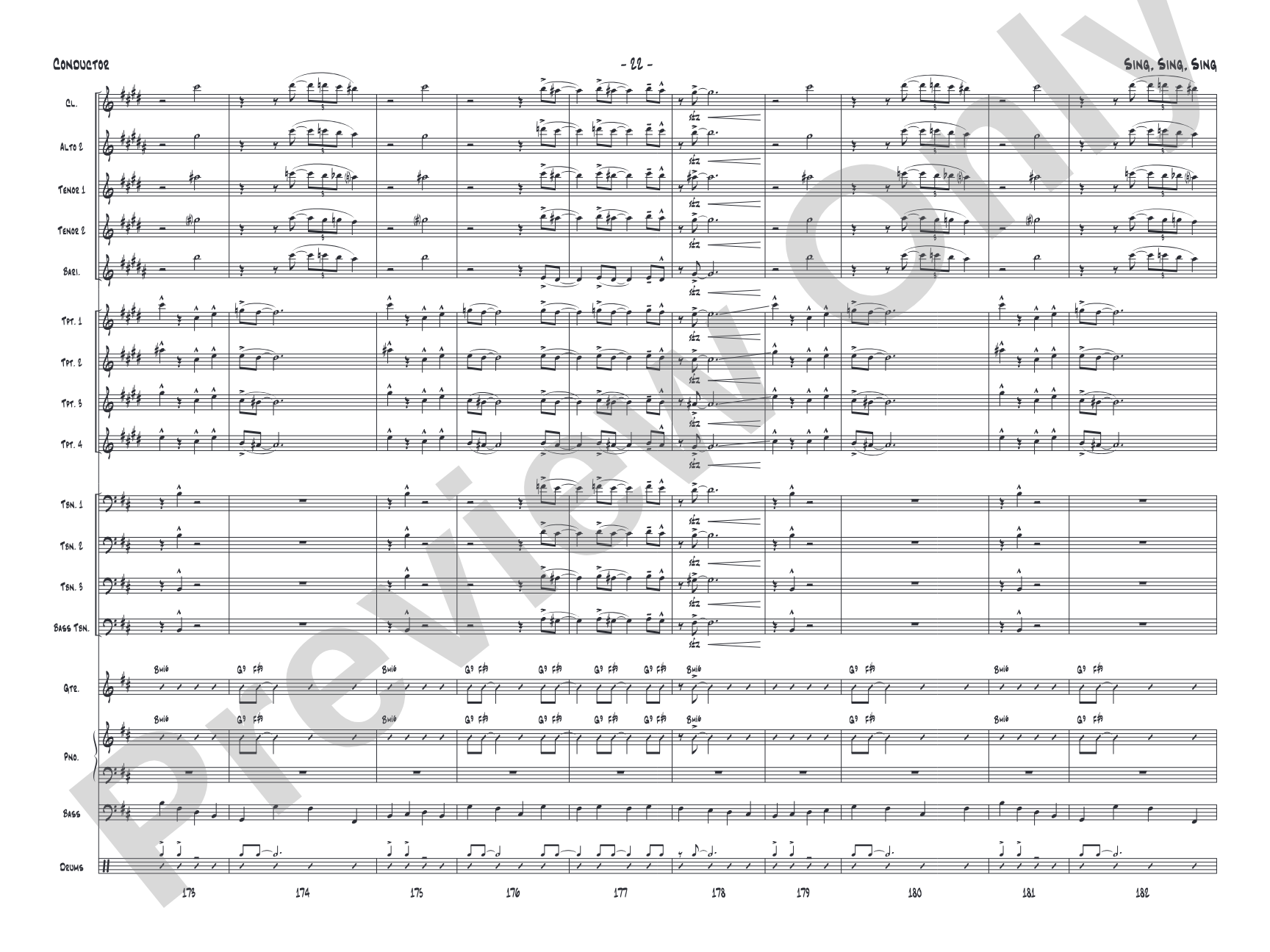
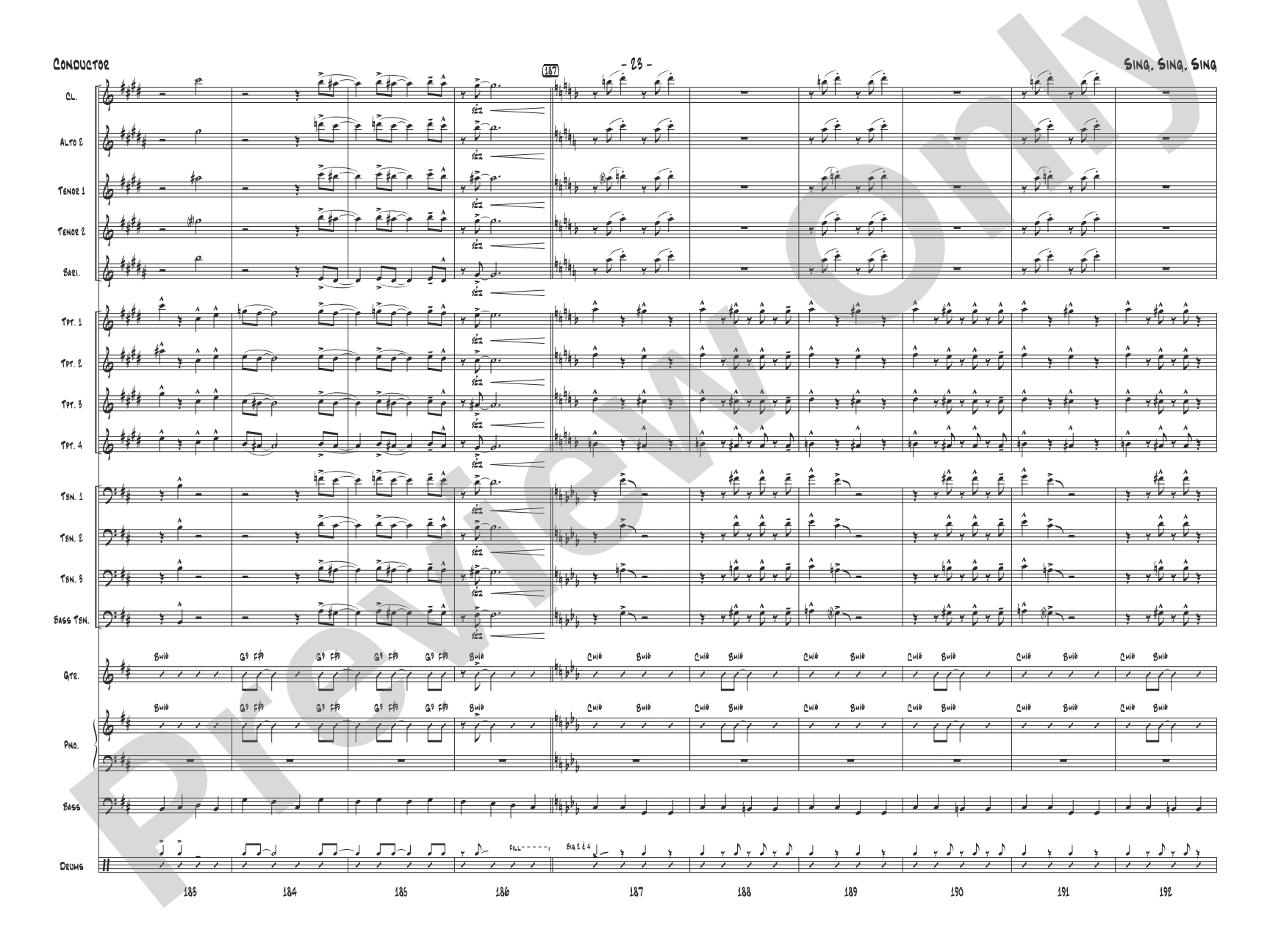
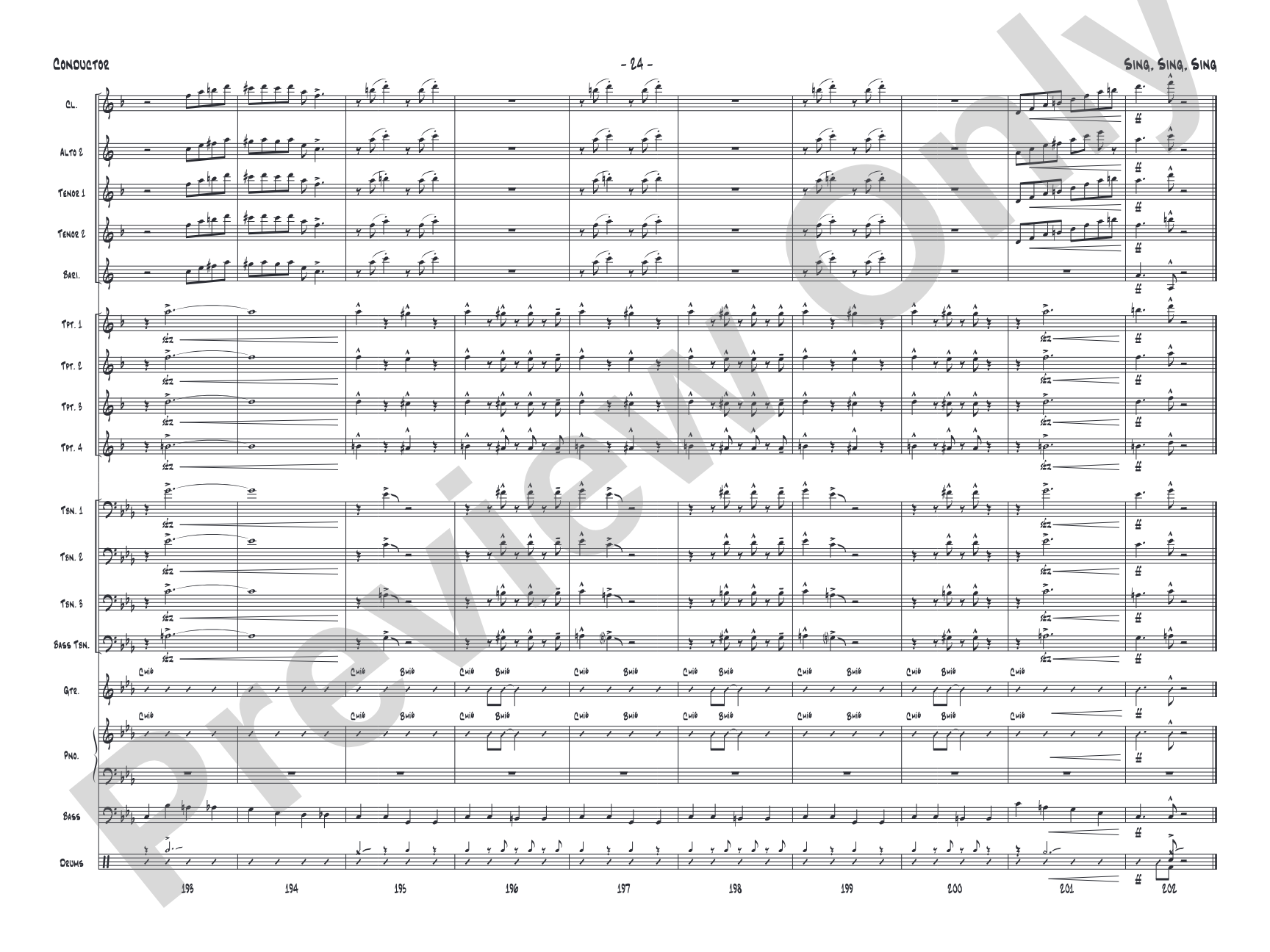

Sing, Sing, Sing: Score
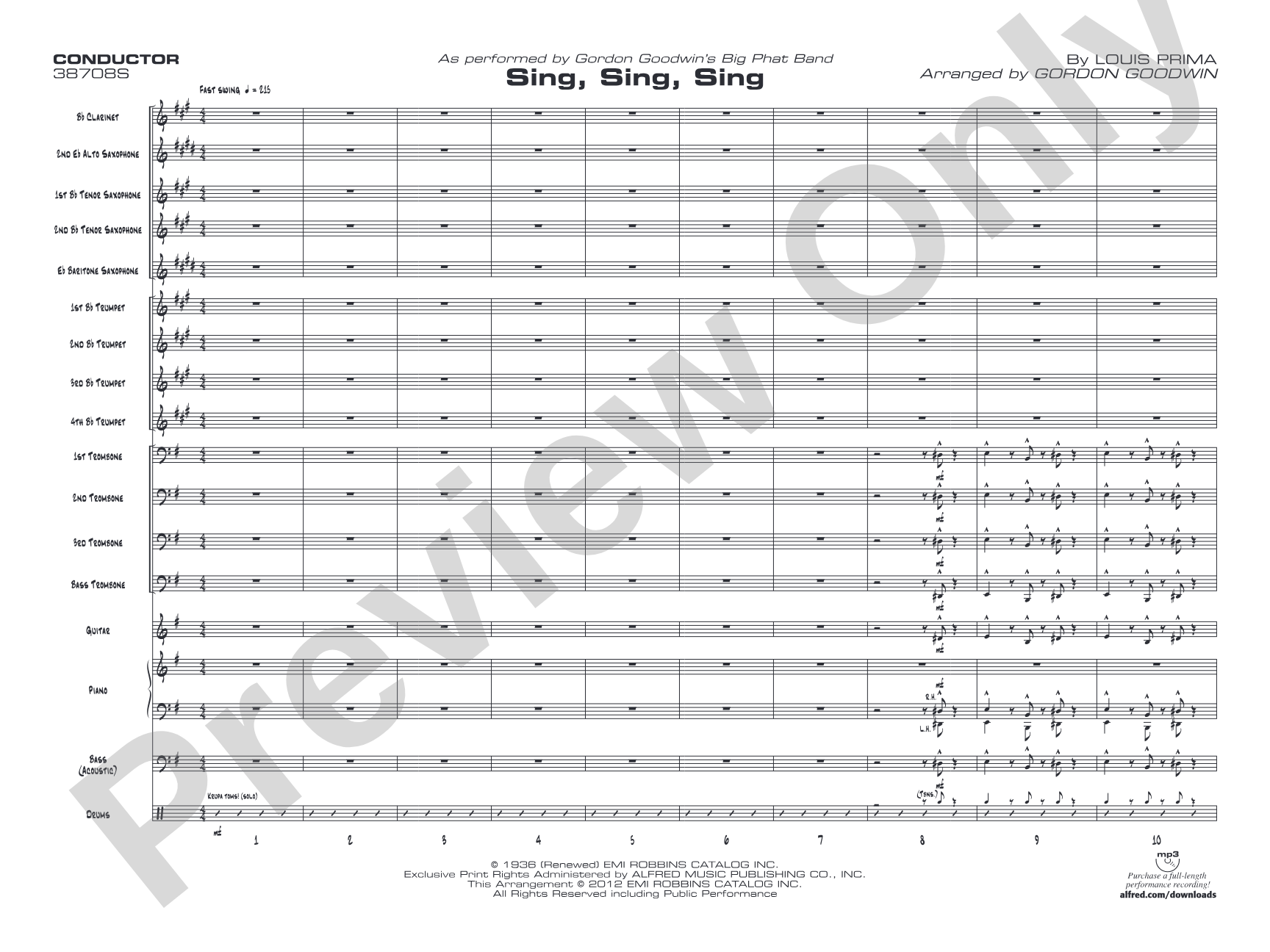
As Performed by Gordon Goodwin's Big Phat Band
By Louis Prima / arr. Gordon Goodwin
Grade: 5 (Advanced / Difficult)
Item: 00-PR-0005519
$11.00
Pickup currently not available
Description
A few twists and turns added to the original Goodman swing version make this chart a definite crowd (and band) pleaser. The chart features a clarinet part and an alternate alto 1 part in lieu of clarinet. Solo changes provided for all sax parts (clarinet) and lead trumpet range is to high F-sharp. This title is available in MakeMusic Cloud.


Don't just read it, hear it, play along with it, and watch your students grow with it. In MakeMusic Cloud, Sing, Sing, Sing: Score comes alive with professional accompaniment, adjustable tempo, and built-in practice tools that turn solo practice into real progress.
Open in the Player
Jump straight in and assign it today.
Start Your Free Trial
Open this title and explore the full library in minutes.
Sample Audio
1
Audio File
--:--
0:00
0:00
Sample Video
No sample videos found.
Additional Details
Series:
Gordon Goodwin Series
Publisher:
Alfred Music
Page Count:
74
SKU:
00-PR-0005519
More about this title
About the Composer: Louis Prima
Louis Prima (1910-1978) was a New Orleans native who became one of swing era's most dynamic entertainers. A trumpeter, singer, and bandleader, Prima bridged popular swing, jazz, and novelty music with infectious energy and showmanship that made him a draw on both the concert stage and in film.
Why we love this
Gordon Goodwin's arrangement captures the infectious swagger of Prima's original while adding harmonic sophistication and modern ensemble writing that keeps advanced players engaged. The inclusion of solo changes across the saxophone section and clarinet gives your section leaders room to stretch, while the alternate alto part opens the chart to ensembles without dedicated clarinet doubling.
What to expect
Exuberant and propulsive, built on a foundation of classic swing but with enough harmonic color and modern ensemble writing to feel fresh. The piece radiates the confidence of a big bandstand moment where soloists and ensemble lock into that perfect, effortless groove.
Who it's for
Advanced jazz ensembles seeking a swinging, high-energy chart that balances crowd appeal with musical substance. This arrangement works for ensembles with solid section readers and at least one capable improviser in the saxophone section.
How to get the most out of it
- Balance the ensemble so that solos cut through without drowning out the section figures behind them; Goodwin's voicings are dense enough that soloist clarity requires deliberate dynamic control.
- Lock the rhythm section (piano, bass, drums) into a crisp swing feel first; the entire chart depends on that groove sitting solidly before horns layer on top.
- Mark the solo changes in parts during rehearsal so players know exactly where they can improvise and where ensemble precision matters most.
- Attend to the lead trumpet's high passages (up to F-sharp); ensure your player has the stamina and range mapped out well before performance.
How to use it
Program this as a concert closer or stand-alone set closer where energy and audience engagement matter. Its swagger and swing sensibility also make it an excellent finale for a jazz-focused concert or a strong anchor in a mixed-genre ensemble program.
Skills your students will build
- Reading dense swing-era voicings and harmonic movement
- Improvising changes over standard jazz changes
- Balancing solo transparency with ensemble support
- Executing high-register passages with precision and control
- Locking into ensemble groove under pressure