Sing, Sing, Sing: 1st Trombone Sheet Music Preview

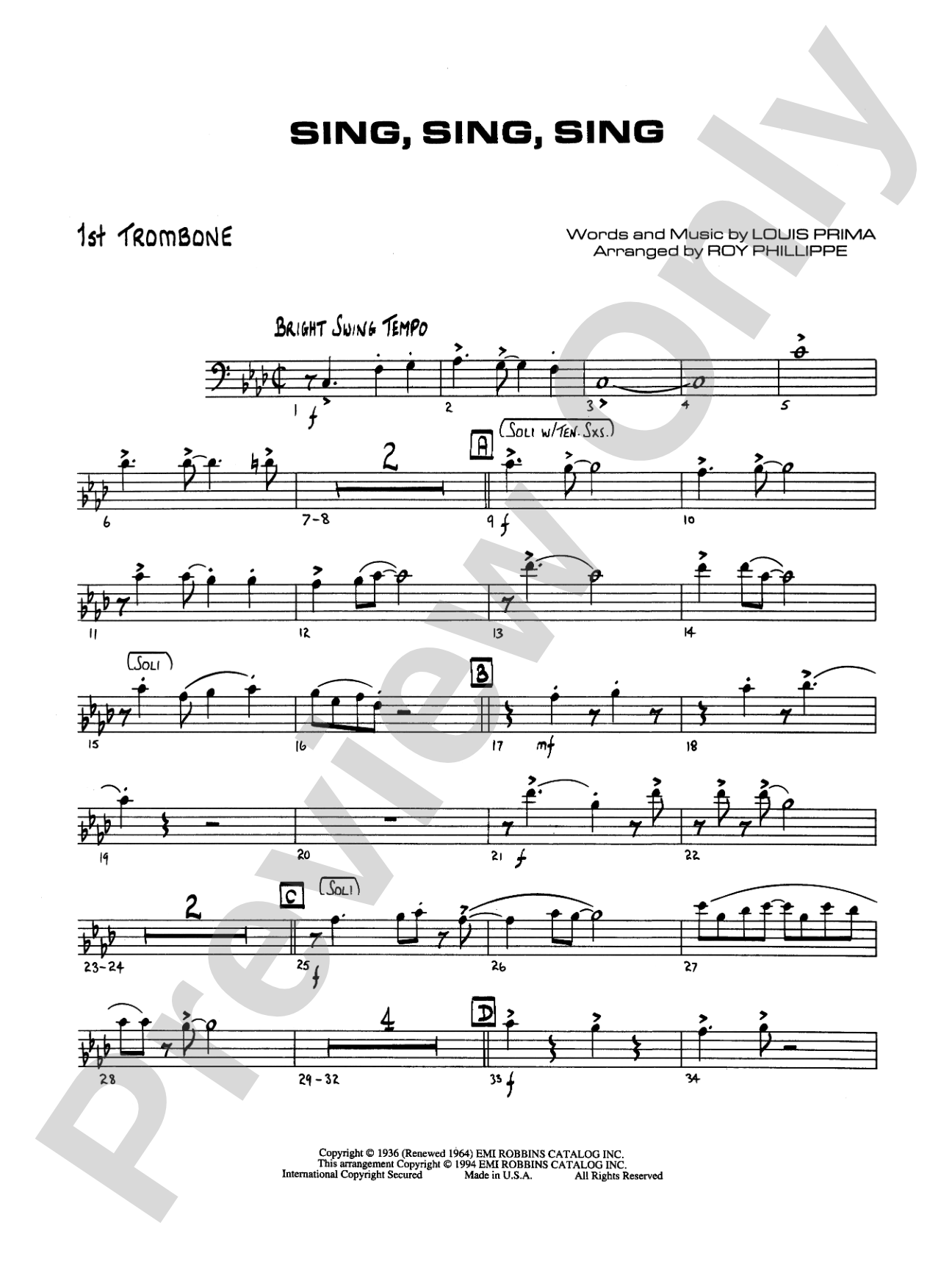
Sing, Sing, Sing: 1st Trombone

By Louis Prima / arr. Roy Phillippe

Grade: 3 (Medium)

Item: 00-PC-0015260_TN1

Digital Download
$3.00
Description
This all-time great jazz classic gets a new arrangement from the pen of Roy Phillippe. It's different than the original Benny Goodman chart, swings well and gives the chart a new 1990s sound. Try it!

Don't just read it, hear it, play along with it, and watch your students grow with it. In MakeMusic Cloud, Sing, Sing, Sing: 1st Trombone comes alive with professional accompaniment, adjustable tempo, and built-in practice tools that turn solo practice into real progress.

Sample Audio
No sample audio found.
Sample Video
Additional Details
Series: Jazz Band Series
Publisher: Alfred Music
Page Count: 68
SKU: 00-PC-0015260_TN1

More about this title

About the Composer: Louis Prima

Louis Prima (1910-1978) was an Italian-American trumpeter, singer, and bandleader who bridged New Orleans jazz tradition with pop appeal. His exuberant style and showmanship made him one of the most commercially successful entertainers of the swing era, and his compositions became standards that continue to anchor jazz repertoire across all skill levels.

Why we love this

Roy Phillippe's 1990s reimagining of this perennial favorite strips away nostalgia and gives the ensemble something genuinely fun to play. The arrangement swings with contemporary energy while keeping the essential character that makes this tune irresistible, and Grade 3 scoring means your section leaders can carry the harmony without overwhelming less experienced players.

What to expect

Unbridled joy and forward momentum. The tune practically demands movement; listeners hear the optimism and propulsive rhythm that made Prima's original so contagious. Phillippe's arrangement keeps that infectious energy alive while giving it a cleaner, modern articulation that reflects late-20th-century big band sensibilities.

Who it's for

Jazz ensemble directors at the middle school through early high school level who want a proven crowd-pleaser that doesn't require soloists or extended improvisation. Conductors looking for a springboard into swing style will find this arrangement accessible enough for developing players while still sounding polished in performance.

How to get the most out of it

  • Establish a relaxed but propulsive swing feel from rehearsal one. This chart lives or dies on the groove, so lock the rhythm section (bass, drums, piano) before layering the horns.
  • Balance the trumpet section against the saxes in the lead passages. The arrangement likely features calls and responses between sections; clarity here keeps the energy crisp rather than muddy.
  • Let dynamic contrast shape the form. Mark the soft passages in pencil and rehearse them explicitly; younger ensembles often default to one volume and miss the lift that comes from variation.
  • Encourage articulation precision in the ensemble figures. Even eighth-note rhythms should have definition and space between notes, which gives the swing character room to breathe.

How to use it

This is a natural opener or closer for a jazz concert; its familiar melody and uplifting character engage audiences immediately and leave them smiling. It also works well as a feature piece in a mixed program, offering a stylistic anchor point between more introspective jazz selections or contemporary works.

Skills your students will build

  • Swing articulation and phrasing (separation, space, and lift in eighth-note passages)
  • Section balance and blend in call-and-response figures
  • Dynamic contrast within a single harmonic framework
  • Ensemble cohesion in rhythmic figures at moderate tempo
  • Recognition of form and structure in a classic jazz composition

You May Also Like