
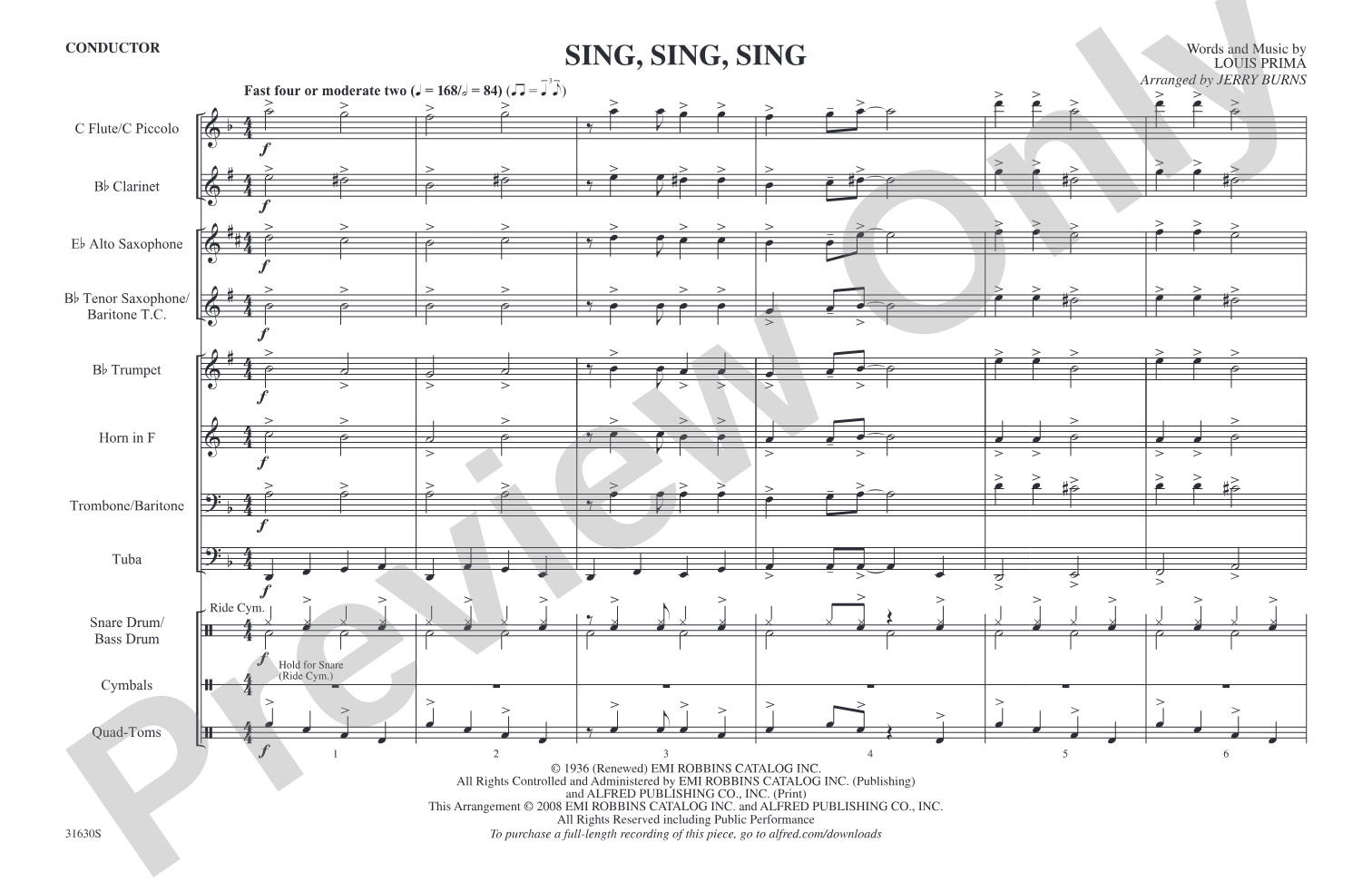
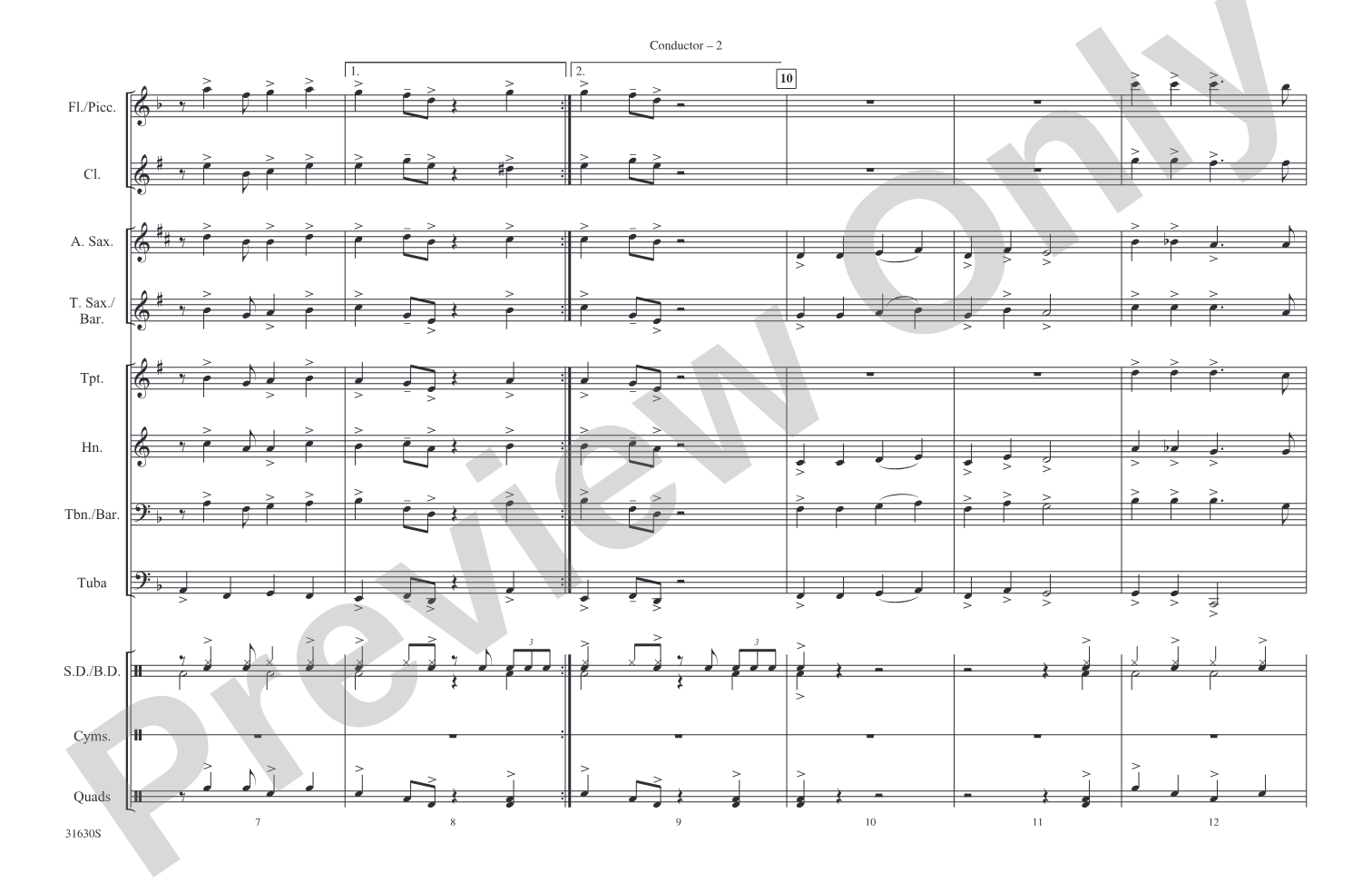
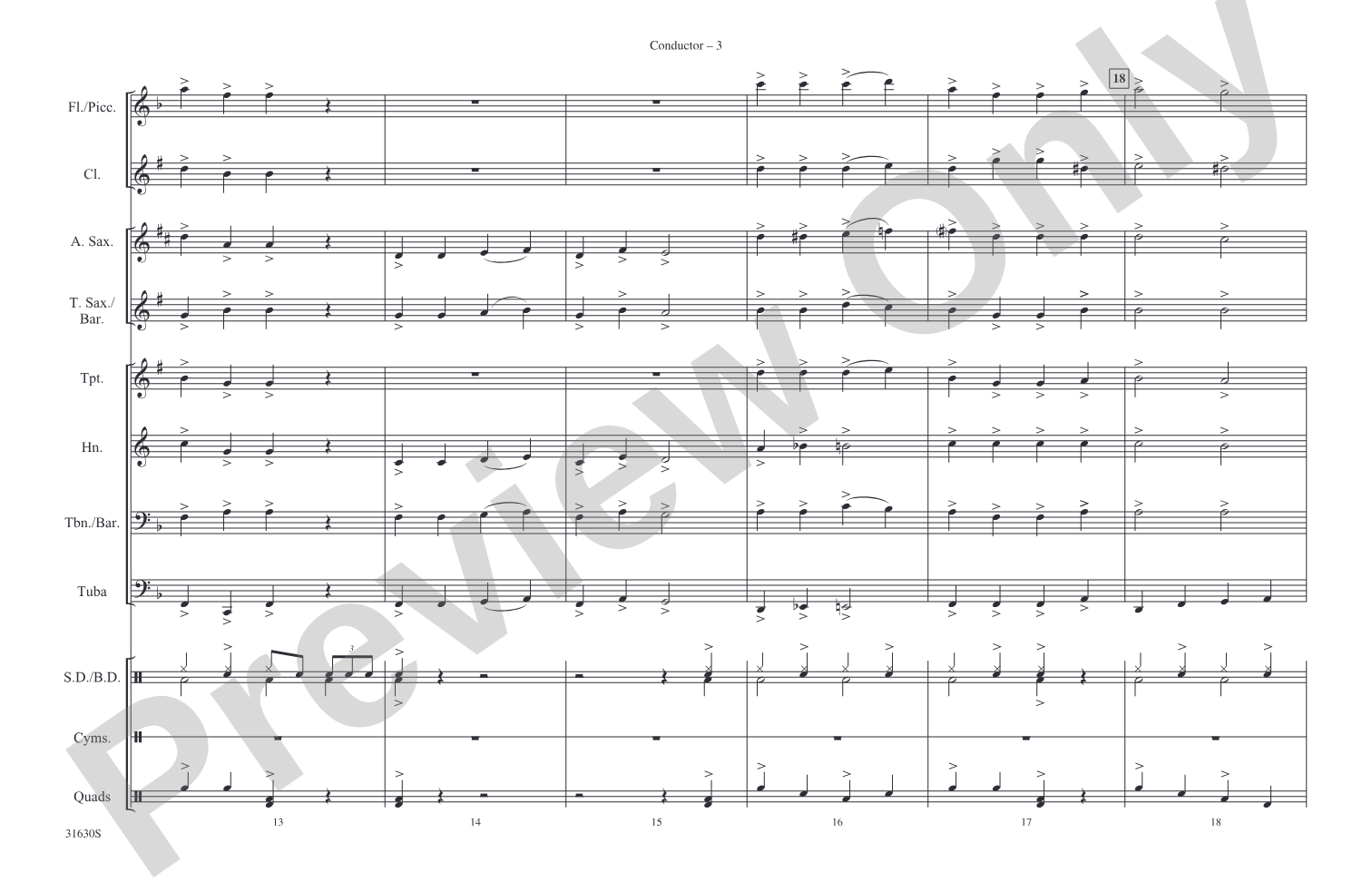
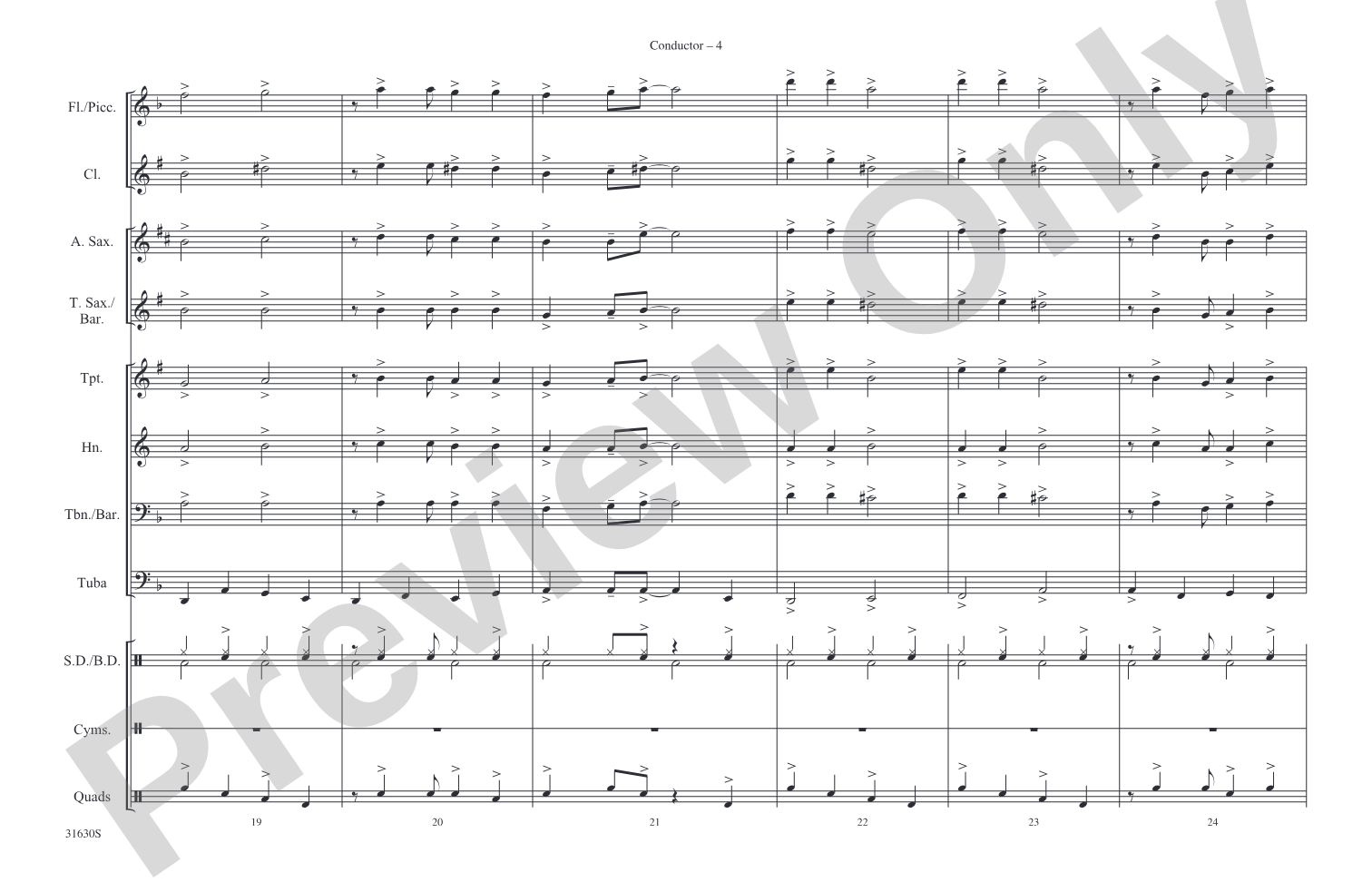
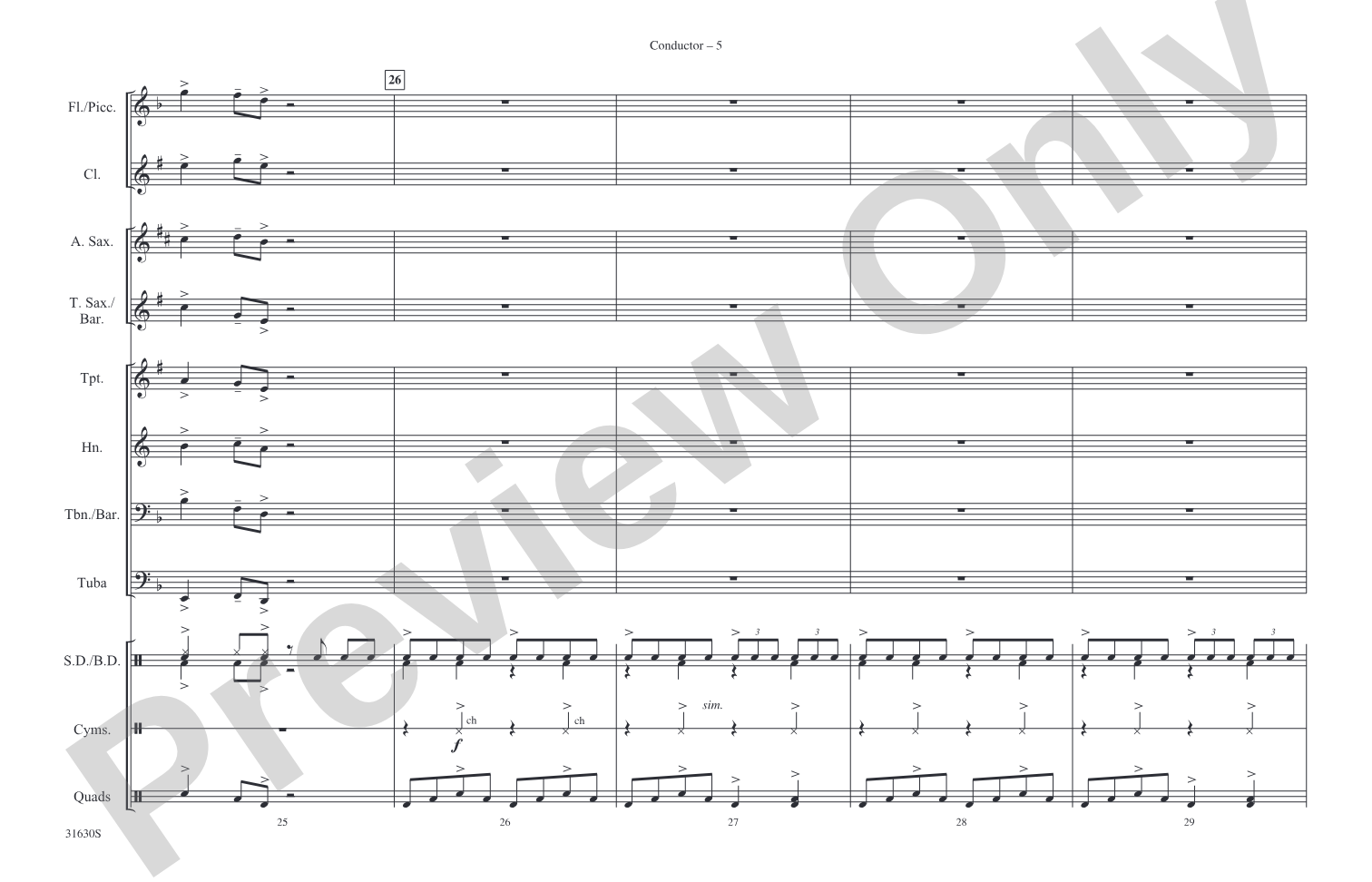
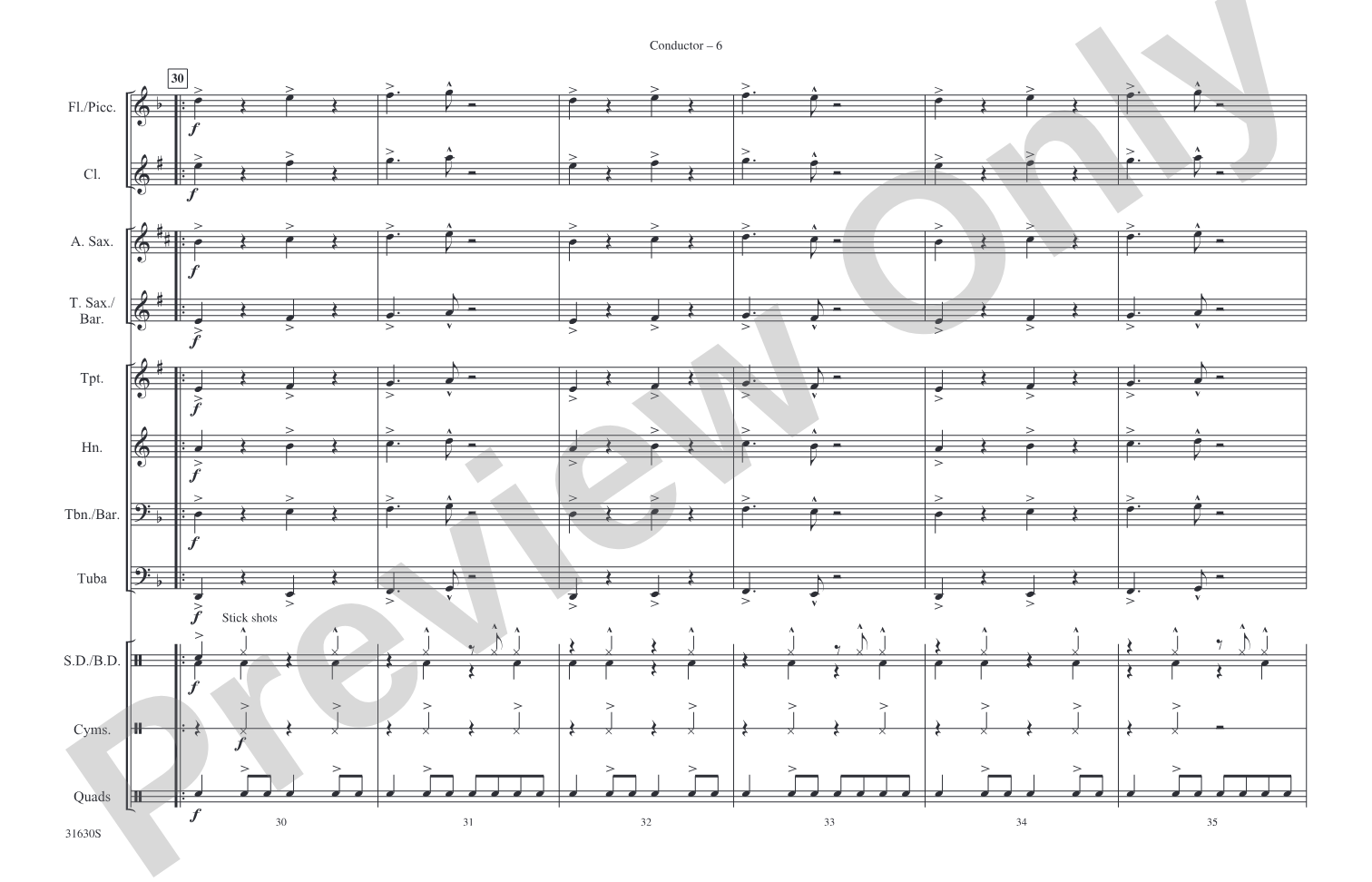
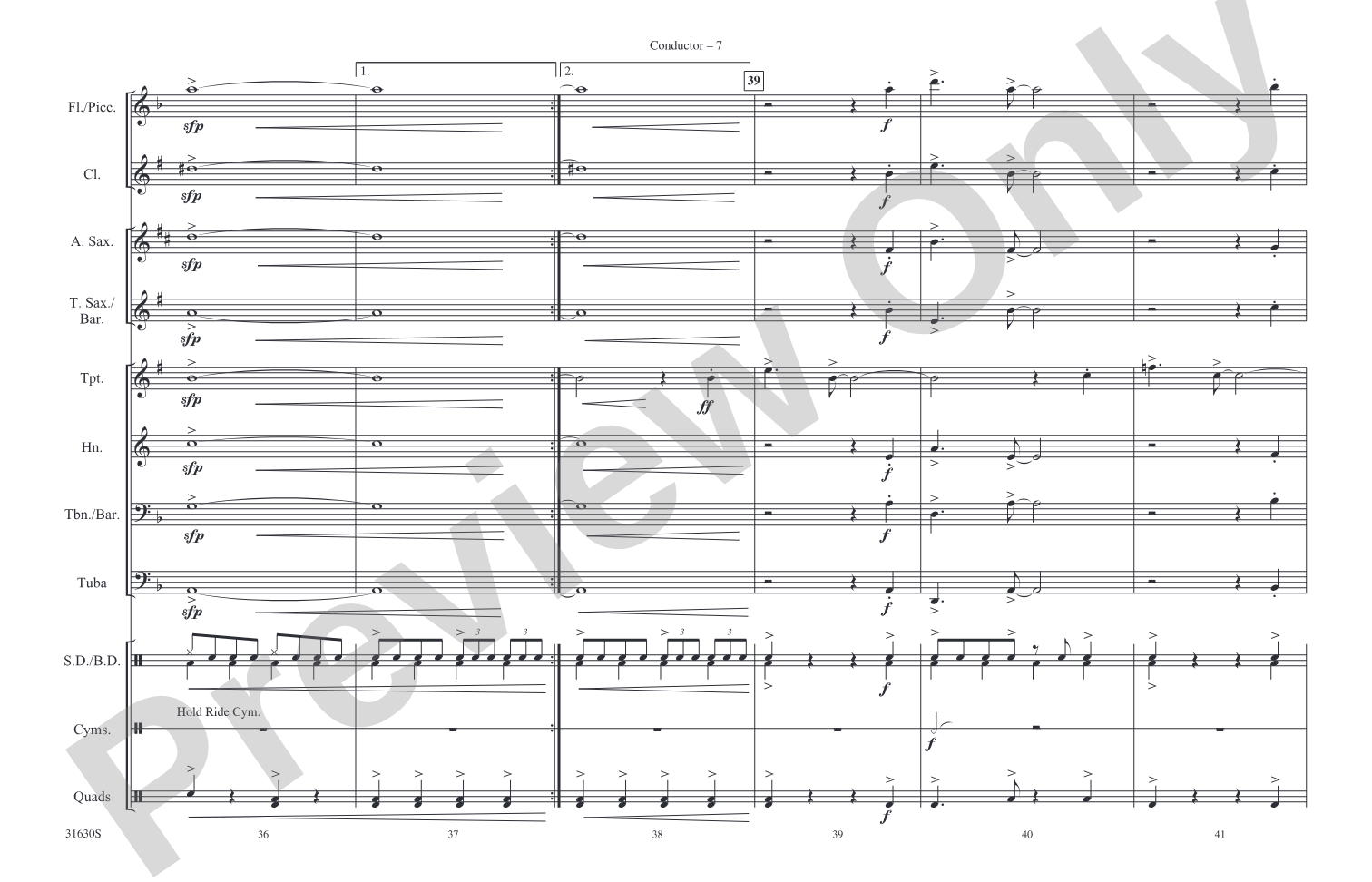
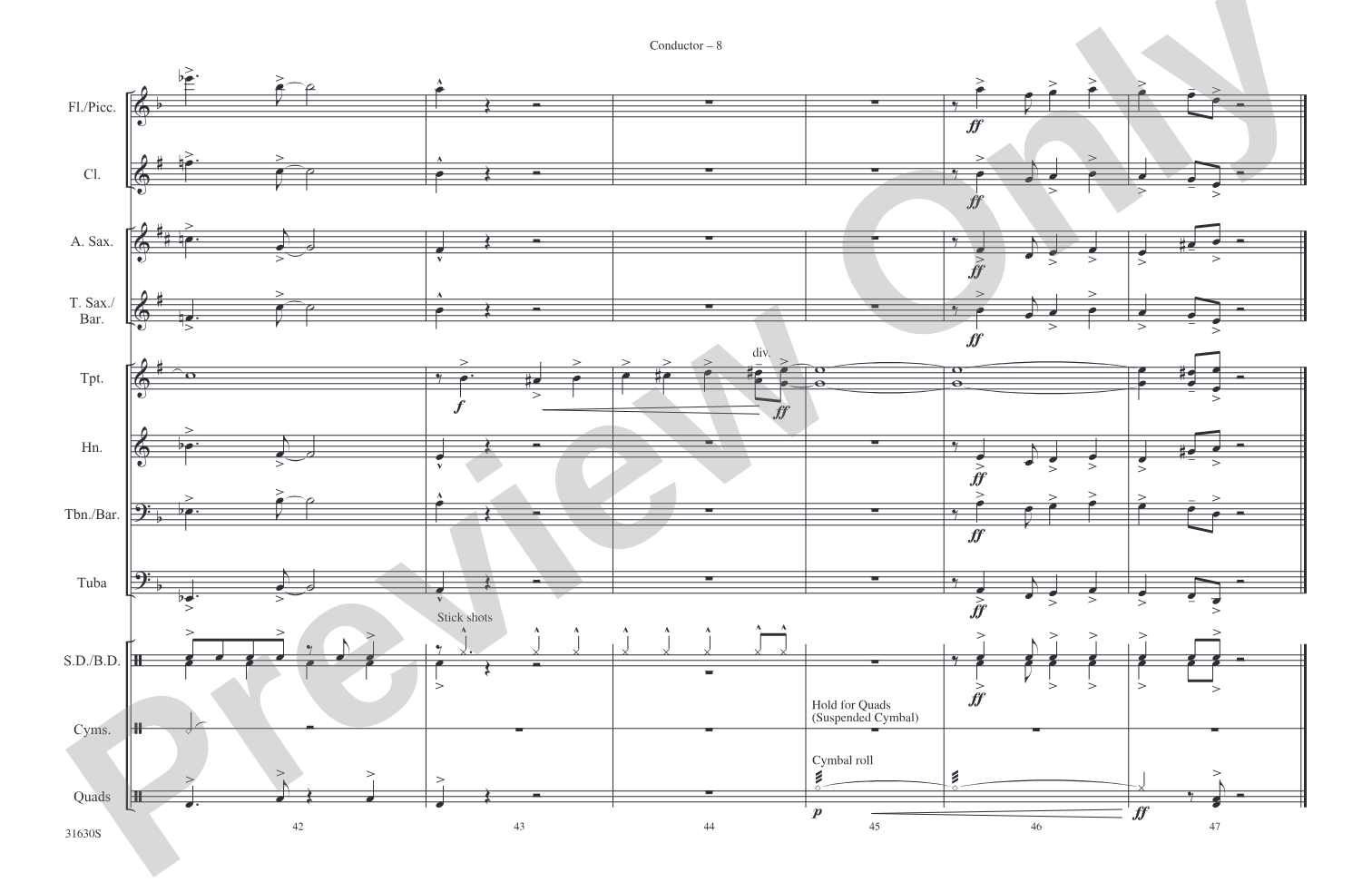

Sing, Sing, Sing: Marching Band Conductor Score & Parts
Words and music by Louis Prima / arr. Jerry Burns
Grade: 1.5 (Very Easy)
Item: 00-PK-0007881

$40.00
One moment…
Description
Jerry Burns does it again! Here he takes the big band classic from Benny Goodman and crafts a great-sounding but oh-so-easy chart that will make any band sound great! (1:25)


Don't just read it, hear it, play along with it, and watch your students grow with it. In MakeMusic Cloud, Sing, Sing, Sing: Marching Band Conductor Score & Parts comes alive with professional accompaniment, adjustable tempo, and built-in practice tools that turn solo practice into real progress.
Open in the Player
Jump straight in and assign it today.
Start Your Free Trial
Open this title and explore the full library in minutes.
Sample Audio
1
Audio File
--:--
0:00
0:00
Sample Video
Additional Details
Series:
Very Easy Pops for Marching Band
Publisher:
Alfred Music
Page Count:
86
SKU:
00-PK-0007881
More about this title
About the Composer: Louis Prima
Louis Prima (1910-1978) was a New Orleans-born trumpeter, singer, and bandleader whose energetic swing style and charismatic performances made him a fixture of American popular music. He composed "Sing, Sing, Sing" during the big band era, and the tune became iconic when Benny Goodman's orchestra recorded it in 1937, establishing itself as a cornerstone of swing repertoire.
Prima's gift for writing infectious melodies that sit naturally for both horns and voices made his compositions enduringly popular in educational and performance settings. His work captures the exuberance and rhythmic drive that define the swing era.
Why we love this
Jerry Burns has stripped away the complexity that often intimidates newer marching bands while preserving every bit of the tune's irresistible swing. At Grade 1.5, this arrangement lets developing musicians taste the joy of a big band classic without getting bogged down in technical demands. The chart swings from the first measure and rewards solid fundamentals with music that sounds polished and energetic.
What to expect
Immediate fun. The tune bounces with unstoppable optimism, built on a melody so catchy that audiences recognize it within the first phrase. The arrangement moves between unison passages and gentle harmonies, always maintaining the propulsive swing rhythm that makes "Sing, Sing, Sing" timeless.
Who it's for
Directors leading Grade 1-2 bands who want a crowd-pleasing centerpiece that doesn't demand advanced technique. Marching bands in their first or second year benefit from music that sounds mature and energetic without requiring independent musicianship beyond their reach.
How to get the most out of it
- Anchor the groove with a steady, confident snare line. Even at this accessible level, the back beat is what sells the swing feel.
- Balance the melodic sections between sections so the tune's signature hook cuts through clearly. Avoid letting any one voice group overshadow the whole.
- Lock the rhythm section (bass drum and cymbals) to a clean pulse without rushing. Swing lives in the pocket, not in desperation.
- Capture the brightness of the original through tight articulation in the brass chorale sections. Short, punchy attacks keep the energy from sagging.
How to use it
Program this early in your season when teaching swing style and big band vocabulary. Its accessibility makes it an ideal centerpiece for a pops concert or a lighter set on a full-length program, and the engaging melody keeps audience attention high without demanding serious silence from the crowd.
Skills your students will build
- Swing articulation and phrasing
- Jazz rhythmic feel and groove
- Section balance in homophonic writing
- Recognizing and executing the head melody
- Maintaining steady tempo through repetitive figures