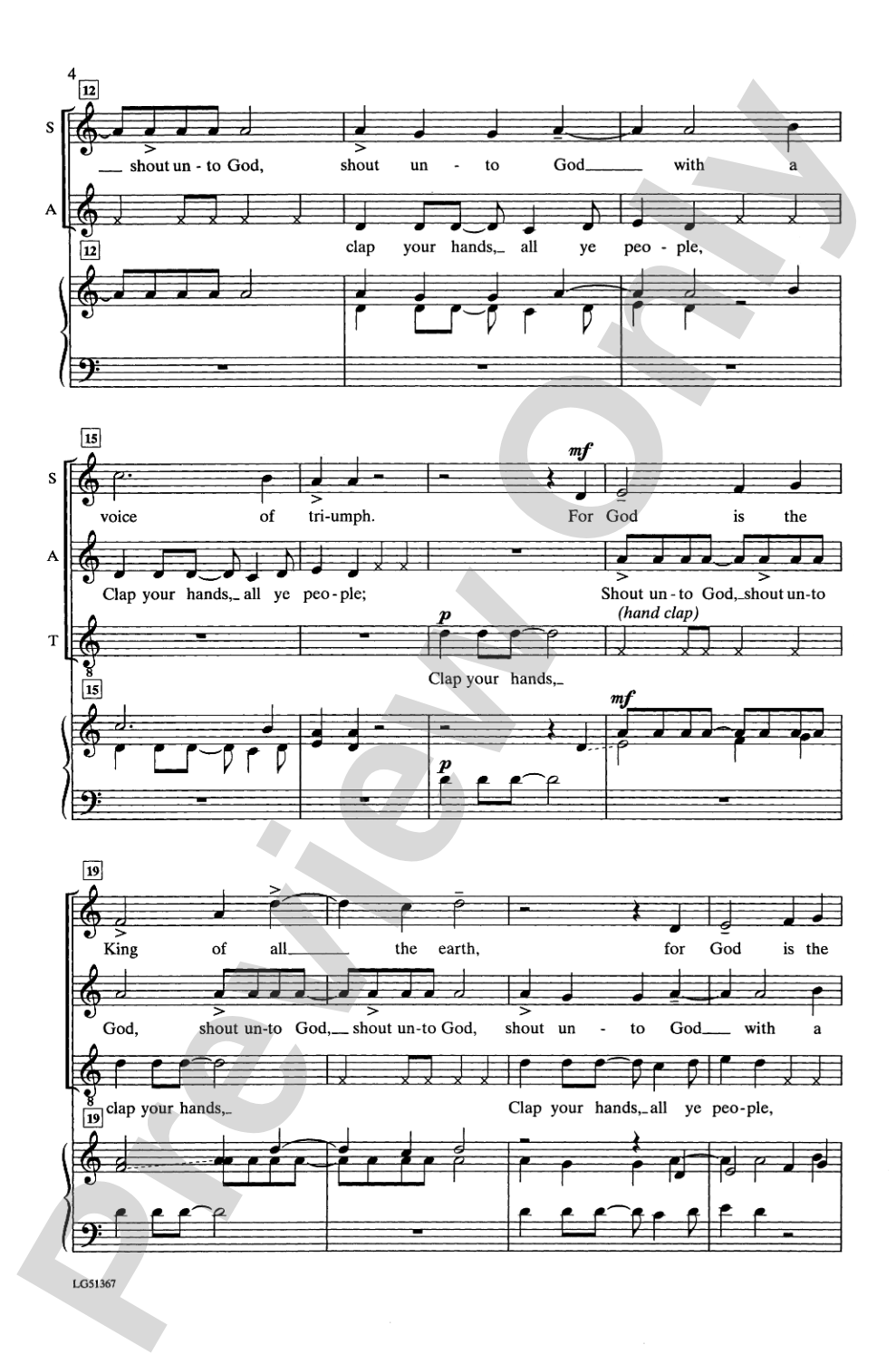
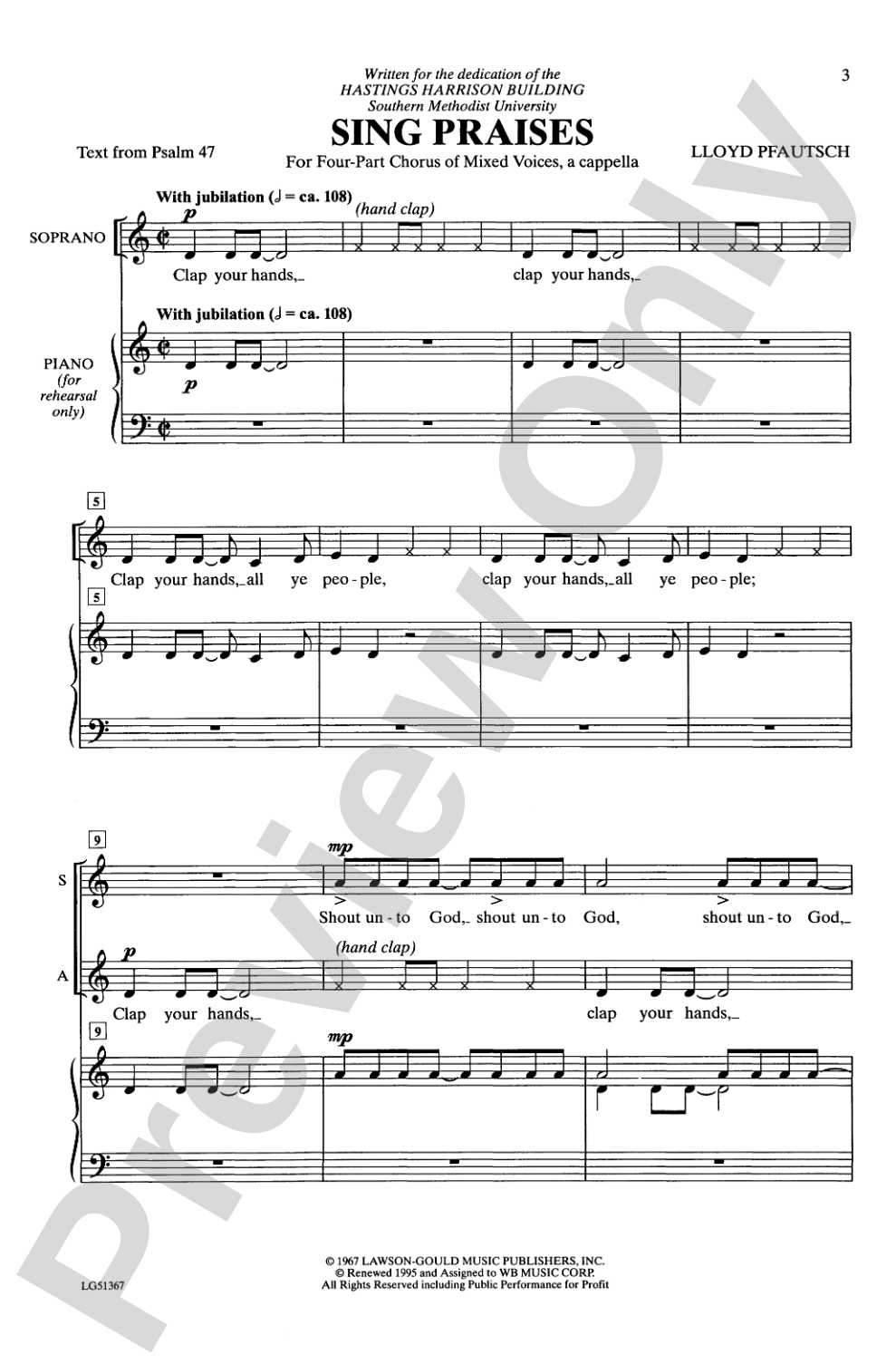
Sing Praises Sheet Music Preview

Sing Praises: SATB Choral Octavo

By Lloyd Pfautsch

Item: 00-PO-0002660

Digital Download
$2.25

Minimum order quantity: 20 copies

Description

Sing Praises: SATB Choral Octavo isn't in MakeMusic Cloud just yet...but it could be. Let us know you'd like to see it, and you'll help shape what comes next. In the meantime, start a free trial and dive into thousands of interactive titles your students can play along with today.

Sample Audio
No sample audio found.
Sample Video
Additional Details
Series: Alfred Archive Edition: Lawson-Gould Music Publishers
Publisher: Alfred Music
Page Count: 12
SKU: 00-PO-0002660

More about this title

About the Composer: Lloyd Pfautsch

Lloyd Pfautsch (1921-2006) was an American choral composer and conductor whose work shaped sacred choral music throughout the second half of the twentieth century. A respected voice in American choral pedagogy, he composed extensively for church choirs and concert ensembles, balancing accessibility with musical substance. His pieces remain staples in choral libraries because they honor both singers and listeners.

Why we love this

Pfautsch writes for real choirs rather than idealized ones. The vocal ranges sit comfortably, the harmonic language is direct without being simplistic, and the text setting feels natural. This is the kind of piece your singers will want to perform again once they've learned it.

What to expect

The music conveys quiet conviction. Pfautsch sets the text with clarity and reverence, allowing the meaning to emerge through straightforward harmonic writing and accessible vocal lines. You'll hear a sense of prayer offered without pretense.

Who it's for

Any SATB choir ranging from community and church choirs to advanced high school ensembles will find this piece singable and rewarding. It works equally well for directors seeking a standalone sacred piece or as part of a larger concert program.

How to get the most out of it

  • Attend to Pfautsch's phrase markings carefully; they guide you toward natural breath points rather than metric ones. This prevents the piece from feeling choppy.
  • Balance the voices so that inner parts maintain independence without overshadowing the outer voices; SATB texture works best when all four lines breathe together.
  • Take time with any key changes or harmonic shifts; Pfautsch uses them for expressive effect, not just structural variety.

How to use it

This fits naturally into sacred music concerts, interfaith services, or spring choral programs that balance liturgical and concert repertoire. It pairs well with both earlier Renaissance settings and contemporary choral works, giving programmers flexibility in how they frame the piece.

Skills your students will build

  • Singing SATB harmony with independence in all four voice parts
  • Phrasing across bar lines while respecting text punctuation
  • Responding to subtle harmonic color changes
  • Blending tone while maintaining clear diction in sacred text

You May Also Like