

Sing Out This Triumphant Day! (from Armide): SAB Choral Octavo
From Armide by Christoph Willibald Gluck
Ed. and arr. Patrick M. Liebergen
Item: 00-PO-0000037
$1.65
Minimum order quantity: 20 copies
Pickup currently not available
Related Items
Sing Out This Triumphant Day!: SAB Choral Octavo |
$1.65
|
View |
Description
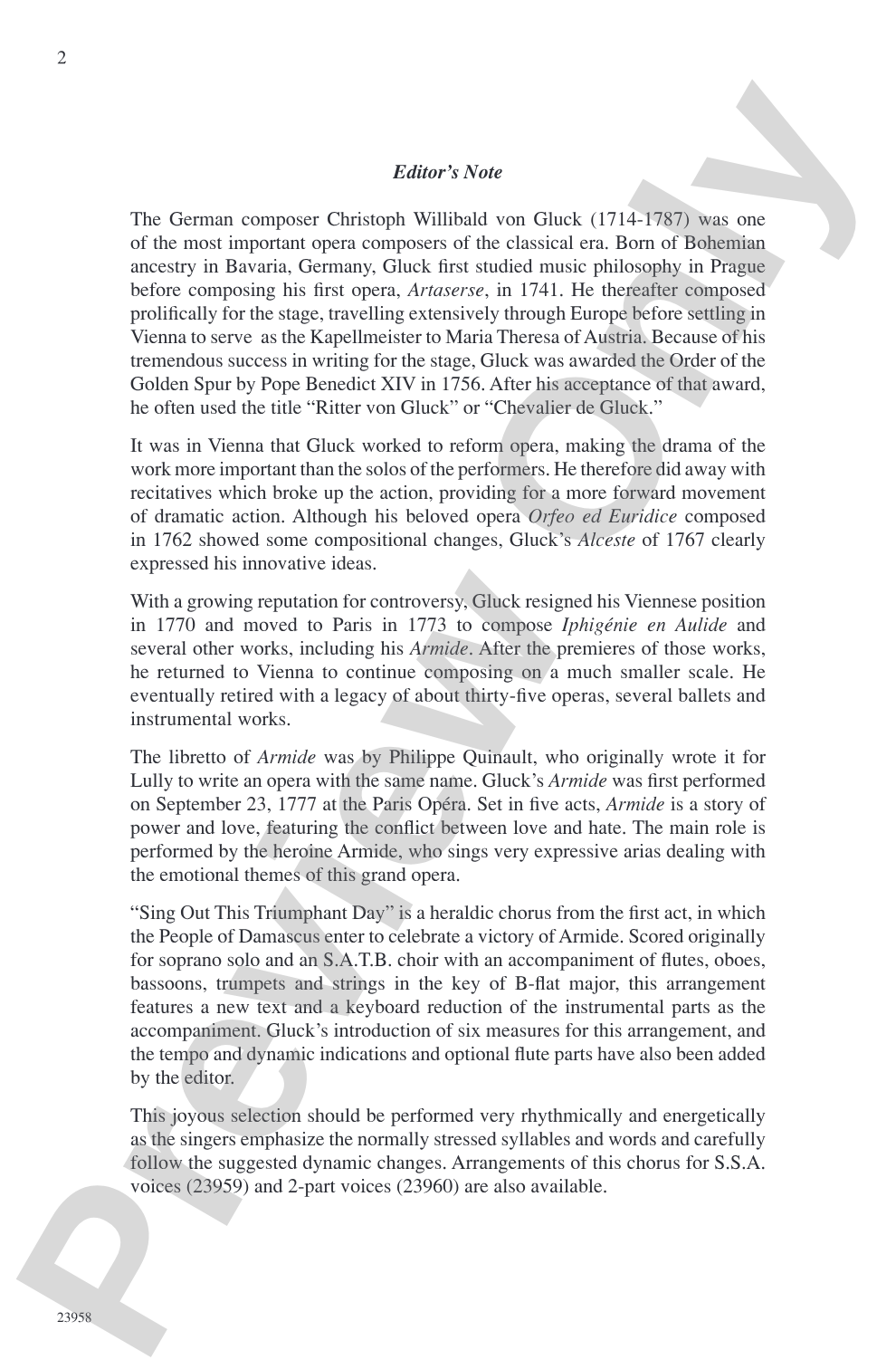
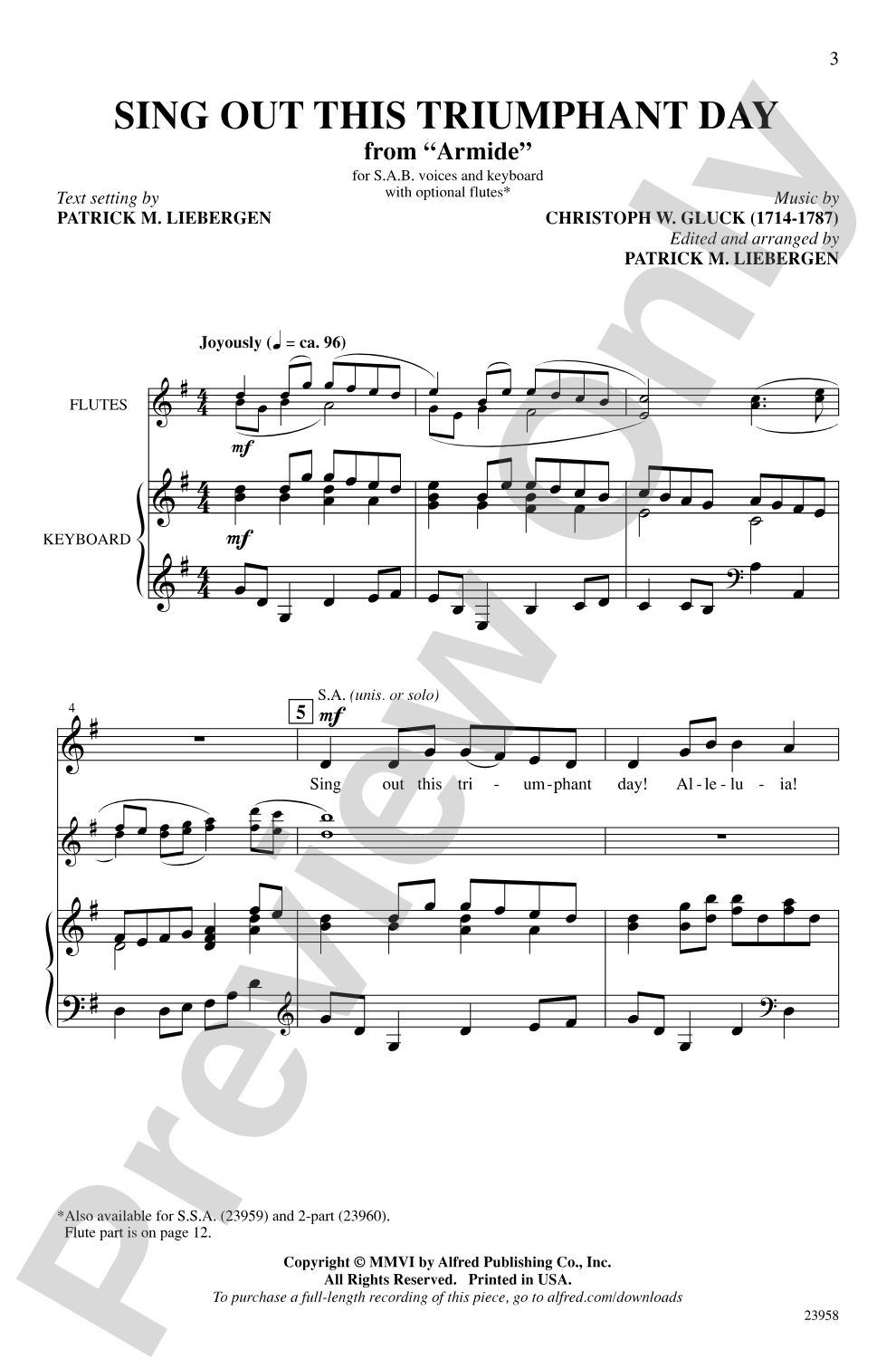
This da capo chorus from Gluck's opera Armide provides a wonderful opportunity to cultivate skills like musical phrasing, dynamic contrast, and vocal tone and production. Two optional flutes enhance the musicality of a polished performance at concerts and festivals.


Sing Out This Triumphant Day! (from Armide): SAB Choral Octavo isn't in MakeMusic Cloud just yet...but it could be. Let us know you'd like to see it, and you'll help shape what comes next. In the meantime, start a free trial and dive into thousands of interactive titles your students can play along with today.
Request This Title
Tell us you want it.
Start Your Free Trial
Explore everything that's ready to play right now.
Sample Audio
1
Audio File
--:--
0:00
0:00
Sample Video
No sample videos found.
Additional Details
Series:
Alfred Choral Designs
Publisher:
Alfred Music
Page Count:
12
SKU:
00-PO-0000037
Instrumentation:
Two Opt. Flutes
More about this title
About the Composer: Christoph Willibald Gluck
Christoph Willuck Gluck (1714-1787) fundamentally reshaped operatic music by prioritizing clarity, emotional directness, and dramatic truth over vocal display. Working across Europe, he became a leading figure in the reform opera movement, creating works where the orchestra and text served the story rather than showcasing a singer's technical prowess. His influence on subsequent composers and on how we understand the relationship between music and drama remains profound.
Gluck's operas continue to anchor the classical repertoire because of their architectural clarity and their refusal to separate music from meaning. For student musicians, his work offers a masterclass in how phrasing and orchestration can carry emotional weight without relying on vocal acrobatics.
Why we love this
Patrick Liebergen's arrangement keeps the stately character and harmonic richness of Gluck's original while making it accessible to developing SAB choirs. The optional flute parts offer a sophisticated touch that rewards ensembles ready to add instrumental color without complicating rehearsal demands. This is a legitimate operatic moment that works equally well at concert or festival.
What to expect
Stately and ceremonial, with an underlying warmth that emerges through careful voicing. The piece has triumph in its DNA, but Gluck's restraint means that triumph comes from collective tone and precision rather than volume. There's an elegance here that asks singers to listen to each other and to trust the composer's harmony.
Who it's for
SAB choirs with solid intonation and a willingness to think about phrasing beyond rhythm. This arrangement suits high school or early college choirs, or any community ensemble comfortable with classical harmonic language and the discipline it requires. Singers familiar with hymn singing or other classical choral literature will find the musical thinking familiar.
How to get the most out of it
- Shape the phrase through strategic breath placement rather than tempo fluctuation. Gluck's melodic lines breathe naturally when singers understand the arc of each four- or eight-bar idea.
- Balance the upper voices carefully during the opening statement; the sopranos should float above rather than drive through. This clarity makes the harmonic movement legible to the audience.
- If using the optional flutes, allow them to double the vocal lines in certain sections for musical weight, but pull back during climactic moments to let the voices dominate.
- Attend to dynamic transitions between sections. Gluck composed specific contrasts; avoid the tendency to smooth everything into one dynamic level during rehearsal.
How to use it
This works beautifully as a concert closer or as a bridge between lighter fare and more demanding contemporary pieces. The operatic roots make it a natural pairing with other classical choral works, and its 12-page length allows it to anchor a program without overwhelming rehearsal time. Consider programming it for a spring concert when your singers have built the tonal control and phrasing skills it deserves.
Skills your students will build
- Long-line phrasing in Classical harmonic language
- Dynamic contrast and control within a moderate range
- Blend and balance in SAB voicing, especially soprano-alto interaction
- Attention to text expression and emotional intent within restrained dynamics
- Collaborative listening when adding optional instrumental parts