
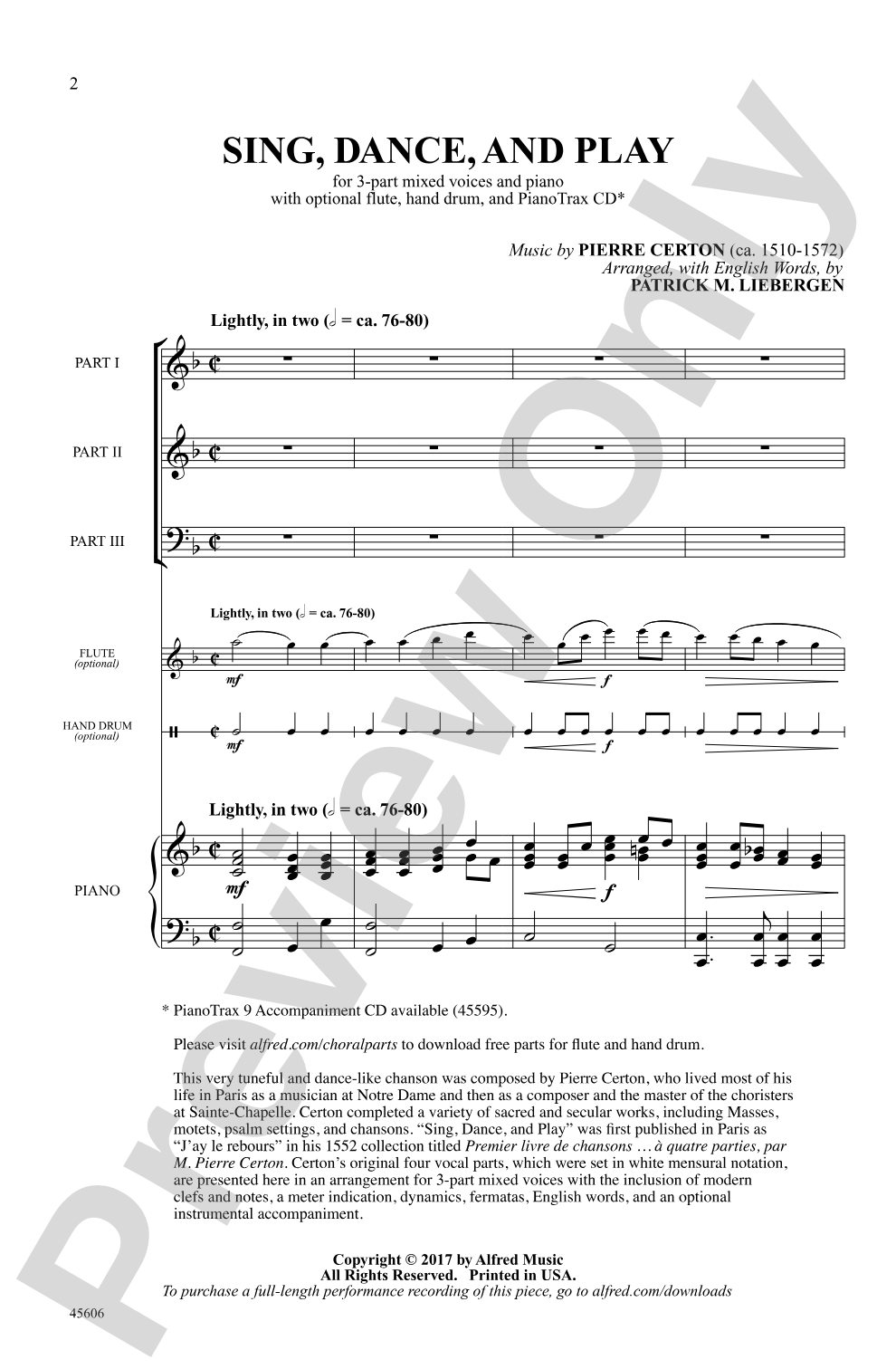

Sing, Dance, and Play: 3-Part Mixed Choral Octavo
Music by Pierre Certon / arr., with English words, by Patrick M. Liebergen
Item: 00-PO-0005501
$1.90
Minimum order quantity: 20 copies
Pickup currently not available
Description
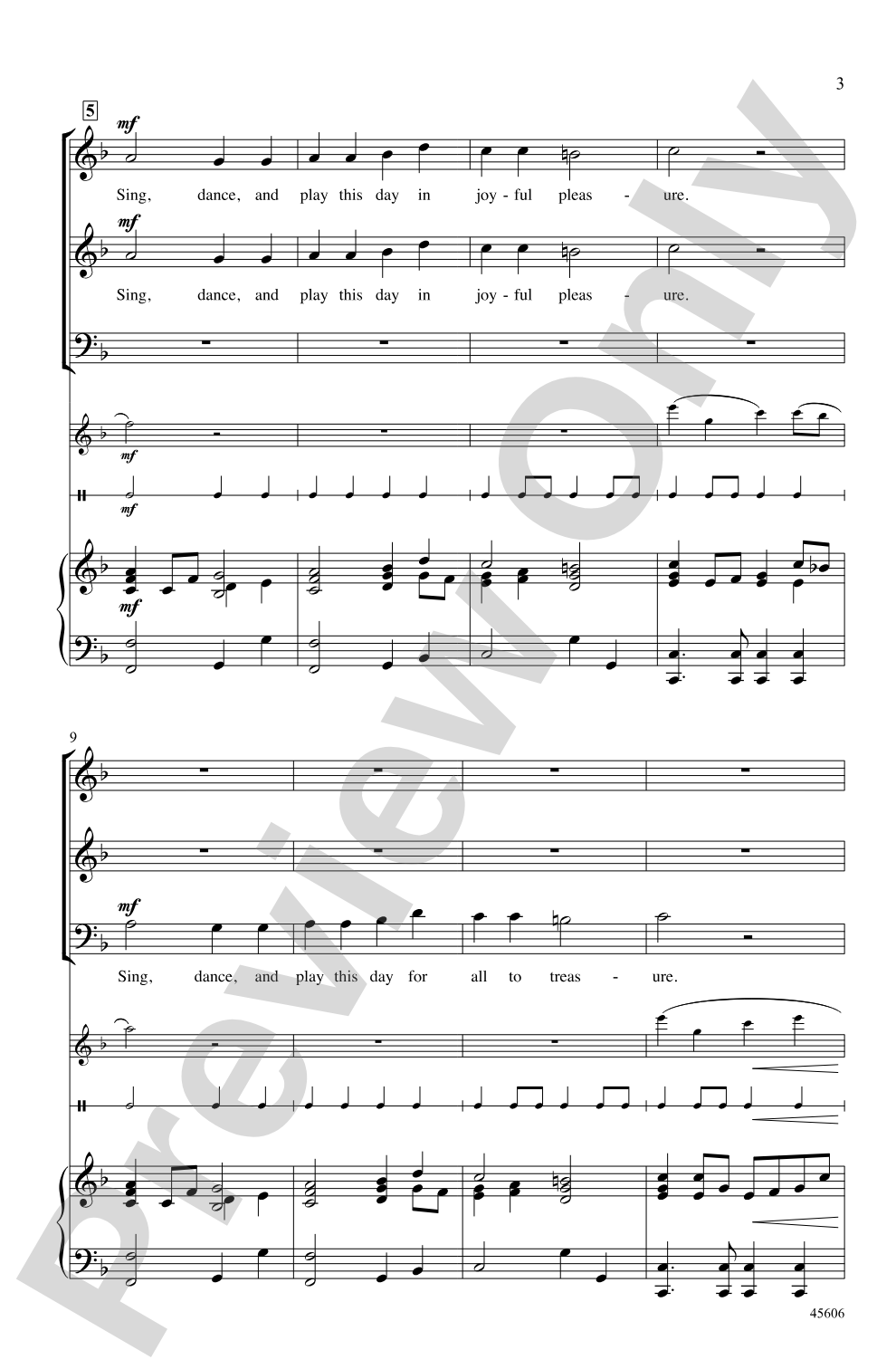
This tuneful chanson is perfectly set for developing singers with modest vocal ranges. Bouyant "fa la las" alternate with joyful new English words by the arranger. Optional flute and hand drum enhance the dance-like character. Solid 3-part mixed repertoire.


Sing, Dance, and Play: 3-Part Mixed Choral Octavo isn't in MakeMusic Cloud just yet...but it could be. Let us know you'd like to see it, and you'll help shape what comes next. In the meantime, start a free trial and dive into thousands of interactive titles your students can play along with today.
Request This Title
Tell us you want it.
Start Your Free Trial
Explore everything that's ready to play right now.
Sample Audio
1
Audio File
--:--
0:00
0:00
Sample Video
Additional Details
Series:
Alfred Choral Designs
Publisher:
Alfred Music
Page Count:
12
SKU:
00-PO-0005501
Instrumentation:
Opt. Flute & Hand Drum
More about this title
About the Composer: Pierre Certon
Pierre Certon (c. 1510-1572) was a French Renaissance composer and singer whose chansons shaped the secular vocal repertoire of the 16th century. His works circulated widely across Europe and influenced the development of the chanson as a refined, expressive form. Certon's gift for melody and text-painting made his pieces enduring models for teaching harmonic writing and ensemble singing.
Why we love this
Liebergen's arrangement strips away historical complexity while preserving the chanson's infectious character, making it genuinely accessible for SAB choirs without sacrificing musical authenticity. The buoyant 'fa la las' provide rhythmic momentum and joy, while the new English text invites singers into the piece immediately. Optional flute and hand drum let you scale the arrangement to your ensemble's instrumentation and skill level, creating flexibility that feels intentional rather than compromised.
What to expect
Bouyant and rhythmically alive, this arrangement captures the playful spirit of the Renaissance chanson while feeling contemporary and approachable. The alternating 'fa las' create a sense of conversation or gentle competition between voices, inviting singers to engage physically and mentally with the text. There's a lightness here that never feels frivolous; instead, it evokes a dance that's both joyful and carefully crafted.
Who it's for
Directors seeking solid 3-part mixed repertoire for developing high school or community choirs will find singers thrive on this piece's modest vocal range and musical clarity. The straightforward harmony and tuneful melody support singers who are still building confidence in ensemble blend and intonation. This works equally well as a contest selection or concert opener.
How to get the most out of it
- Keep the 'fa la las' articulate and rhythmically precise; they're the engine that drives the dance-like feel, so clarity here pays dividends across the whole piece.
- Balance the three parts so no single line dominates; Renaissance polyphony thrives when each voice is heard as an equal partner.
- If using the optional flute and hand drum, rehearse them separately first, then layer them in so the percussion and woodwind enhance rather than obscure the choir.
- Let the new English text shape your phrase shapes and dynamics; the arranger's wordsmithing should feel conversational, not rigid.
How to use it
Open a concert with this piece to set an upbeat, approachable tone and put your audience at ease immediately. Pair it with other secular Renaissance works to build a thematic program, or use it as a tonal contrast following a sacred work or contemporary art song. Its modest length and bright character also make it an ideal encore or a strong selection for spring pops concerts.
Skills your students will build
- Singing independent melodic lines in 3-part mixed voicing
- Maintaining rhythmic precision in repeated 'fa la' figures
- Blending vocal parts with optional instrumental accompaniment
- Interpreting Renaissance text and melody within modern English context
- Performing with ensemble cohesion and rhythmic vitality