

Sing and Rejoice!: SSATB, a cappella Choral Octavo
Words and music by Sally K. Albrecht
Item: 00-PO-0005577
$1.90
Minimum order quantity: 20 copies
Pickup currently not available
Related Items
Sing and Rejoice!: SSATB, a cappella Choral Octavo |
$1.90
|
View |
Description
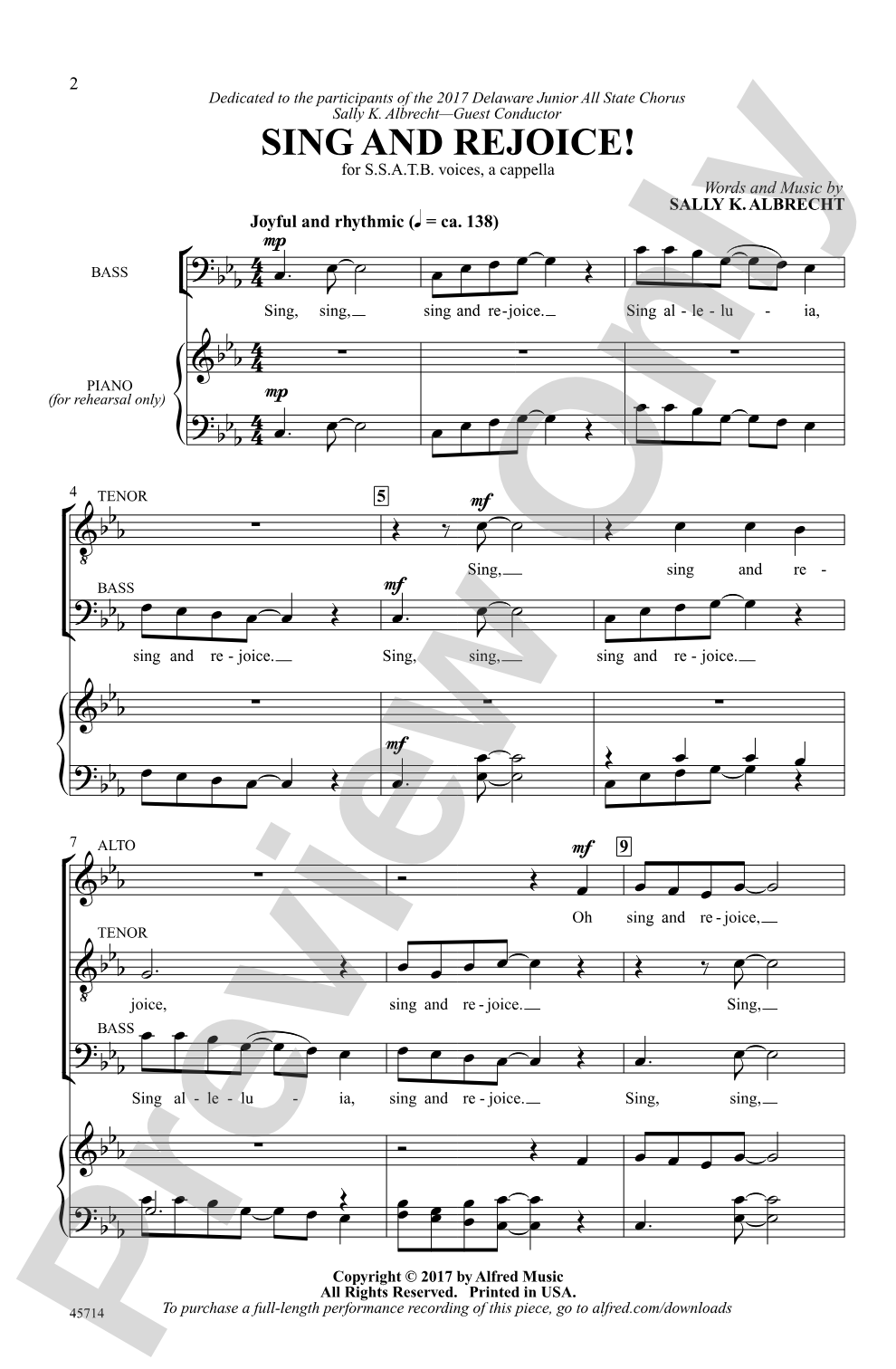
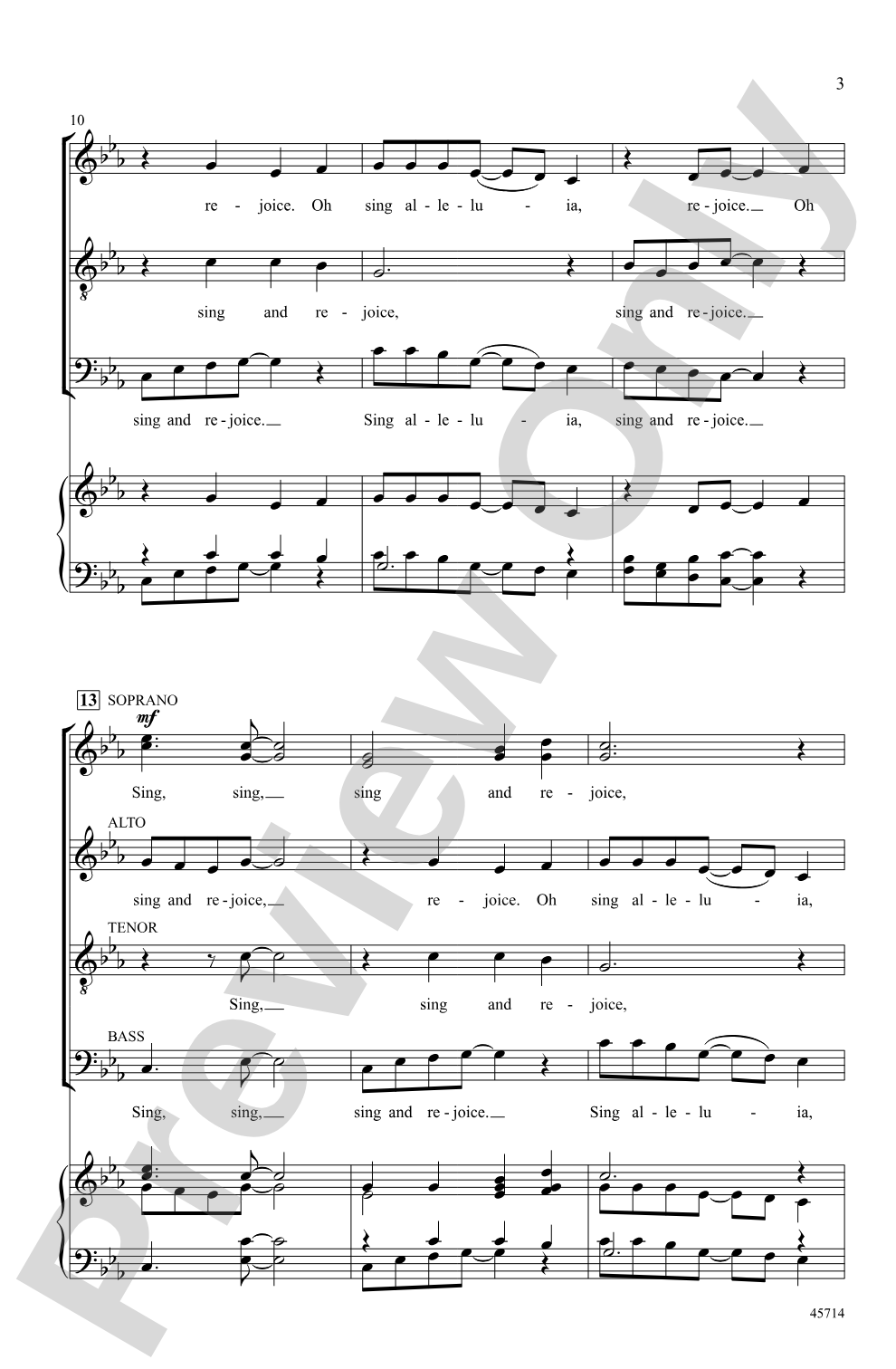
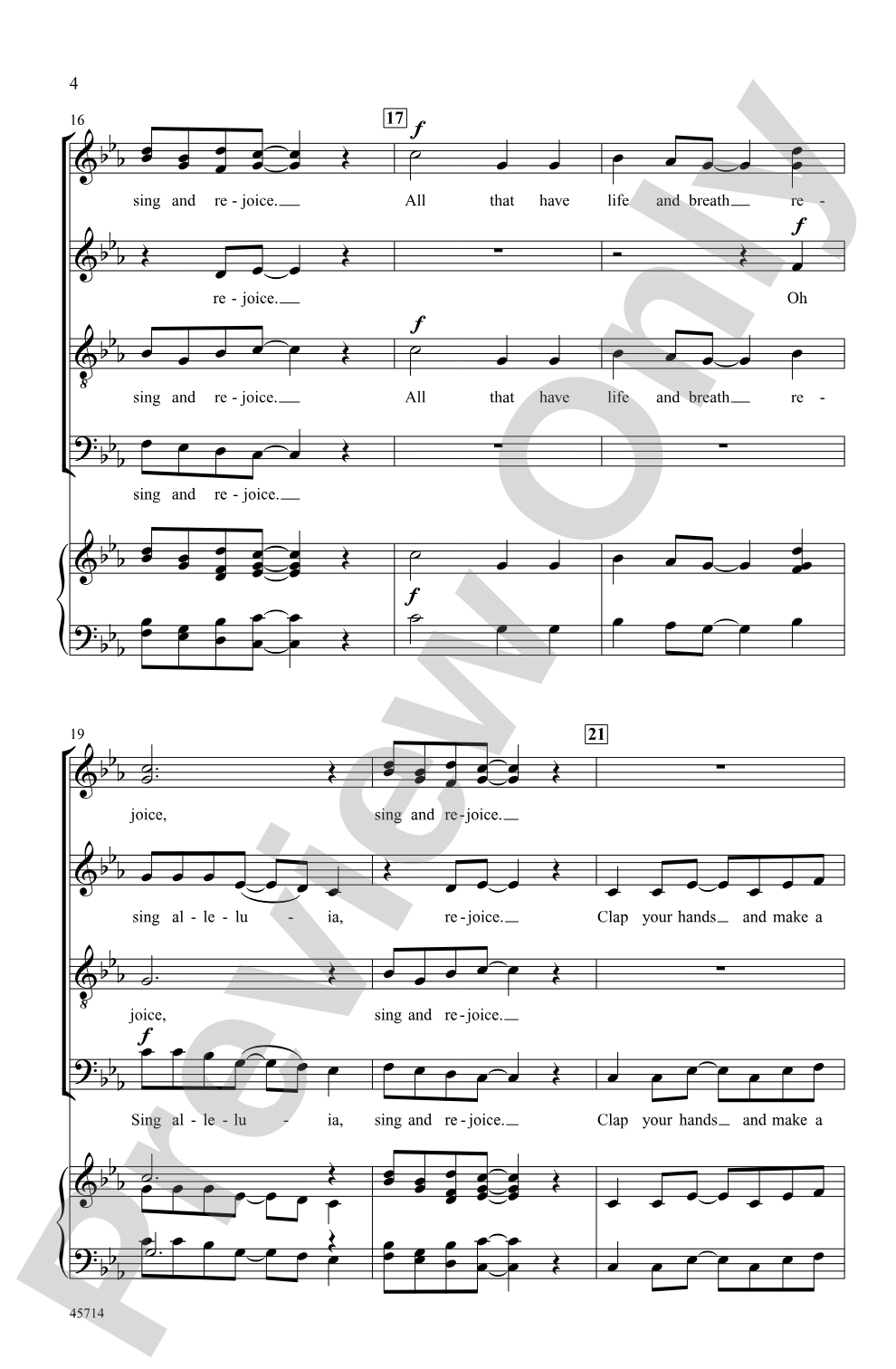
The bass section lays out a captivating minor key line, followed by the entrance of syncopated tenors. Altos add their percussive part, and the sopranos offer another layer in the exciting contrapuntal introduction of this dynamic concert and contest feature. In the middle, mixed and changing meters intensify the piece to its "voices resound" height just before the independent parts return. A joyful a cappella prize!


Sing and Rejoice!: SSATB, a cappella Choral Octavo isn't in MakeMusic Cloud just yet...but it could be. Let us know you'd like to see it, and you'll help shape what comes next. In the meantime, start a free trial and dive into thousands of interactive titles your students can play along with today.
Request This Title
Tell us you want it.
Start Your Free Trial
Explore everything that's ready to play right now.
Sample Audio
1
Audio File
--:--
0:00
0:00
Sample Video
Additional Details
Series:
Alfred Choral Designs
Publisher:
Alfred Music
Page Count:
12
SKU:
00-PO-0005577
More about this title
About the Composer: Sally K. Albrecht

Sally K. Albrecht has shaped American choral music through both composition and leadership for over three decades. An ASCAP award recipient since 1987, she has published more than 600 choral works alongside 75 larger musicals and songbooks. Her tenure as Director of School Choral, Vocal, and Elementary Publications at Alfred Music positioned her at the center of choral repertoire development for generations of singers.
Beyond the page, Albrecht has conducted honor choirs at Lincoln Center, Carnegie Hall, and The Kennedy Center, bringing her distinctive approach to choral movement and interpretation across the country. She holds degrees from Rollins College (B.A., Music and Theater), the University of Miami (M.A. in Drama, M.M. in Accompanying), and has taught at Oakland University, Jersey City State College, and Meredith College. Her leadership extends to the Omicron Delta Kappa National Leadership Honor Society, where she served as Board Chair and received the "Pillar of Leadership" award. She resides in Wake Forest, North Carolina, with composer and arranger Jay Althouse.
Why we love this
Albrecht constructs this piece with genuine contrapuntal sophistication: the bass line anchors a minor key foundation while tenors syncopate above, altos contribute a percussive layer, and sopranos weave through the texture. The introduction alone justifies programming this work, and the shift to mixed and changing meters mid-piece demonstrates her skill at building dramatic arc without sacrificing musical cohesion. Directors will find this a rare a cappella contest piece that challenges singers technically while sounding immediately rewarding in performance.
What to expect
The opening draws listeners into a dark, minor-key landscape where rhythmic energy builds through stacked vocal lines. As the piece unfolds through shifts in meter and texture, it gathers momentum toward a powerful choral declaration, then pulls back as the individual voices reclaim their independence, leaving singers and audience alike energized.
Who it's for
This piece suits choirs with solid reading skills and comfort with independent voice parts. The a cappella texture and changing meters demand precision, making it ideal for advanced high school, college, or community choirs preparing for festival and contest settings.
How to get the most out of it
- Lock the minor key foundation in your bass section first; their line establishes the harmonic and rhythmic grid that the other voices stack onto. Without a secure bass foundation, the syncopated tenor entrance and percussive alto part will feel unfocused.
- Isolate the contrapuntal introduction by voice part in sectionals before attempting the full texture. Each voice has distinct rhythmic and melodic material, and singers need to own their lines before balancing them together.
- Mark the meter changes clearly in rehearsal so tenors and altos understand where the syncopation and percussive moments sit rhythmically. Use a metronome to stabilize transitions into the mixed meters that build toward the "voices resound" climax.
- Balance the soprano line carefully during the contrapuntal sections; they're meant to offer another layer, not dominate. A light, sustained approach will allow the bass, tenor, and alto lines to shine through the texture.
How to use it
Program this as a contest or festival submission where its technical demands and dramatic arc will impress adjudicators. It also works as a concert feature that sits well alongside other contemporary sacred choral works, offering the a cappella purity that audiences find compelling without requiring instrumental accompaniment.
Skills your students will build
- Reading independent voice parts in contrapuntal texture
- Singing syncopated rhythms against steady harmonic lines
- Navigating mixed and changing meters (3/4, 4/4, and others) within a single piece
- Balancing four-part harmonic color while maintaining individual line clarity
- Sustaining intonation and blend in a cappella singing without instrumental support