

Sing Alleluia, Allelu!: 2-Part Choral Octavo
Music by Andy Beck
Item: 00-PO-0004320
$2.25
Minimum order quantity: 20 copies
Pickup currently not available
Description
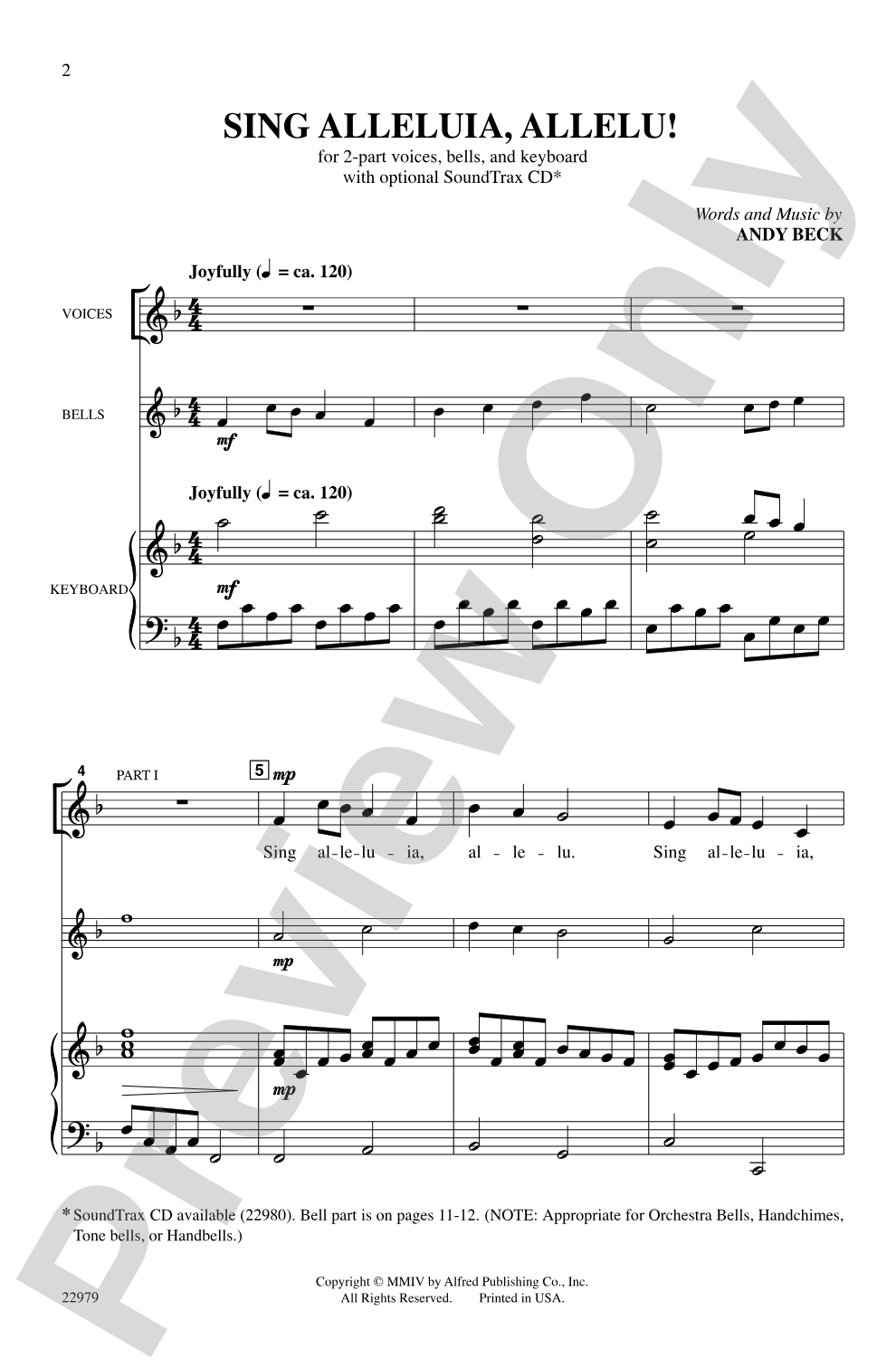
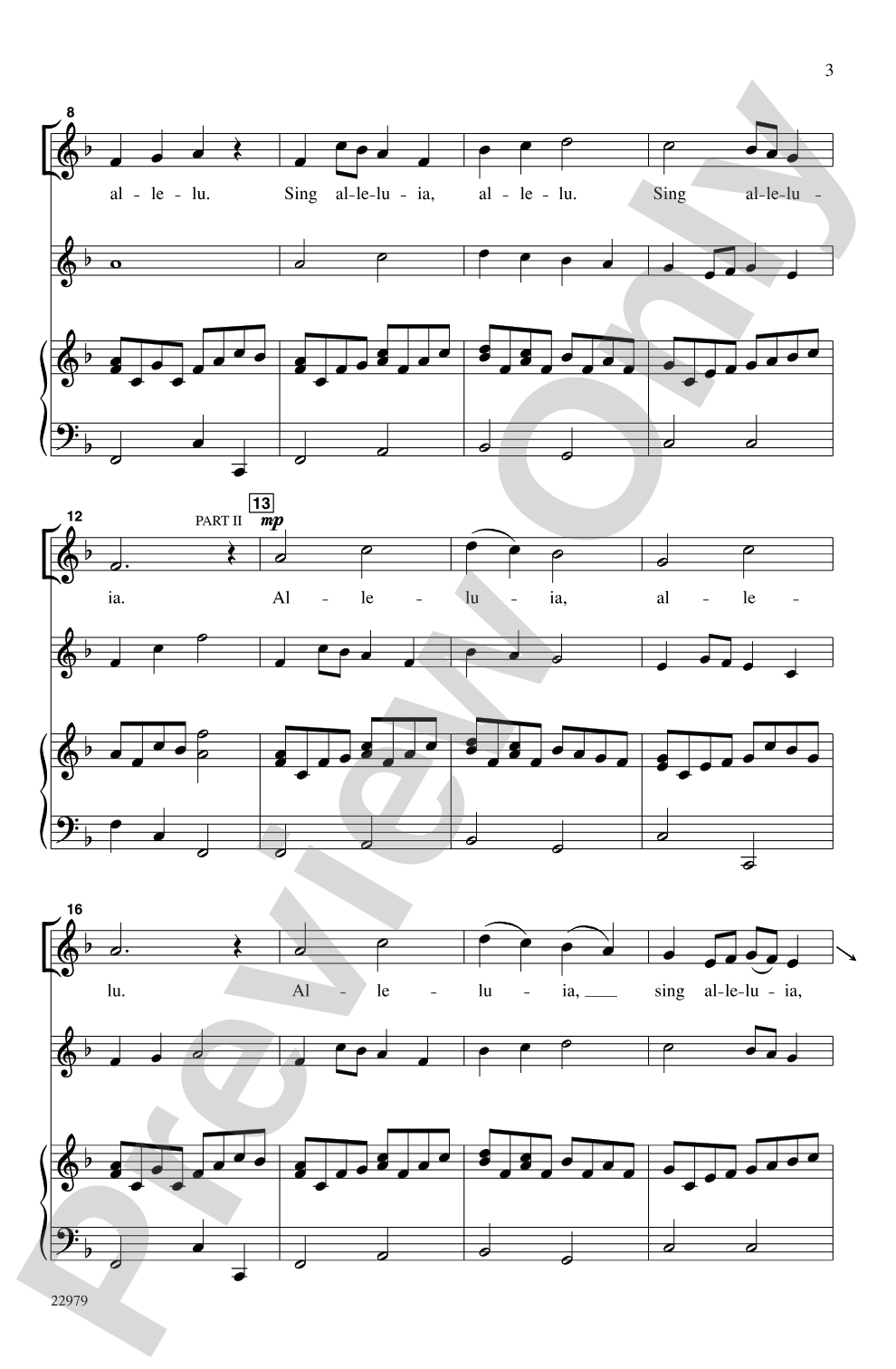
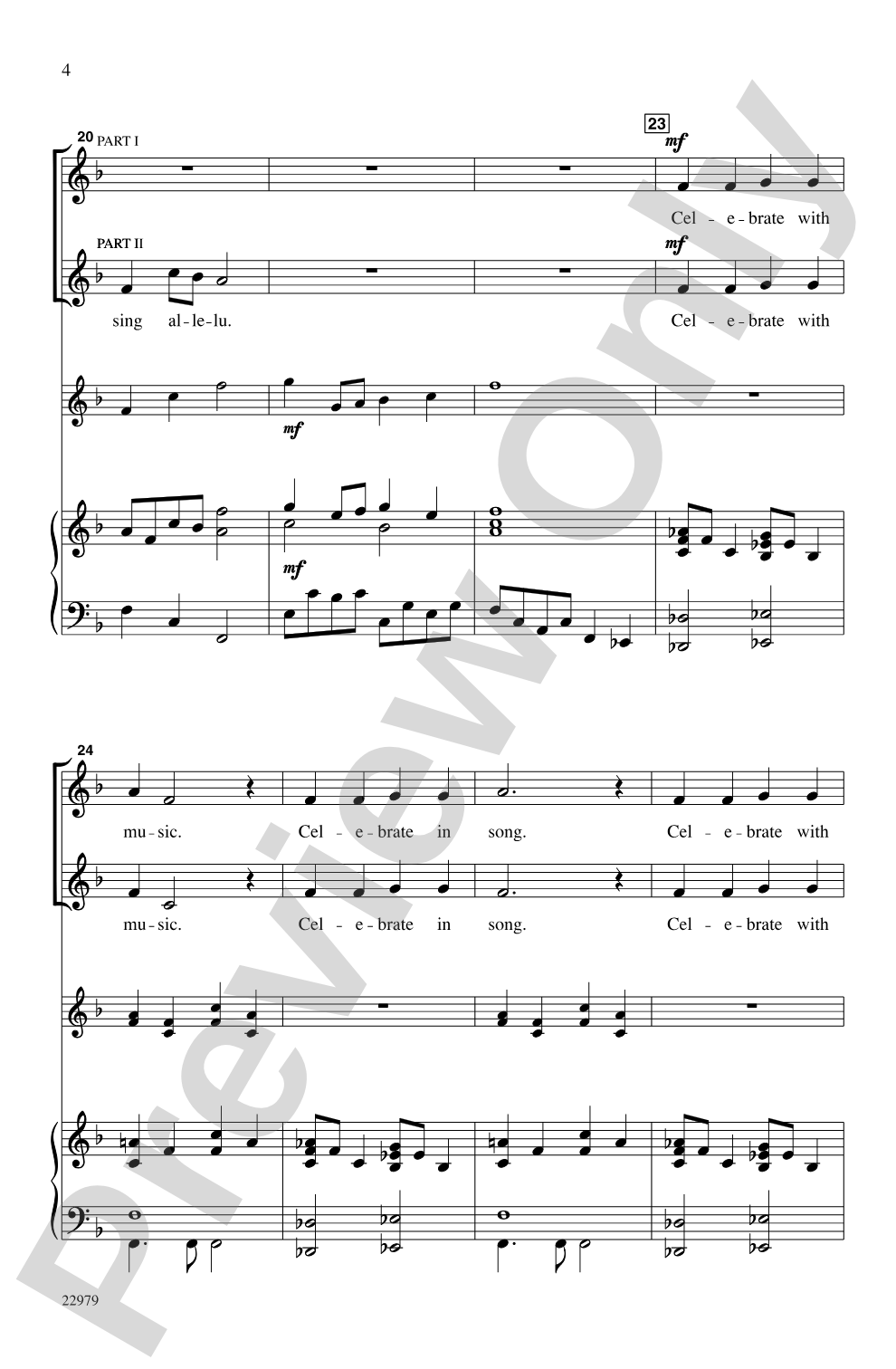
This joyful piece is also featured in Alfred's Sing at First Sight (a choral sight singing method), so you can be assured that it will be easy to teach, with singable lines and simple intervals. Partner song format, with two independent melodies that work beautifully together as the song progresses. A simple bell part, Alberti style keyboard, and vocal descant add to the Mozartian flair, or sing this one with our classical sounding SoundTrax. Programmable at any time of year.


Sing Alleluia, Allelu!: 2-Part Choral Octavo isn't in MakeMusic Cloud just yet...but it could be. Let us know you'd like to see it, and you'll help shape what comes next. In the meantime, start a free trial and dive into thousands of interactive titles your students can play along with today.
Request This Title
Tell us you want it.
Start Your Free Trial
Explore everything that's ready to play right now.
Sample Audio
1
Audio File
--:--
0:00
0:00
Sample Video
No sample videos found.
Additional Details
Series:
Alfred Archive Edition: Alfred Choral Designs
Publisher:
Alfred Music
Page Count:
12
SKU:
00-PO-0004320
More about this title
About the Composer: Andy Beck

Andy Beck directs choral publications at Alfred Music and has composed and arranged more than 450 choral works and vocal resources for singers of all ages. His output spans from children's musicals to full-length choral catalogs, and his work reaches singers across the globe, as evidenced by countless performances shared on YouTube. Beyond the page, Beck maintains an active presence as a guest conductor, adjudicator, and clinician for music educators nationwide, with recent work including commissions and conducting engagements for honor choirs and all-state groups throughout the Southeast.
Beck holds degrees in Music Education from Ithaca College and Northwest Missouri State University. A tenor himself, he performs with the North Carolina Master Chorale Chamber Choir and has worked as a studio singer for Alfred Music since 1992. His published pedagogical works, including Sing at First Sight, Foundations in Choral Sight Singing, and Vocalize! 45 Vocal Warm-Ups That Teach Technique, demonstrate a deep commitment to music literacy and choral artistry grounded in classroom experience.
Why we love this
Beck's connection to Sing at First Sight gives this piece genuine pedagogical credibility; the singable lines and simple intervals you'll find here aren't accidental but reflect his understanding of what beginning singers can execute successfully. The partner song format creates natural two-part independence without requiring advanced vocal balance, and the optional bell and keyboard parts (or the recorded accompaniment) let you adjust the arrangement to match your resources and rehearsal time.
What to expect
Sing Alleluia, Allelu! sparkles with the kind of refined joy you'd expect from classical-period sacred writing. The text and melody combine to create buoyancy without relying on bombast; instead, there's an understated celebration in the singing line, supported by the gentle companion melody that evolves as the piece progresses. Whether performed with keyboard, bell, or recorded backing, the overall effect feels elegant and complete.
Who it's for
This piece works beautifully for middle school and high school choirs building two-part confidence, as well as community and adult choral groups seeking accessible sacred music. Beginning sight singers benefit from the straightforward intervallic content, while more experienced ensembles will appreciate the elegant partner song structure and the flexibility to program it with or without accompaniment.
How to get the most out of it
- Balance the two melodic lines by having singers listen across parts during rehearsal; the beauty of the partner song relies on hearing both melodies as equal conversation partners.
- If using the recorded accompaniment, rehearse it separately first to establish tempo and harmonic context before layering in your voices.
- Approach the Mozartian character by keeping the tone bright and lifted; avoid heaviness that would undercut the joyful text setting.
- If adding the optional bell part or keyboard, assign students or colleagues to those roles during earlier rehearsals so singers can anchor their pitches without relying solely on each other.
How to use it
This piece sits comfortably in spring concerts, holiday programs, or any occasion calling for brief sacred music that won't overshadow a larger thematic arc. Program it early in your concert to establish a clear, uplifting mood, or use it as a closing number to send audiences out with brightness. The twelve-page octavo and modest performance requirements make it ideal for mixed-level rehearsal schedules where you need strong repertoire that doesn't demand excessive instrumental support.
Skills your students will build
- Singing partner songs with independent melodic lines
- Sight-reading simple diatonic intervals
- Balancing two-part harmony
- Sustained singing with rhythmic precision
- Part independence without full accompaniment support