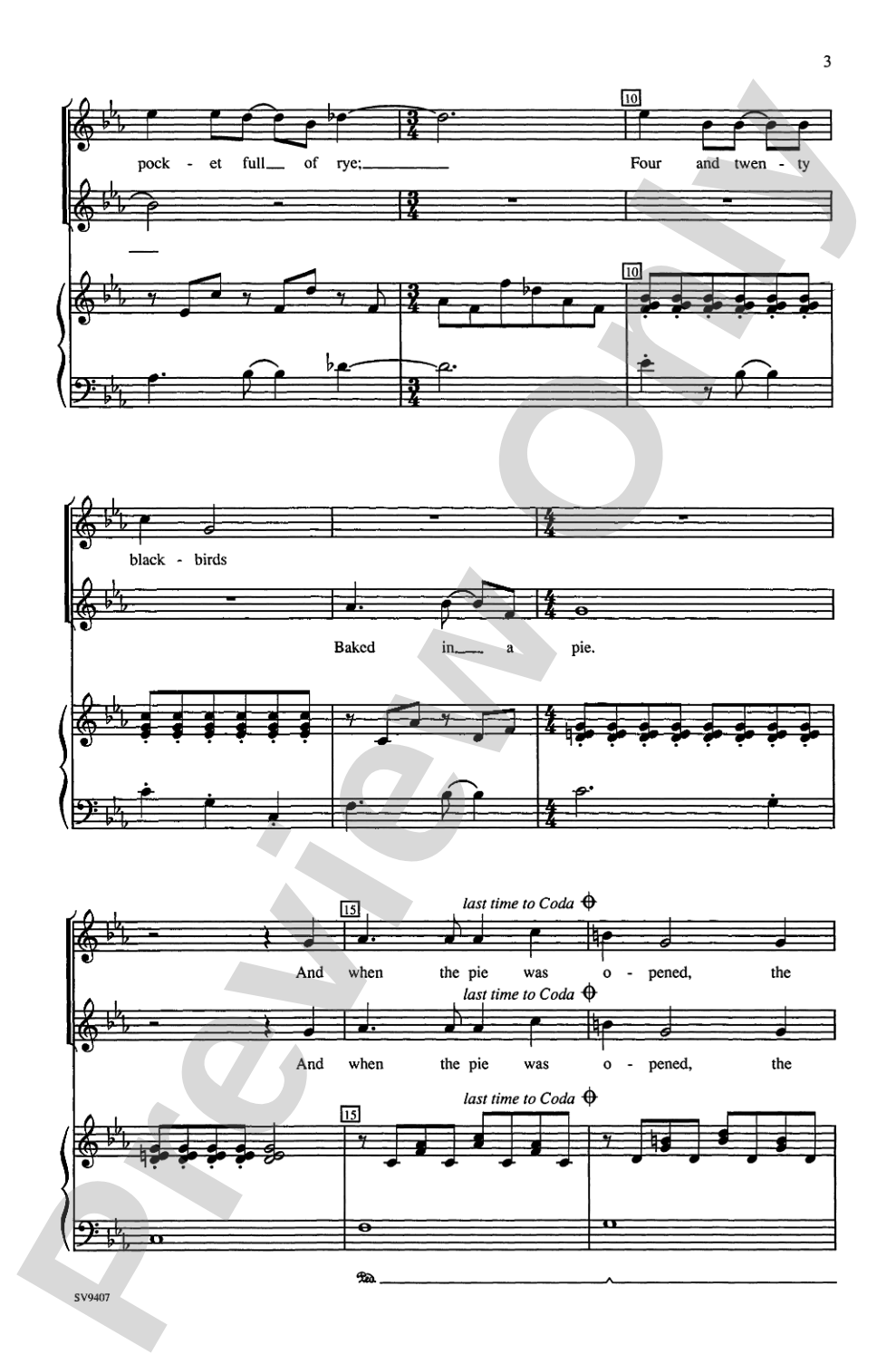
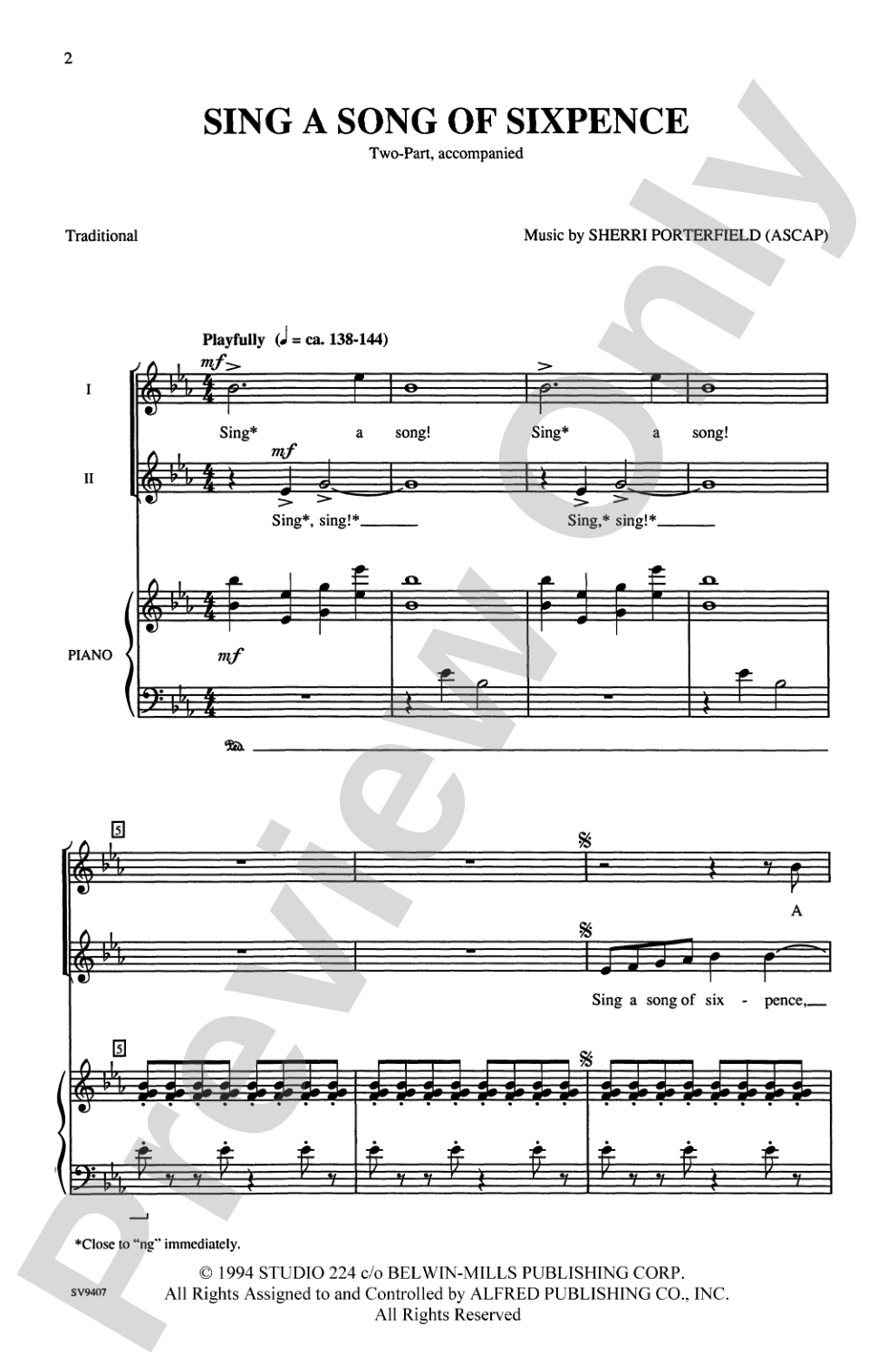
Sing a Song of Sixpence Sheet Music Preview

Sing a Song of Sixpence: 2-Part Choral Octavo

By Sherri Porterfield

Level: Moderate

Item: 00-PO-0005230

Digital Download
$2.25

Minimum order quantity: 20 copies

Description
Delightfully clever, this two-part choral is fun for everyone. Sherri has given the Mother Goose rhyme new rhythmic life. A work worthy of concert, contest or festival performance.

Sing a Song of Sixpence: 2-Part Choral Octavo isn't in MakeMusic Cloud just yet...but it could be. Let us know you'd like to see it, and you'll help shape what comes next. In the meantime, start a free trial and dive into thousands of interactive titles your students can play along with today.

Sample Audio
No sample audio found.
Sample Video
Additional Details
Series: Alfred Archive Edition: Studio PR Catalog
Publisher: Alfred Music
Page Count: 8
SKU: 00-PO-0005230

More about this title

About the Composer: Sherri Porterfield

Sherri Porterfield

Sherri Porterfield leads the choral program at Cedar Park Middle School in Cedar Park, Texas, and has directed award-winning choirs across Missouri, Kansas, and Texas. Her ensembles have earned numerous first-place and sweepstakes honors at competitions and performed at several state music educators conventions. She has also served as an adjunct assistant professor of music education at the University of Missouri-Kansas City Conservatory of Music.

With over 175 published choral compositions to her credit, Porterfield has built a prolific career as a composer represented by Alfred Music and other major publishers. Since 1997, she has received yearly ASCAP awards for her compositions. A graduate of the University of Memphis (B.S.E. in music education) and the University of Missouri-Kansas City (Master of Music in choral conducting), she has worked extensively as a clinician and guest conductor with honor choirs at the elementary, middle, and high school levels throughout the United States. She was named Teacher of the Year at Frontier Trail Junior High in Olathe, Kansas, in 1999, and has been recognized four times in Who's Who Among America's Teachers.

Why we love this

Porterfield takes a beloved nursery rhyme and makes it genuinely entertaining for singers without sacrificing musicality. The rhythmic invention lifts the Mother Goose text into something fresh and concert-ready, perfect for groups seeking material that audiences enjoy and judges respect equally.

What to expect

Witty and animated, this setting breathes new energy into a familiar rhyme. The two-part writing creates genuine harmonic texture while keeping the piece accessible; the result feels clever without being overcomplicated.

Who it's for

This octavo works well for developing middle school or upper elementary choirs ready to tackle harmonic writing without heavy technical demands. It's equally suited to contest and festival programs, where schools want a piece that sounds polished, sounds fun, and shows off young singers' growing musicianship.

How to get the most out of it

  • Emphasize the rhythmic vitality throughout. This piece gains its charm from forward motion, so maintain crisp articulation and clear pulse even in softer moments.
  • Balance the two parts carefully during unison passages so the blend feels intentional rather than accidental. Mark these transitions in your scores to rehearse them specifically.
  • Treat the text with clarity and humor. The Mother Goose rhyme invites playfulness without becoming cartoonish; let the natural wit of Porterfield's setting guide your interpretation.

How to use it

Program this as a contrast piece in a concert of mixed repertoire, where it lightens the mood and engages the audience. Its moderate difficulty and contest-ready status also make it an excellent choice for festival season, particularly when you want material that's both competitive and genuinely enjoyable.

Skills your students will build

  • Singing in two independent parts with harmonic awareness
  • Rhythmic clarity and precision in syncopated passages
  • Textual expression and communication of meaning through music
  • Blending in unison sections while maintaining part identity

You May Also Like