
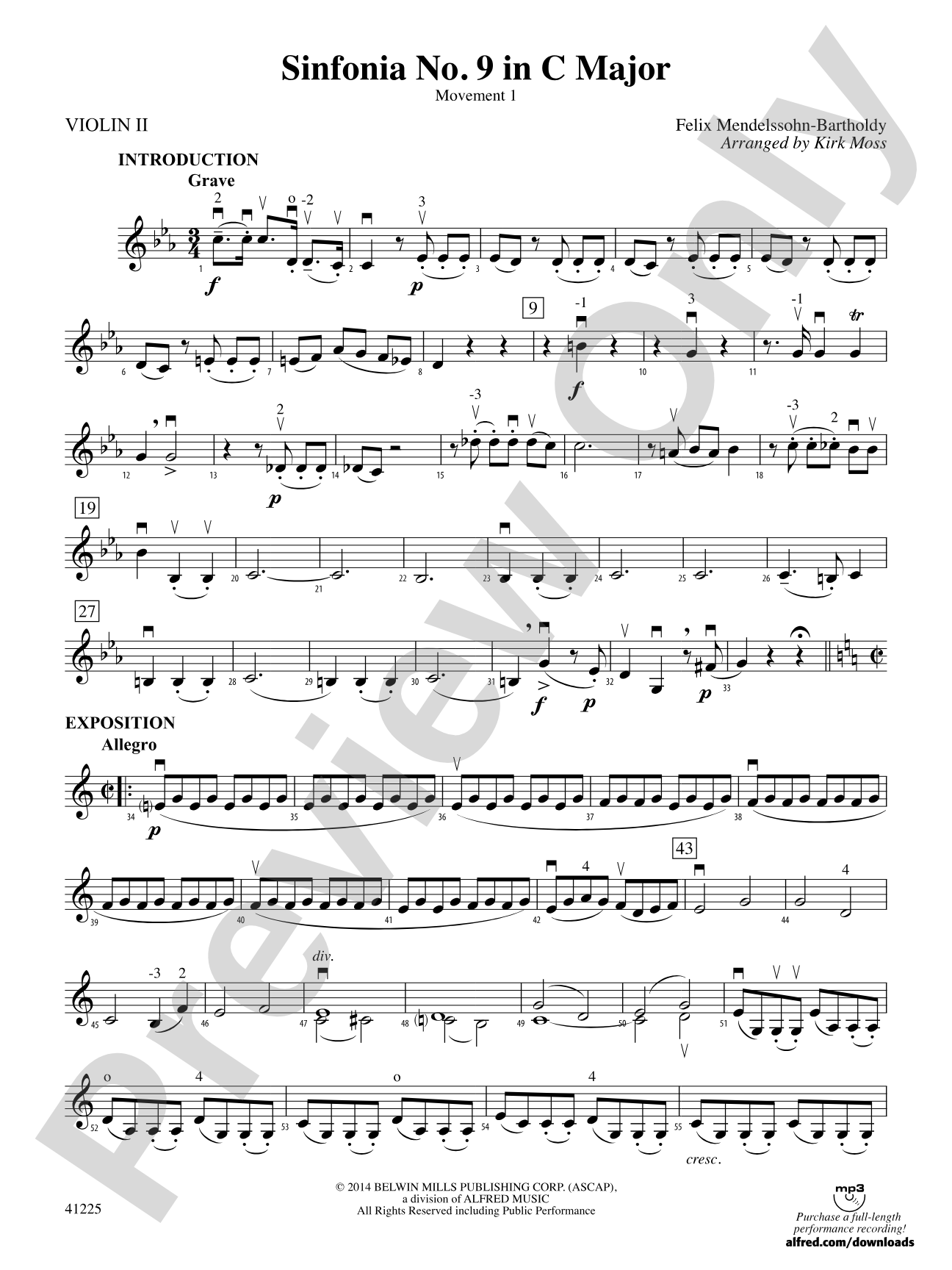
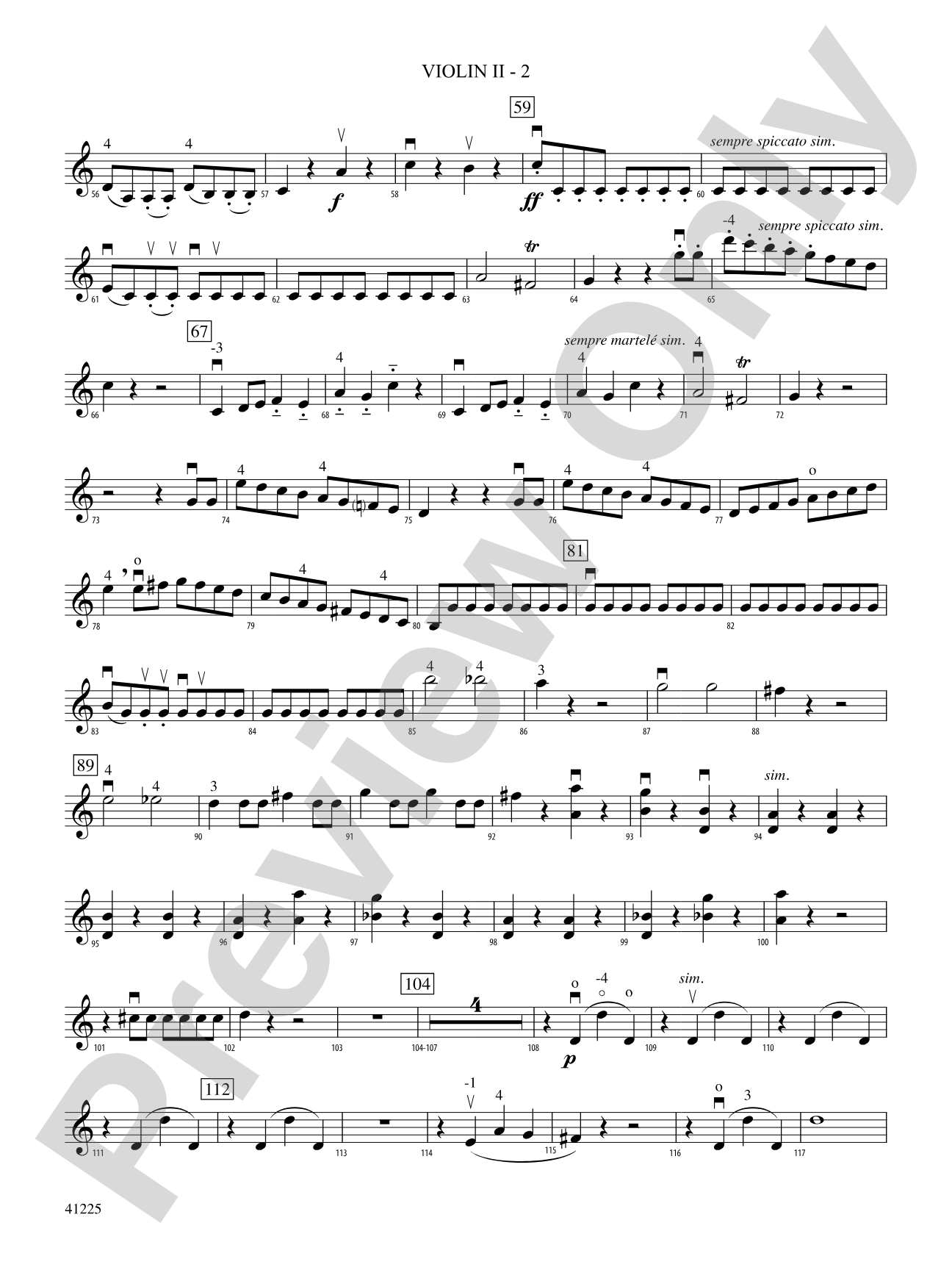

Sinfonia No. 9 in C Major: 2nd Violin
Movement 1
By Felix Mendelssohn-Bartholdy / arr. Kirk Moss
Grade: 4
Item: 00-PC-0016349_VN2
$5.99
Pickup currently not available
Description
A slow and somber Grave introduction leads to a light-hearted Allegro, presenting an ideal piece to teach sonata form to your students. The clearly marked bowings and artist-level fingerings will save precious rehearsal minutes and contribute to a professional sound. This arrangement re-scores the first movement of "Sinfonia No. 9" from six voices, requiring two separate viola parts, to the traditional five-voice string orchestra. Consistent with selected professional performances of the work, the first of two recapitulations has been seamlessly omitted to create a more balanced form, eliminate redundancies akin to counterpoint exercises, and showcase the young composer's emerging creativity by emphasizing his striking use of the key of A-major before reaffirming the home key. The elimination of a repeat reduces the duration to 8:30. (11:30) This title is available in MakeMusic Cloud.


Don't just read it, hear it, play along with it, and watch your students grow with it. In MakeMusic Cloud, Sinfonia No. 9 in C Major: 2nd Violin comes alive with professional accompaniment, adjustable tempo, and built-in practice tools that turn solo practice into real progress.
Open in the Player
Jump straight in and assign it today.
Start Your Free Trial
Open this title and explore the full library in minutes.
Sample Audio
1
Audio File
--:--
0:00
0:00
Sample Video
No sample videos found.
Additional Details
Series:
Belwin Concert String Orchestra
Publisher:
Alfred Music
Page Count:
248
SKU:
00-PC-0016349_VN2
More about this title
About the Composer: Felix Mendelssohn-Bartholdy
Felix Mendelssohn-Bartholdy (1809-1847) was a Romantic-era composer whose mastery of orchestral form and gift for lyrical melody secured his place among the most performed classical composers. A child prodigy trained in rigorous counterpoint, he demonstrated extraordinary facility across all instrumental genres; his symphonies, concertos, and overtures reveal a mind deeply engaged with the structural logic of the Classical tradition while embracing the emotional expressive language of Romanticism.
Mendelssohn's orchestral works remain essential teaching repertoire because they balance technical clarity with genuine musical substance. His writing for strings is idiomatic and gratifying; his harmonic language, though enriched by 19th-century chromaticism, remains transparent enough to illuminate formal architecture. He spent much of his career as a conductor and mentor, and that pedagogical instinct permeates his scores.
Why we love this
Kirk Moss's rescoring strips away the six-voice texture and the complications of dual viola parts to create an arrangement that lets young orchestras hear the piece's architectural elegance without wrestling with unnecessary complexity. The thoughtful omission of the first recapitulation sharpens the form and eliminates the tedious sectional repetitions that can test student focus, while the pre-printed bowings and fingerings mean your ensemble sounds polished from early rehearsals rather than spending weeks on bowing logistics.
What to expect
The opening Grave settles like mist over still water, austere and introspective; when the Allegro breaks through, the mood transforms to bright conversation between sections, buoyant but never frivolous. The harmonic excursion to A major provides a moment of harmonic color that stands out vividly against the surrounding C-major landscape, offering a taste of Mendelssohn's sophisticated harmonic palette.
Who it's for
String orchestras at the advanced Grade 4 level seeking a masterwork that teaches sonata form through direct musical experience rather than textbook example. Directors preparing students for fall festival seasons will find a piece substantial enough to impress adjudicators but manageable enough to polish in a single rehearsal cycle.
How to get the most out of it
- Shape the Grave introduction with genuine weight and silence; resist rushing through fermatas, as the stillness makes the Allegro's arrival feel like real arrival.
- Mark the A-major modulation in rehearsal as a pivot moment structurally and sonically; the brightness of that key shift should feel intentional, not accidental.
- Balance the dialogue between first and second violins throughout the Allegro; this piece trades thematic fragments between sections, and clarity here trains ears for motivic listening.
- Let the omitted recapitulation become a teaching point: have students compare this score to a recording of the original six-voice version and discuss what Moss removed and why form benefits from the revision.
How to use it
Program this as the centerpiece of a concert devoted to Romantic string literature, pairing it with shorter character pieces or contemporary works to frame it as both a milestone in orchestral history and a living musical experience. It also serves perfectly as a contest selection for spring festivals, where its formal clarity and manageable duration (8:30) allow adjudicators to evaluate both ensemble precision and artistic phrasing.
Skills your students will build
- Sonata form structure (exposition, development, recapitulation) through active performance
- Harmonic modulation and tonal function, particularly movement from C major to A major
- Transparency and balance in dialogue between string choir sections
- String-specific techniques: coordinated bowings across sections, vibrato control in lyrical passages, rhythmic precision in Allegro articulation
- Score awareness and ensemble interdependence across five string voices