
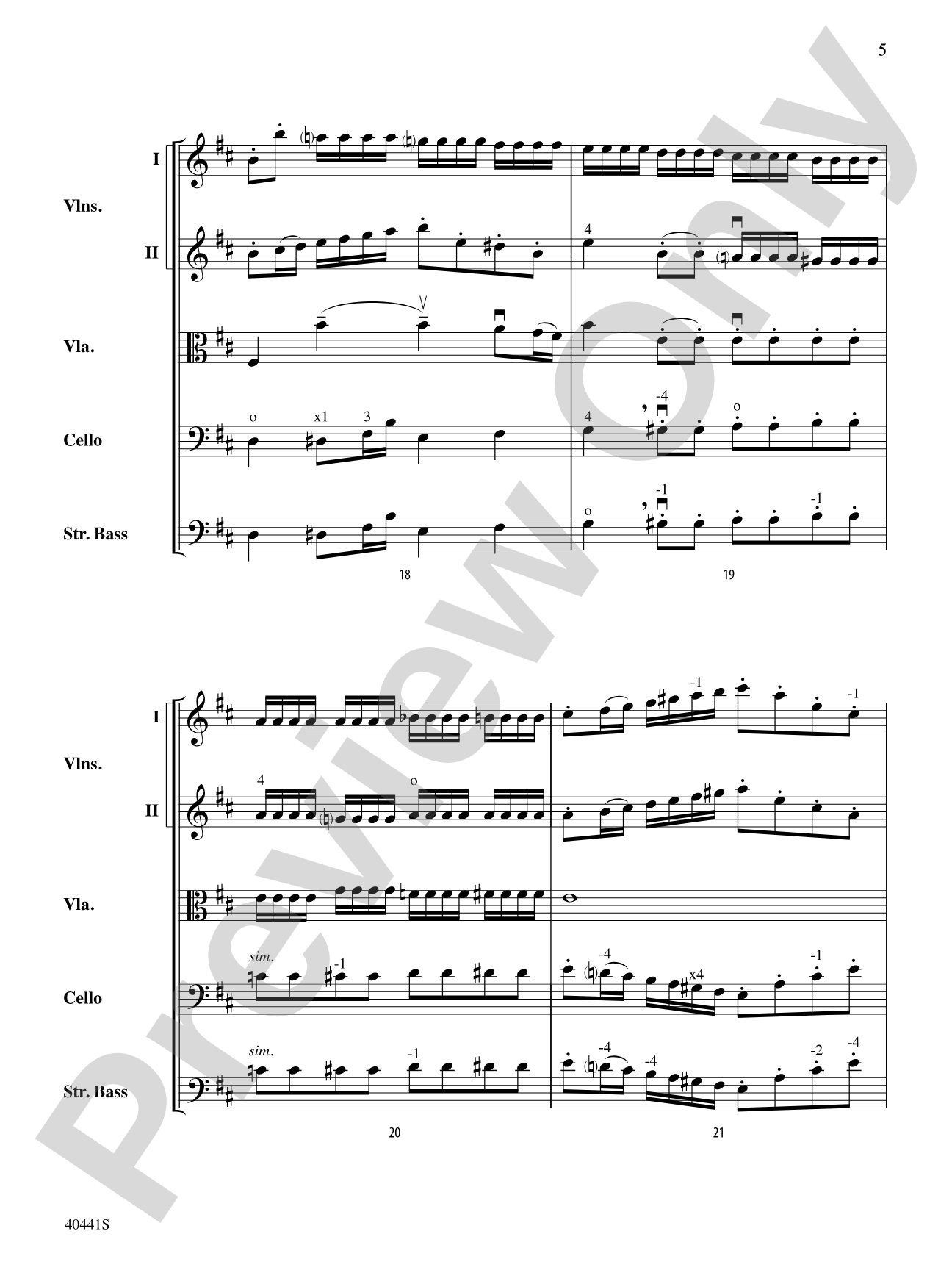
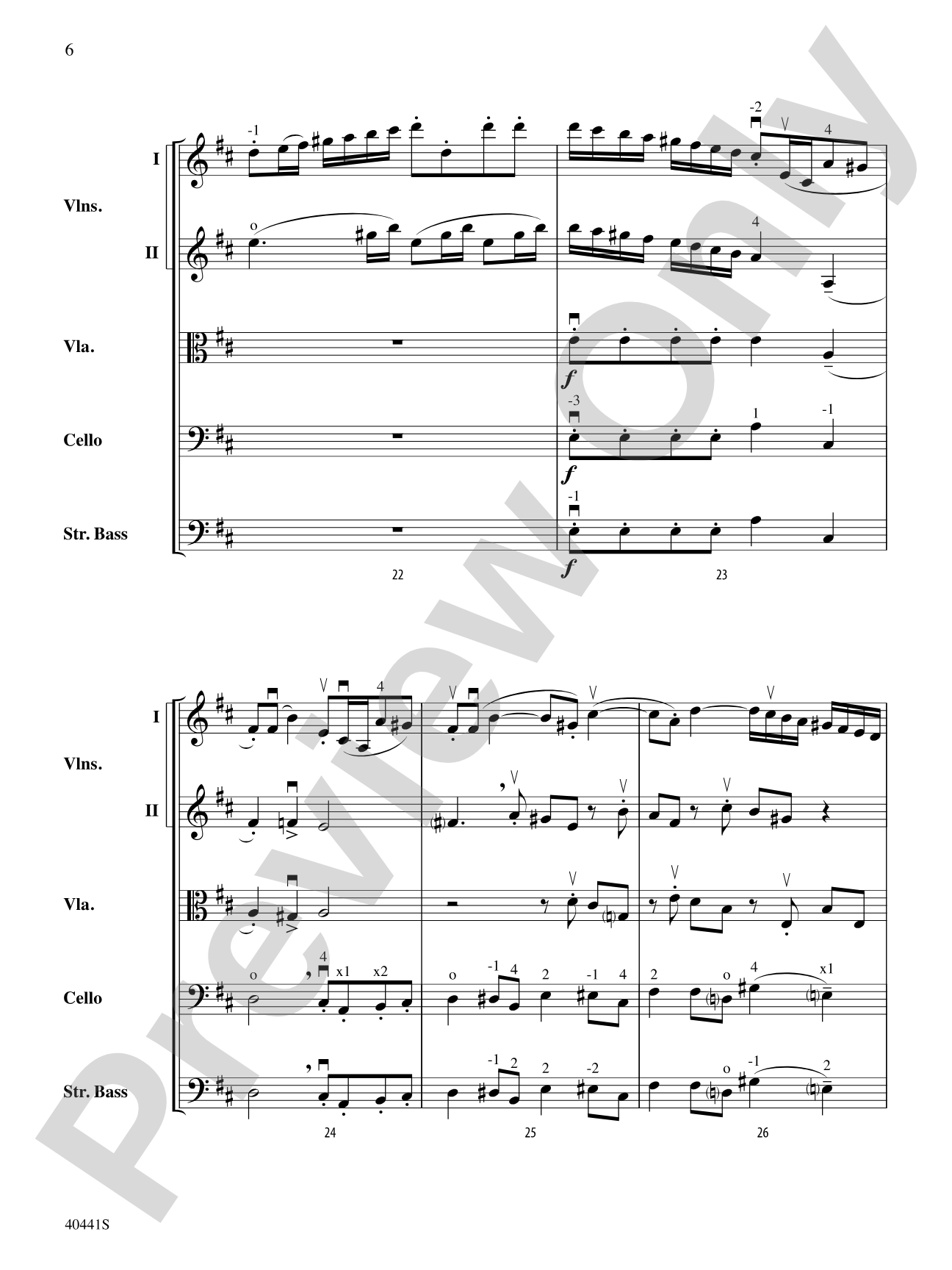
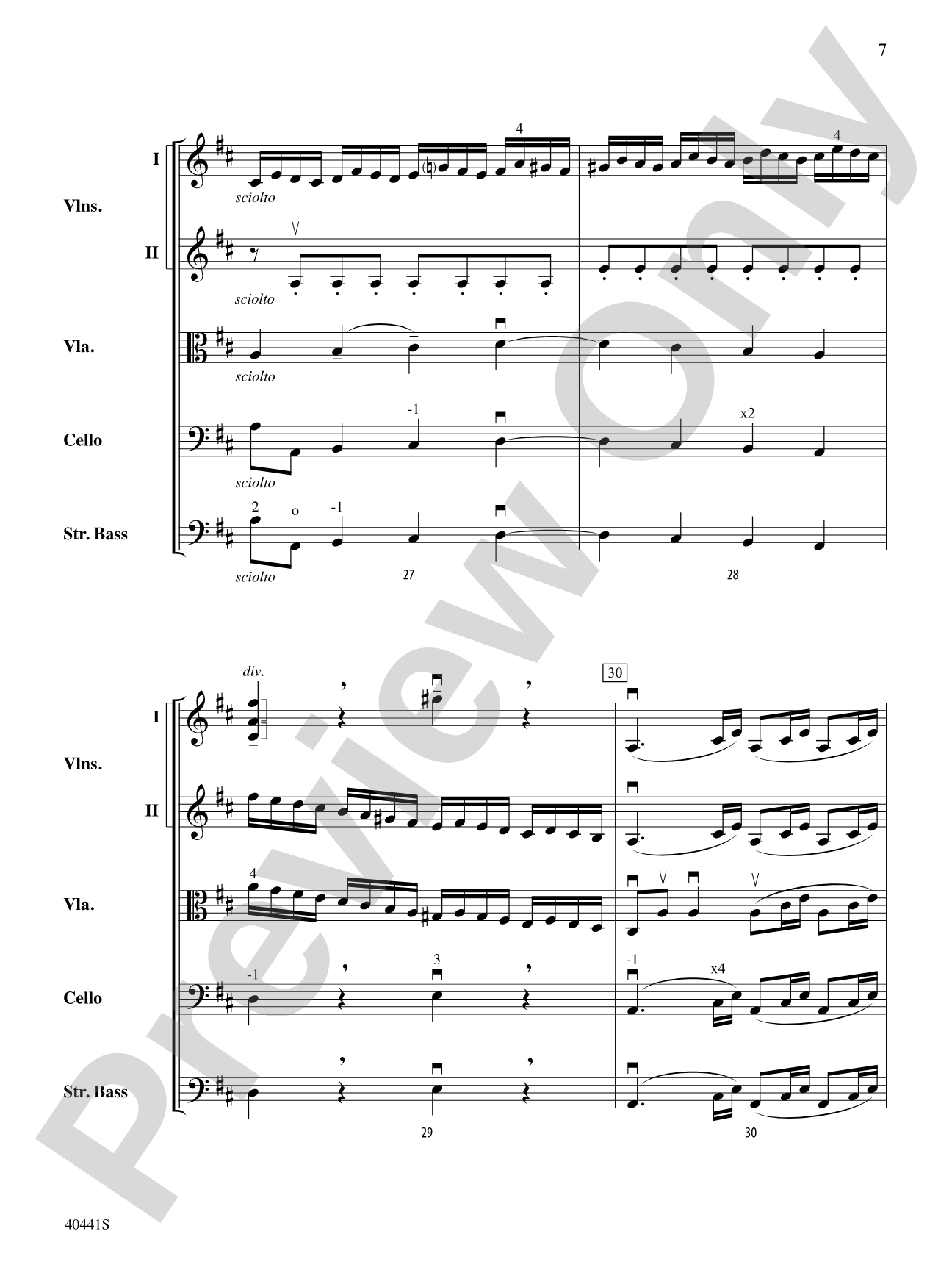
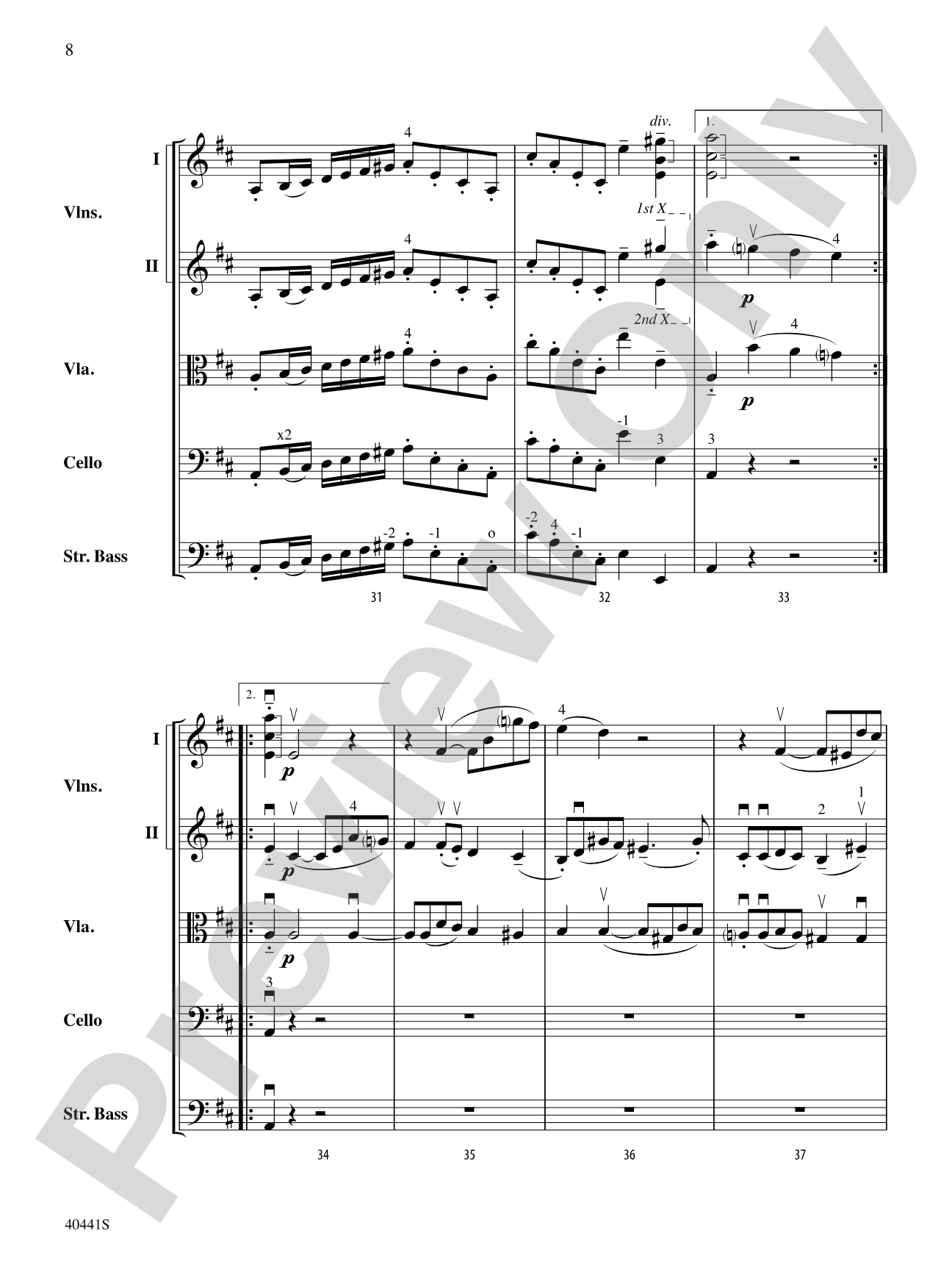
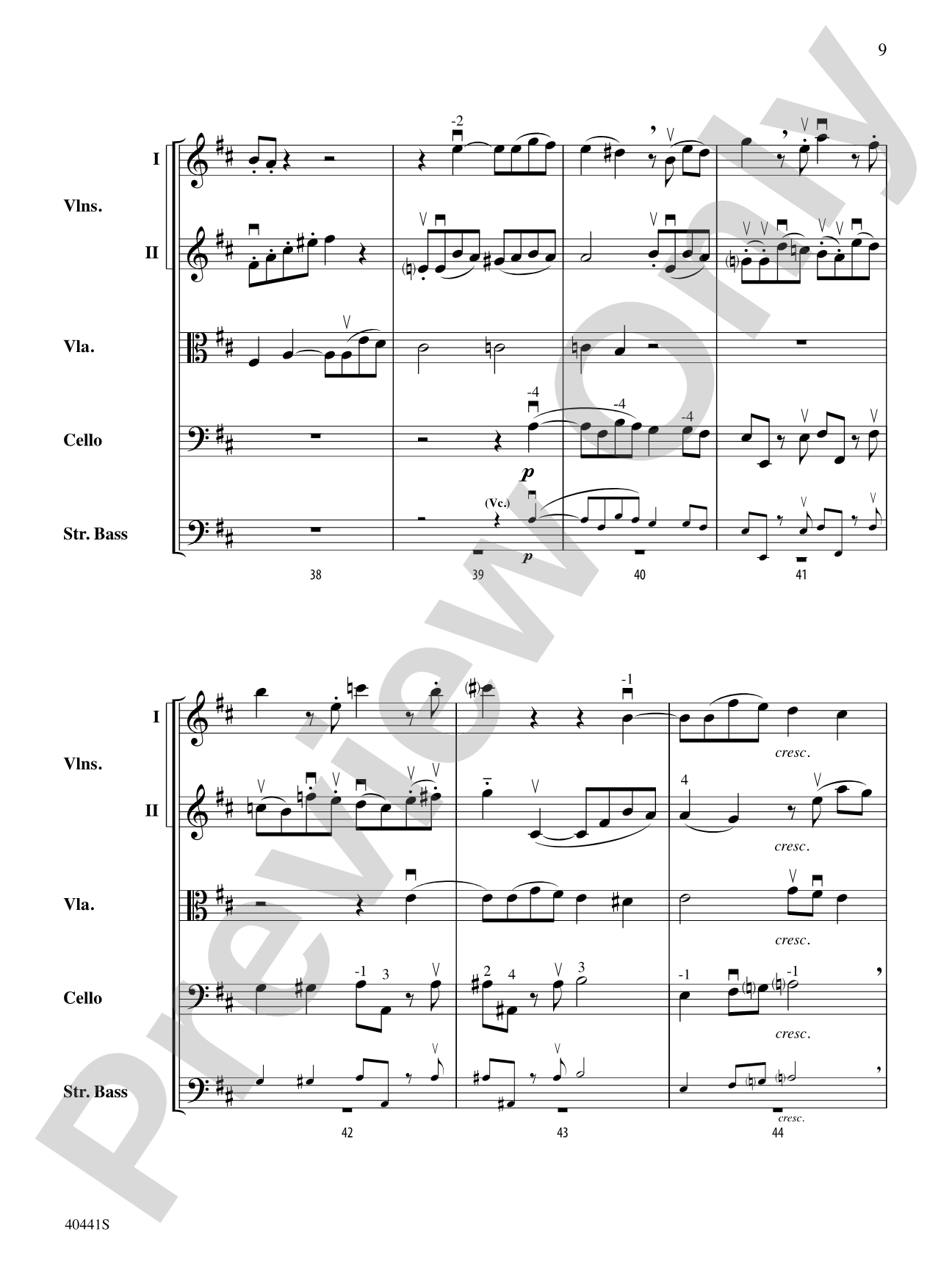
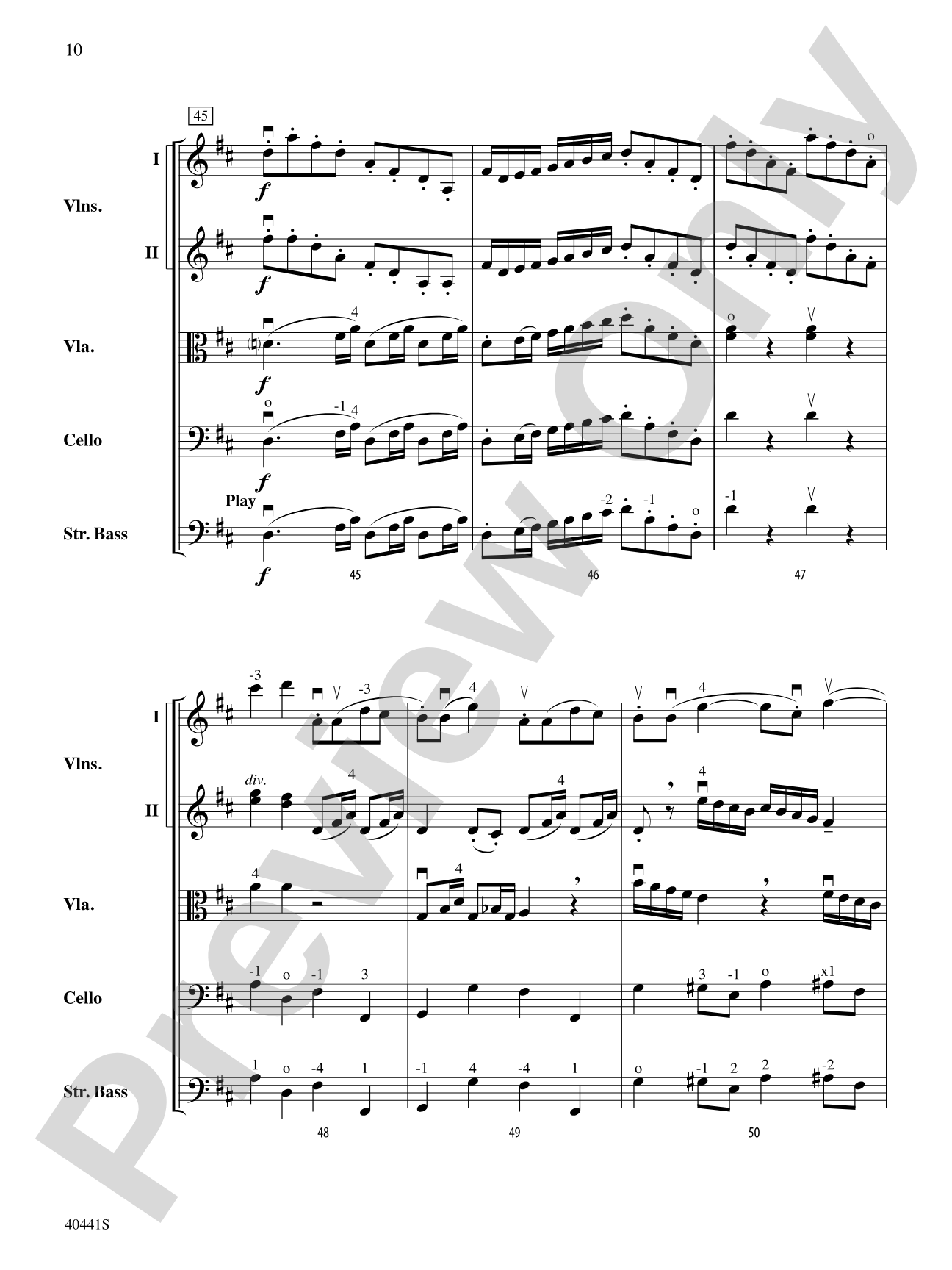
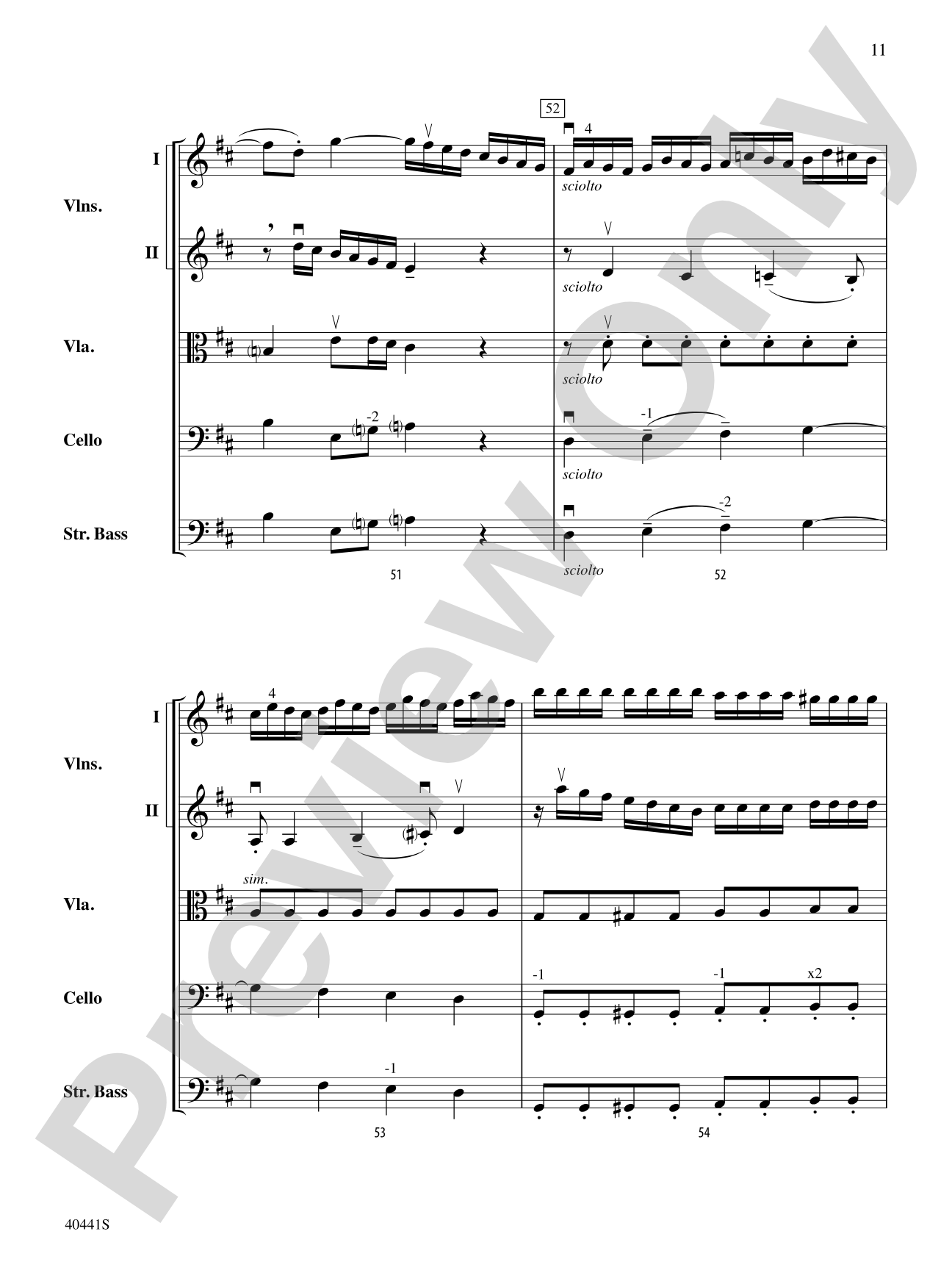
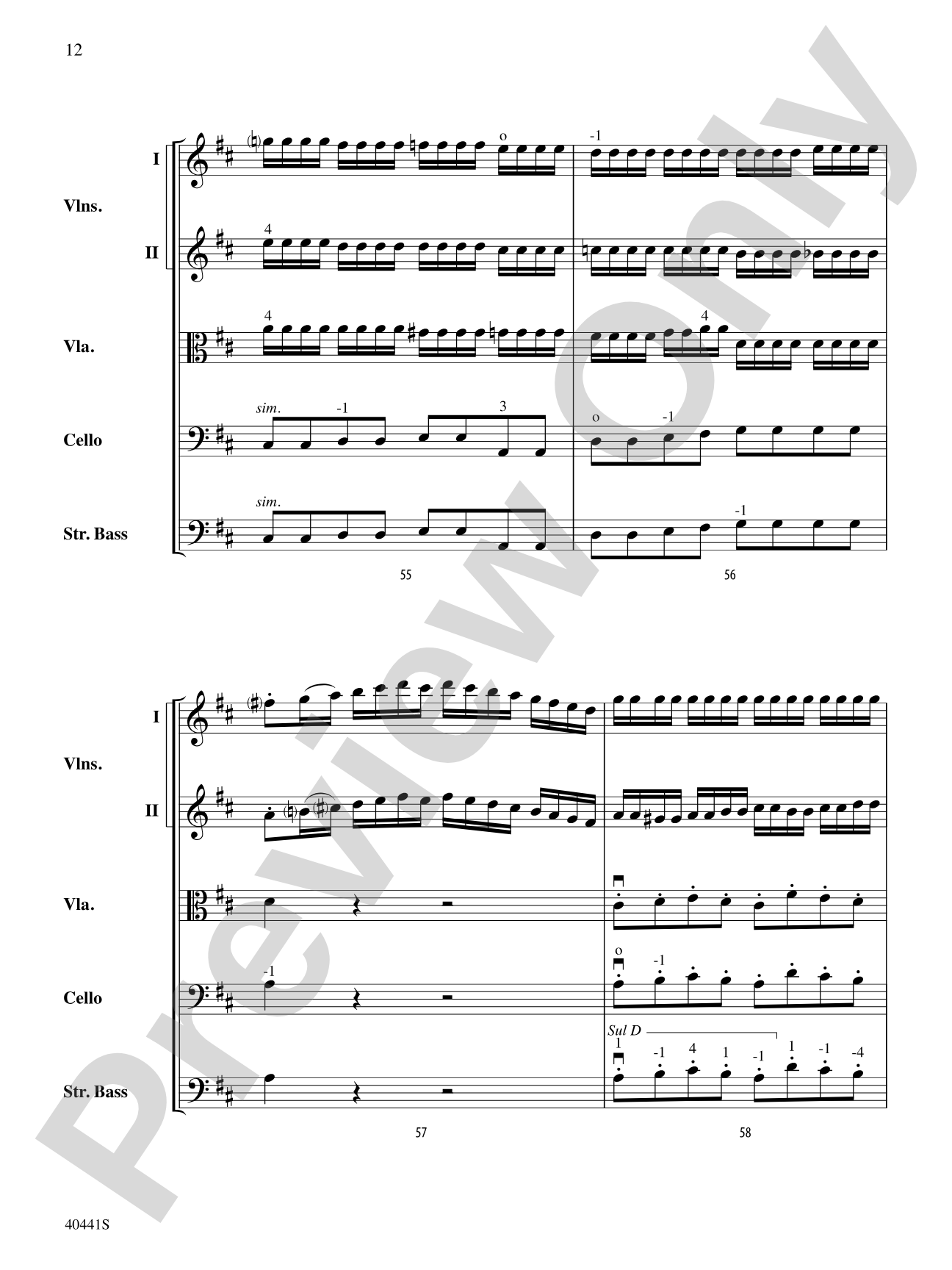
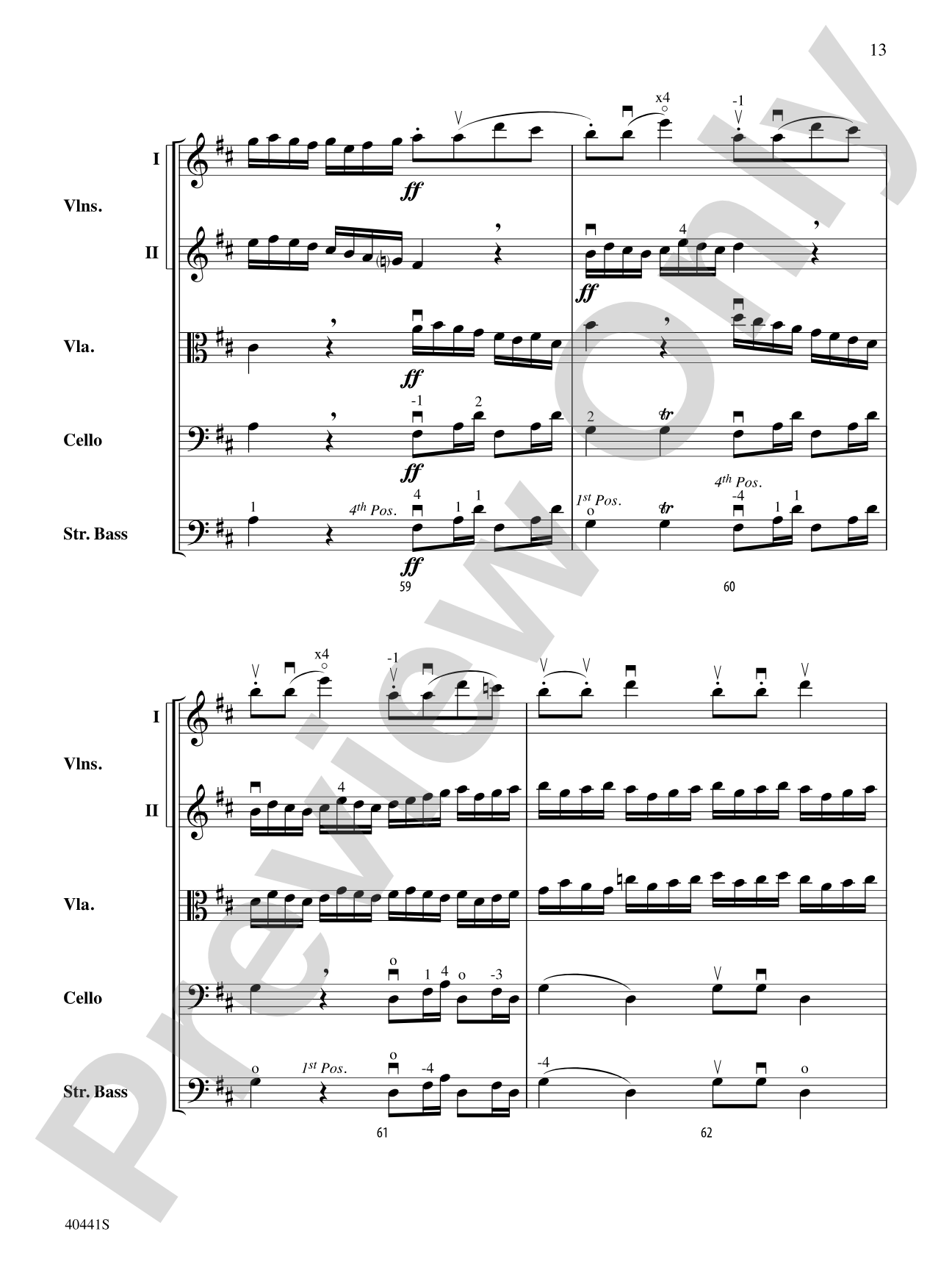
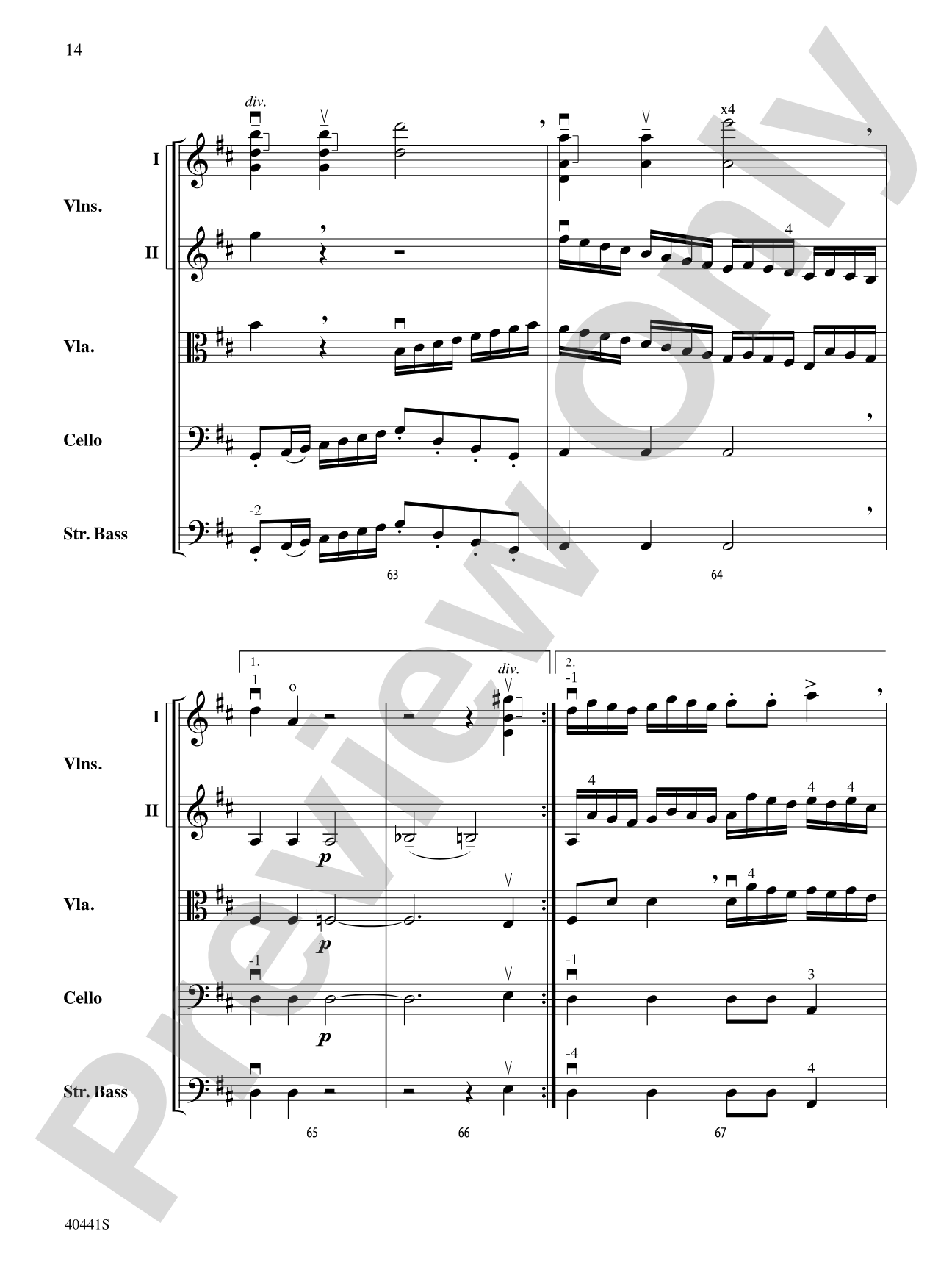
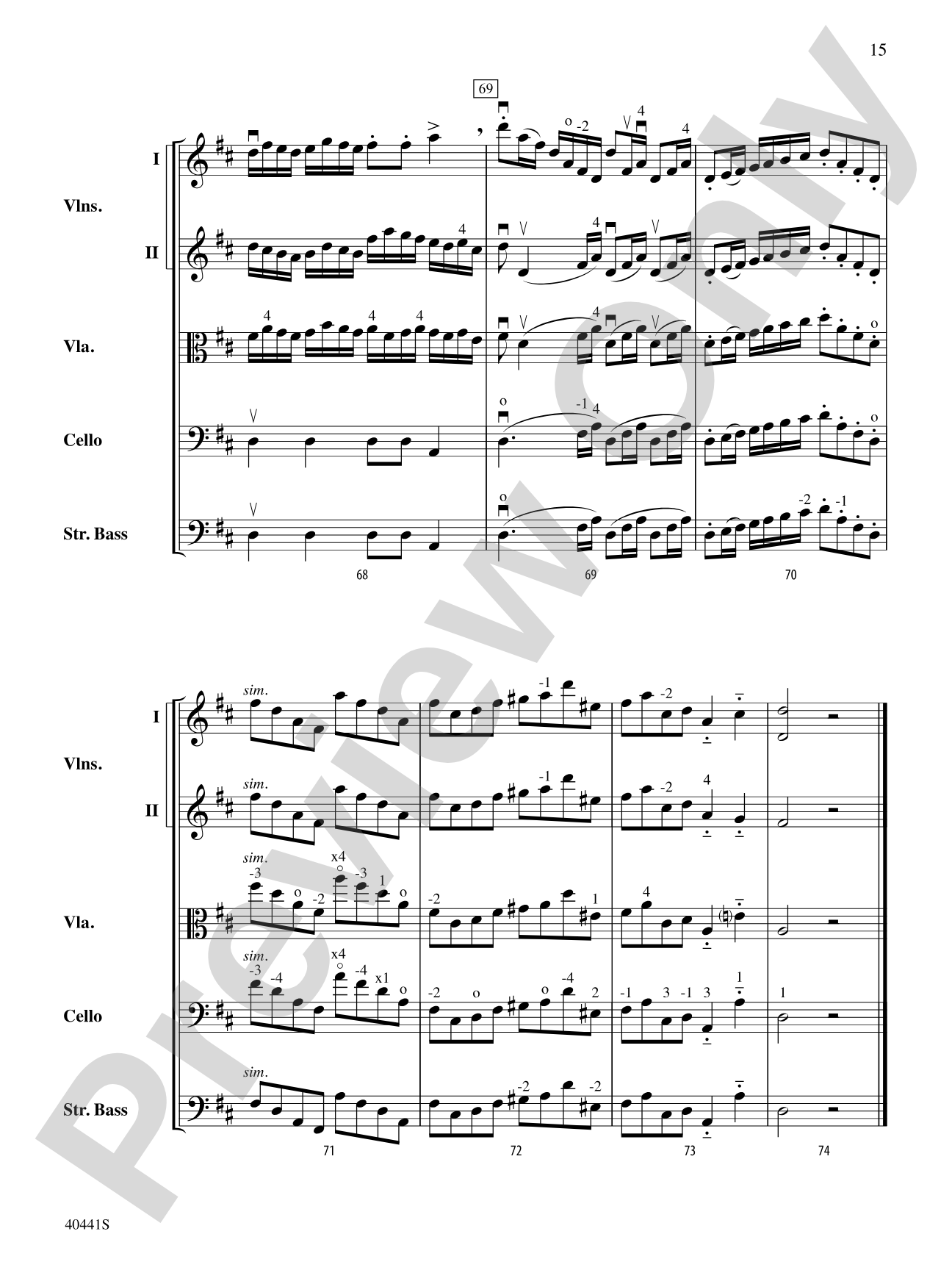


Sinfonia No. 2 in D Major: Score
Movement 1
By Felix Mendelssohn / arr. Kirk Moss
Grade: 4.5
Item: 00-PR-0004285
$10.00
Pickup currently not available
Description
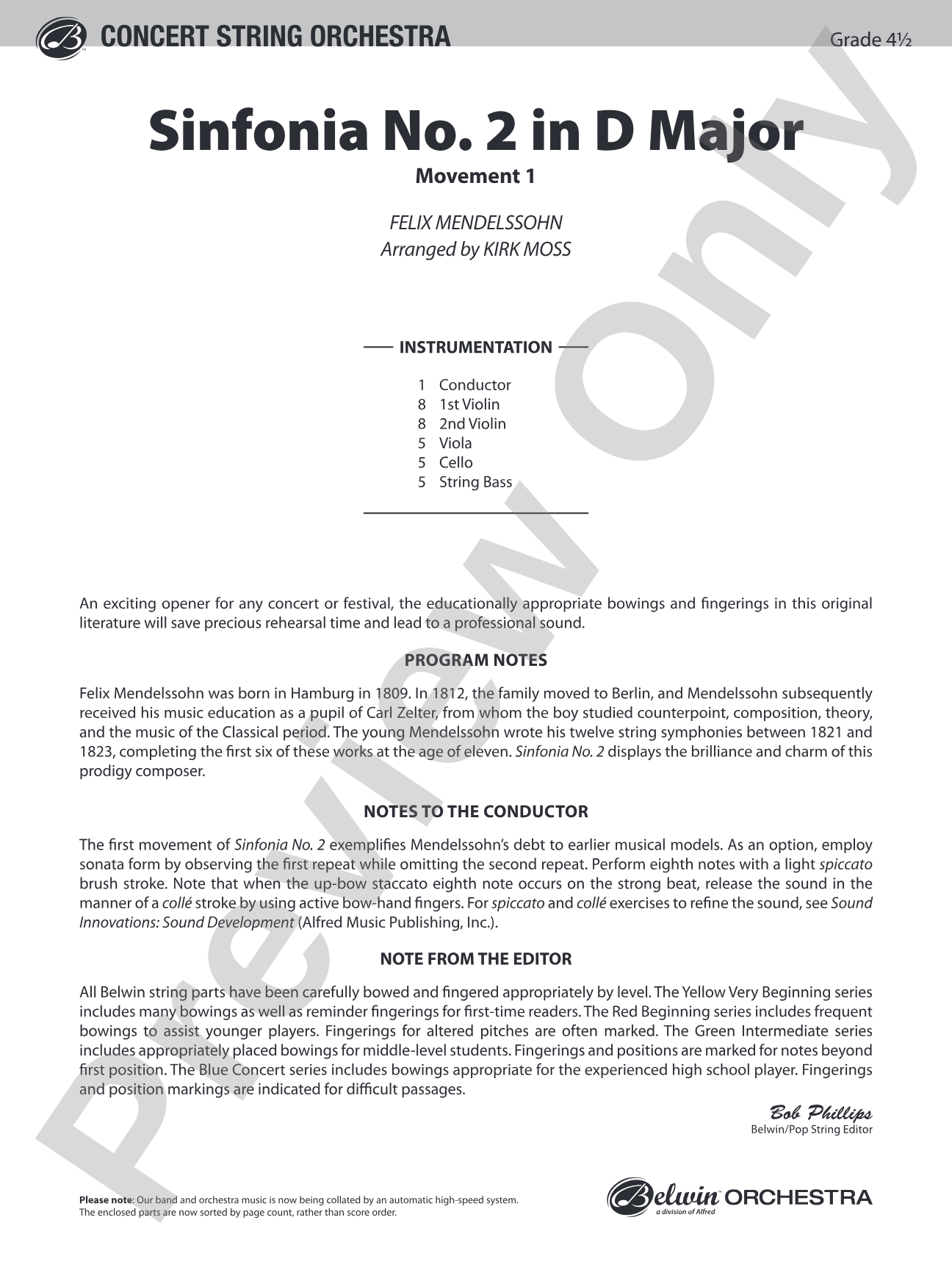
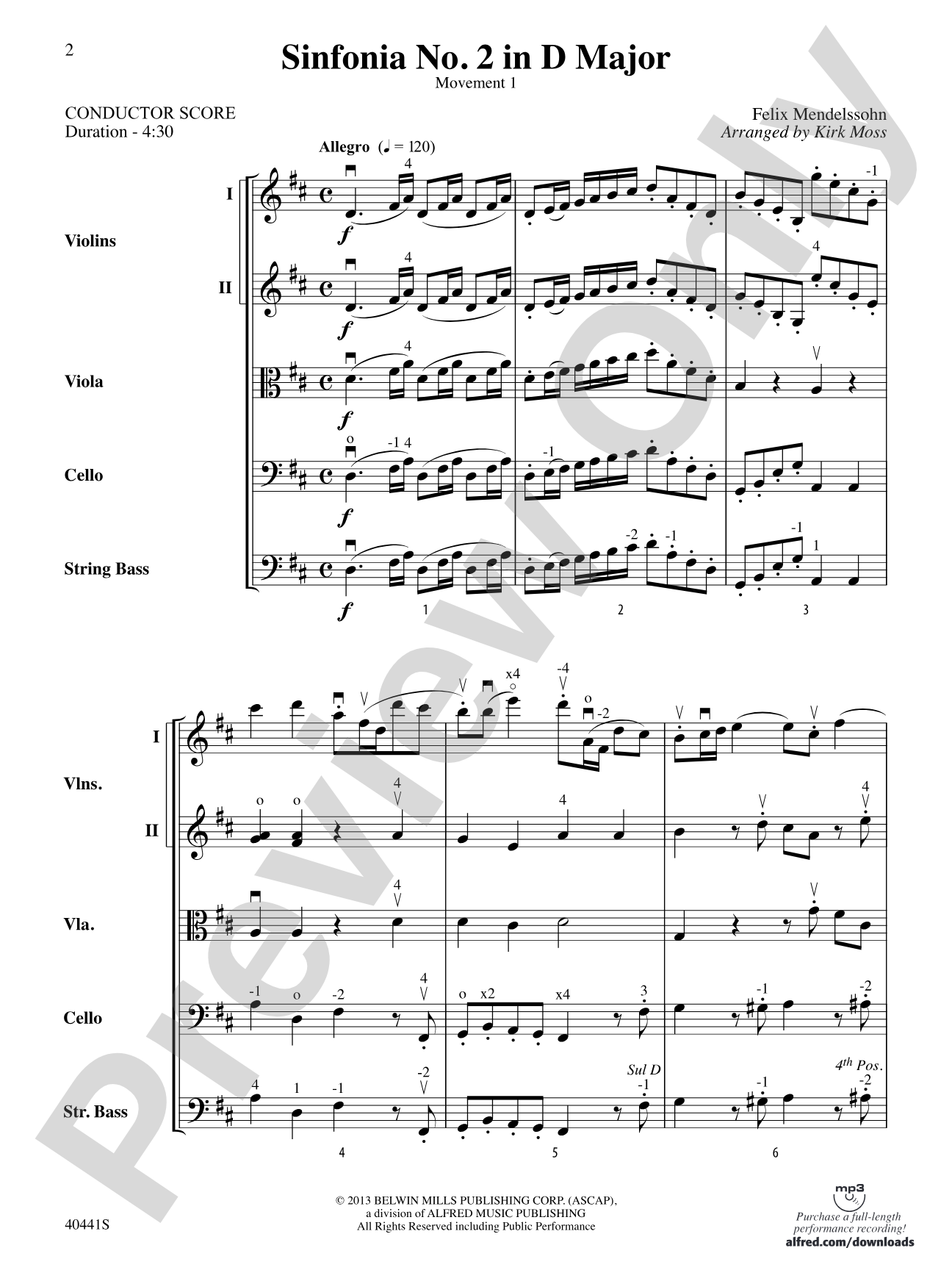
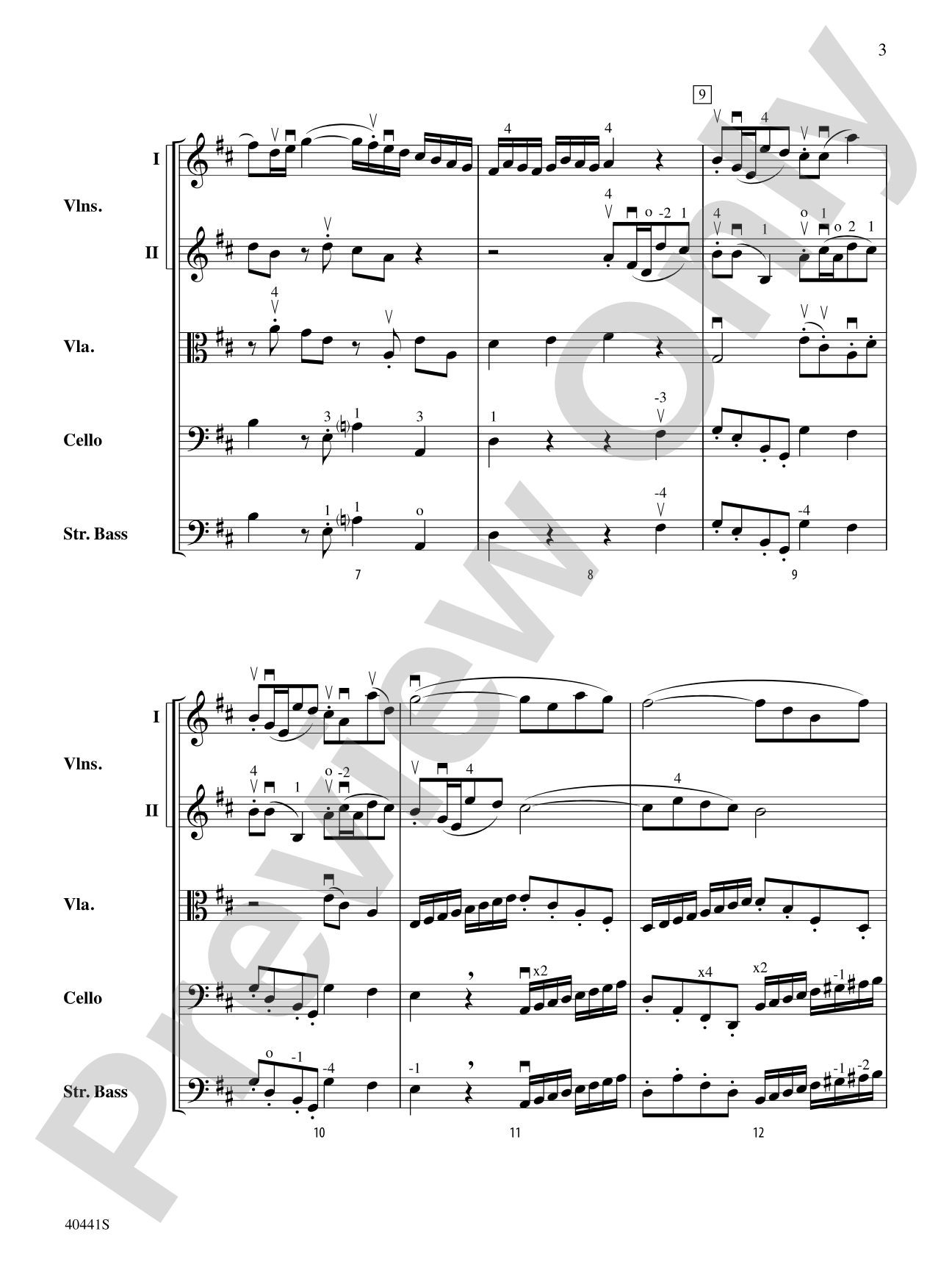
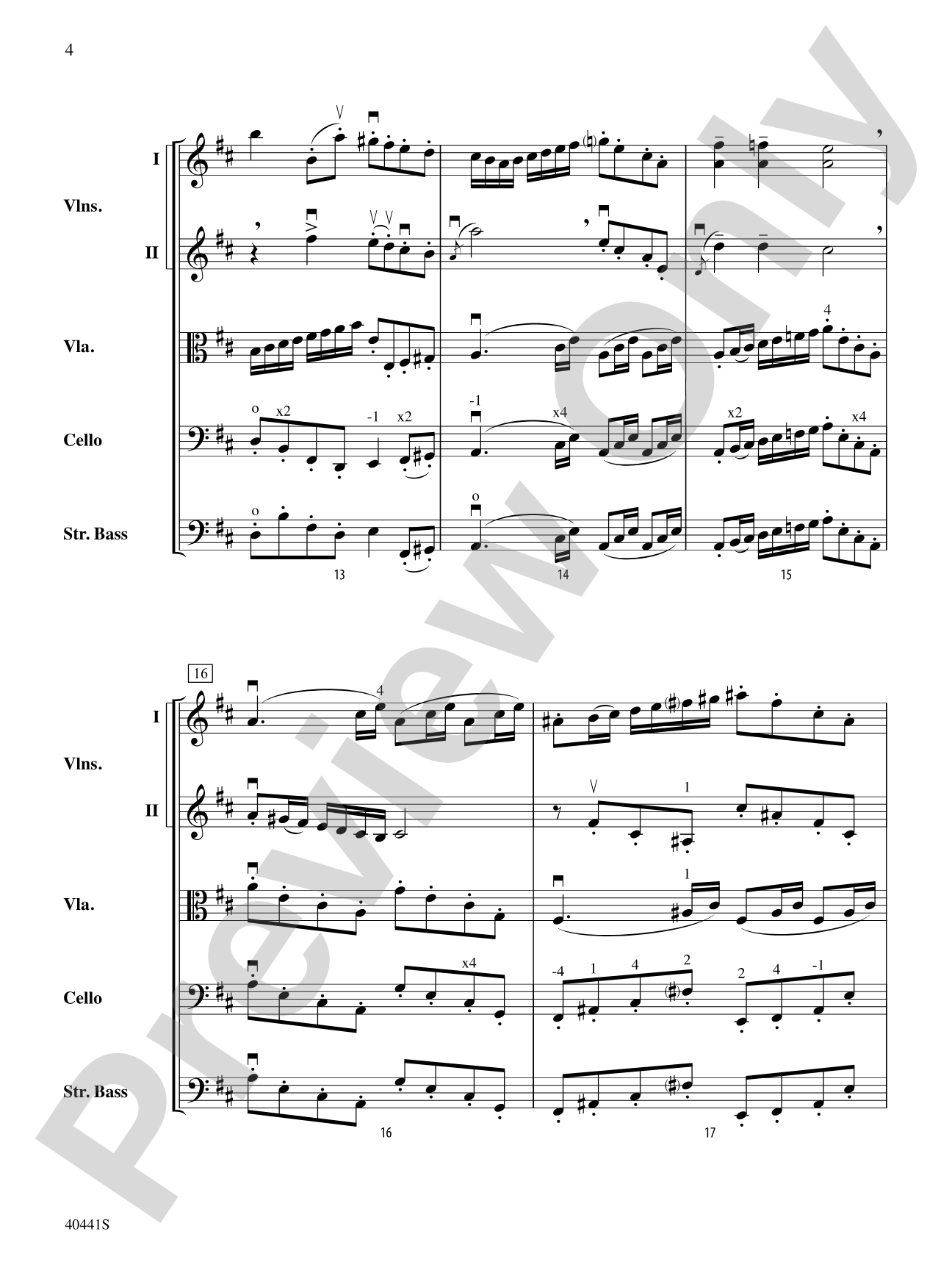
An exciting opener for any concert or festival, the educationally appropriate bowings and fingerings in this original literature will save precious rehearsal time and lead to a professional sound. A perfect piece to develop and refine the spiccato bow stroke. This title is available in MakeMusic Cloud.


Don't just read it, hear it, play along with it, and watch your students grow with it. In MakeMusic Cloud, Sinfonia No. 2 in D Major: Score comes alive with professional accompaniment, adjustable tempo, and built-in practice tools that turn solo practice into real progress.
Open in the Player
Jump straight in and assign it today.
Start Your Free Trial
Open this title and explore the full library in minutes.
Sample Audio
1
Audio File
--:--
0:00
0:00
Sample Video
No sample videos found.
Additional Details
Series:
Belwin Concert String Orchestra
Publisher:
Alfred Music
Page Count:
124
SKU:
00-PR-0004285
More about this title
About the Composer: Felix Mendelssohn
Felix Mendelssohn (1809-1847) was a German composer, conductor, and pianist whose prolific output shaped Romantic-era orchestration. His string writing remains a cornerstone of orchestra curricula because of its clarity, singable lines, and technical sophistication. Mendelssohn understood the voice of the string section intimately and wrote idiomatically for every part, making his works both engaging for young players and musically substantial.
As both composer and conductor, Mendelssohn championed the music of Bach and Handel at a time when these composers were undervalued. His own works reflect that reverence for structural clarity paired with Romantic warmth and expressive depth. His influence on string pedagogy and professional orchestration remains direct and measurable in concert halls and rehearsal rooms worldwide.
Why we love this
Mendelssohn's Sinfonia No. 2 sits at exactly the grade 4.5 sweet spot: the musical architecture is genuinely impressive and substantial, yet the arranger has made smart pedagogical choices with bowings and fingerings that keep rehearsal time focused on musicianship rather than logistics. The spiccato bow work embedded throughout the piece gives your orchestra a concrete technical goal that transfers immediately to future repertoire.
What to expect
Mendelssohn's orchestral voice brings forward momentum and elegant phrasing. The D Major key opens the piece with brightness and clarity, and the spiccato bow passages give the strings rhythmic vitality and a sense of playfulness. Even at this grade level, the ensemble will sound remarkably polished and professional.
Who it's for
String orchestras at the Grade 4.5 level will find this Sinfonia approachable yet musically serious. Conductors seeking a repertoire piece that teaches solid technique while building an ensemble's confidence on a concert platform will value the clear pedagogical scaffolding built into the parts.
How to get the most out of it
- Establish the spiccato bow stroke early in rehearsal by isolating passages in measures where the bow stroke is clearest. Start slowly and gradually increase tempo as players gain control and confidence with the bouncing motion.
- Shape the opening theme with slight dynamic swells on longer note values to bring out the melodic contour. Mendelssohn's lines sing, and even a Grade 4.5 orchestra can achieve lyrical beauty when players understand where the phrase breathes.
- Balance the inner string parts carefully during thematic material. Violas and second violins often carry important countermelody or harmonic support; ensure they stay audible without overwhelming the first violins.
- Use the articulation and bowing markings provided by the arranger as a foundation, but encourage players to listen across sections and adjust their release timing for unified string sound, especially during spiccato passages.
How to use it
Program this as an opening work to set an energetic, refined tone for your concert. Its professional sound and confident character make it an ideal festival selection, and its moderate length fits well on programs where you need an engaging opener before a longer feature piece or soloist.
Skills your students will build
- Spiccato bow stroke development and control
- Balanced string section texture across all four parts
- Phrasing in Romantic-era string writing
- Reading and executing articulation markings in an orchestral context
- Ensemble intonation during rapid string passages