
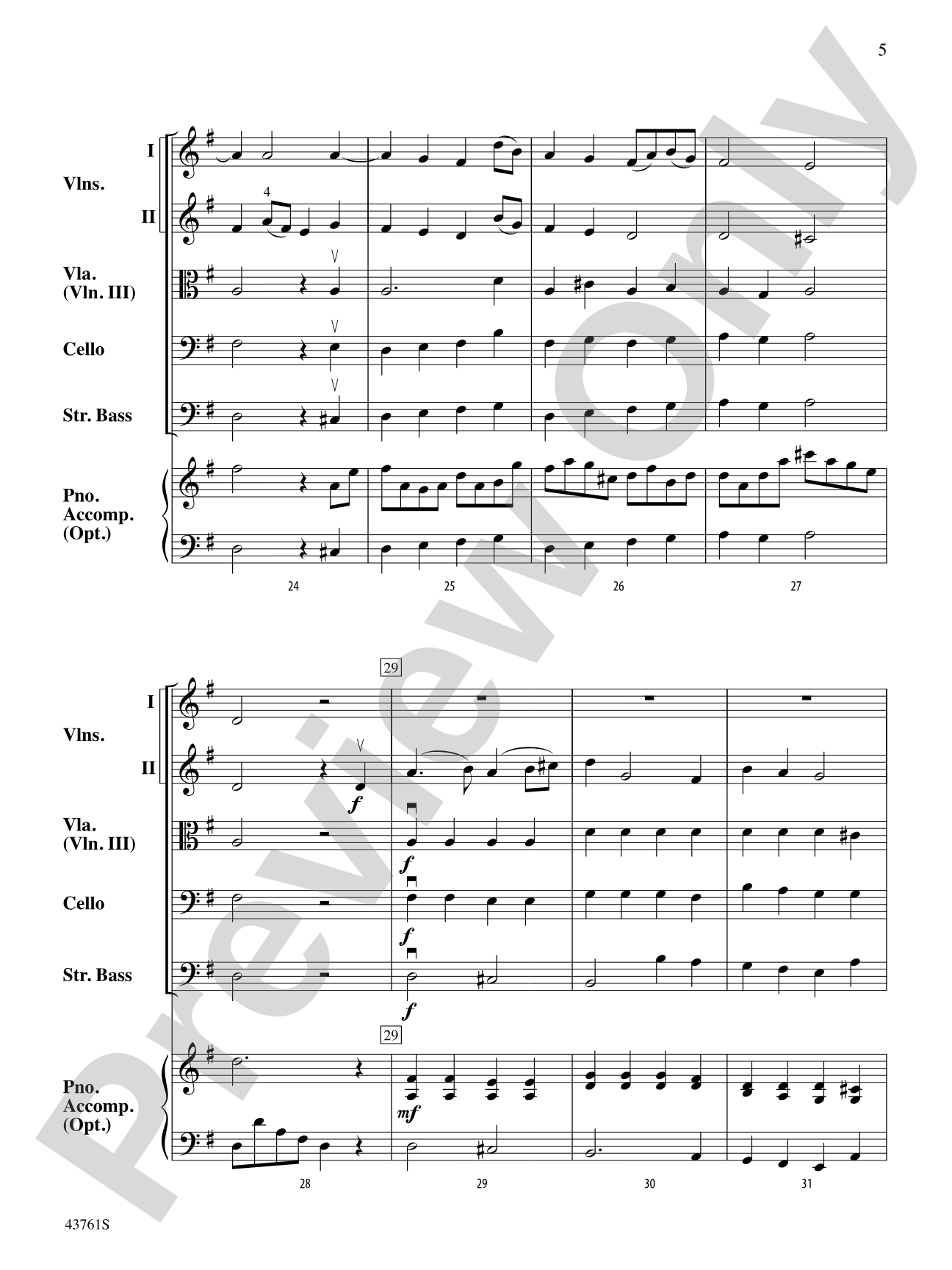
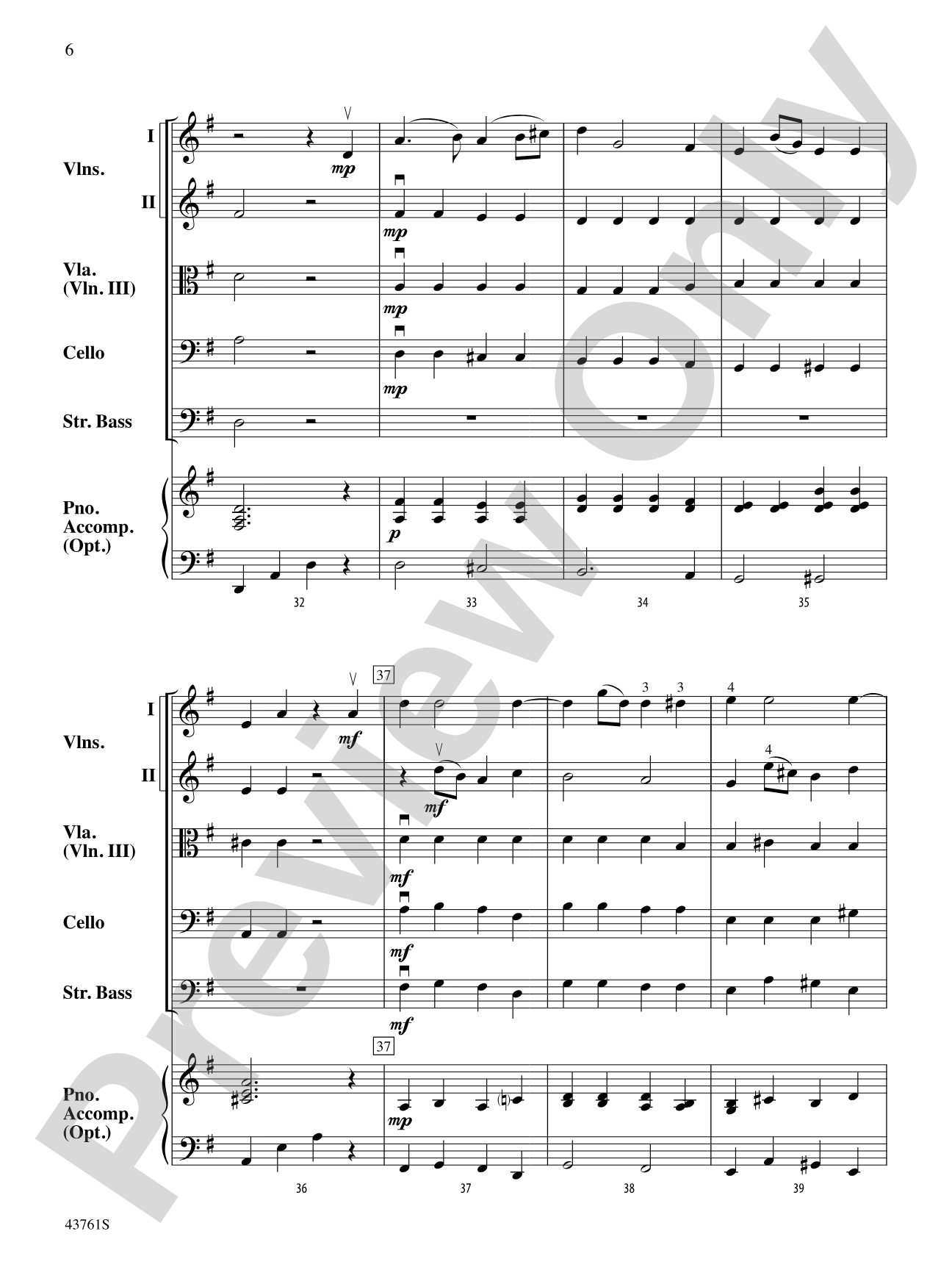
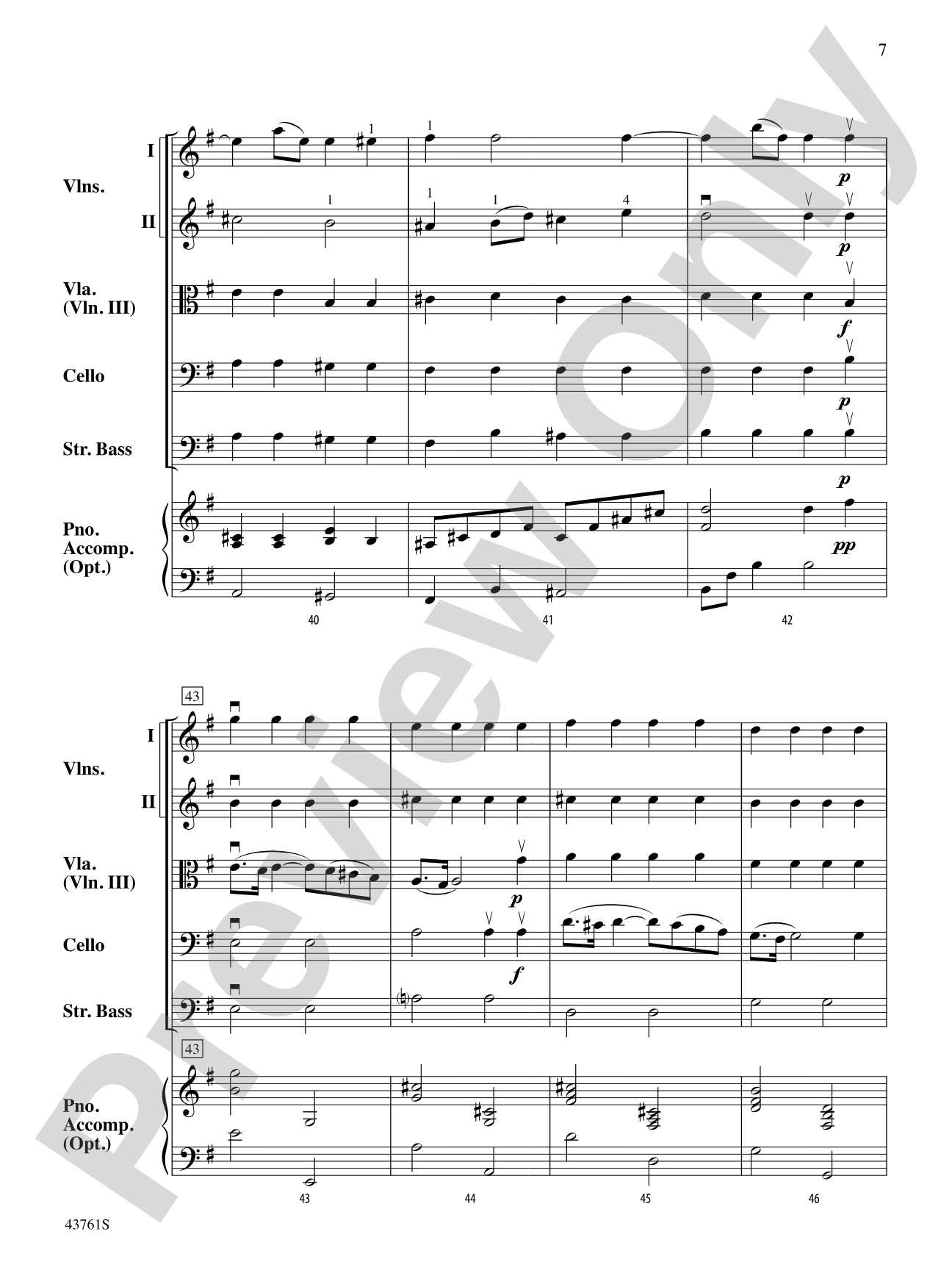
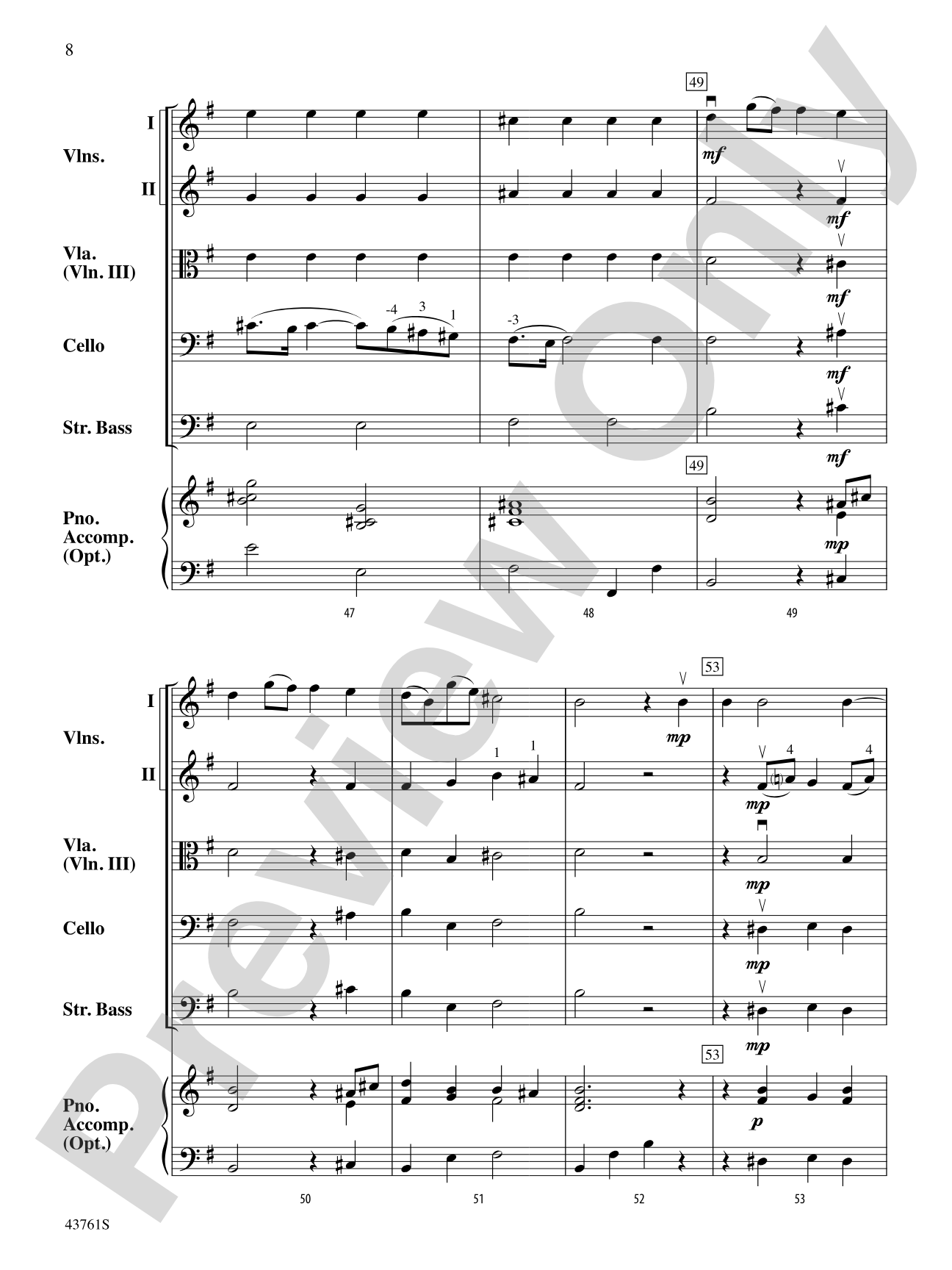
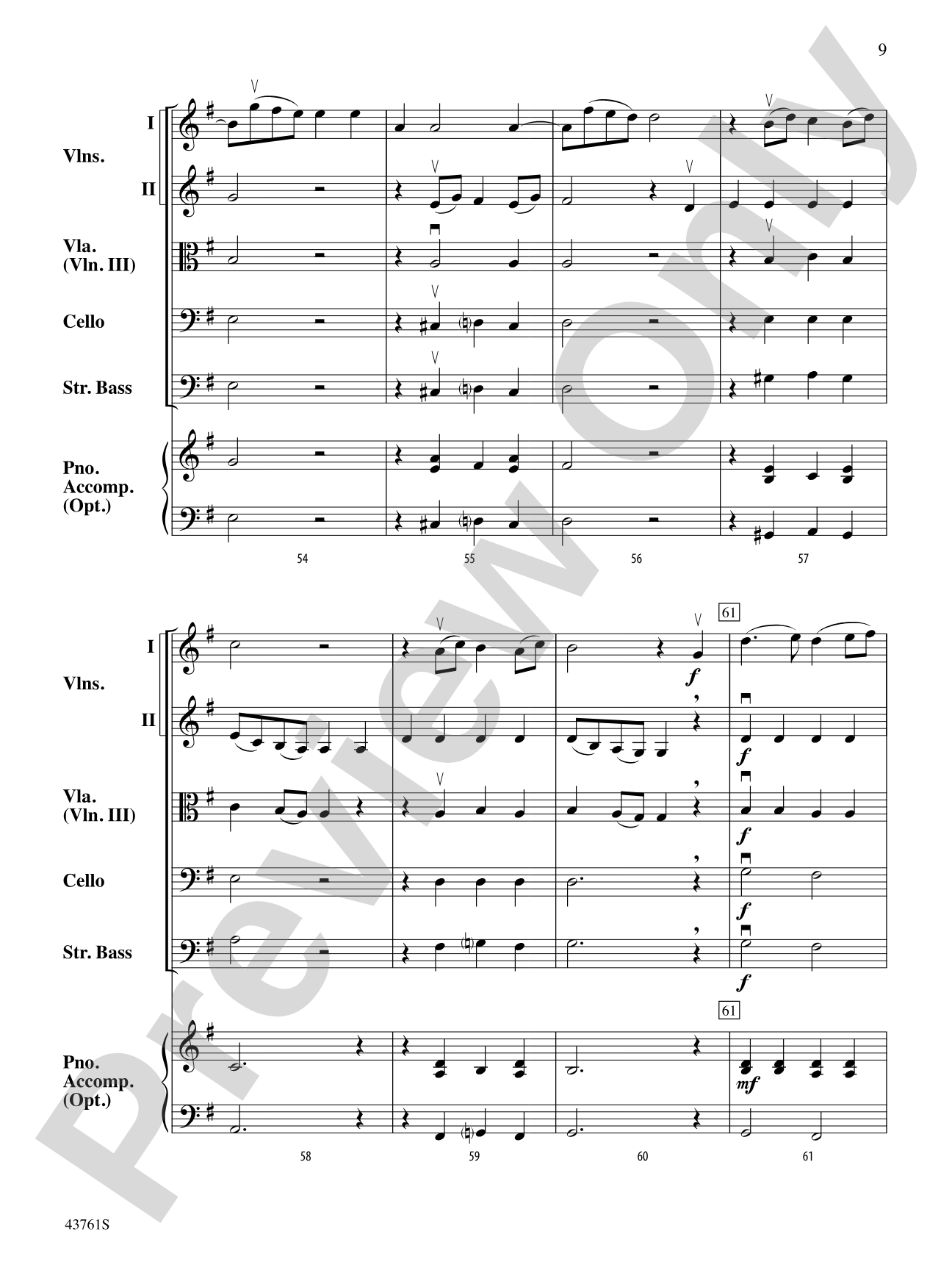
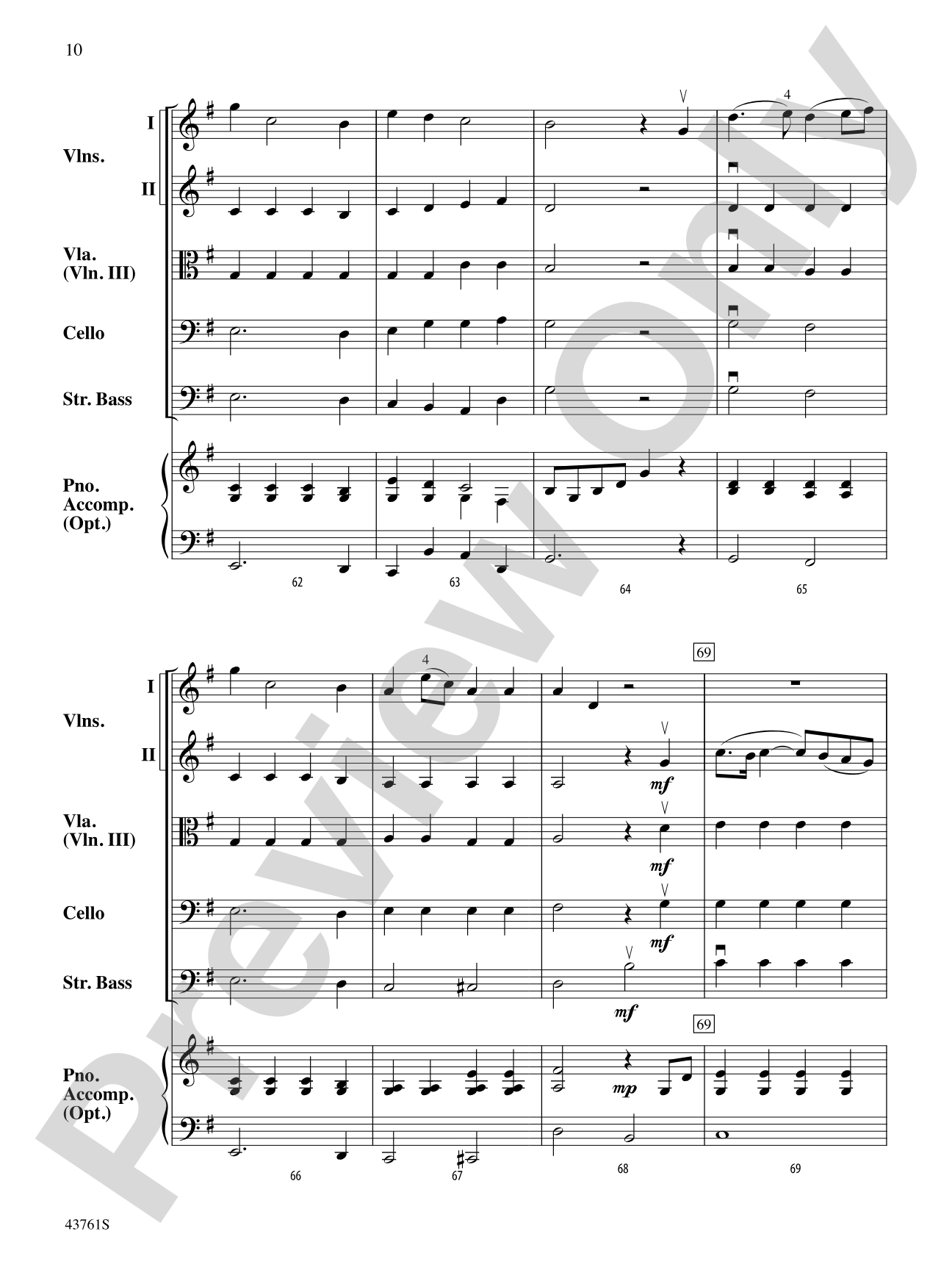
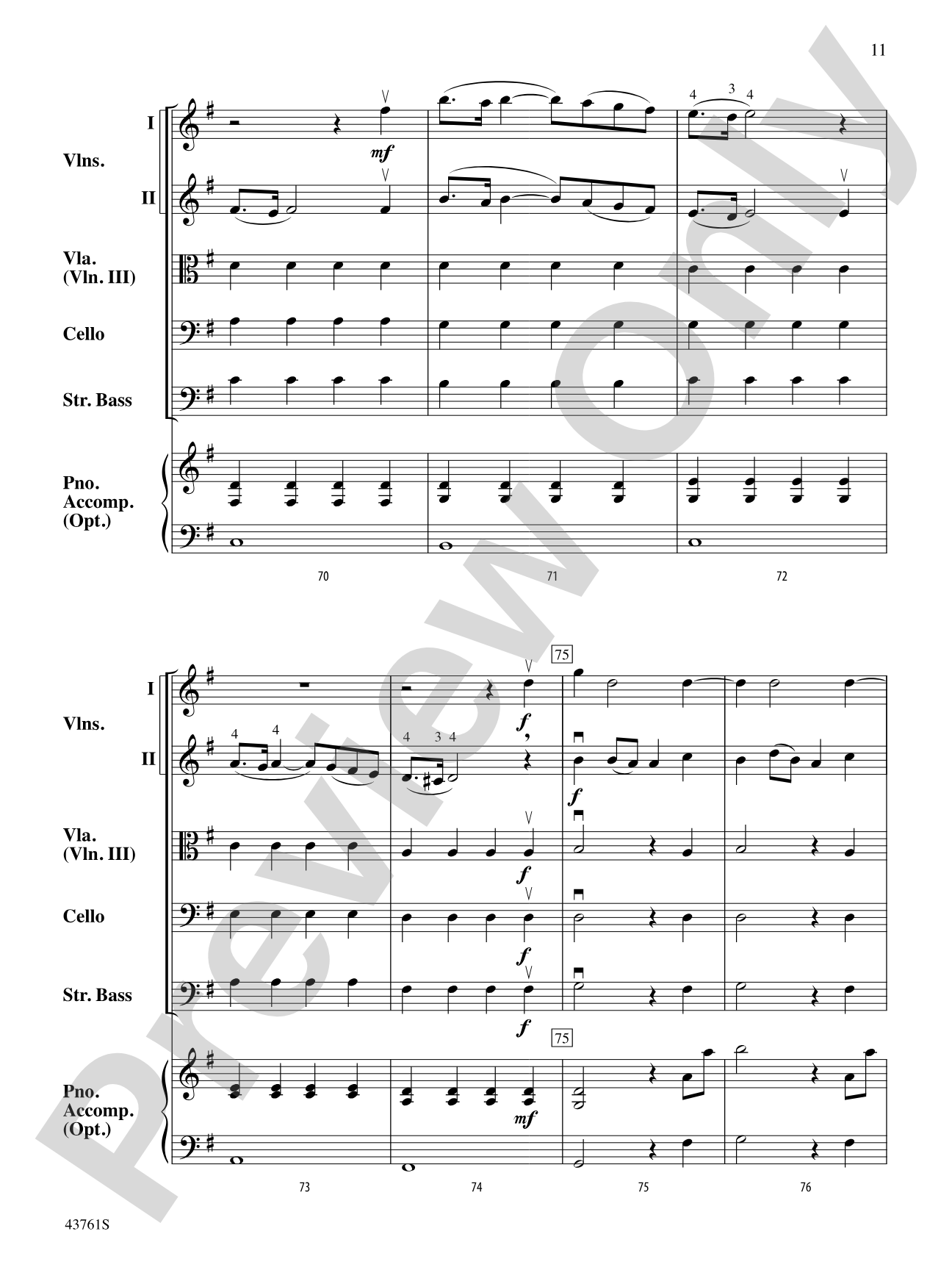
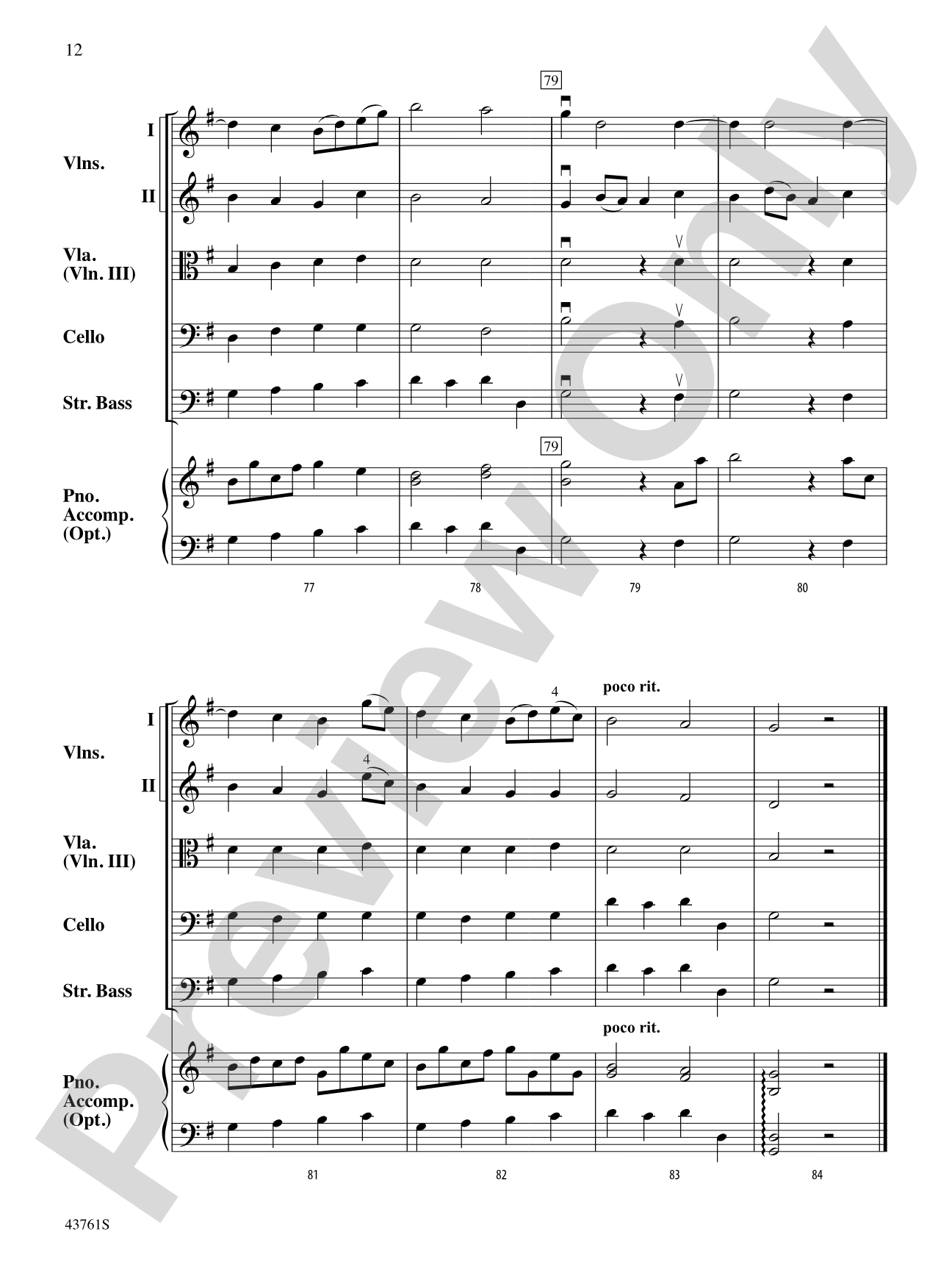

Sinfonia in G: Score
By Domenico Gallo / arr. Douglas E. Wagner
Grade: 2.5
Item: 00-PR-0005107
$9.00
Pickup currently not available
Description
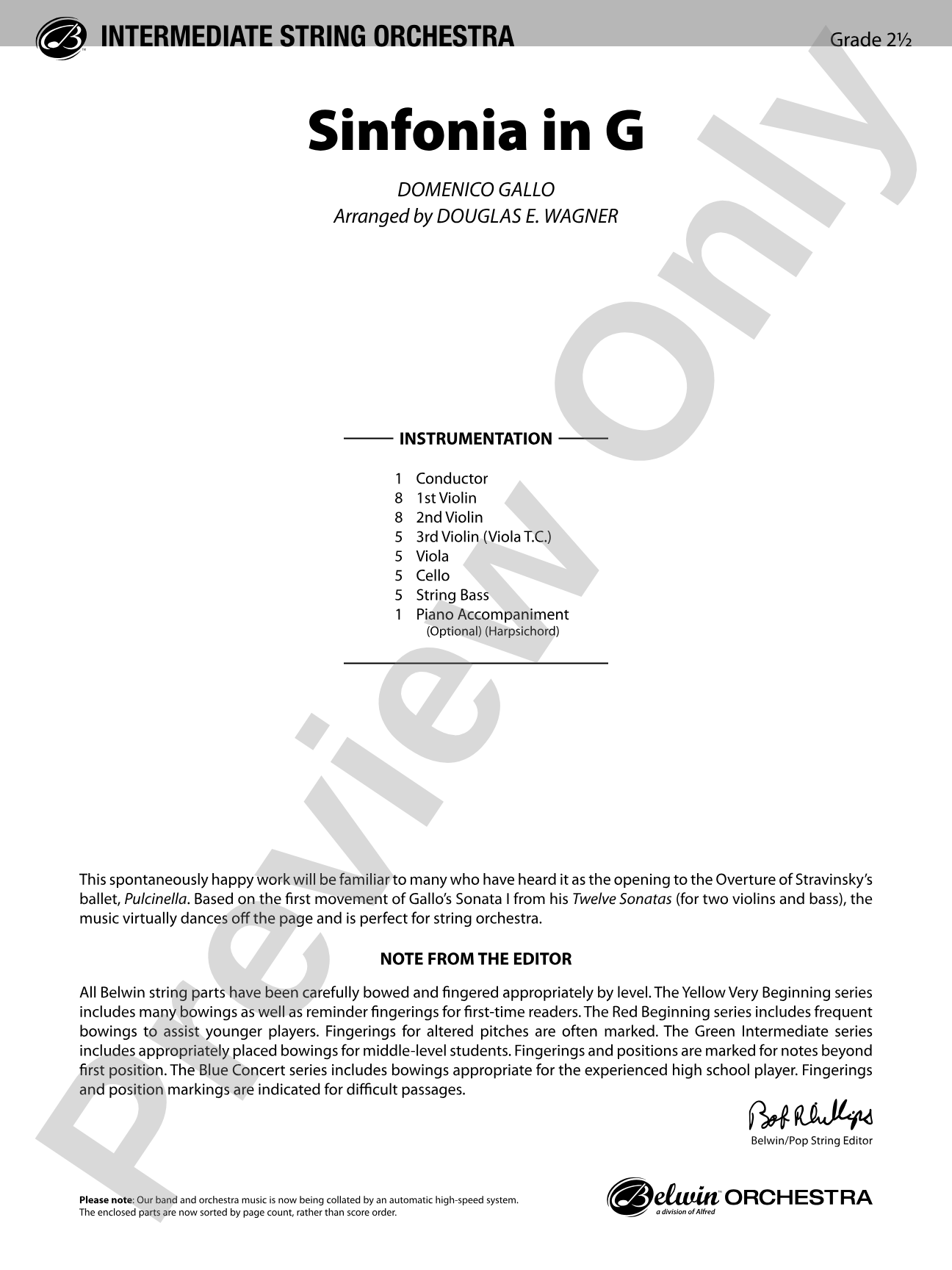
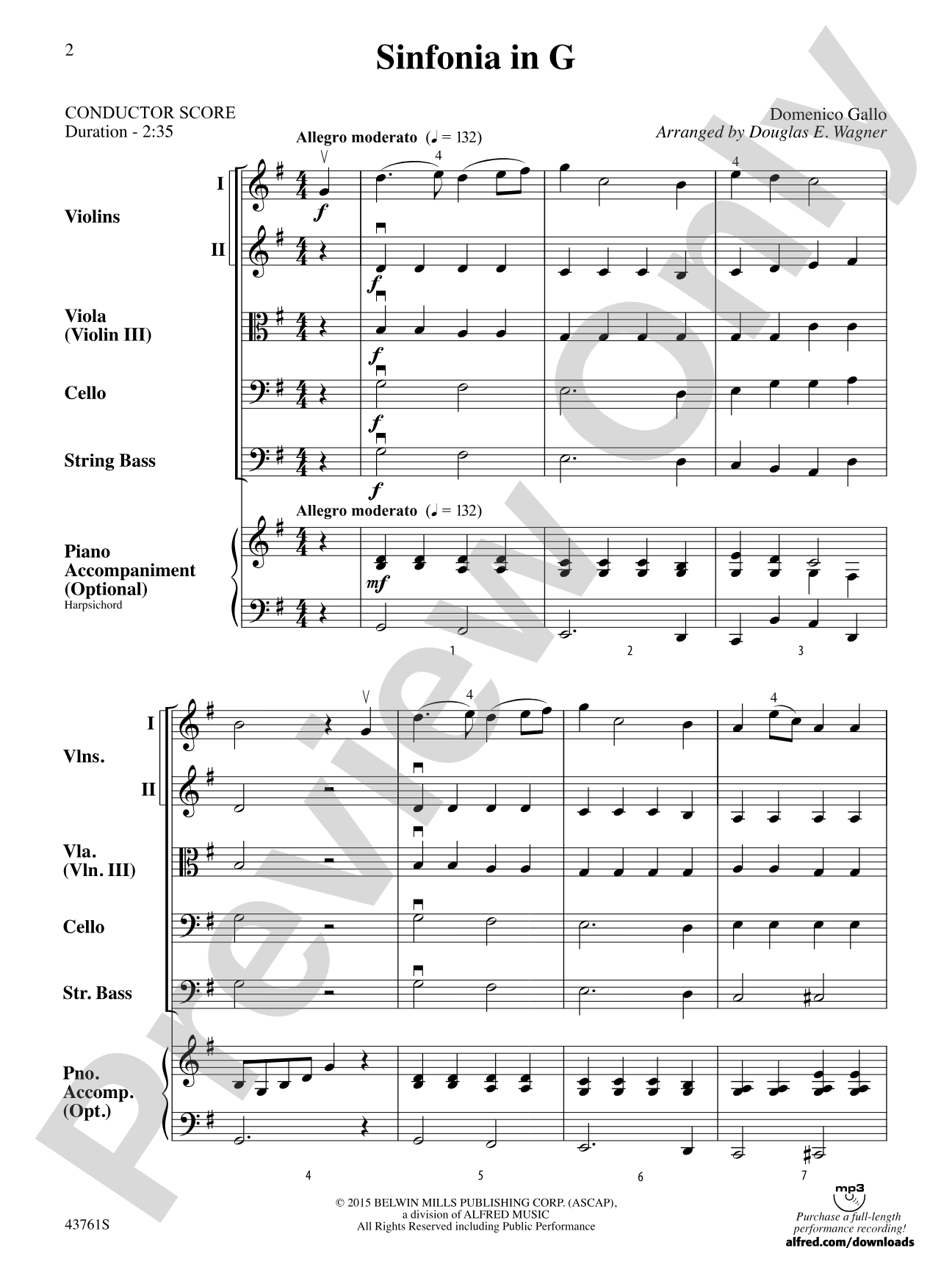
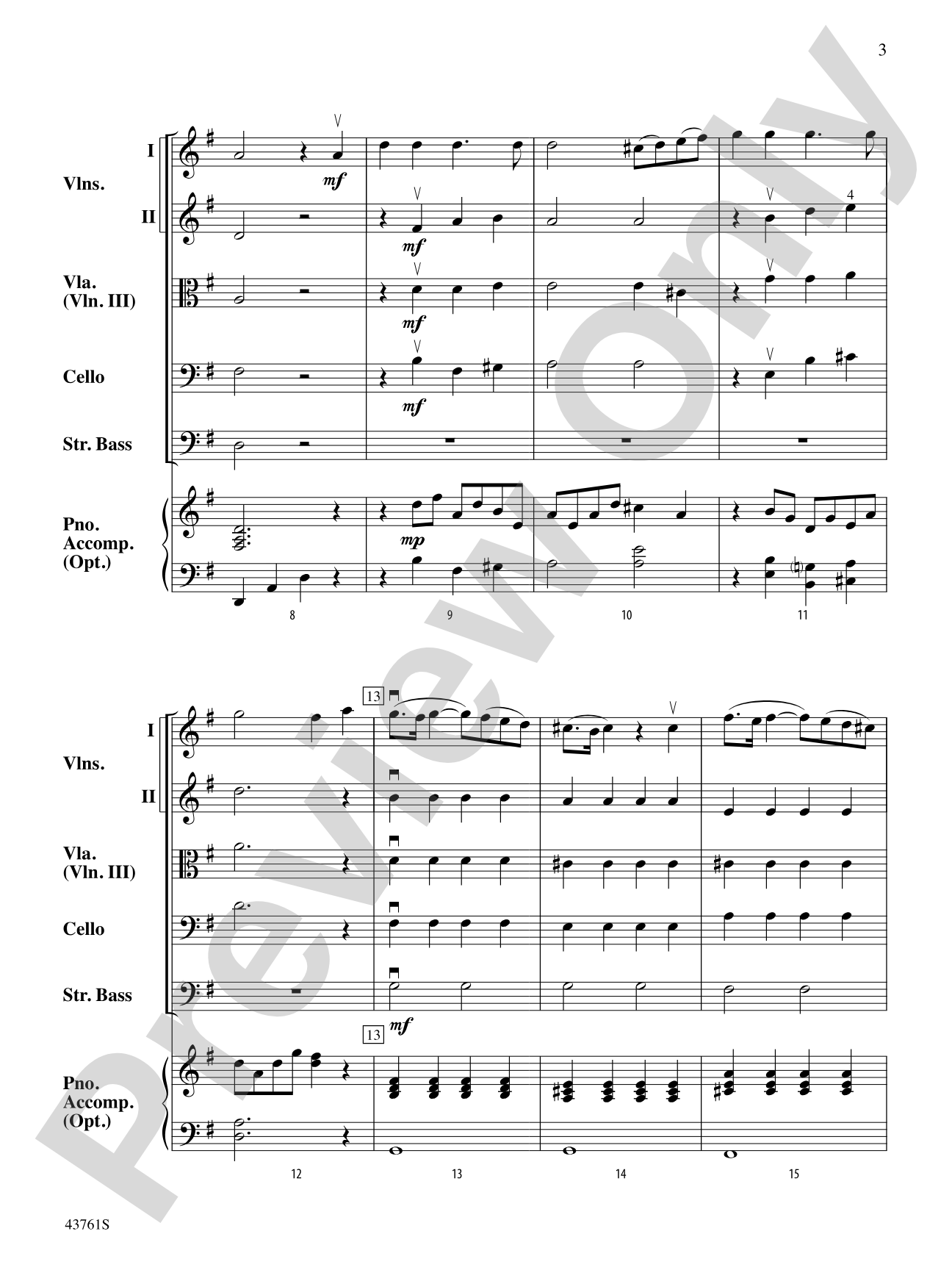
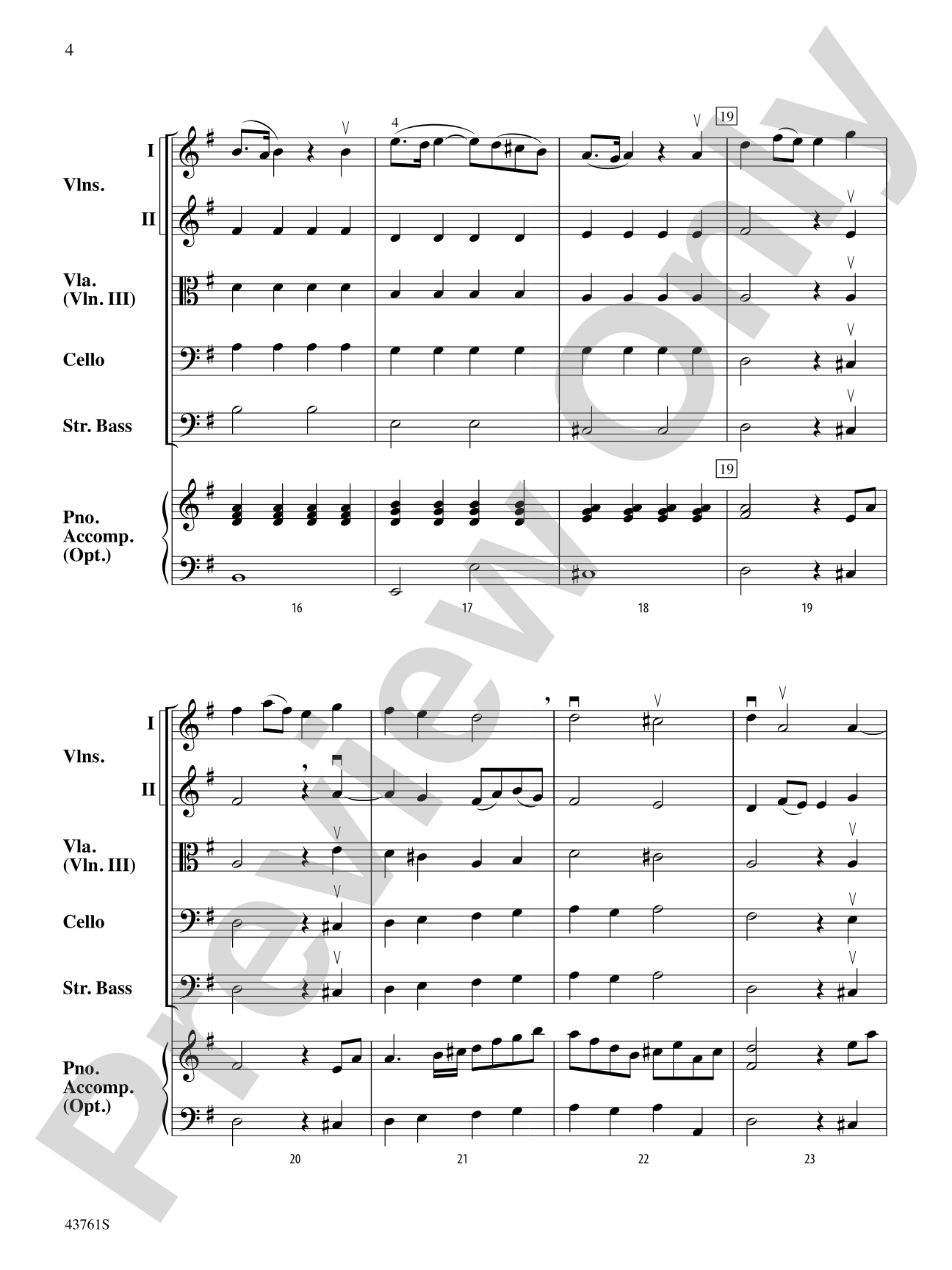
This spontaneously happy work will be familiar to many who have heard it as the opening to the Overture to Stravinsky's ballet, Pulcinella. The music virtually dances off the page and is perfect for strings. (2:35)


Don't just read it, hear it, play along with it, and watch your students grow with it. In MakeMusic Cloud, Sinfonia in G: Score comes alive with professional accompaniment, adjustable tempo, and built-in practice tools that turn solo practice into real progress.
Open in the Player
Jump straight in and assign it today.
Start Your Free Trial
Open this title and explore the full library in minutes.
Sample Audio
1
Audio File
--:--
0:00
0:00
Sample Video
Additional Details
Series:
Belwin Intermediate String Orchestra
Publisher:
Alfred Music
Page Count:
148
SKU:
00-PR-0005107
More about this title
About the Composer: Domenico Gallo
Domenico Gallo (1688-1763) was a Venetian composer and violinist whose instrumental works exemplified the Italian Baroque style. Though less documented than his contemporaries, his compositions circulated widely throughout Europe and were frequently attributed to or borrowed by other composers, testament to their appeal and craftsmanship. His music captures the vitality and elegance characteristic of early 18th-century Italian string writing.
Gallo's Sinfonia in G achieved lasting recognition through Stravinsky's 20th-century appropriation as the opening movement of Pulcinella, introducing his music to modern audiences. This rediscovery underscores the enduring quality of his melodic lines and harmonic clarity, which remain highly accessible to student musicians while maintaining genuine compositional sophistication.
Why we love this
This arrangement captures everything that makes early Baroque string writing so effective: uncomplicated textures, clear harmonic progression, and infectious rhythmic energy. At Grade 2.5, it sits at an ideal difficulty level where students can focus on phrase shaping and ensemble balance without struggling with technical complexity. The piece's joyful character and concert-friendly length make it reliable for festivals, winter concerts, or as a program opener that immediately engages an audience.
What to expect
The music radiates spontaneous joy and lightness. Buoyant rhythms and dance-like phrasing give it an almost theatrical quality, as though the instruments themselves are animated and responding to one another. There's an elegance without pretension; the piece moves with natural grace and never feels labored.
Who it's for
String orchestras at the intermediate level who need accessible repertoire with authentic baroque voice leading and character. This works equally well for students preparing for contests and festivals or for directors building a balanced concert program that includes masterworks without demanding advanced technique.
How to get the most out of it
- Shape the opening melody with gentle forward motion; resist the urge to over-articulate, as the inherent rhythm will carry the music forward naturally.
- Balance the first and second violin lines carefully during passages where they alternate; this keeps the texture transparent and prevents muddiness.
- Give the bass line clear harmonic support without letting it overwhelm the upper voices, especially in the lower register where students naturally play loud.
- Use the fermatas as genuine breathing points for the ensemble, not just places to stop; a quick breath together creates unity.
How to use it
Open a concert with this piece to set an energetic, welcoming tone. Its Baroque authenticity pairs beautifully alongside later-period string arrangements, allowing you to build programming that spans musical eras. The familiar connection to Pulcinella may also delight informed listeners and students who recognize the source.
Skills your students will build
- Baroque phrasing and articulation patterns
- Ensemble balance between melody and harmonic voices
- Reading uncluttered, transparent textures with clear part independence
- Responding to conductor gestures during fermatas and structural transitions
- Maintaining rhythmic integrity without over-emphasis or rushing