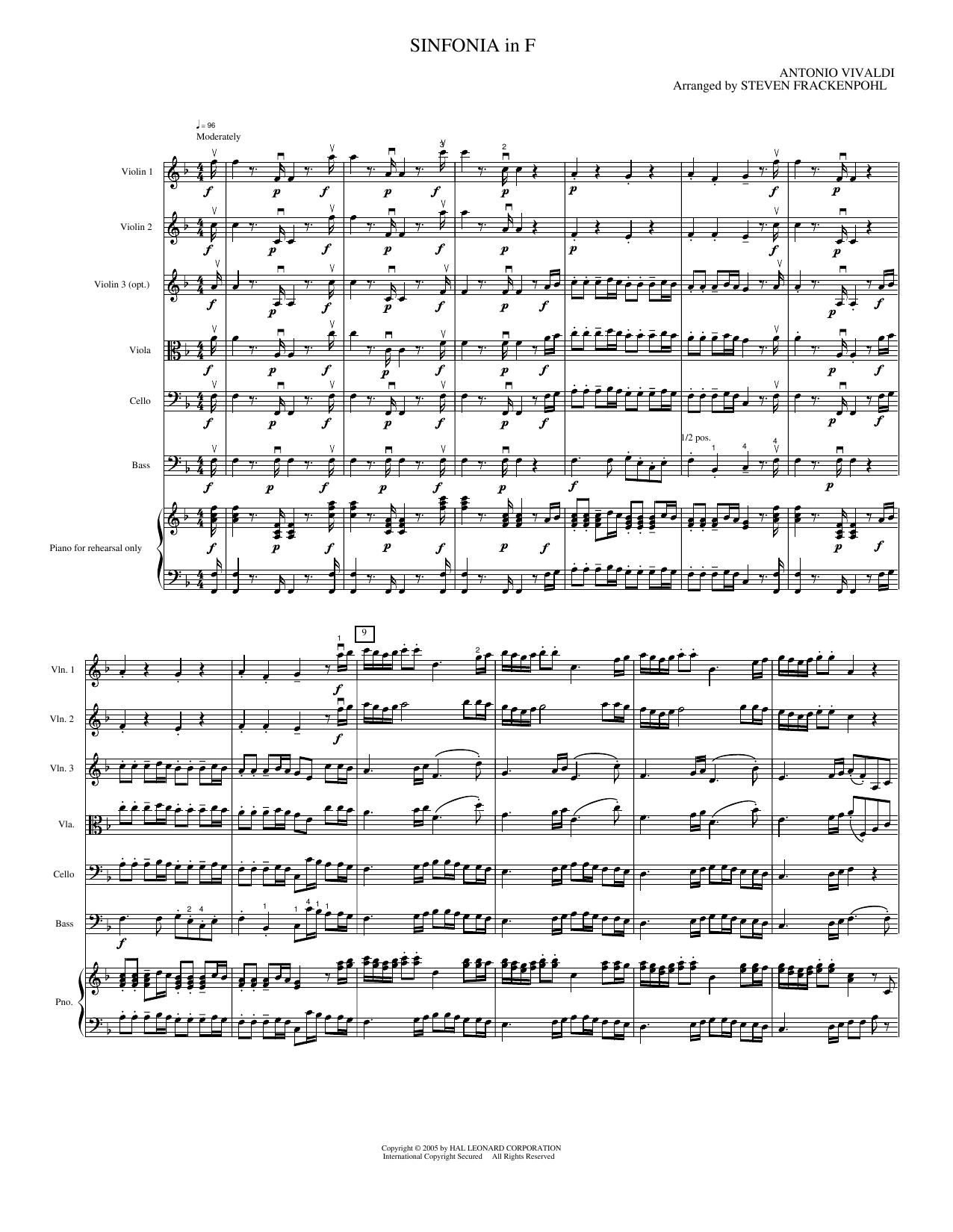
Antonio Vivaldi (1678–1741) shaped the concerto grosso and solo concerto into forms that defined the Baroque era. A virtuoso violinist and prolific composer, he wrote over 500 works across nearly every genre, yet remained grounded in pedagogy; much of his output emerged from teaching at the Ospedale della Pietà in Venice, where he composed for talented young musicians. His influence on instrumental writing remains foundational to music education because he understood how to write idiomatically for players at every level.
Vivaldi's orchestral sinfonias occupy a distinctive middle ground between overture and symphony. These three-movement works showcase the clarity and architectural logic that made his music essential to composers across Europe. String orchestras continue to gravitate toward his sinfonias because they balance musical substance with accessibility.