
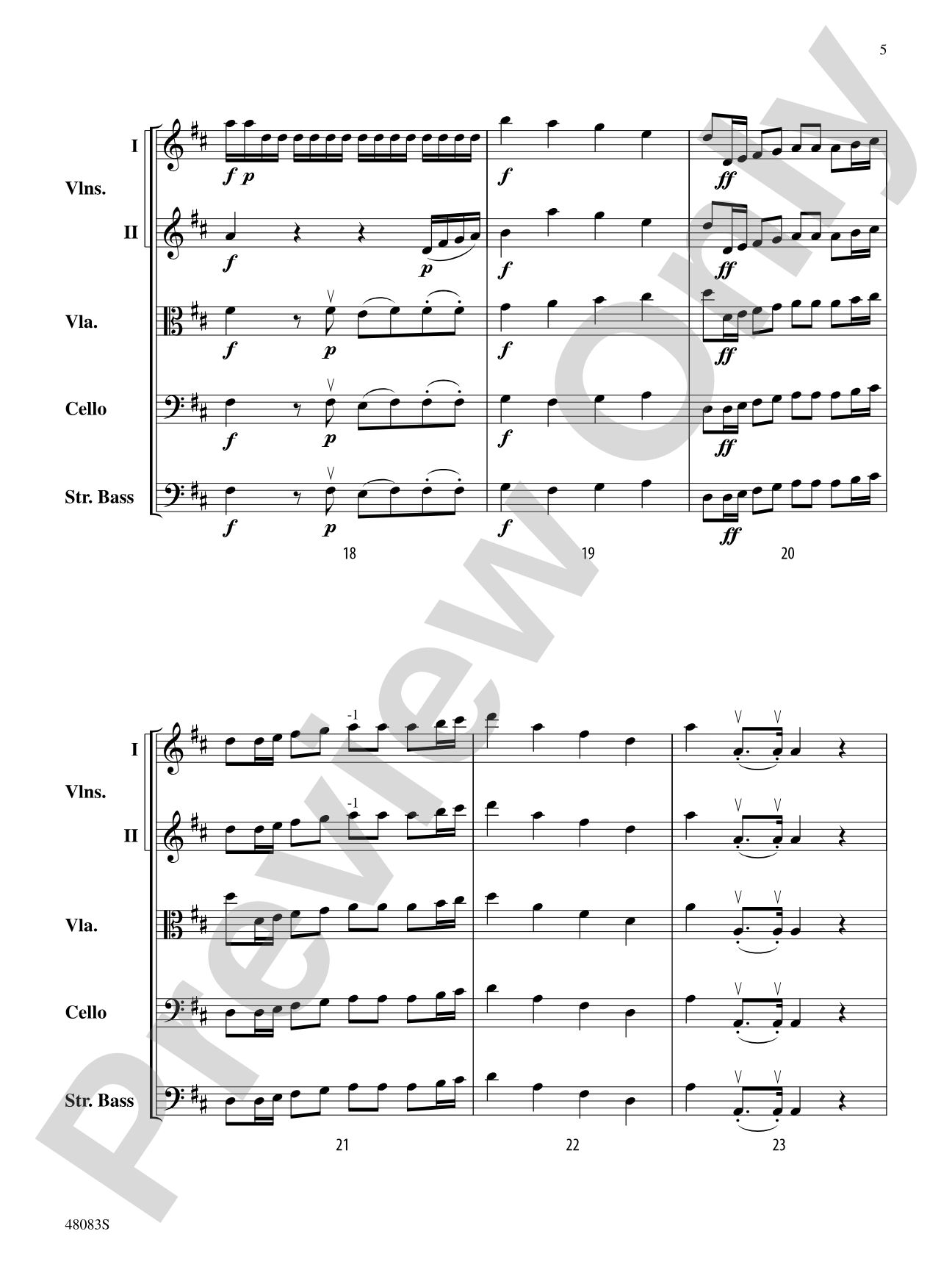
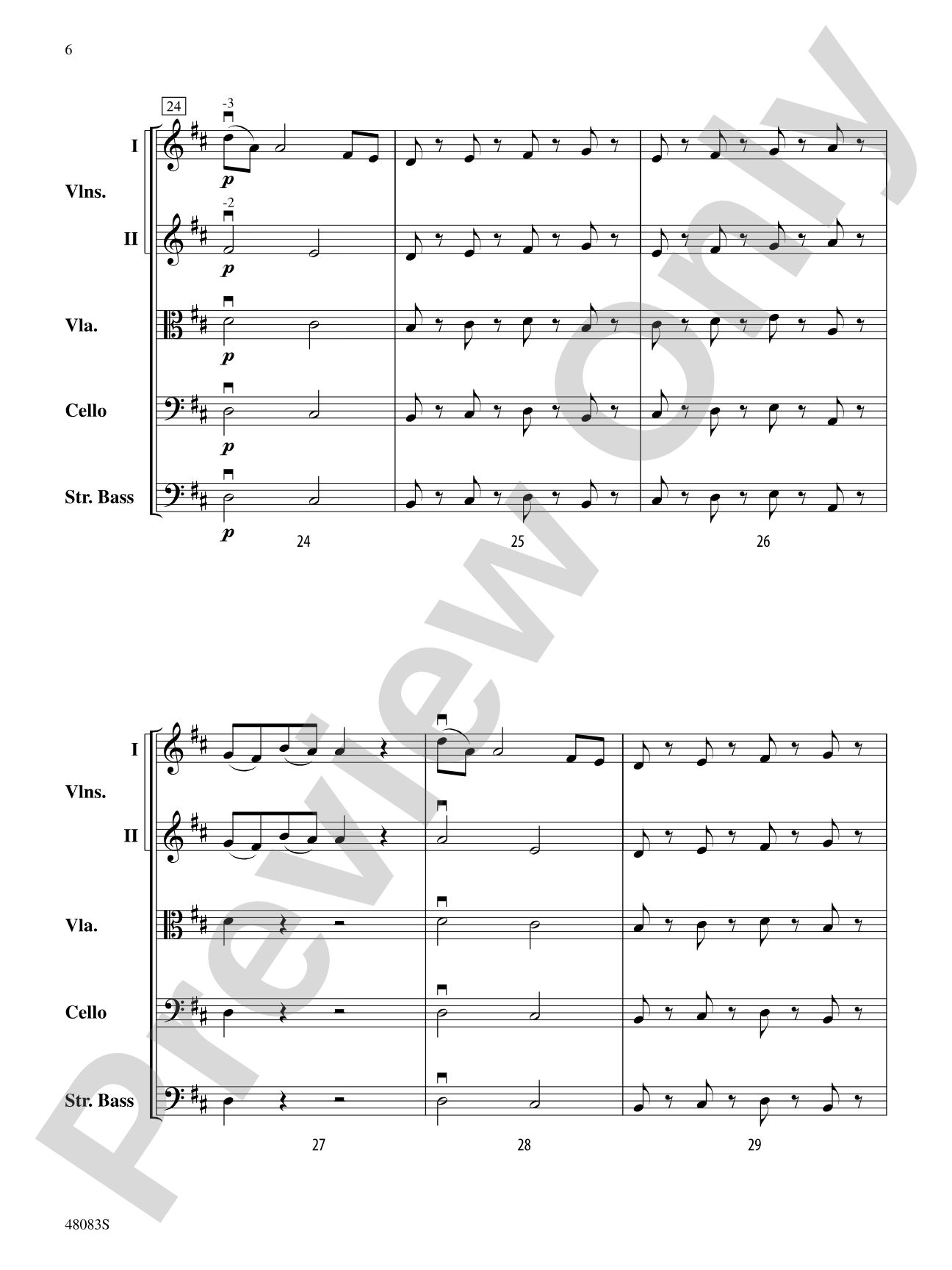
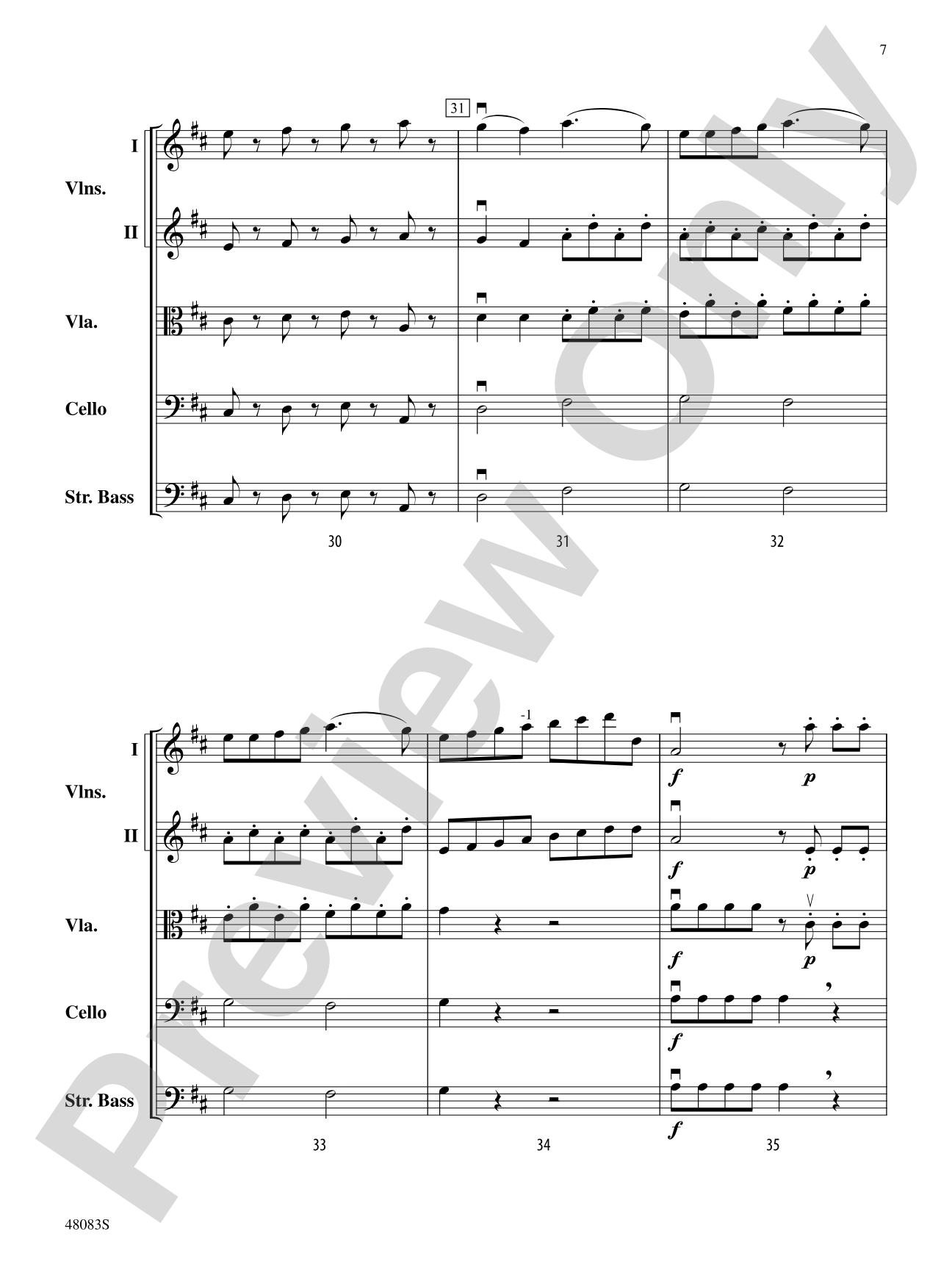
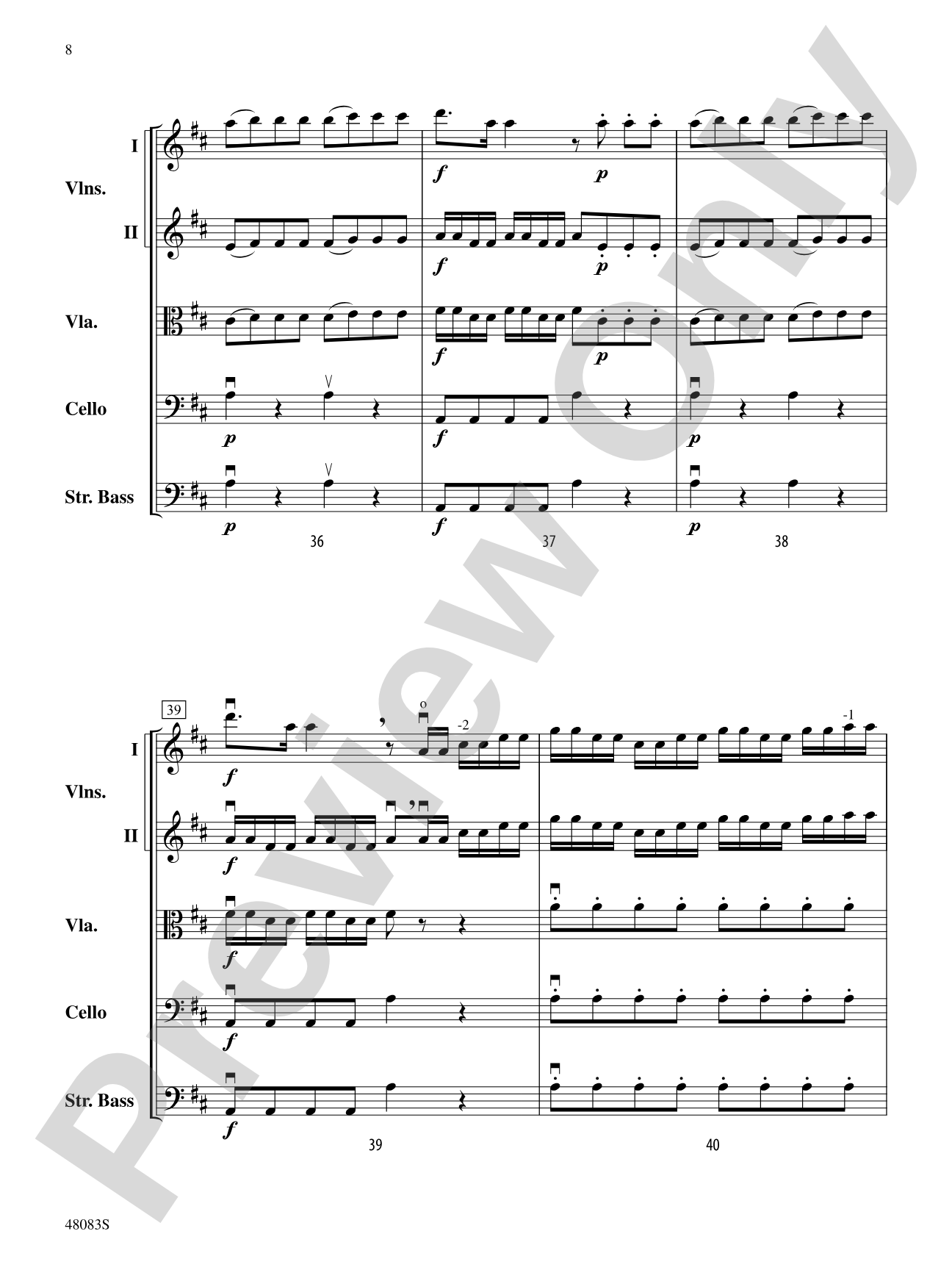
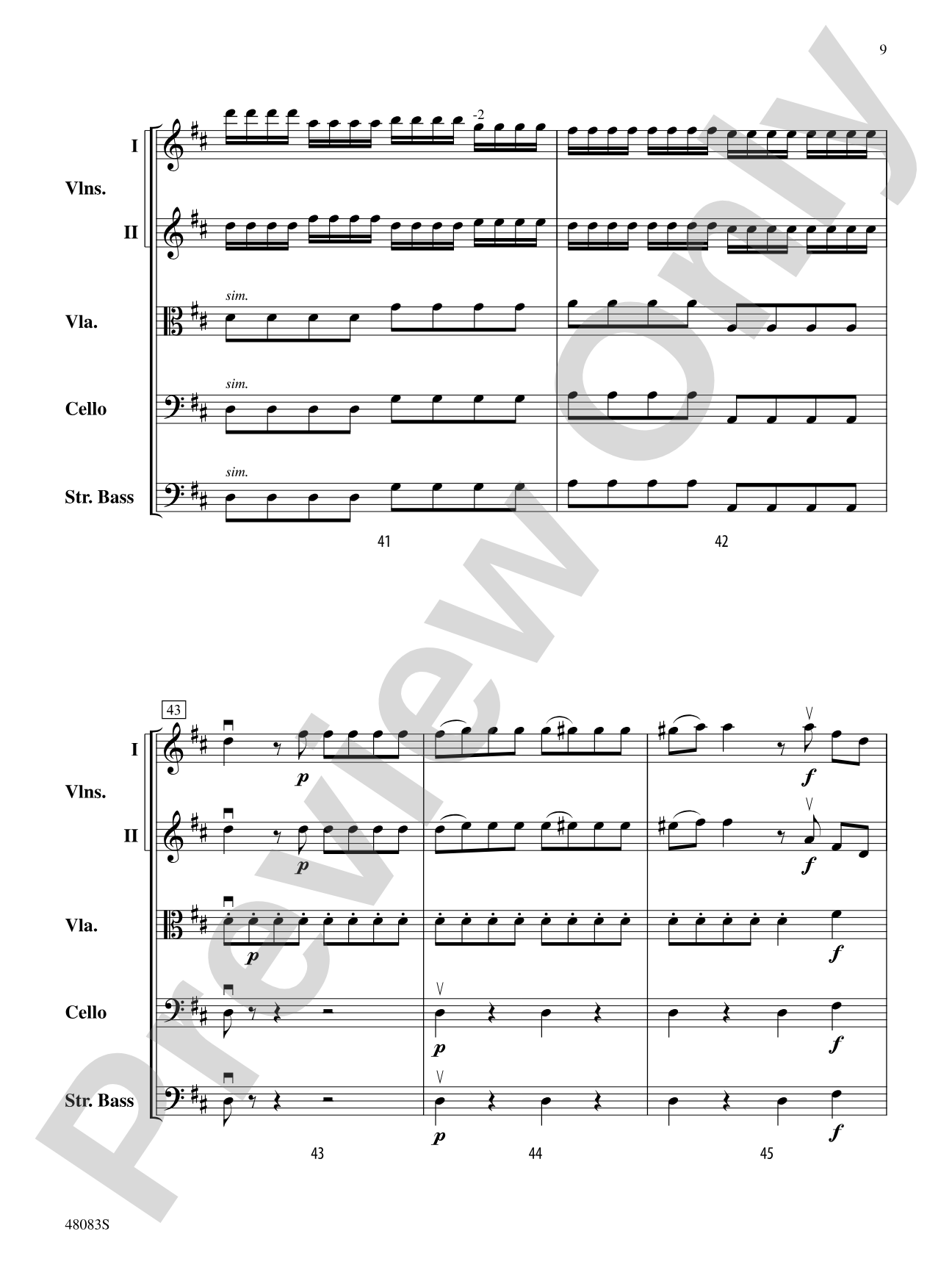
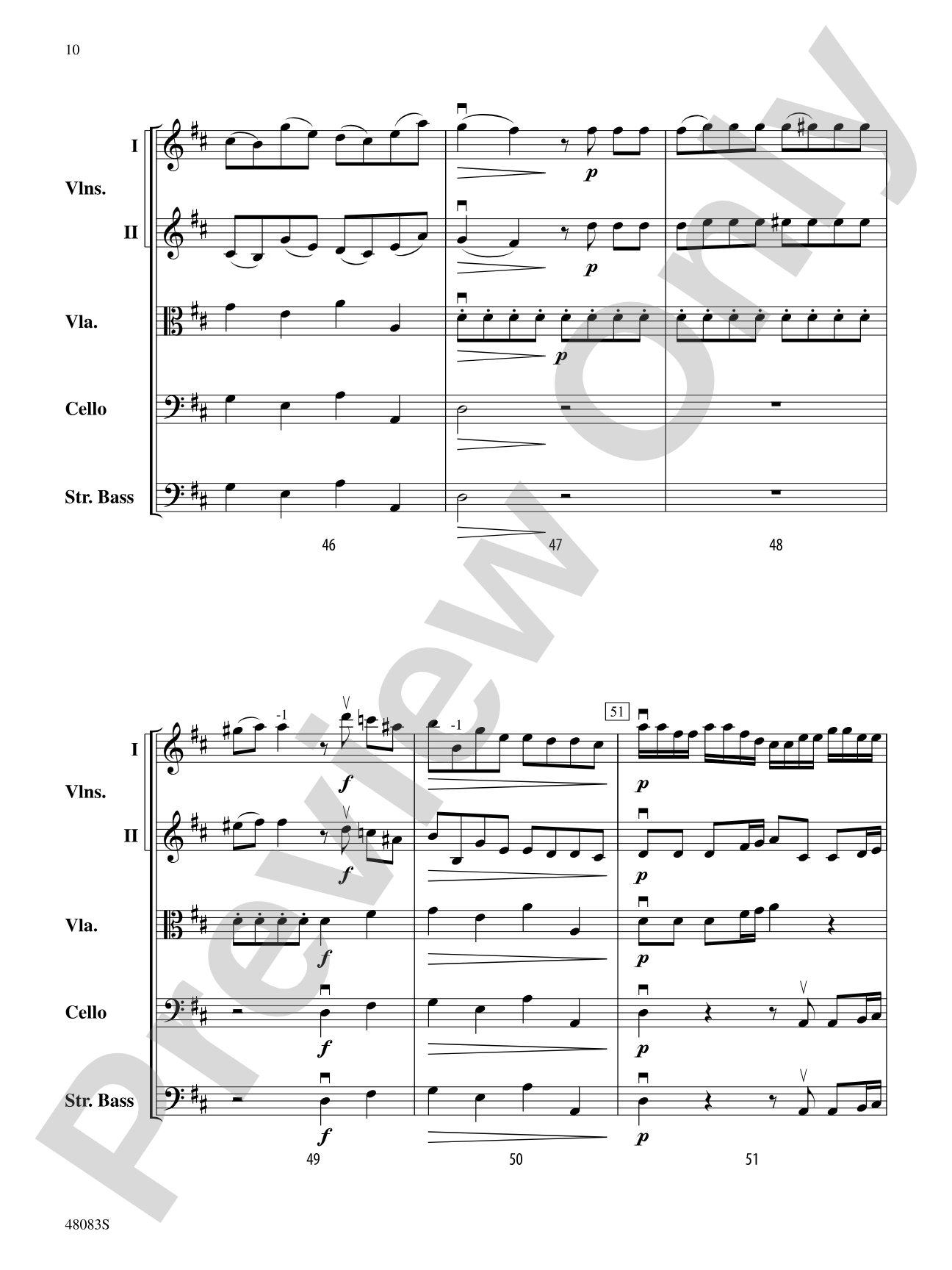
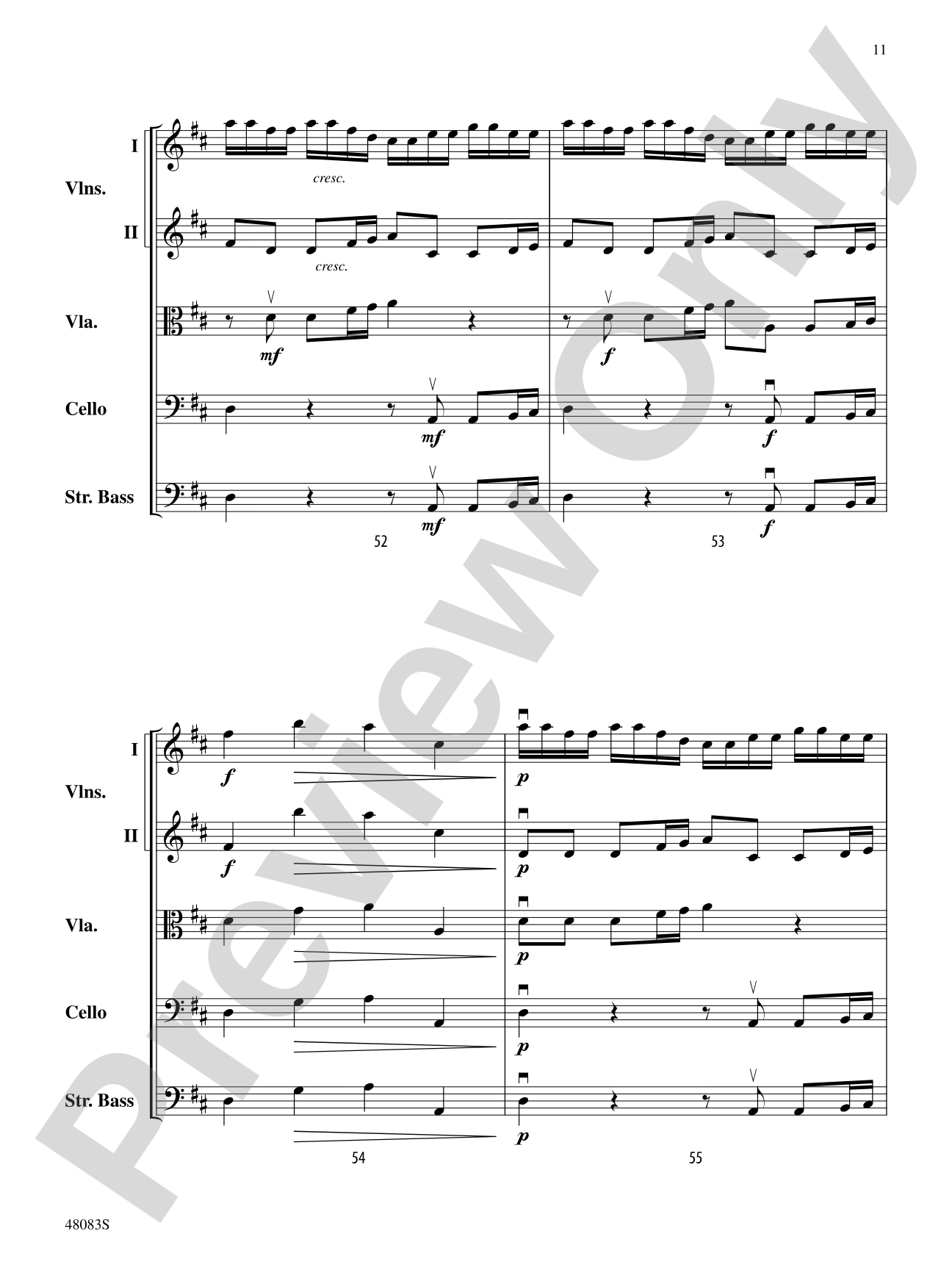
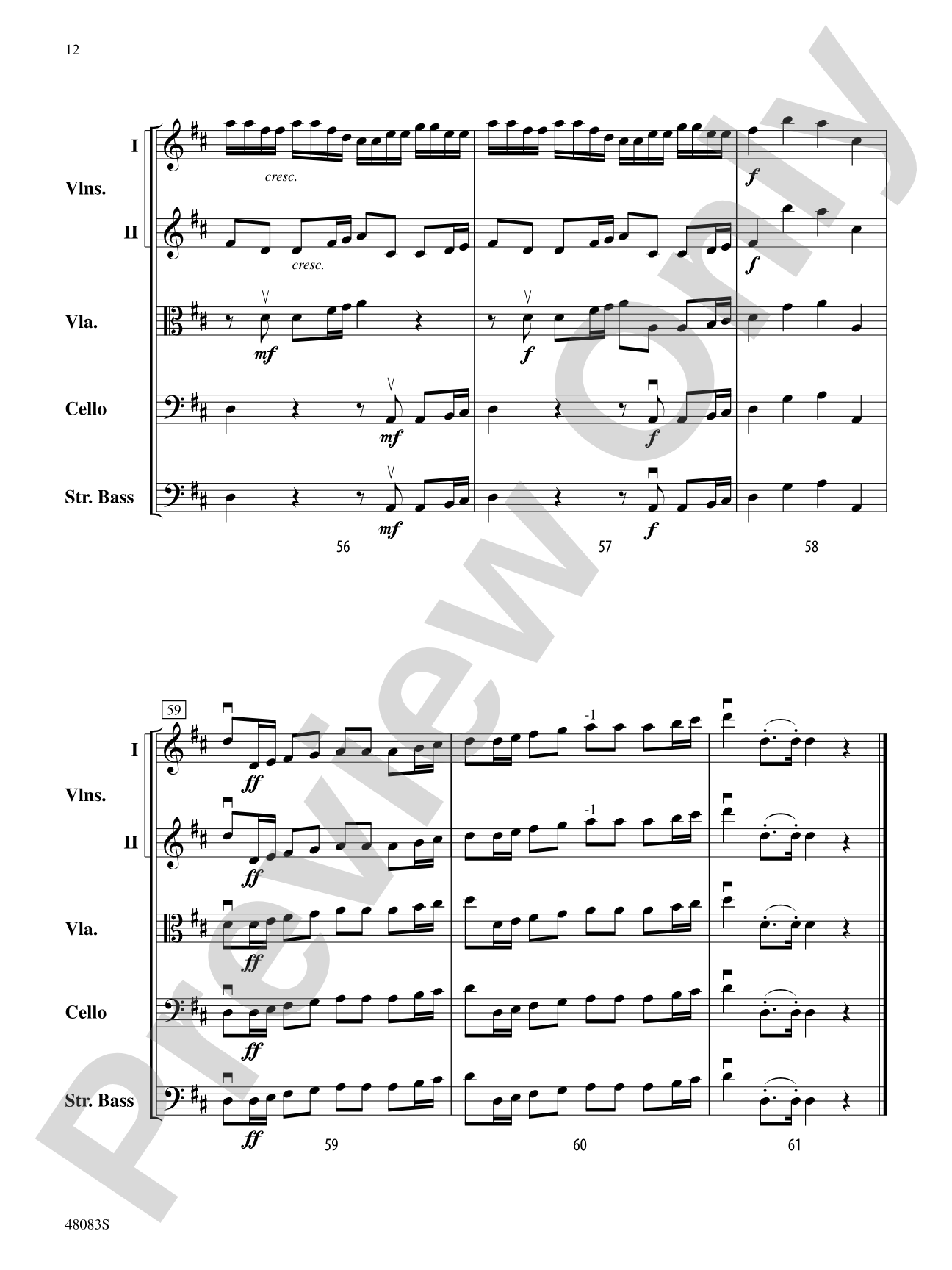

Sinfonia in D Major: Score
By Johann Christian Bach / arr. Jim Palmer
Grade: 3
Item: 00-PR-0006719
$9.00
Pickup currently not available
Description
This title features Alfred Music's String Orchestra FLEX options. That means that every part in this set is now transposed into every other part, so you can play this title with any combination of like- or mixed-string ensemble. After purchasing this set, decide what additional parts you need to meet the unique needs of your ensemble, then download and print them for free at alfred.com/supplemental---free of charge.
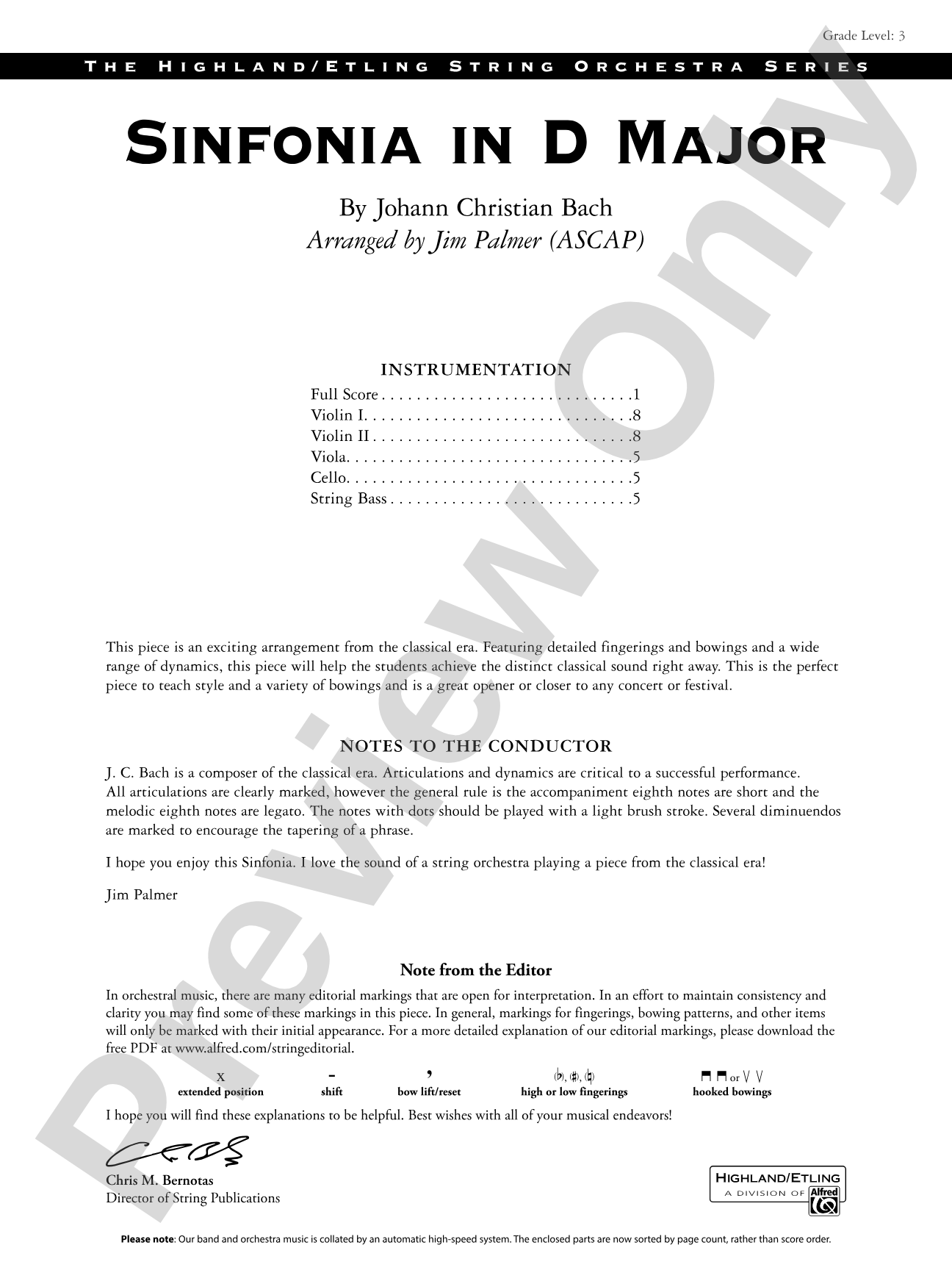
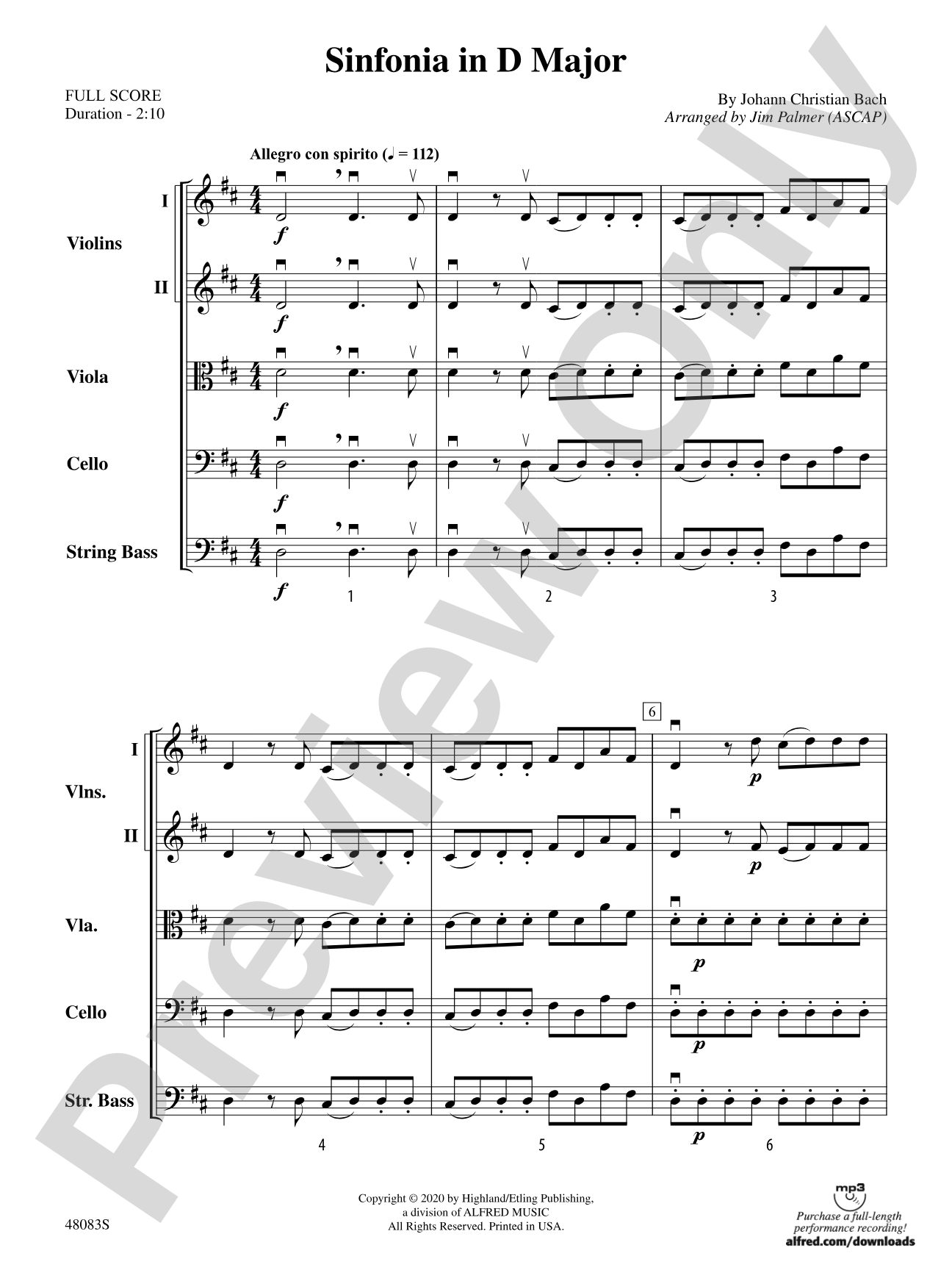
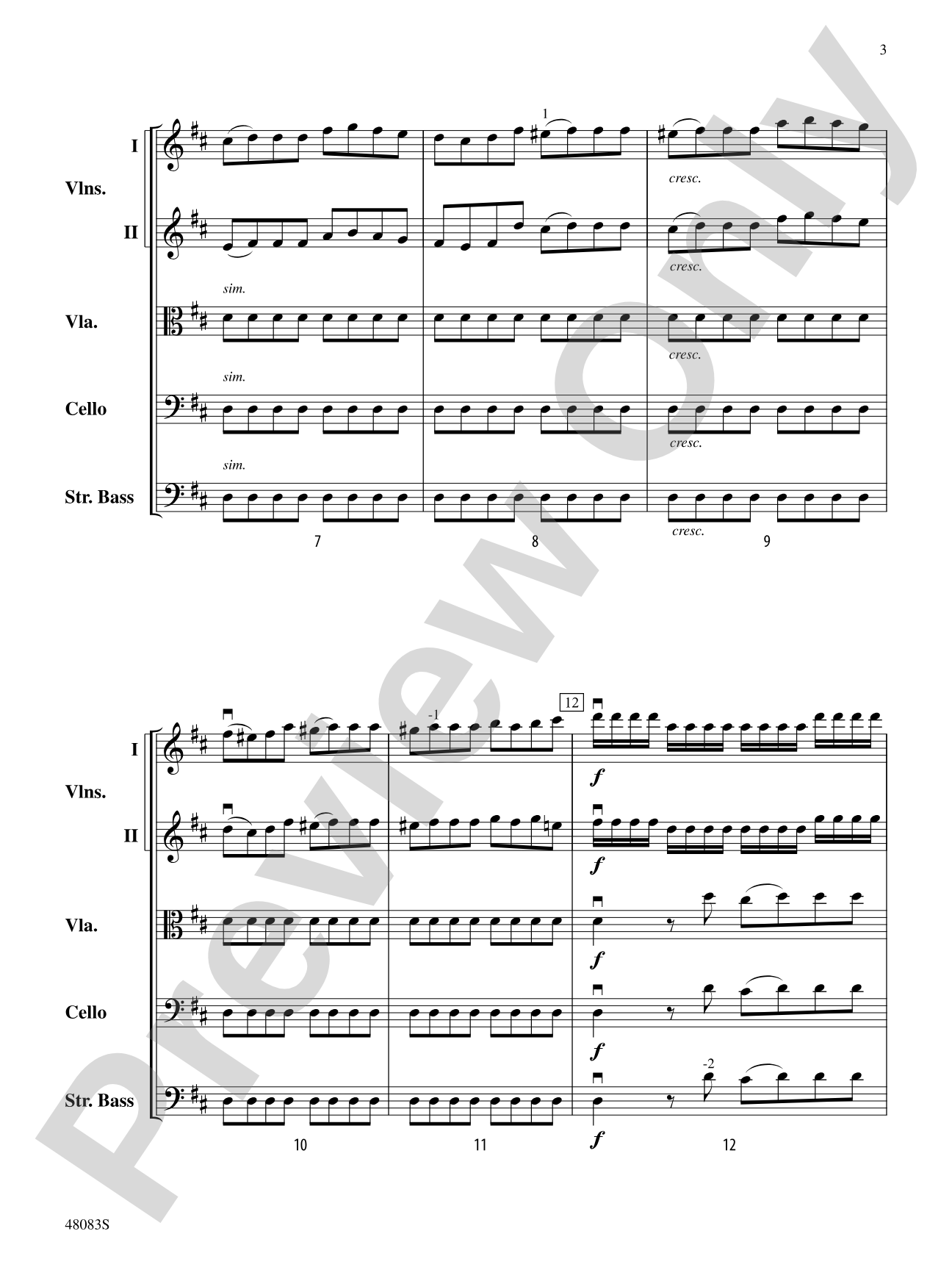
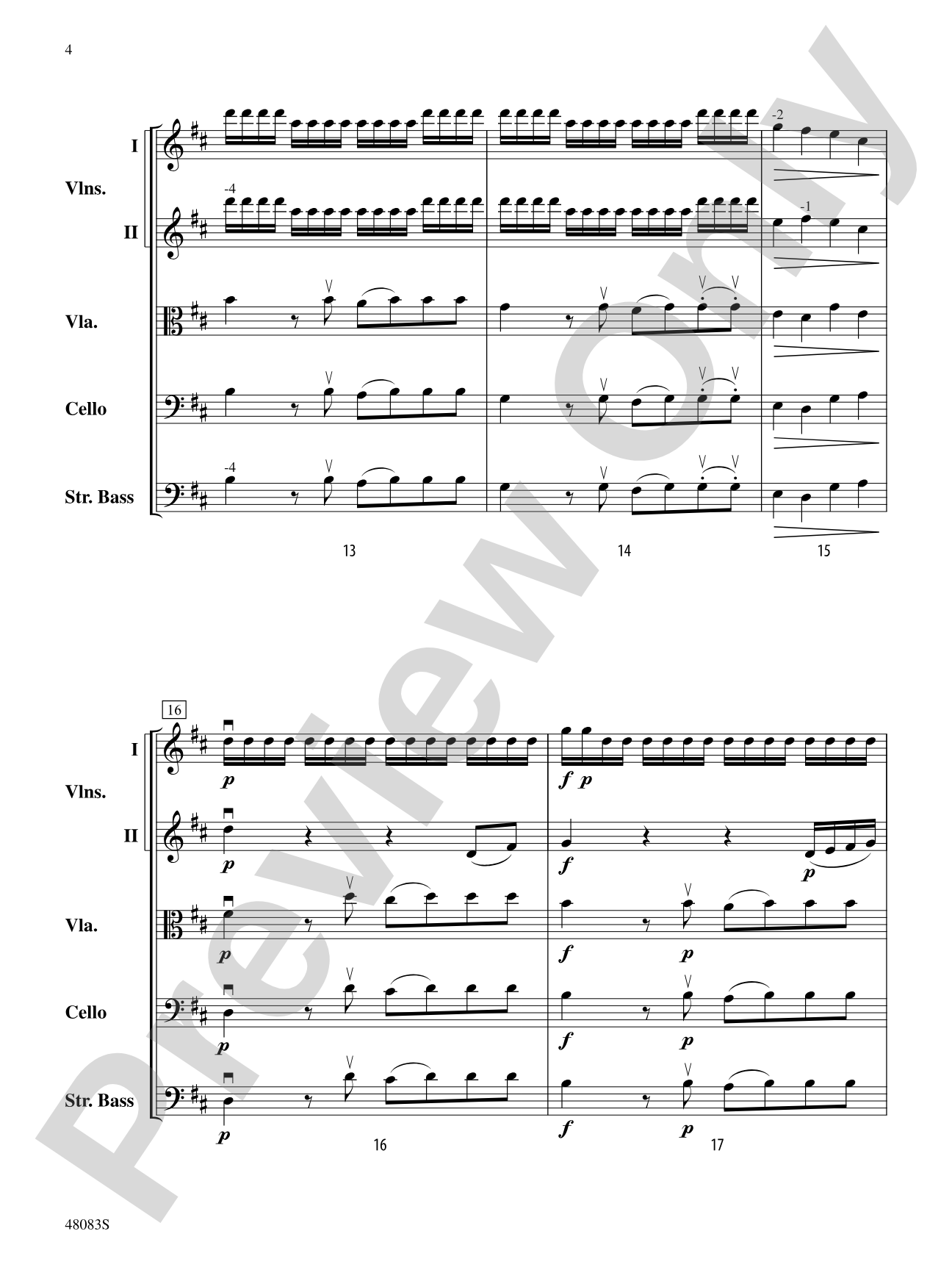
Sinfonia in D Major by Johann Christian Bach, and arranged by Jim Palmer, is an exciting arrangement from the classical era. Featuring detailed fingerings and bowings and a wide range of dynamics, this piece will help the students achieve that distinct classical sound right away. This is the perfect piece to teach style and a variety of bowings and is a great opener or closer to any concert or festival. (2:10) This title is available in MakeMusic Cloud.


Sinfonia in D Major by Johann Christian Bach, and arranged by Jim Palmer, is an exciting arrangement from the classical era. Featuring detailed fingerings and bowings and a wide range of dynamics, this piece will help the students achieve that distinct classical sound right away. This is the perfect piece to teach style and a variety of bowings and is a great opener or closer to any concert or festival. (2:10) This title is available in MakeMusic Cloud.
Don't just read it, hear it, play along with it, and watch your students grow with it. In MakeMusic Cloud, Sinfonia in D Major: Score comes alive with professional accompaniment, adjustable tempo, and built-in practice tools that turn solo practice into real progress.
Open in the Player
Jump straight in and assign it today.
Start Your Free Trial
Open this title and explore the full library in minutes.
Sample Audio
1
Audio File
--:--
0:00
0:00
Sample Video
Additional Details
Series:
Highland/Etling String Orchestra
Publisher:
Alfred Music
Page Count:
124
SKU:
00-PR-0006719
More about this title
About the Composer: Johann Christian Bach
Johann Christian Bach (1735-1782) was the youngest son of J.S. Bach and one of the most prolific composers of the classical era. Based primarily in London after 1760, he became a central figure in shaping the emerging symphonic style, bridging the ornamental sensibilities of the baroque with the clarity and structure of early classicism. His instrumental works were widely performed across Europe and remained foundational teaching repertoire for generations of musicians.
Why we love this
Jim Palmer's arrangement captures the hallmarks of classical style—articulate phrasing, transparent textures, and purposeful harmonic movement—without overwhelming a Grade 3 ensemble. The detailed fingerings and bowings transform what could be a simple arrangement into a genuine teaching vehicle for technique and style, and the FLEX instrumentation means you can actually perform it with the ensemble you have right now.
What to expect
Elegant and articulate, with the bright energy of a classical-era sinfonia. The piece sparkles with clear phrase shapes and purposeful harmonic movement, inviting students into the idiom of Bach's era without demanding virtuosity.
Who it's for
String orchestra directors teaching Grade 3 ensembles who need a piece that sounds mature while remaining accessible. Ensembles with flexible or mixed instrumentation will especially benefit from the FLEX options, which eliminate the frustration of missing parts.
How to get the most out of it
- Attend carefully to the dynamic range. The piece asks for everything from crisp fortes to delicate pianos, and these contrasts are essential to classical style. Without them, the arrangement flattens.
- Lock the rhythm section (cellos and basses) into a unified pulse from the first rehearsal. The articulate classical character depends on precise rhythmic clarity in the lower voices.
- Shape phrases toward their harmonic goals rather than toward the downbeat. This encourages students to listen across measures and develop longer musical lines.
- Differentiate your bow weight and speed according to the articulation markings. Staccatos and slurs require distinct physical approaches, and this piece gives students meaningful practice with both.
How to use it
This works beautifully as a concert opener where it establishes clarity and style, or as a closer that leaves audiences with the sophistication of classical form. It pairs well on mixed programs where you want to showcase ensemble refinement and technical control without relying on heavy romantic or contemporary repertoire.
Skills your students will build
- Classical articulation and phrasing conventions
- Reading detailed fingering and bowing indications
- Maintaining rhythmic precision across independent parts
- Dynamic contrast and musical expression within a formal structure
- Balancing ornamental melody with supporting harmonic voices