Since I Fell for You (arr. John Clayton) Sheet Music Preview

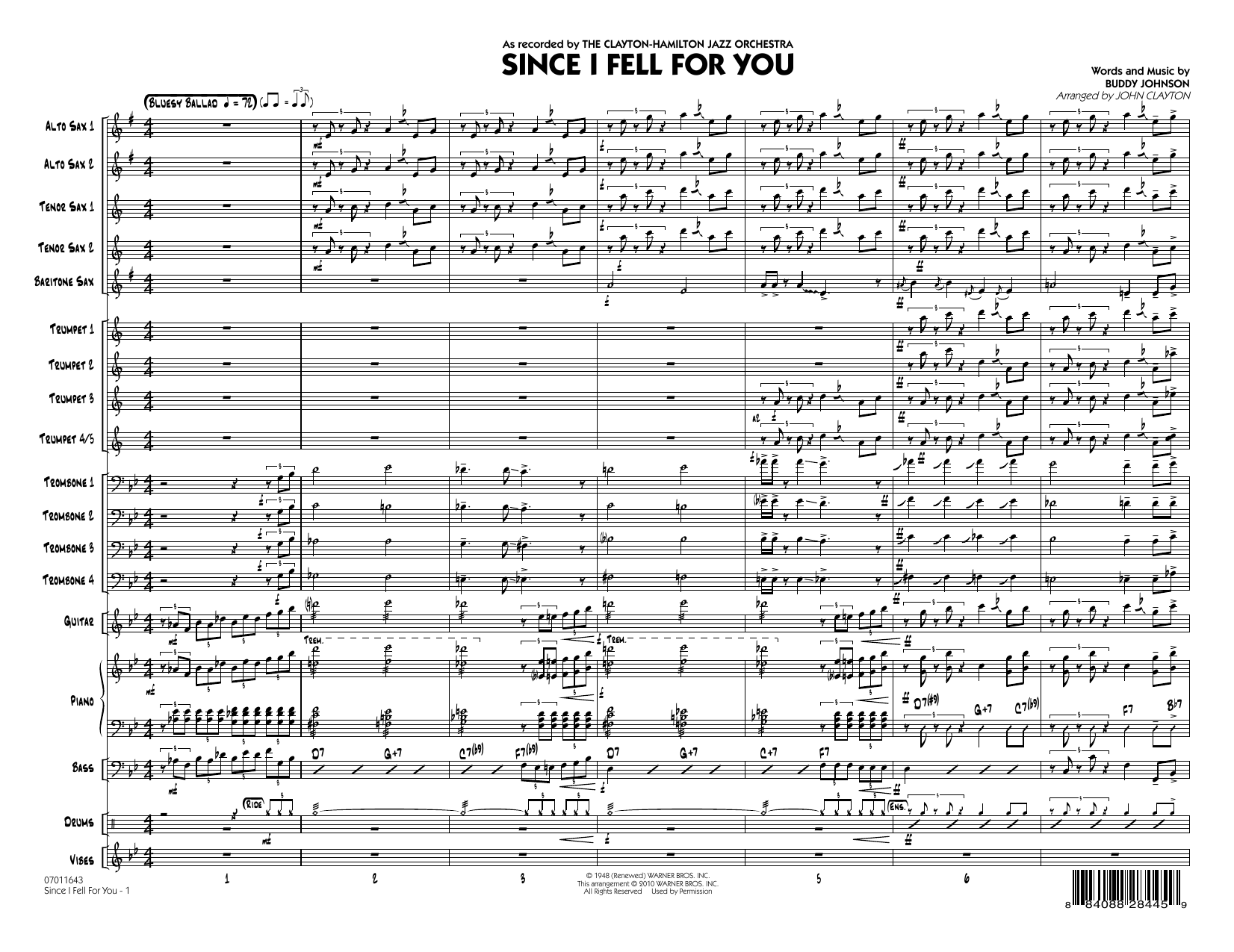
Since I Fell for You (arr. John Clayton): Jazz Ensemble Conductor Score & Parts

As performed by The Clayton-Hamilton Jazz Orchestra / Arranged by John Clayton

Grade: 5

Item: 35-PK01215474

Digital Download
$60.00

One moment…

Description
Recorded on the Clayton-Hamilton Jazz Orchestra CD "Explosive!," this dynamic and swingin' setting of the standard "Since I Fell for You" was designed to showcase master vibraphonist Milt Jackson (heard on this excerpt). Also featured is solo space for tenor sax and piano, plus strategically positioned explosive support from the full ensemble. A piano (or other soloist) could be used in place of vibes if desired.

Since I Fell for You (arr. John Clayton): Jazz Ensemble Conductor Score & Parts isn't in MakeMusic Cloud just yet...but it could be. Let us know you'd like to see it, and you'll help shape what comes next. In the meantime, start a free trial and dive into thousands of interactive titles your students can play along with today.

Sample Audio
No sample audio found.
Sample Video
Additional Details
Publisher: Hal Leonard
SKU: 35-PK01215474

More about this title

About the Artist: The Clayton-Hamilton Jazz Orchestra

The Clayton-Hamilton Jazz Orchestra represents one of contemporary jazz's most disciplined and swinging ensembles, founded by bassist John Clayton and drummer Jeff Hamilton. Their recordings for Concord Records showcase a deep commitment to the big band tradition while bringing fresh energy to standards and original compositions alike.

Known for their tight ensemble work and space for stellar soloists, the orchestra has become a vital voice in keeping the big band sound vital and relevant in modern jazz. Their approach balances respect for the jazz canon with the kind of infectious groove that makes audiences move.

Why we love this

John Clayton's arrangement captures everything that makes this standard swing: the melody sits perfectly for ensemble passages, the solo sections breathe naturally between full-band hits, and the writing gives your players a genuine model of how professional jazz ensembles balance tightness with expression. Hearing it on the "Explosive!" recording means your students aren't learning from a chart in a vacuum; they're learning from musicians who have performed it at the highest level.

What to expect

Sophisticated swing that never loses its accessibility. The arrangement has the polish of a polished recording session, yet it swings with genuine warmth and the kind of ensemble unity that makes even younger players sound seasoned. It's the sound of musicians who know the tradition deeply and play it with joy.

Who it's for

Jazz ensembles working at Grade 5 level who can handle independent section work, flexible time feels, and the soloistic demands of this standard. Directors seeking material that teaches students how real professional jazz orchestras approach a familiar tune will find a direct pedagogical model here.

How to get the most out of it

  • Study the recorded version to nail the rhythmic pocket, especially how the ensemble locks in during the ensemble shout sections. The groove sits slightly behind the beat in a way that's subtle but essential.
  • Balance the vibraphone (or piano solo) with the full ensemble support. The 'explosive' moments work because there's clear contrast with the soloist's more intimate passages.
  • Lock the section parts with precision during the full ensemble hits. Clayton writes these moments to land with punch, which requires clean attacks and unified releases across all sections.
  • Give your tenor sax soloist room to breathe and bend the melody during their featured chorus. This is where the arrangement shifts from ensemble showcase to individual expression.

How to use it

This works beautifully as a centerpiece on a jazz concert, particularly when paired with newer compositions or original big band charts. It also serves as an excellent teaching tool mid-year when your ensemble has developed the ensemble cohesion to handle the full-band moments while giving soloists enough scaffolding to develop their voice.

Skills your students will build

  • Reading and executing jazz ensemble articulations and attacks
  • Balancing sectional independence with full ensemble unity
  • Playing in a relaxed swing pocket while maintaining rhythmic precision
  • Responding to dynamic contrast between solo and ensemble sections
  • Interpreting standards within a modern big band context

You May Also Like