
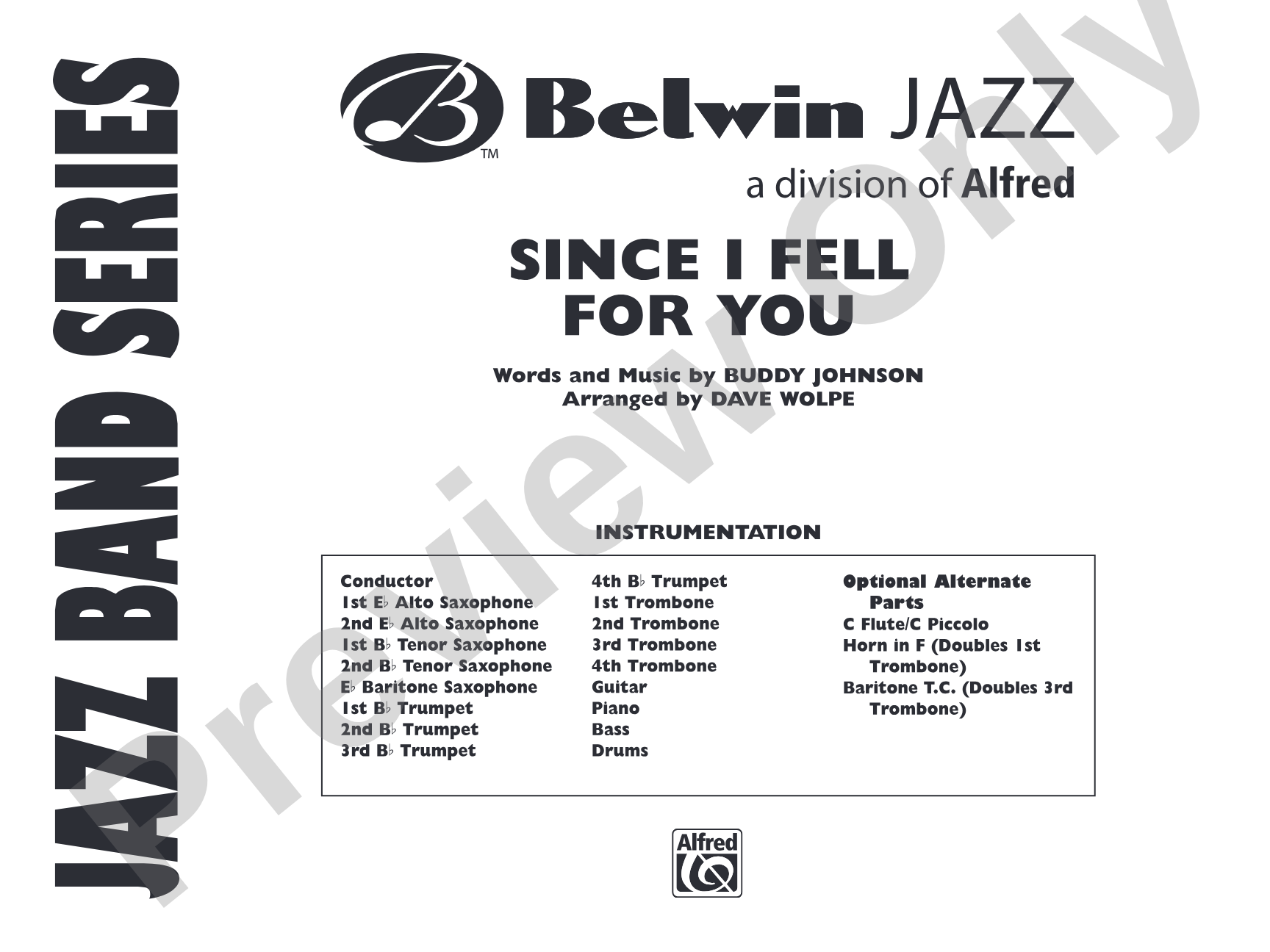
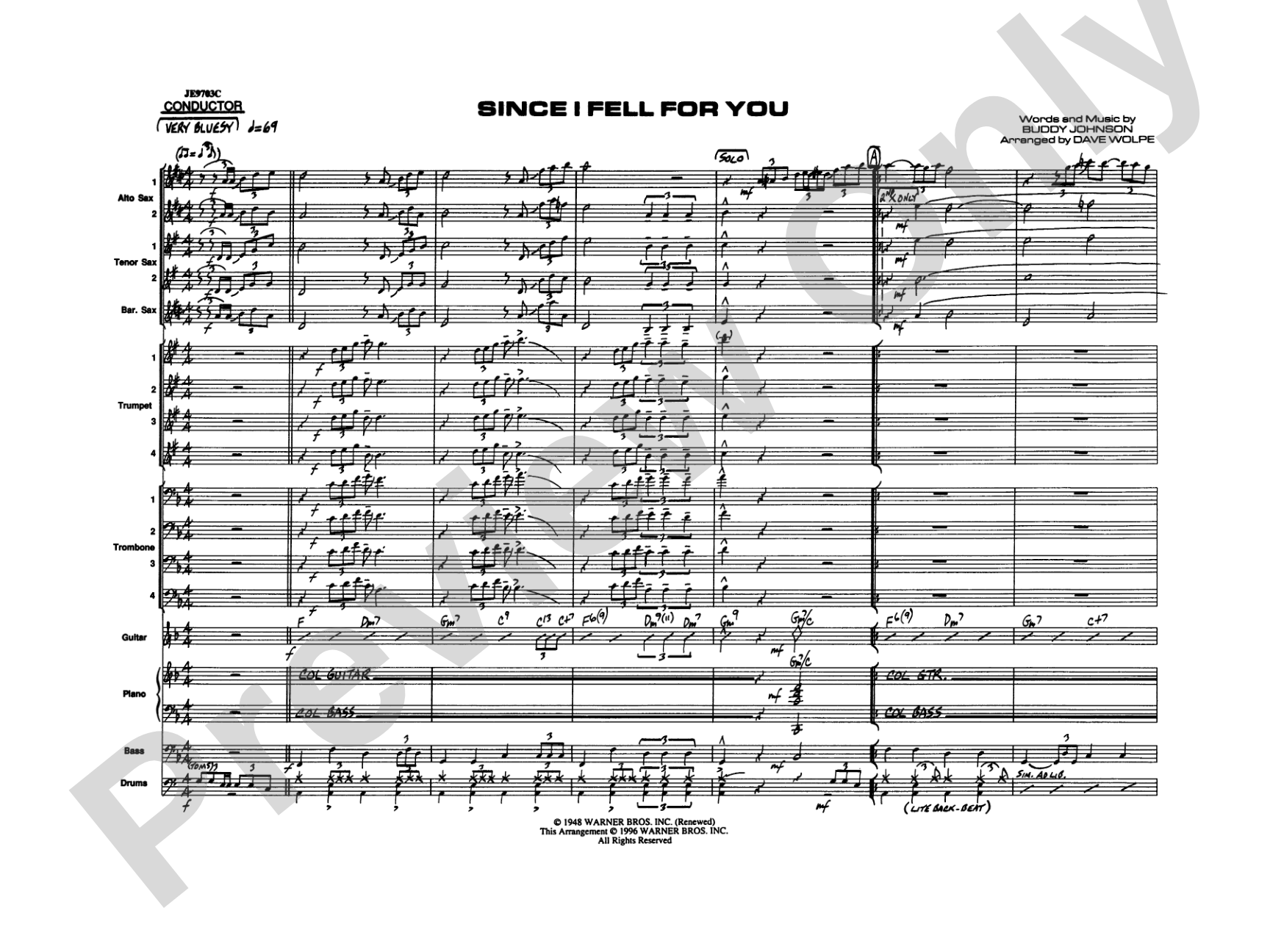
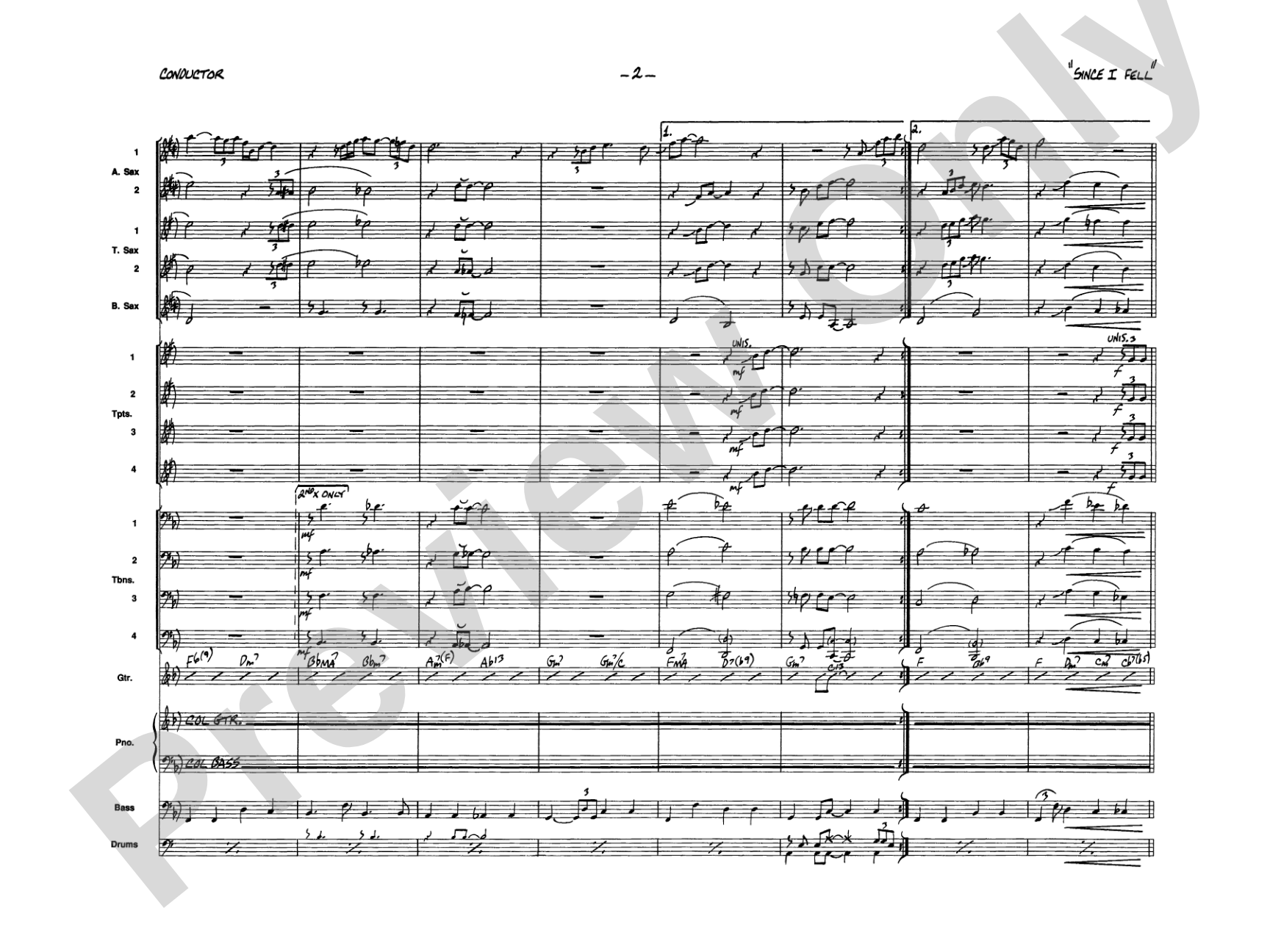
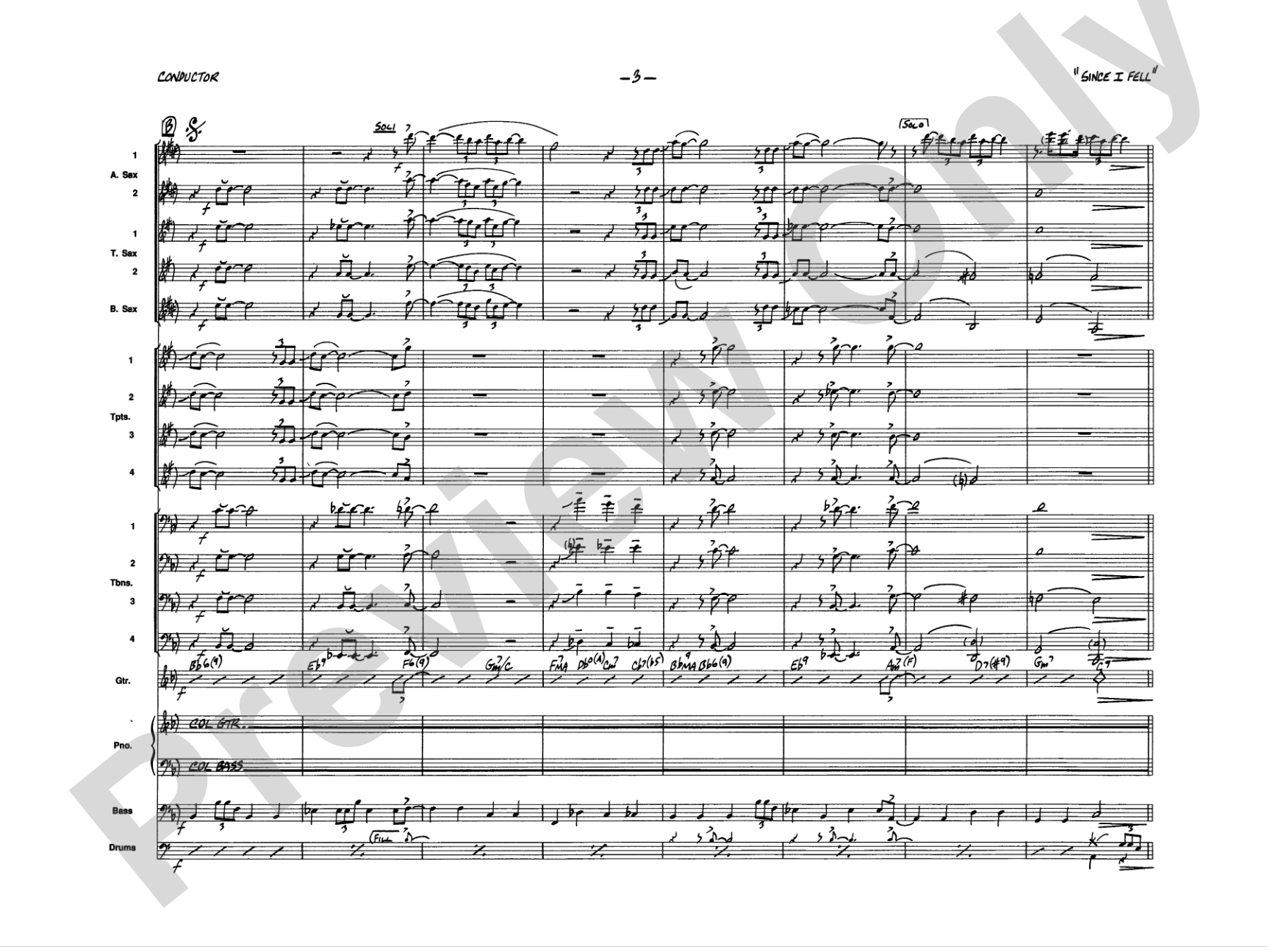
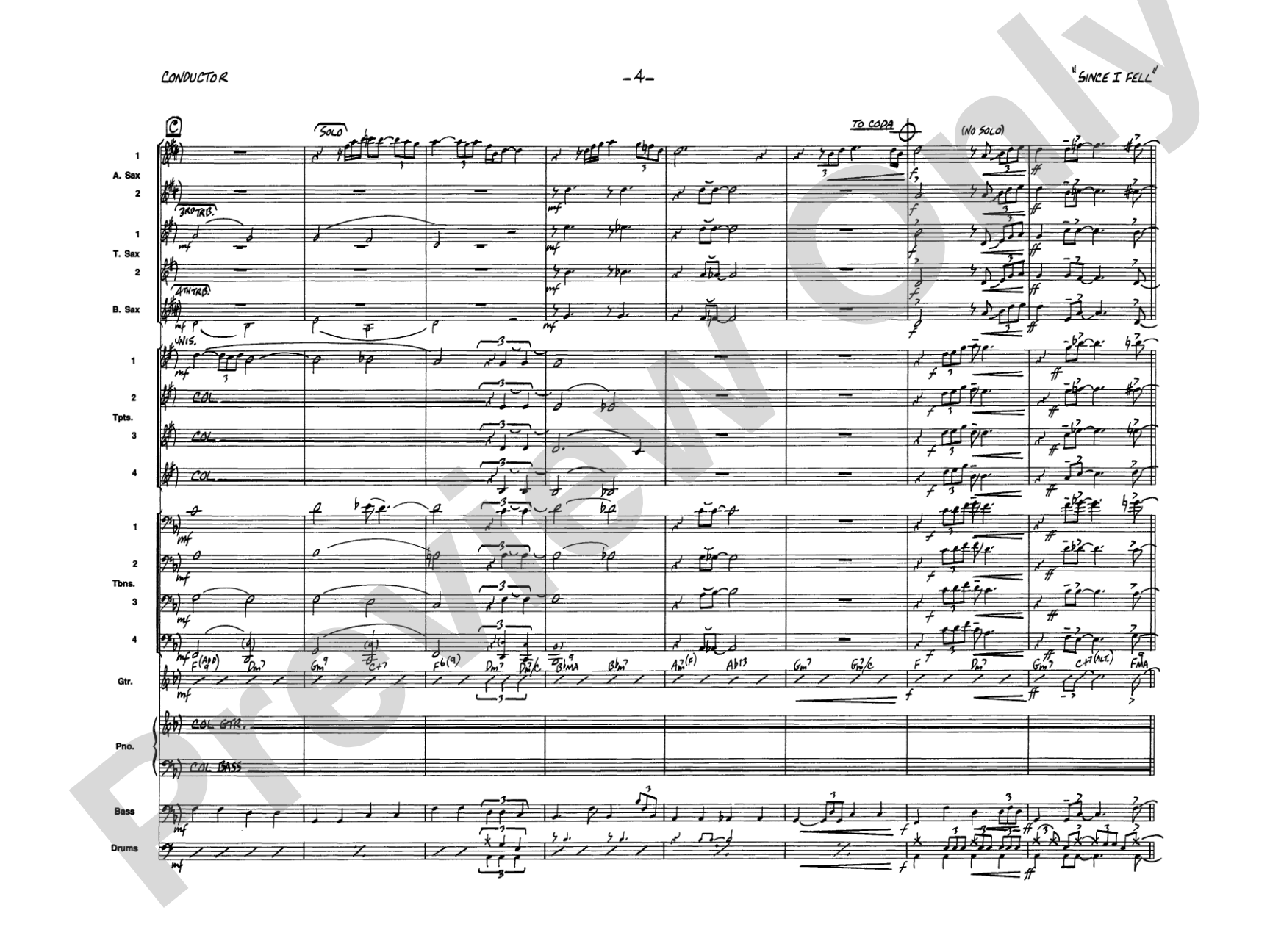
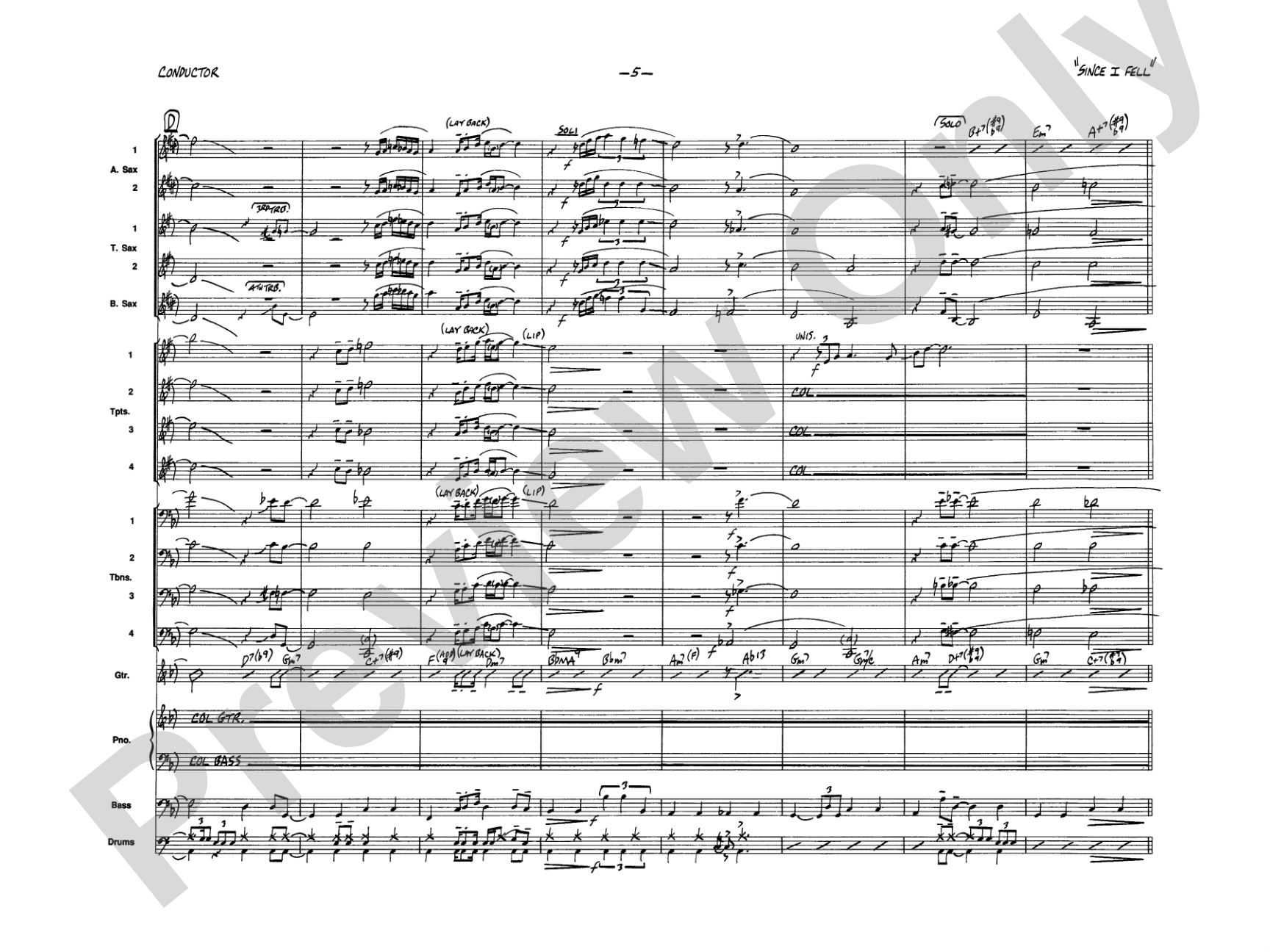
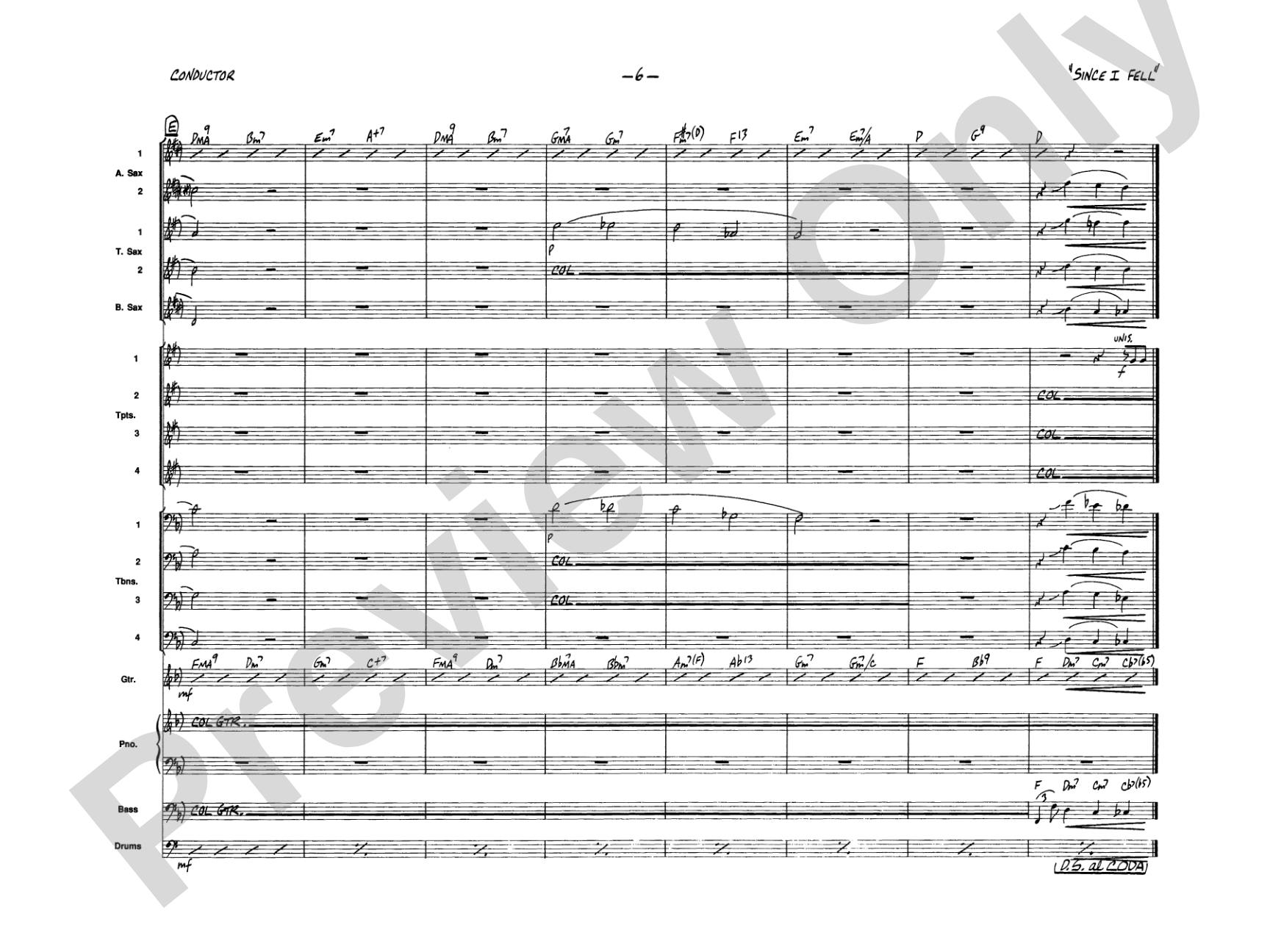
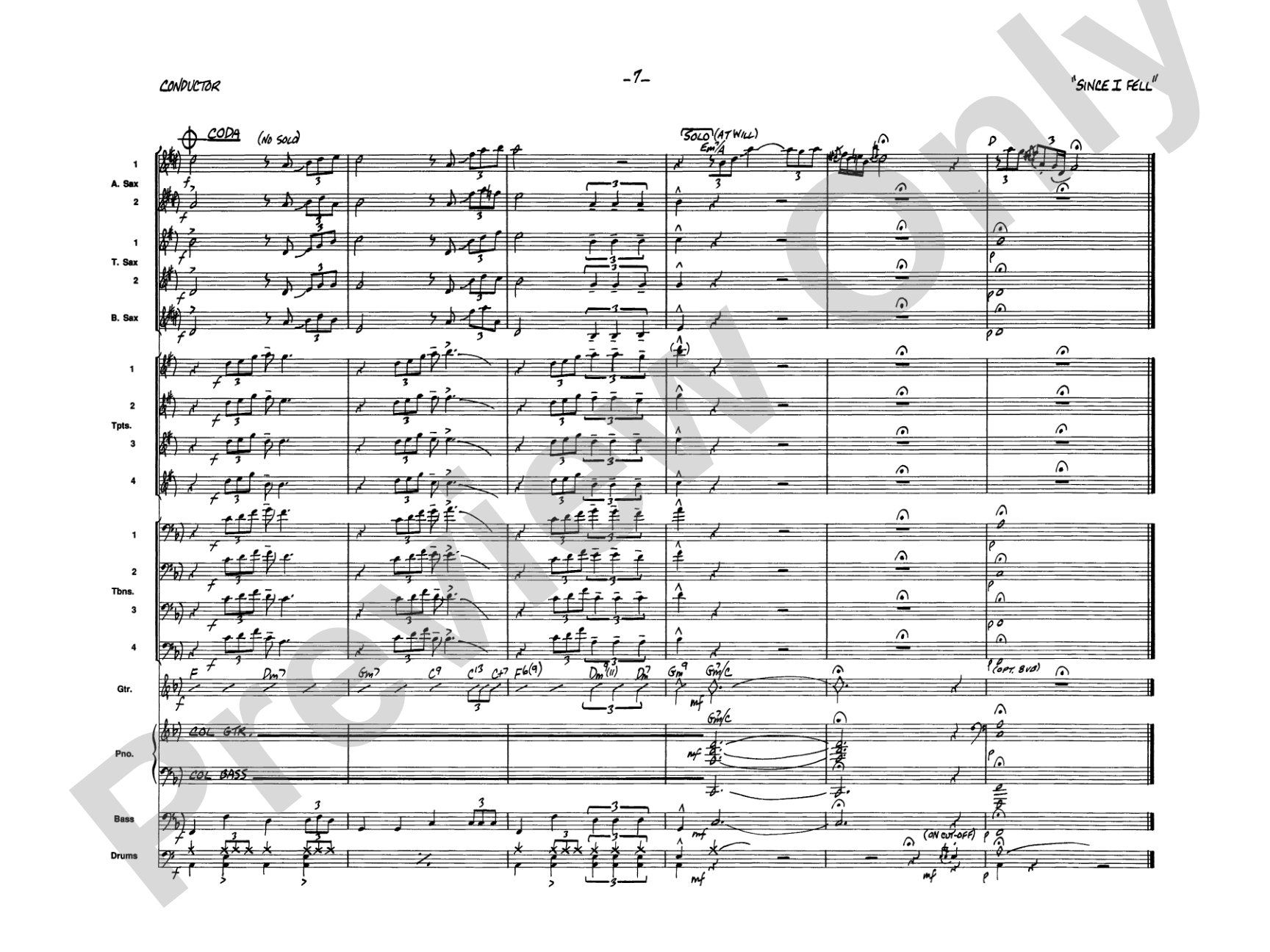

Since I Fell for You: Jazz Ensemble Conductor Score & Parts
By Buddy Johnson / arr. Dave Wolpe
Grade: 3 (Medium)
Item: 00-PK-0002436

$52.00
One moment…
Description
This sultry, bluesy ballad gets the Dave Wolpe treatment. Dave has written a chart that features your best alto sax player. This version of an ever-popular tune is smooth from start to finish. Great chord changes! (duration 4:22)


Don't just read it, hear it, play along with it, and watch your students grow with it. In MakeMusic Cloud, Since I Fell for You: Jazz Ensemble Conductor Score & Parts comes alive with professional accompaniment, adjustable tempo, and built-in practice tools that turn solo practice into real progress.
Open in the Player
Jump straight in and assign it today.
Start Your Free Trial
Open this title and explore the full library in minutes.
Sample Audio
No sample audio found.
Sample Video
No sample videos found.
Additional Details
Series:
Jazz Band Series
Publisher:
Alfred Music
Page Count:
92
SKU:
00-PK-0002436
More about this title
About the Composer: Buddy Johnson
Buddy Johnson (1915-1967) was a pianist, bandleader, and composer who bridged jump blues and early rhythm and blues during the 1940s and 1950s. His instrumental and vocal work earned him a devoted following, and his compositions became standards in both blues and jazz repertoires. Johnson's gift for crafting memorable melodies and grooves made him a significant figure in the evolution of popular music during the postwar era.
Why we love this
Dave Wolpe's arrangement showcases the alto sax with a featured role that lets your strongest player shine while keeping the ensemble cohesive and groove-oriented. The chart balances accessibility with genuine jazz sophistication, making it rewarding for intermediate groups without requiring extensive jazz background from every player.
What to expect
Smooth and intimate, with the languid pacing of a late-night ballad. The arrangement draws listeners into the alto sax's voice and the subtle conversation between sections, creating an atmosphere that feels both polished and deeply rooted in blues tradition.
Who it's for
Jazz ensemble directors seeking a signature chart that gives an advanced section player a genuine solo vehicle while keeping the rest of the band engaged and learning. This works well for groups with intermediate sight-reading skills and a solid rhythm section, whether your ensemble is developing jazz vocabulary or performing at a more established level.
How to get the most out of it
- Lock the rhythm section's pocket early in rehearsal. The chart's sultry quality depends on a relaxed, floating feel rather than a rigid tempo, so isolate bass, drums, and piano to establish that cohesion before bringing in the horns.
- Tailor the alto sax's tone toward warmth and flexibility in the higher register. This chart asks the featured player to navigate some expressive phrasing, so work on breath control and note connection rather than pure technical speed.
- Keep the ensemble dynamics conversational. Since the tune is written as a ballad, resist the urge to push volume; instead, use the chord changes and orchestration shifts to create shape and interest.
- Balance the reed section carefully through the supporting sections. The alto takes the lead, but the other saxes and any clarinet parts need to sit back and provide harmonic color without competing for attention.
How to use it
This ballad pairs beautifully with uptempo swingers or contemporary pop-jazz charts, giving your program dynamic shape and emotional depth. Consider programming it mid-set to showcase your ensemble's maturity and provide a moment where soloists can breathe without rushing the tempo.
Skills your students will build
- Reading jazz articulation and phrasing conventions
- Supporting a featured soloist while maintaining ensemble cohesion
- Playing with relaxed time and groove-oriented flexibility
- Balancing harmonic function in a jazz voicing context
- Interpreting dynamics and tone color to serve the arrangement's mood