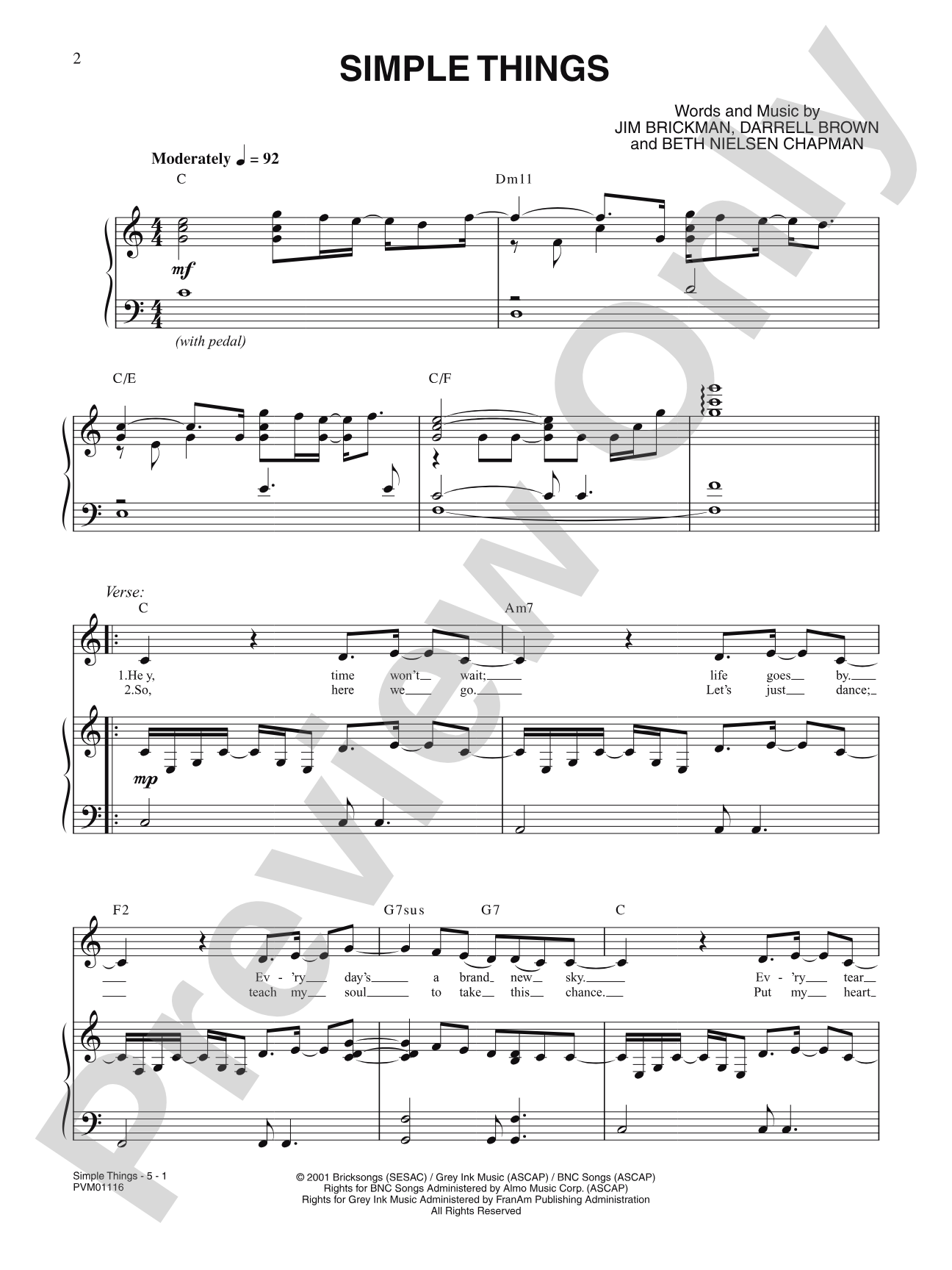
Simple Things Sheet Music Preview

Simple Things: Piano/Vocal/Chords

Recorded by Jim Brickman featuring Rebecca Lynn Howard

Item: 00-PIP-000560

Digital Download
$3.99
Description

Simple Things: Piano/Vocal/Chords isn't in MakeMusic Cloud just yet...but it could be. Let us know you'd like to see it, and you'll help shape what comes next. In the meantime, start a free trial and dive into thousands of interactive titles your students can play along with today.

Sample Audio
No sample audio found.
Sample Video
Additional Details
Publisher: Alfred Music
Page Count: 6
SKU: 00-PIP-000560

More about this title

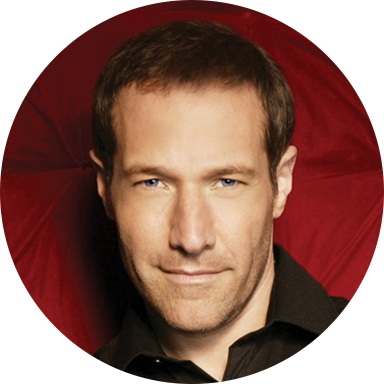
About the Artist: Jim Brickman

Jim Brickman

Jim Brickman stands among the most commercially successful solo pianists in contemporary music, known for crafting accessible yet emotionally resonant instrumental compositions. His approach to songwriting centers on creating music that marks life's significant moments, blending classical piano technique with pop sensibility and new age textures. Brickman's influence on modern instrumental music extends beyond recordings into live performance, where his ability to connect with audiences has fundamentally shaped how piano-driven music reaches mainstream listeners.

Brickman's collaborative work, particularly his partnerships with vocalists like Rebecca Howard, demonstrates his skill at integrating voice and piano into cohesive storytelling. His output across albums, film scores, and television work reflects a consistent artistic philosophy: music exists to accompany, uplift, and underscore the experiences that define our lives.

Why we love this

Brickman's harmonic language sits perfectly at the intersection of pop accessibility and genuine musical sophistication, giving singers and pianists material that sounds both contemporary and timeless. The piano/vocal/chords format makes this ideal for recital pianists who sing, duet performers, or pianists backing up vocalists in intimate settings. The six-page length keeps the piece manageable for learning while offering enough musical content to create a memorable performance.

What to expect

The piece carries the contemplative warmth characteristic of Brickman's style—intimate without being precious, emotional without melodrama. It invites quiet reflection, the kind of music that makes listeners feel genuinely understood through its unhurried pacing and direct harmonic language.

Who it's for

This arrangement suits pianists who sing, vocalist-pianist duos, and piano students exploring contemporary songwriting beyond classical repertoire. Teachers working with advanced middle school or high school students who want pop-influenced material with genuine musicality will find this accessible without being simplistic.

How to get the most out of it

  • Balance the vocal line with accompaniment by keeping the piano part conversational rather than dominant; let chords support the story the singer is telling rather than compete for attention.
  • Work out the rhythmic relationship between vocal phrasing and piano voicings separately before combining them; Brickman's pop-influenced style often plays with slight timing variations that read as natural speech.
  • Explore the harmonic colors available in the chords—use tasteful pedal and voice leading to create warmth without muddiness, especially important in the quieter sections that define this style.
  • If performing solo as a pianist-singer, rehearse the breath coordination carefully so transitions between playing and singing feel seamless rather than technical.

How to use it

Program this as a recital opener or closer to establish a reflective mood, or pair it with other contemporary vocal music to create a themed set exploring modern approaches to song. The piece works equally well in a student recital setting or as part of a coffeehouse-style concert where the piano-voice relationship takes center stage.

Skills your students will build

  • Balancing vocal melody with accompaniment
  • Realizing chord symbols with tasteful voicings
  • Integrating singing and playing in real time
  • Interpreting contemporary harmonic language in a classical context

You May Also Like