
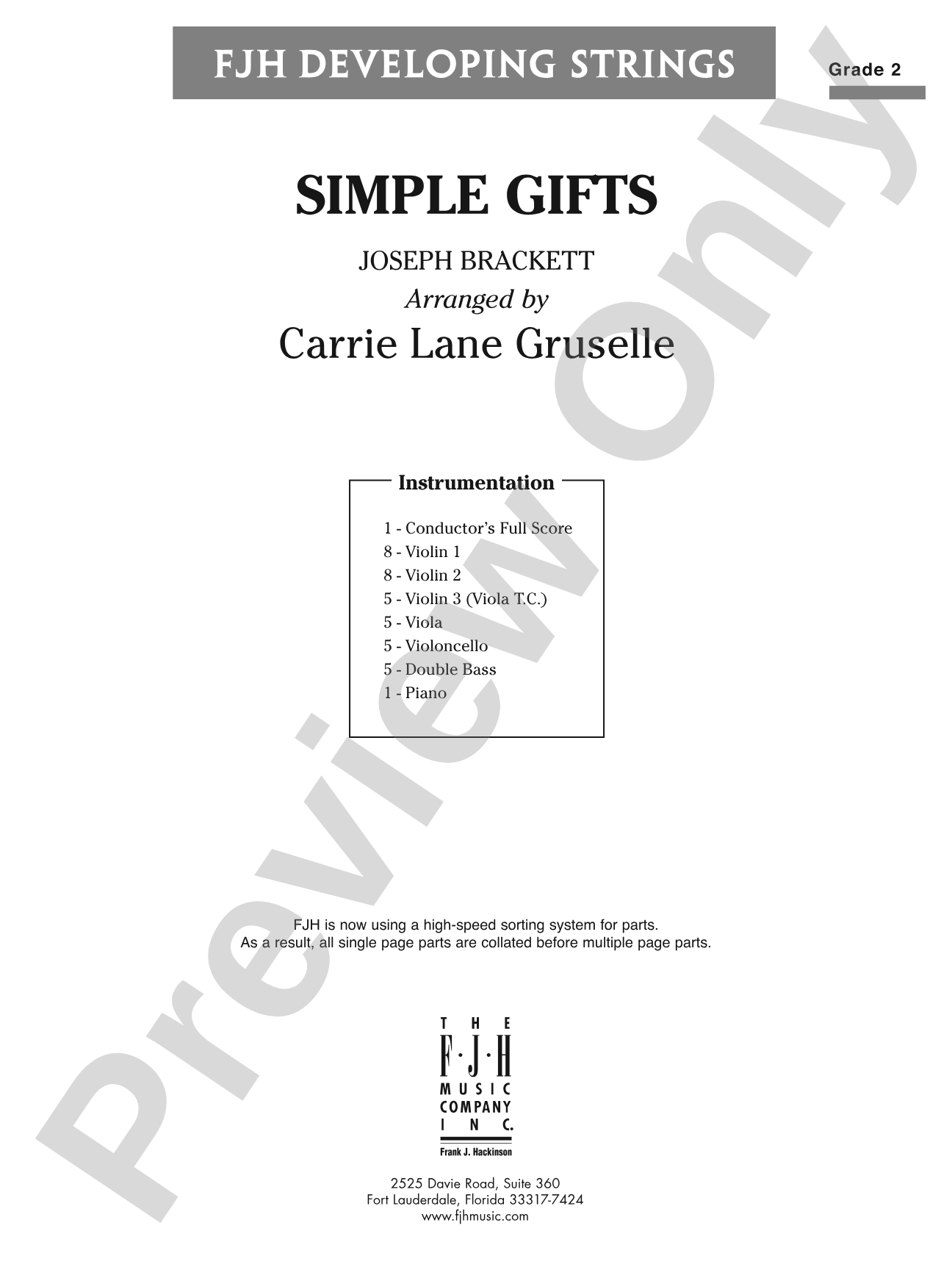
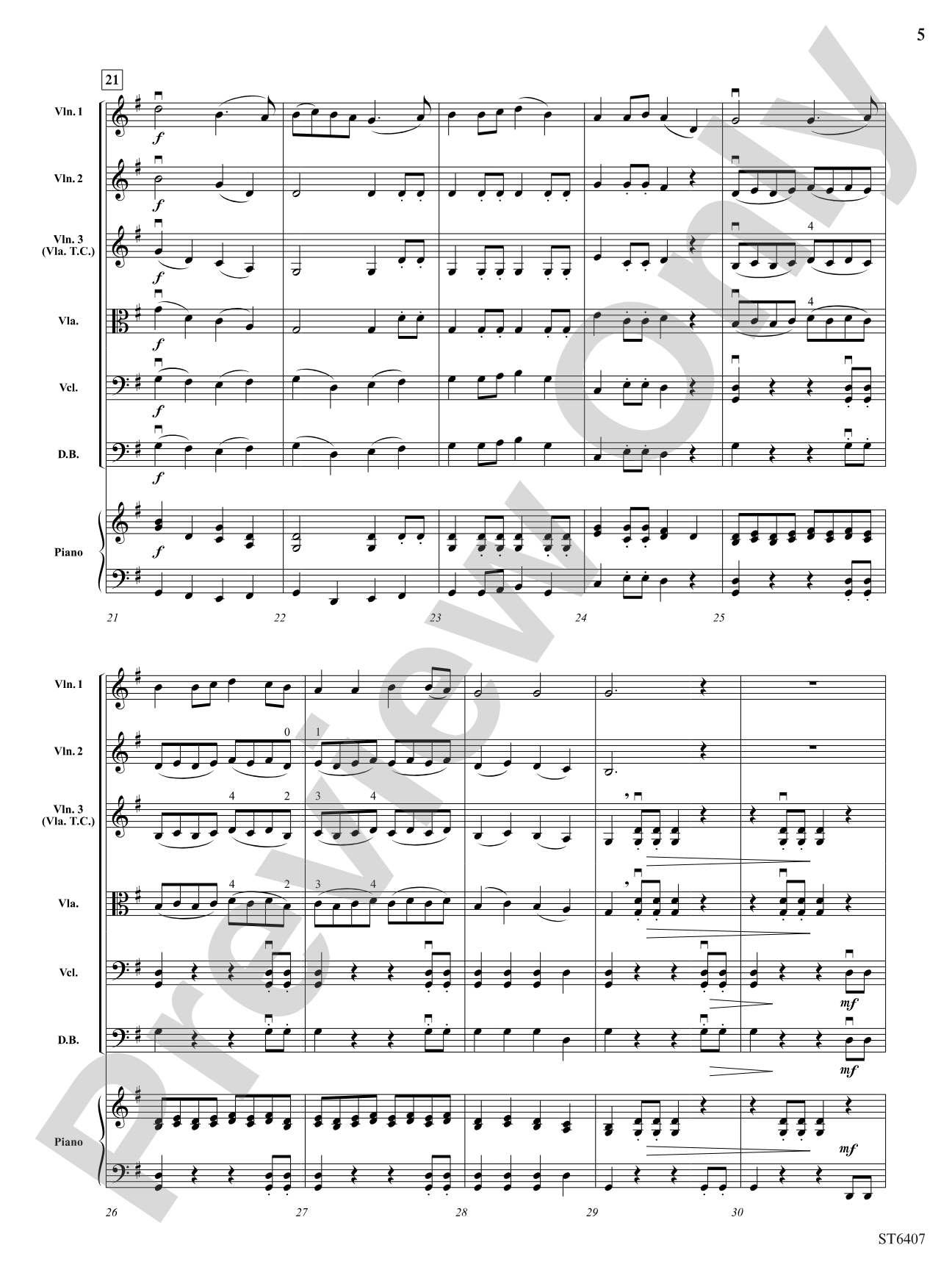
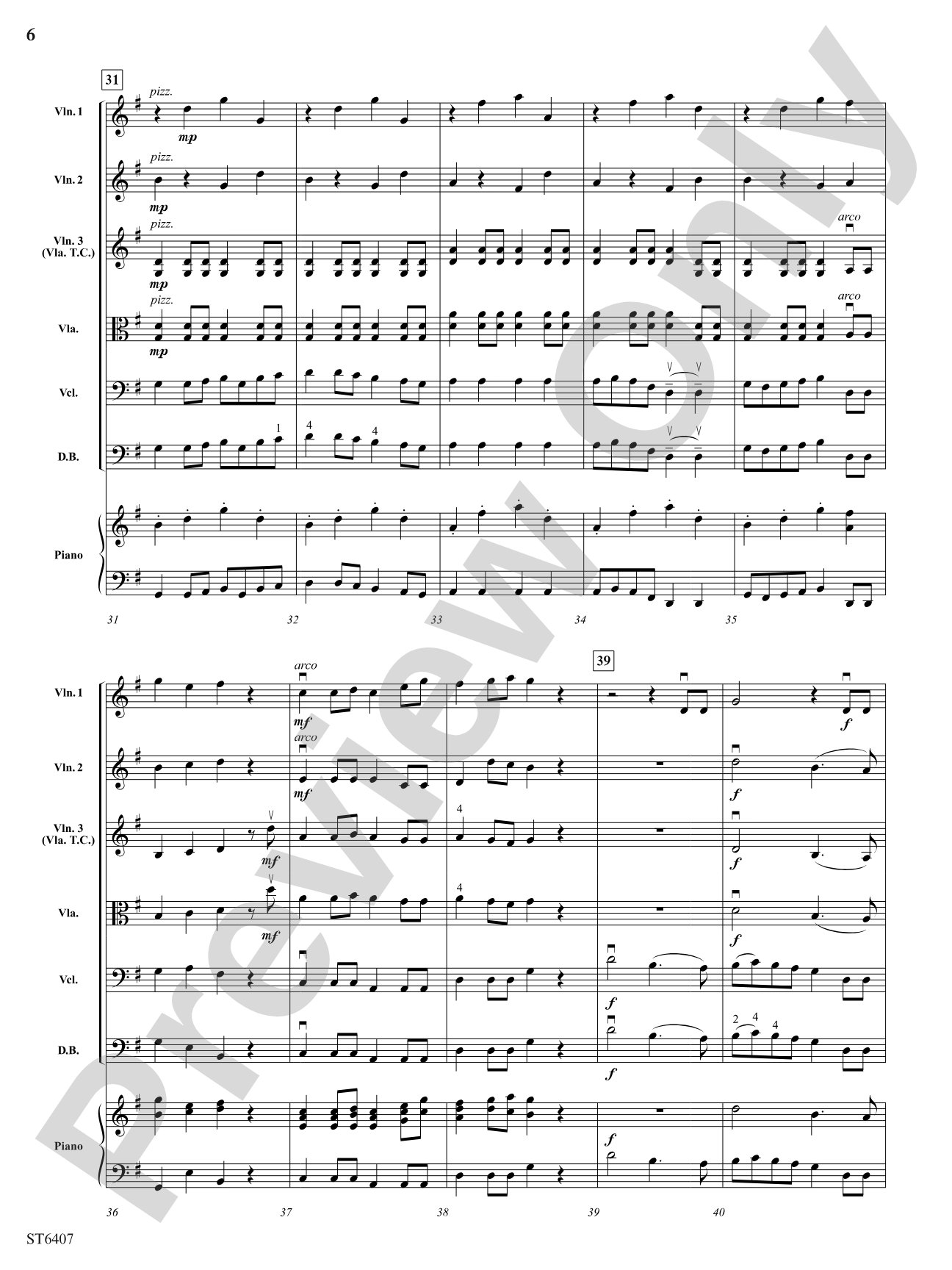
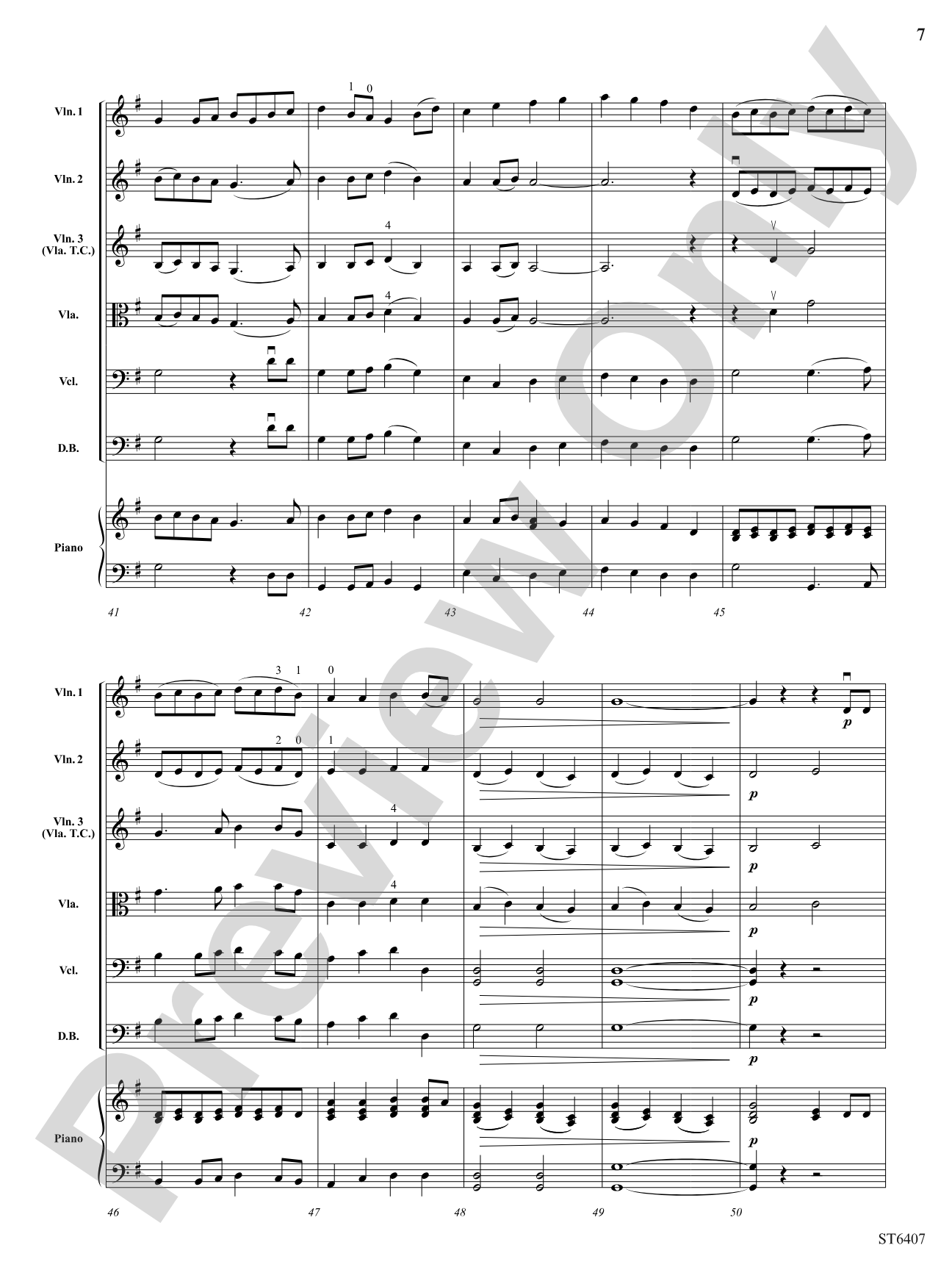
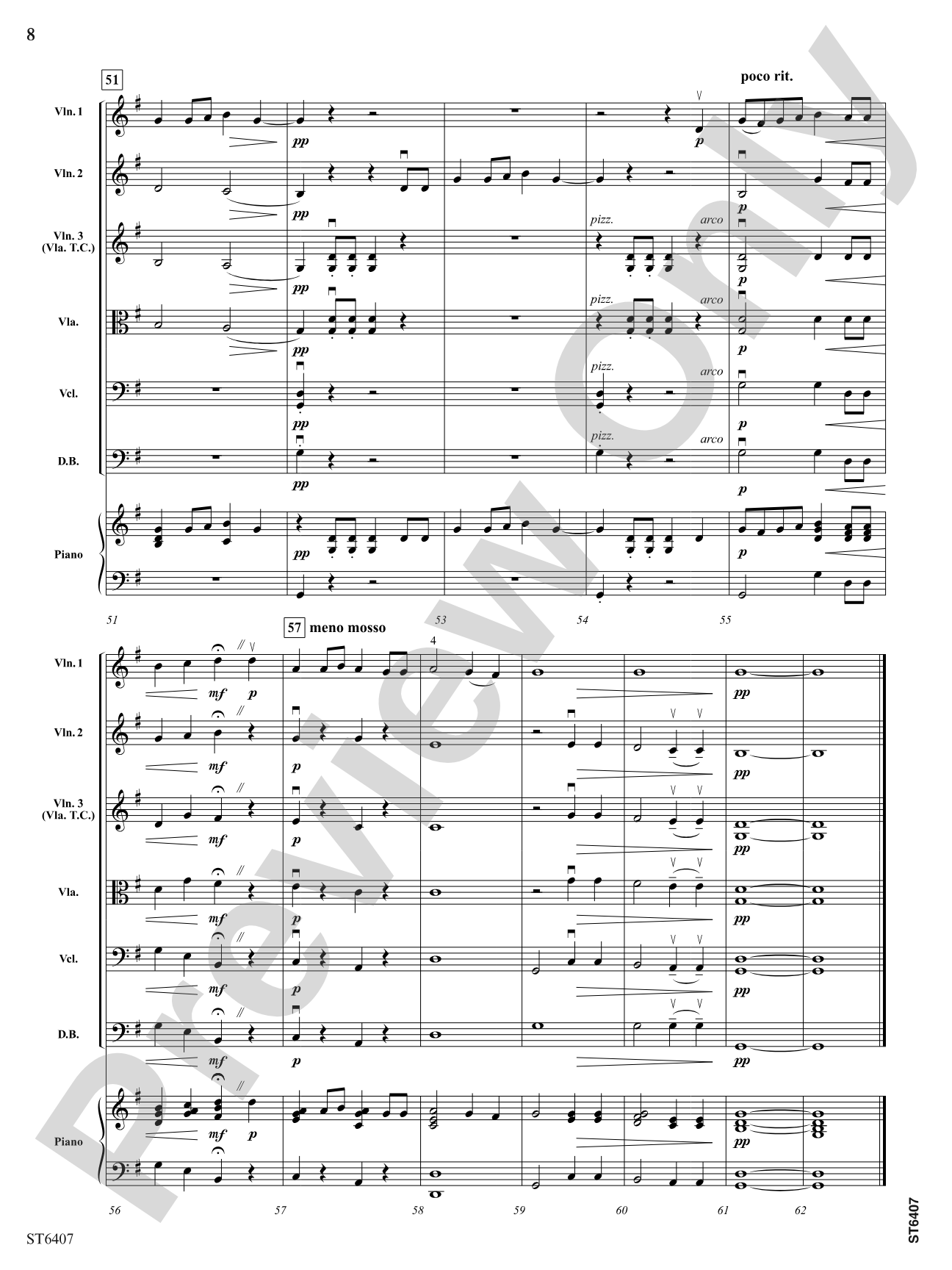

Simple Gifts: String Orchestra Conductor Score & Parts
By Joseph Brackett / arr. Carrie Lane Gruselle
Grade: 2
Item: 98-DST6407

$45.00
Pickup currently not available
Buy Extra Parts (Digital PDF Download)
| Product | Price | Quantity |
|---|---|---|
| Simple Gifts: Score | $5.00 | |
| Simple Gifts: Violin 1 | $7.00 | |
| Simple Gifts: Violin 2 | $7.00 | |
| Simple Gifts: Violin 3 (Viola T.C.) | $7.00 | |
| Simple Gifts: Viola | $7.00 | |
| Simple Gifts: Violoncello | $7.00 | |
| Simple Gifts: Double Bass | $7.00 | |
| Simple Gifts: Piano | $7.00 |
Parts Added to Cart!
Description
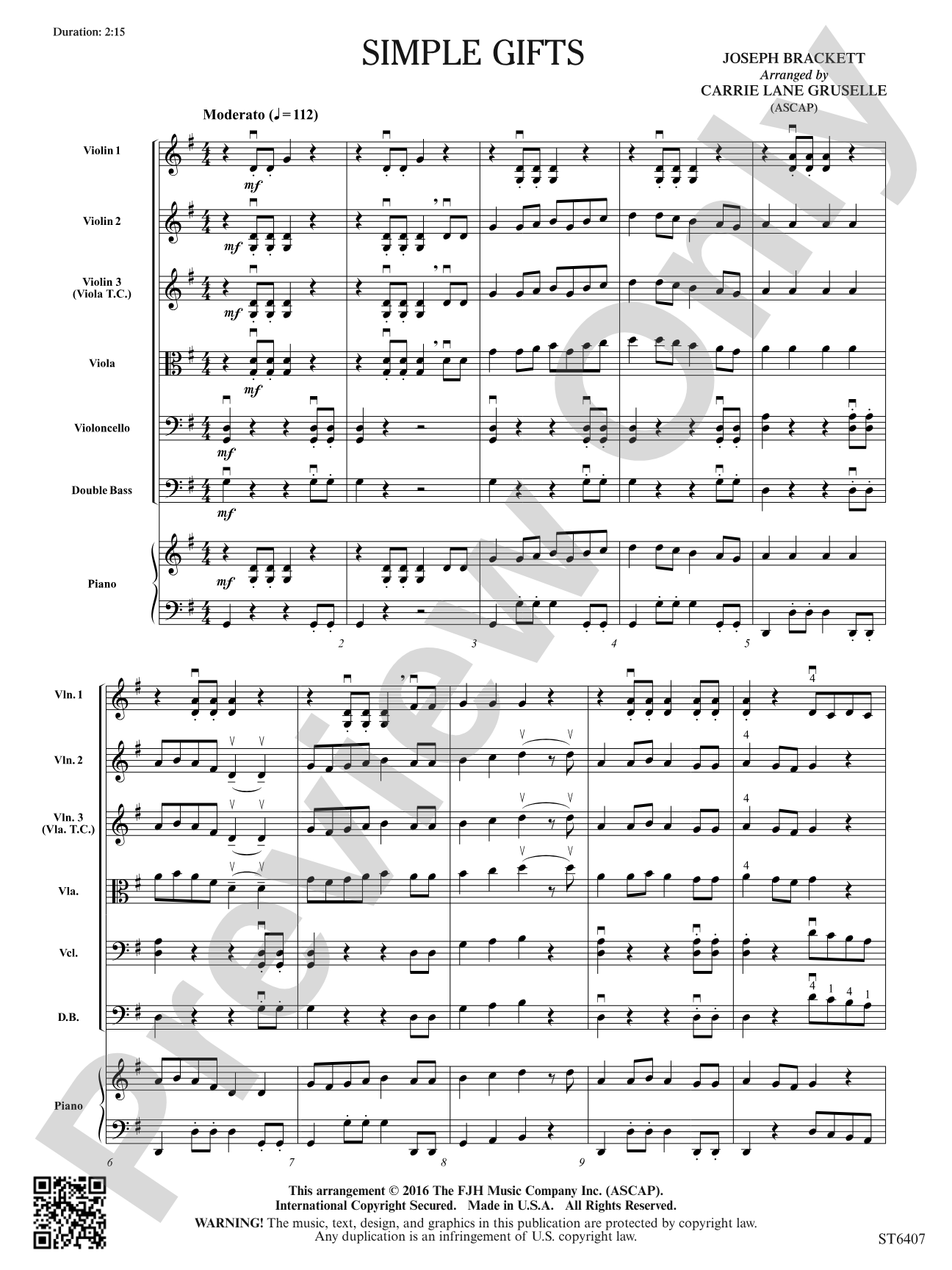
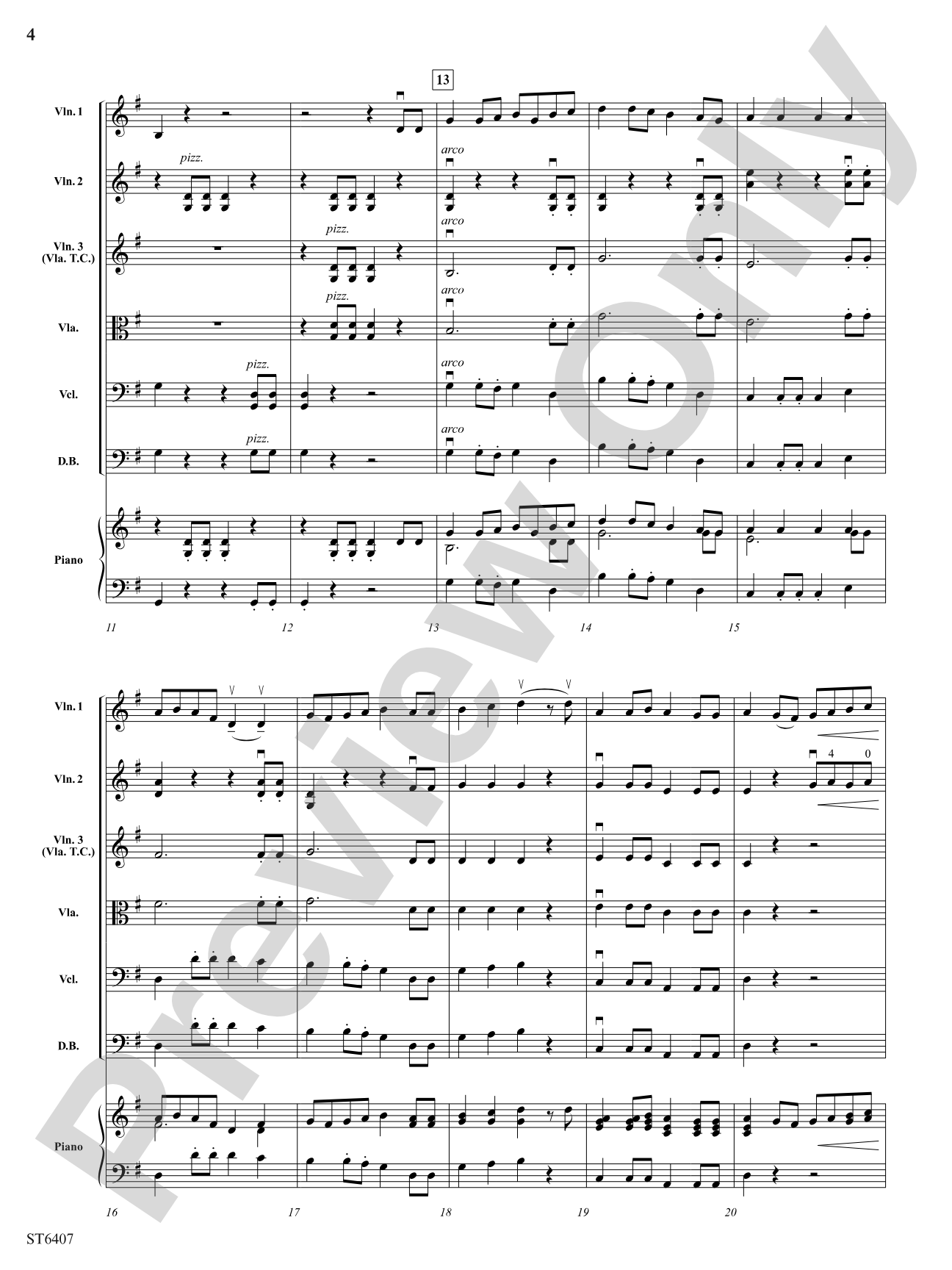
Lighthearted and energetic, this arrangement of Simple Gifts suggests a dance-like character. With its familiar and captivating tune supported by a gentle but persistent underlying rhythmic motif, students will study balance of sound, staccato and legato bowing styles.


Don't just read it, hear it, play along with it, and watch your students grow with it. In MakeMusic Cloud, Simple Gifts: String Orchestra Conductor Score & Parts comes alive with professional accompaniment, adjustable tempo, and built-in practice tools that turn solo practice into real progress.
Open in the Player
Jump straight in and assign it today.
Start Your Free Trial
Open this title and explore the full library in minutes.
Sample Audio
1
Audio File
--:--
0:00
0:00
Sample Video
No sample videos found.
Additional Details
Series:
FJH Developing Strings
Publisher:
The FJH Music Company, Inc.
SKU:
98-DST6407
More about this title
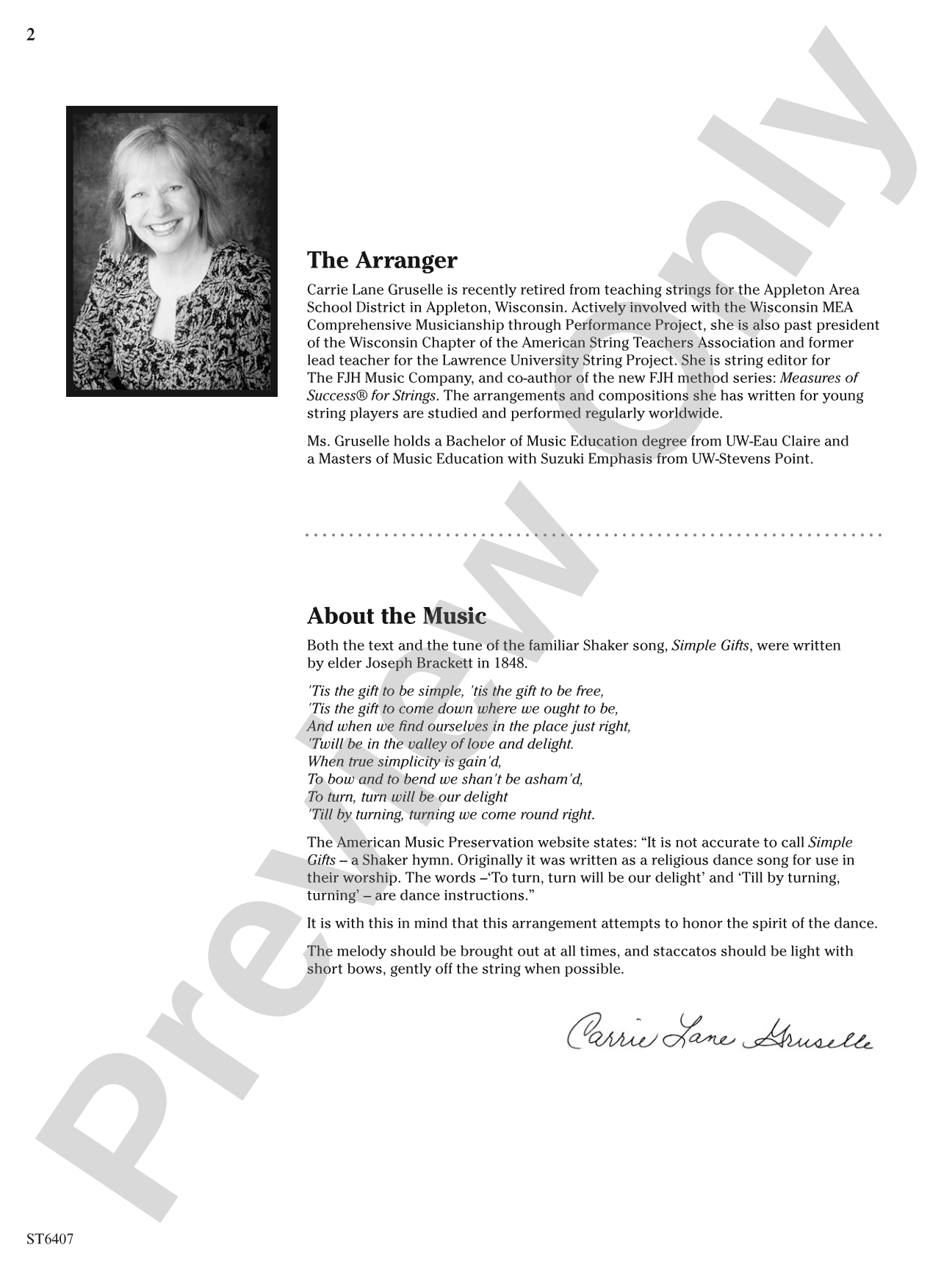
About the Composer: Joseph Brackett
Joseph Brackett (1797-1882) was a Shaker elder and composer whose spiritual hymns became foundational to American sacred music. Though he spent most of his life in the Shaker community at Mount Lebanon, New York, his melodies transcended their original context to become part of American cultural heritage. Brackett's gift for memorable, singable melody paired with accessible harmonic language made his work natural material for arrangement and adaptation across generations.
Why we love this
Carrie Lane Gruselle's arrangement captures the propulsive spirit of the original while giving string players genuine work to do. The persistent rhythmic motif underneath the soaring melody creates the kind of musical texture that feels spacious and simple until students realize how much coordination and listening the parts demand from one another.
What to expect
The piece dances without rushing. Its familiar melody floats above a gentle but insistent rhythmic pattern that keeps energy moving forward, creating a sense of motion and joy that feels both grounded and buoyant. There's lift here, not heaviness.
Who it's for
String orchestras at the early intermediate level (Grade 2) looking for accessible repertoire with real musical substance. Directors preparing contest or festival programs will find a piece that sits comfortably within student technical abilities while offering genuine interpretive challenges around tone production and ensemble balance.
How to get the most out of it
- Establish the underlying rhythmic pulse with lower strings first, then layer in the melody. This foundation prevents the piece from feeling precious or static.
- Shape the familiar tune through dynamic contrast rather than tempo variation. The tune sings whether you're in eighth notes or quarters, so let the dancers carry their own momentum.
- Balance staccato accompaniment figures against sustained melody lines by having sections practice their rhythmic pattern independently, then gradually add the tune until the two layers blend without either disappearing.
- Rehearse transitions between staccato and legato sections deliberately. Mark the shift in your score and have players physically reset their bow contact before each change.
How to use it
Program this as a concert opener to establish a warm, energetic tone, or pair it with other American sacred or folk-inspired works for a thematic set. Its moderate length and uplifting character make it ideal for spring concerts or festival performances where you want to showcase student musicianship without requiring extended rehearsal time.
Skills your students will build
- Balance between melody and accompaniment
- Staccato and legato bowing in contrasting sections
- Maintaining a steady rhythmic pulse while others carry the tune
- Dynamic shaping within a simple harmonic framework
- Coordination of rhythm and pitch across multiple string parts