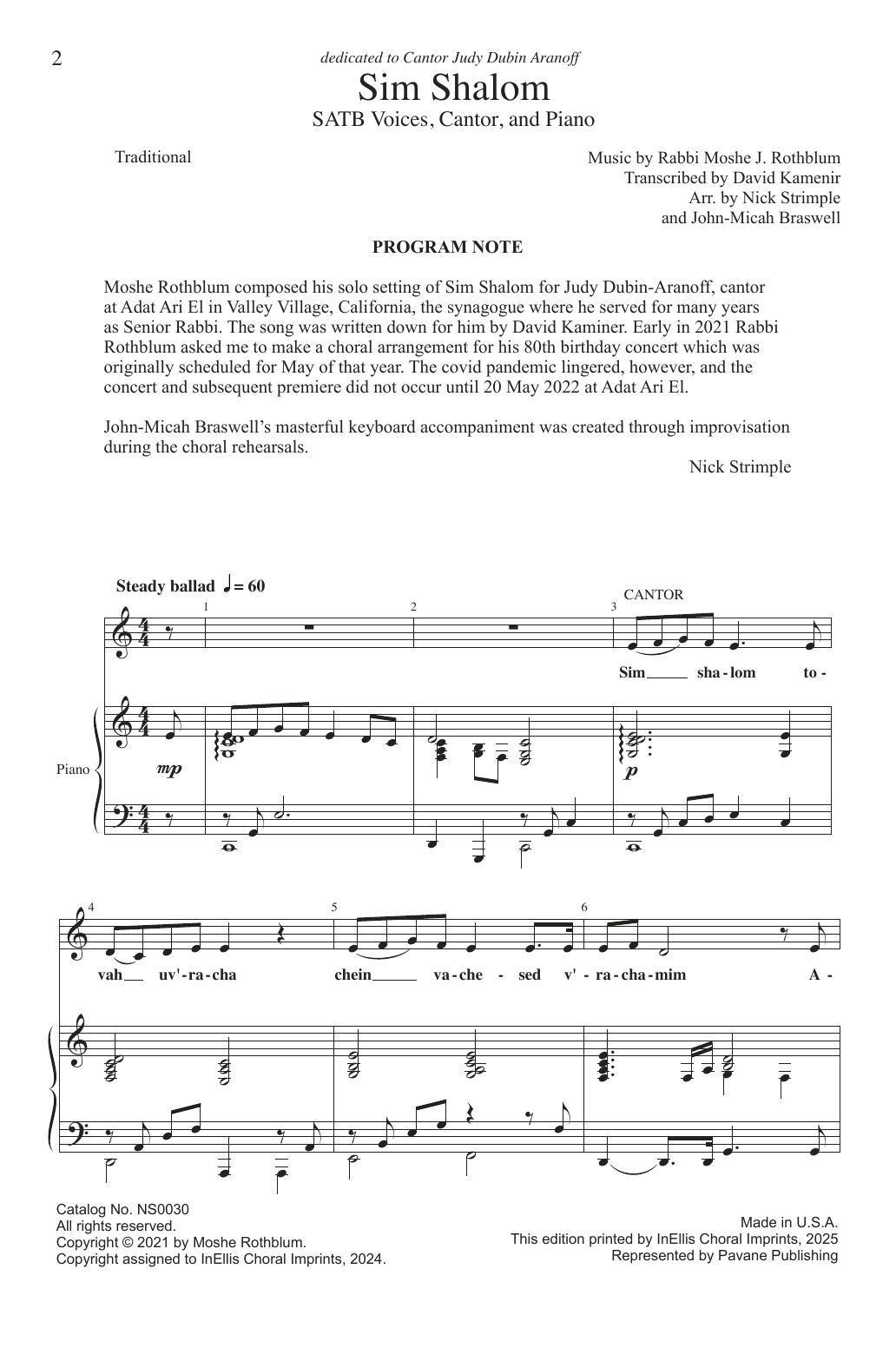
Sim Shalom (arr. Nick Strimple and John-Micah Braswell) Sheet Music Preview

Sim Shalom (arr. Nick Strimple and John-Micah Braswell): SATB Choral Octavo

By Rabbi Moshe J. Rothblum / Arranged by Nick Strimple / Arranged by John-Micah Braswell / Edited by David Kamenir

Item: 35-DS01576679

Digital Download
$3.35
Description

Sim Shalom (arr. Nick Strimple and John-Micah Braswell): SATB Choral Octavo isn't in MakeMusic Cloud just yet...but it could be. Let us know you'd like to see it, and you'll help shape what comes next. In the meantime, start a free trial and dive into thousands of interactive titles your students can play along with today.

Sample Audio
No sample audio found.
Sample Video
Additional Details
Publisher: Hal Leonard
Page Count: 10
SKU: 35-DS01576679

More about this title

Why we love this

Strimple and Braswell's arrangement opens a sacred text to secular choirs without diluting its spiritual weight. The writing is transparent enough to let the text shine through while offering harmonic sophistication that rewards singers who dig into the part writing.

What to expect

Contemplative and grounded, with an inherent warmth that comes from the blessing text itself. The arrangement creates space for reflection without ever becoming solemn or heavy.

Who it's for

SATB choirs seeking repertoire that bridges secular and sacred traditions with integrity. Ensembles comfortable with Jewish liturgical texts and arrangers who value clear musical storytelling will find this piece rewarding.

How to get the most out of it

  • Attend carefully to vowel consistency across the four parts, especially in the sustained passages where blend becomes the primary vehicle for conveying the text's meaning.
  • Balance the lower voices; they carry essential harmonic color that can disappear if sopranos and altos aren't pulled back slightly.
  • Consider how the arrangement's moments of simplicity contrast with its richer passages. These shifts need rehearsal time to register as intentional choices rather than uneven writing.

How to use it

Pair this with other interfaith or multicultural programming to deepen conversation about how diverse spiritual traditions inhabit concert stages. It works equally well as a program closer or as part of a thematic set exploring blessing and gratitude.

Skills your students will build

  • Singing in Hebrew with accurate pronunciation and musical intention
  • Balancing four-part harmony where no single voice dominates the texture
  • Sustaining vocal tone through longer phrases without sacrificing clarity
  • Interpreting text-driven music where arrangement choices support rather than override the liturgical content

You May Also Like