Sim Shalom Sheet Music Preview

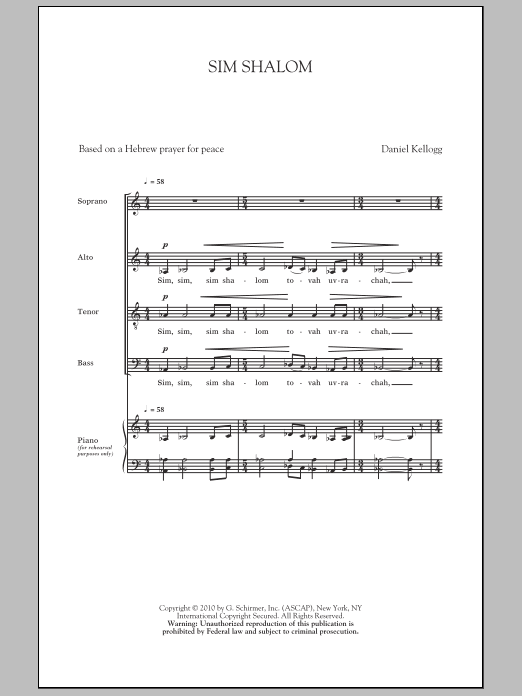
Sim Shalom: SATB Choral Octavo

By Daniel Kellogg

Item: 35-DS00158945

Digital Download
$2.99
Description

Sim Shalom: SATB Choral Octavo isn't in MakeMusic Cloud just yet...but it could be. Let us know you'd like to see it, and you'll help shape what comes next. In the meantime, start a free trial and dive into thousands of interactive titles your students can play along with today.

Sample Audio
No sample audio found.
Sample Video
Additional Details
Publisher: Hal Leonard
Page Count: 10
SKU: 35-DS00158945

More about this title

Why we love this

Kellogg's setting captures the profound warmth of this Hebrew prayer with understated sophistication. The a cappella writing sits comfortably for singers while avoiding simplistic block harmonies, giving your ensemble room to shape the text with genuine expression.

What to expect

The piece unfolds with quiet dignity, inviting singers and listeners into genuine contemplation. There is strength in its restraint, and a sense of collective purpose that deepens as the voices move together.

Who it's for

SATB choirs seeking meaningful contemporary sacred music that works for both concert and contest settings. This arrangement suits ensembles with solid intonation and the ability to sustain phrase lines without instrumental support.

How to get the most out of it

  • Shape the piece through dynamics and vowel color rather than tempo shifts. Let the harmonic progression breathe naturally.
  • Balance the text clarity across all four voices; make sure this prayer reaches the audience as words first, music second.
  • Rehearse sections by voice part initially to establish secure voicing, then layer the voices carefully to blend rather than blend.

How to use it

Pair this with other spirituals or contemporary settings of Hebrew texts to build a thematic concert section. Its a cappella format and moderate length make it ideal for transitional moments between larger works or as a concert closer that leaves audiences in reflection.

Skills your students will build

  • Singing sustained phrases without instrumental support
  • Balancing vowel consistency across four parts
  • Shaping harmonic progression through dynamic control
  • Projecting text clarity in a cappella voicing

You May Also Like