

Silver and Gold: SATB Choral Octavo
Words and music by Johnny Marks / arr. Eric Van Cleave
Item: 00-PO-0006450
$2.10
Minimum order quantity: 20 copies
Pickup currently not available
Related Items
Silver and Gold: SoundTrax Digital Audio Download |
$29.99
|
View | |
Silver and Gold: SAB Choral Octavo |
$2.10
|
View | |
Silver and Gold: 2-Part Choral Octavo |
$2.10
|
View | |
Silver and Gold: SATB Choral Octavo |
$2.10
|
View | |
Silver and Gold: SAB Choral Octavo |
$2.10
|
View | |
Silver and Gold: 2-Part Choral Octavo |
$2.10
|
View | |
Silver and Gold: Choral Octavo SoundTrax CD |
$29.99
|
View |
Description
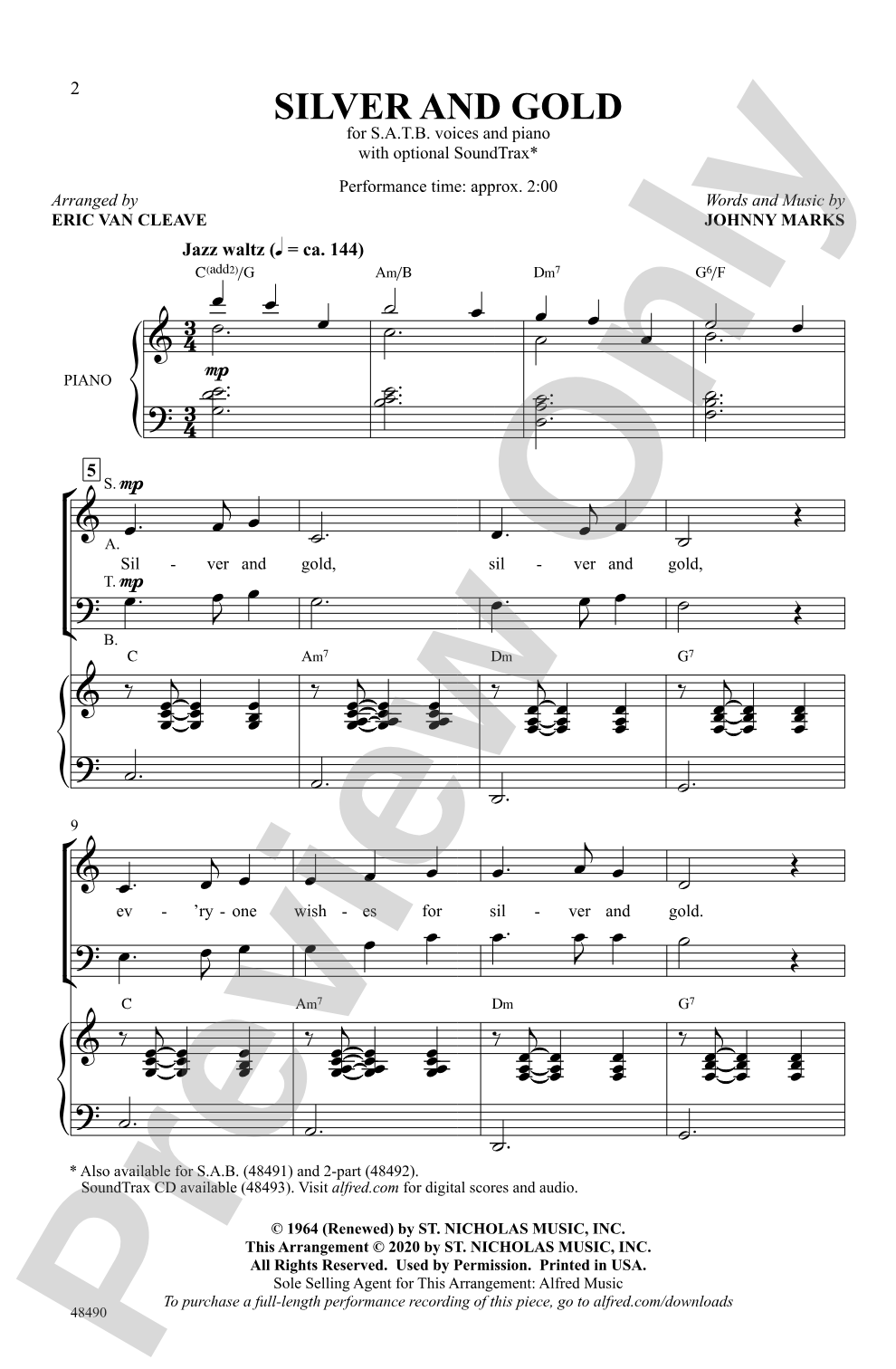
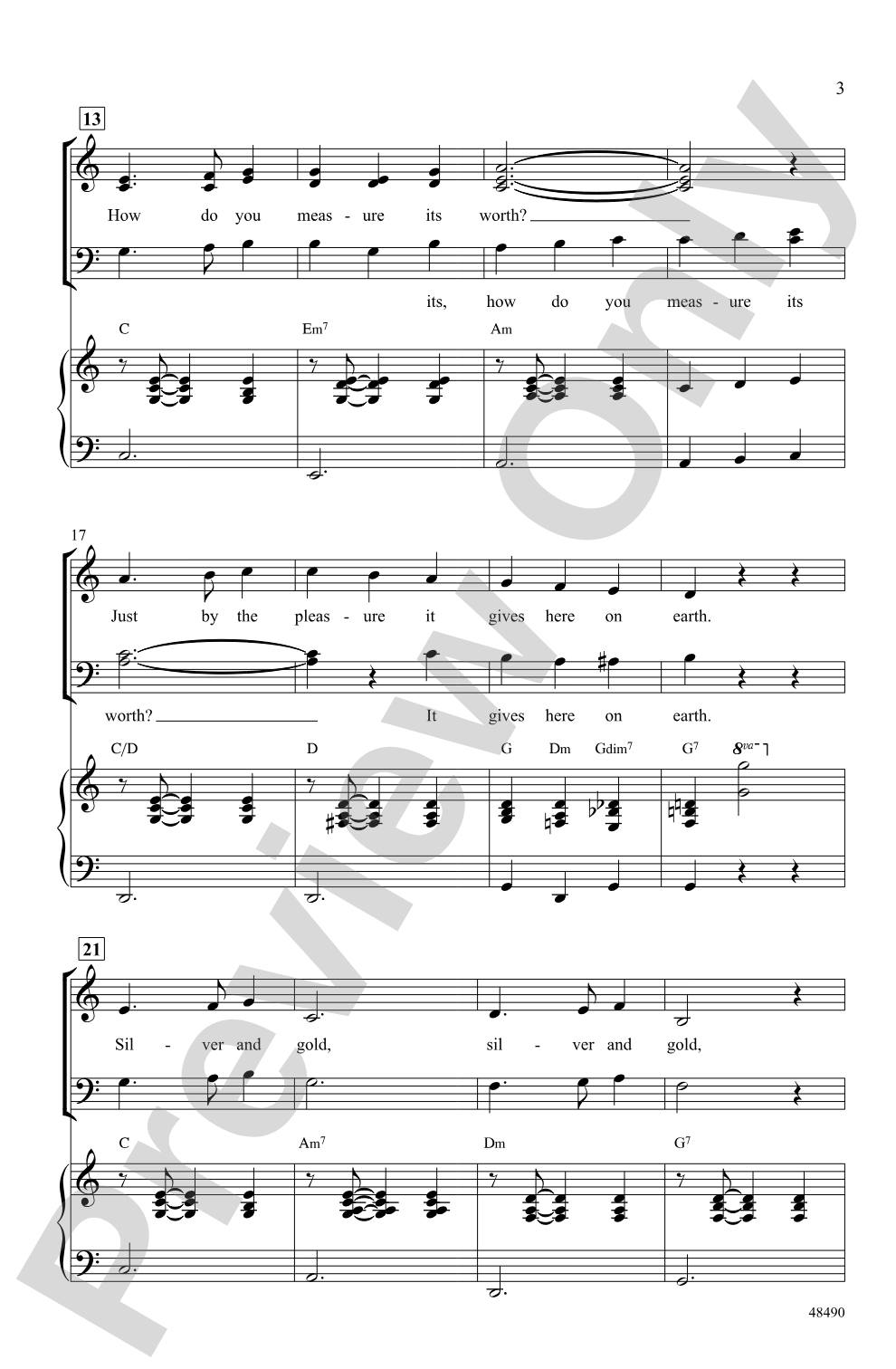
Unforgettable "Sam the Snowman" (voiced by Burl Ives) sings this tune in the iconic Christmas special Rudolph the Red-Nosed Reindeer. The reflective words and lyrical melody make this a cherished evergreen holiday favorite. This arrangement offers some sweet choral sonorities sung in a light jazz waltz.


Silver and Gold: SATB Choral Octavo isn't in MakeMusic Cloud just yet...but it could be. Let us know you'd like to see it, and you'll help shape what comes next. In the meantime, start a free trial and dive into thousands of interactive titles your students can play along with today.
Request This Title
Tell us you want it.
Start Your Free Trial
Explore everything that's ready to play right now.
Sample Audio
1
Audio File
--:--
0:00
0:00
Sample Video
Additional Details
Series:
Alfred Pop Choral Series
Publisher:
Alfred Music
Page Count:
8
SKU:
00-PO-0006450
More about this title
About the Composer: Johnny Marks
Johnny Marks (1909-1985) composed some of the most enduring holiday songs in American popular music. His gift for melody and his understanding of what makes a song memorable across generations shaped the sound of twentieth-century Christmas entertainment. "Rudolph the Red-Nosed Reindeer," "Silver and Gold," and "Holly Jolly Christmas" all carry his fingerprints, and they remain central to how we experience the season musically.
Marks wrote for stage, screen, and radio with equal facility. His catalog includes original compositions, arrangements, and songs for film and television specials. As a composer who bridged classical training with popular sensibility, he created music that appeals to professional musicians and young singers alike, which is precisely why his work continues to show up in school choirs and community concerts.
Why we love this
This arrangement captures the warmth and nostalgia of the original without requiring elaborate orchestration or extensive rehearsal time. The light jazz waltz setting gives singers room to find blend and balance while keeping the melody and emotional core of the tune front and center. It's a sophisticated choice for holiday programs that want to feel special without becoming overly complicated.
What to expect
Gentle and contemplative, with a touch of swing. The waltz meter gives the piece a floating quality, and the harmony sits comfortably in a warm register. There's an intimacy here that mirrors the quiet wisdom in the original text; this isn't a bombastic holiday number but rather a moment of reflection set to music.
Who it's for
This octavo works well for mixed choirs of intermediate ability and above. Singers familiar with pop and jazz styles will find the harmonic language accessible, while more traditional choral singers will appreciate the songlike structure and clarity of each voice part.
How to get the most out of it
- Shape the lyrical melody with gentle dynamic contours; avoid singing each phrase at the same volume level, even when the harmony is straightforward.
- Balance the waltz rhythm gently in the accompaniment so it doesn't overpower the vocal line; the lilt should support, not distract.
- Use the recorded accompaniment to lock in the tempo and feel early in rehearsals; this helps singers hear how the jazz inflection differs from straight choral singing.
- Pay attention to vowel placement on sustained notes; the reflective character depends on consistent, warm tone across all four parts.
How to use it
Pair this with upbeat, rhythmically driving holiday pieces to create contrast and pacing across your concert. It works particularly well as a second-half opener, resetting the mood after a string of faster selections. This arrangement also suits interfaith or community holiday celebrations where you want repertoire that feels nostalgic and widely recognized.
Skills your students will build
- Singing jazz inflections and swing feels in a choral context
- Balancing sustained melody lines with accompaniment texture
- Maintaining lilt and subdivision in triple meter
- Interpreting dynamic nuance to convey lyrical expression