
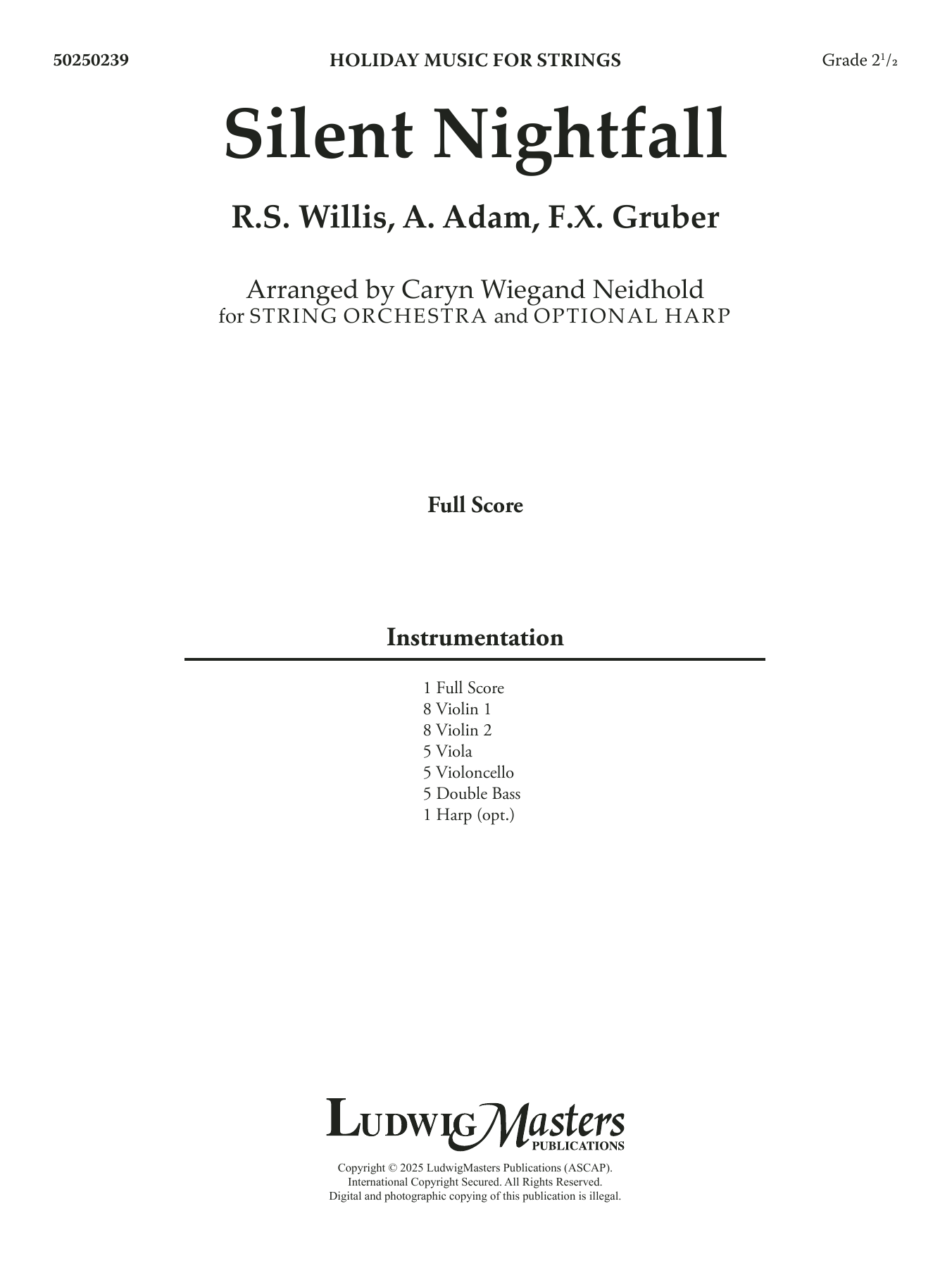

Silent Nightfall: String Orchestra Conductor Score & Parts
By Caryn Wiegand Neidhold
Grade: 2.5
Item: 35-PK01700905
$55.00
Pickup currently not available
Buy Extra Parts (Digital PDF Download)
| Product | Price | Quantity |
|---|---|---|
| Silent Nightfall - Full Score | $7.00 | |
| Silent Nightfall - Violin 1 | $2.50 | |
| Silent Nightfall - Violin 2 | $2.50 | |
| Silent Nightfall - Viola | $2.50 | |
| Silent Nightfall - Cello | $2.50 | |
| Silent Nightfall - Bass | $2.50 | |
| Silent Nightfall - Harp | $2.50 |
Parts Added to Cart!
Description
Three Christmas classics are tenderly presented with an optional harp. It Came Upon a Midnight Clear, Oh Holy Night, and ending with a tranquil rendition of Silent Night, allow students to advance ensemble skills and perform in compound time.


Silent Nightfall: String Orchestra Conductor Score & Parts isn't in MakeMusic Cloud just yet...but it could be. Let us know you'd like to see it, and you'll help shape what comes next. In the meantime, start a free trial and dive into thousands of interactive titles your students can play along with today.
Request This Title
Tell us you want it.
Start Your Free Trial
Explore everything that's ready to play right now.
Sample Audio
No sample audio found.
Sample Video
No sample videos found.
Additional Details
Publisher:
Hal Leonard
SKU:
35-PK01700905
More about this title
Why we love this
Neidholm respects what intermediate ensembles can actually achieve. Rather than drowning three beloved carols in unnecessary complexity, she builds technical growth into the arrangement itself: the compound meter work doesn't feel like an exercise, and the optional harp adds genuine warmth without creating a dependency. This is the kind of holiday writing that lets your group sound polished without rehearsing single passages to death.
What to expect
Hushed and reverent. The three carols unfold with intimate detail, each one deepening the contemplative mood rather than competing for attention. By the final "Silent Night," the arrangement creates a moment of genuine quiet reflection that audiences recognize and respect.
Who it's for
String orchestras at the intermediate level who want to program recognizable holiday material without sacrificing musicianship. This works equally well for concert bands looking to add strings to a winter concert or as a standalone offering for dedicated string ensembles.
How to get the most out of it
- Balance the harp as a color choice, not a necessity. Its optional status gives you flexibility across different performance spaces and instrument availability.
- Anchor the transition between the minor key sections and major tonalities with clear conductor prep. Neidholm sets these shifts deliberately, and your ensemble will track better with deliberate cueing.
- Establish the compound meter pulse early in sectionals. Many intermediate players confuse duple groupings against a triple feel, so lock this in before full ensemble rehearsal.
- The closing "Silent Night" gains its power from restraint. Resist pushing the tempo or volume; let the extended range exploration speak through clarity instead.
How to use it
Position this as your concert closer during December programming. Its meditative arc works beautifully as a bridge between a more energetic first half and the audience's exit, leaving attendees in a thoughtful frame of mind. You might also pair it with a contrasting upbeat holiday selection earlier in the program to create dynamic range.
Skills your students will build
- Reading and performing in compound meter (6/8 and related time signatures)
- Sustaining phrasing across longer melodic arcs
- Blending multiple textures while maintaining individual line clarity
- Transitioning between major and minor tonalities
- Balancing ensemble sound in slow, lyrical tempos