Silent Night: Violin 2 Sheet Music Preview

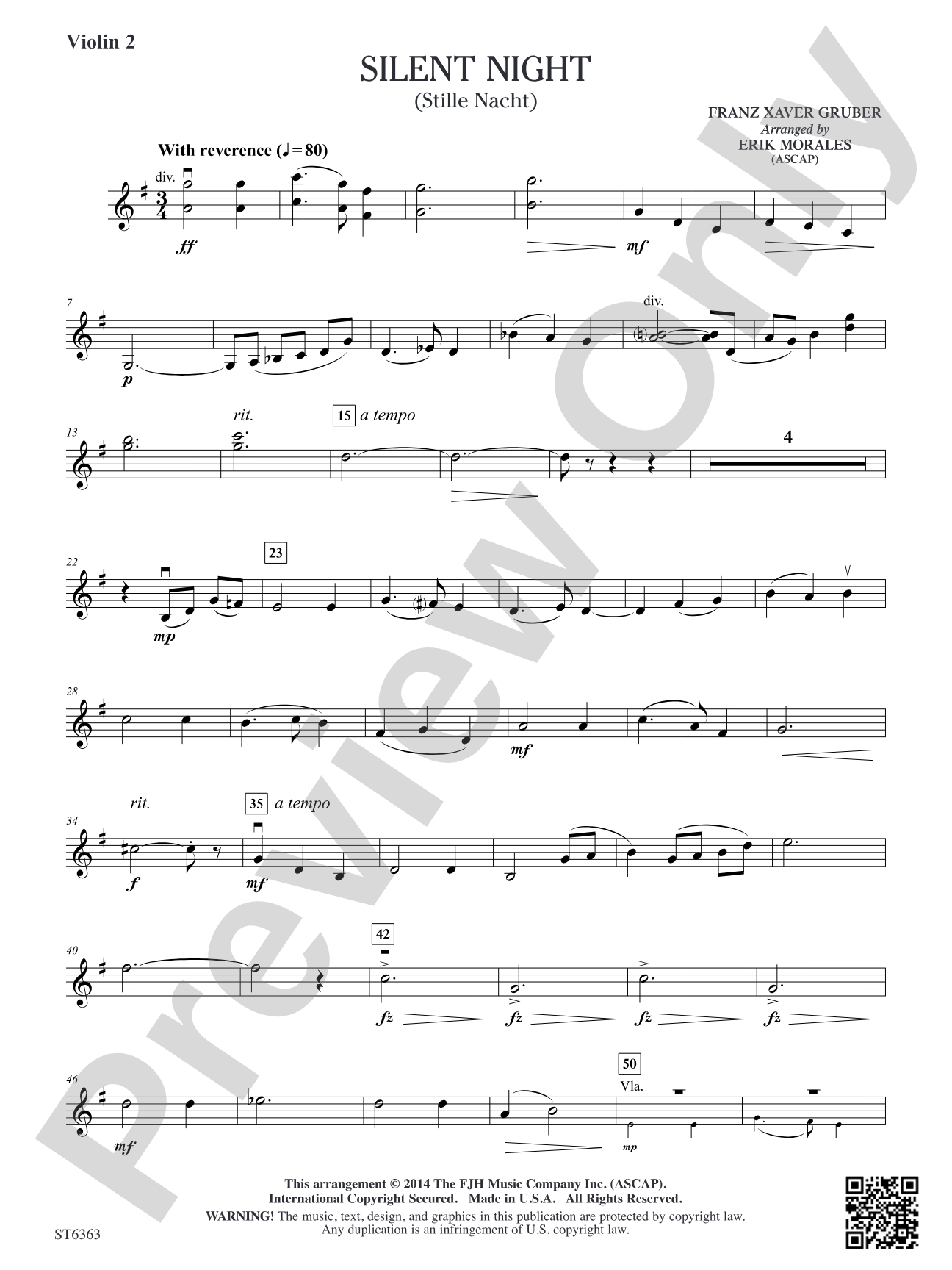
Silent Night: Violin 2

By Franz Xavier Gruber / arr. Erik Morales

Grade: 4

Item: 98-PC-DST6363_VN2

Digital Download
$7.00
Description
This breathtaking arrangement of Silent Night may quite possibly be the highlight of your winter program. Lush harmonies support a gorgeous presentation of the melody that goes through a series of haunting and magical settings. There are also several opportunities to feature your principal violinist. Words can never describe this one - you simply need to hear it to understand its sheer beauty. (3:45)

Don't just read it, hear it, play along with it, and watch your students grow with it. In MakeMusic Cloud, Silent Night: Violin 2 comes alive with professional accompaniment, adjustable tempo, and built-in practice tools that turn solo practice into real progress.

Sample Audio
0:00
0:00
Sample Video
Additional Details
Series: FJH String Orchestra
Publisher: The FJH Music Company, Inc.
SKU: 98-PC-DST6363_VN2

More about this title

About the Composer: Franz Xavier Gruber

Franz Xavier Gruber (1787-1863) composed "Silent Night" in 1818 as the organist and schoolmaster in the small Austrian village of Oberndorf. Working with lyricist Joseph Mohr, Gruber created one of the world's most beloved Christmas melodies, originally titled "Stille Nacht" and first performed on guitar due to a broken church organ. His gift for crafting memorable, singable lines has made this carol a cornerstone of holiday music education and performance.

Gruber's ability to write music that speaks across centuries and cultures remains a model for music educators. The simplicity and emotional directness of his melody have inspired countless arrangements, each revealing new possibilities within the original's gentle framework. For student musicians, studying Gruber's work opens doors to understanding how great melodies endure and how arrangers reimagine tradition.

Why we love this

Erik Morales has crafted an arrangement that honors the carol's intimacy while giving your orchestra genuine textural depth. The lush harmonies and featured passages for principal violin elevate what could be a straightforward holiday piece into something your audience will remember, and your students will genuinely enjoy rehearsing.

What to expect

Peaceful and reverent, with moments that shimmer with almost ethereal beauty. The lush harmonies wrap around the familiar melody like fresh snow, while the principal violin solos add warmth and vulnerability to the arrangement's emotional core.

Who it's for

String orchestra conductors and directors seeking substantial holiday repertoire for intermediate ensembles. This Grade 4 arrangement works beautifully for winter concerts where you want to showcase both ensemble blend and your strongest individual players.

How to get the most out of it

  • Balance the melody carefully as it moves between sections. The principal violin features should sing through without drowning out the supporting harmonies underneath.
  • Shape the phrase endings gently; resist the urge to let climactic moments feel rushed. This arrangement rewards patient, singing bow strokes across the entire ensemble.
  • Use the multiple settings Morales provides as opportunities to shift color and articulation. Varying your approach between sections prevents the piece from feeling repetitive despite the familiar tune.
  • Mark tempo and dynamics clearly in your parts so violins understand when they're leading and when they're part of the harmonic foundation.

How to use it

Program this as a centerpiece of your winter concert, either as a standalone feature or paired with contrasting holiday selections. At under four minutes, it serves equally well as a finale that leaves the audience in a reflective mood or as an intermission-before-the-final-piece moment.

Skills your students will build

  • Balancing melody and accompaniment in multi-voice textures
  • Executing long, sustained phrases with consistent tone quality
  • Responding to subtle dynamic and color shifts within a single piece
  • Supporting featured soloists while maintaining ensemble cohesion

You May Also Like