
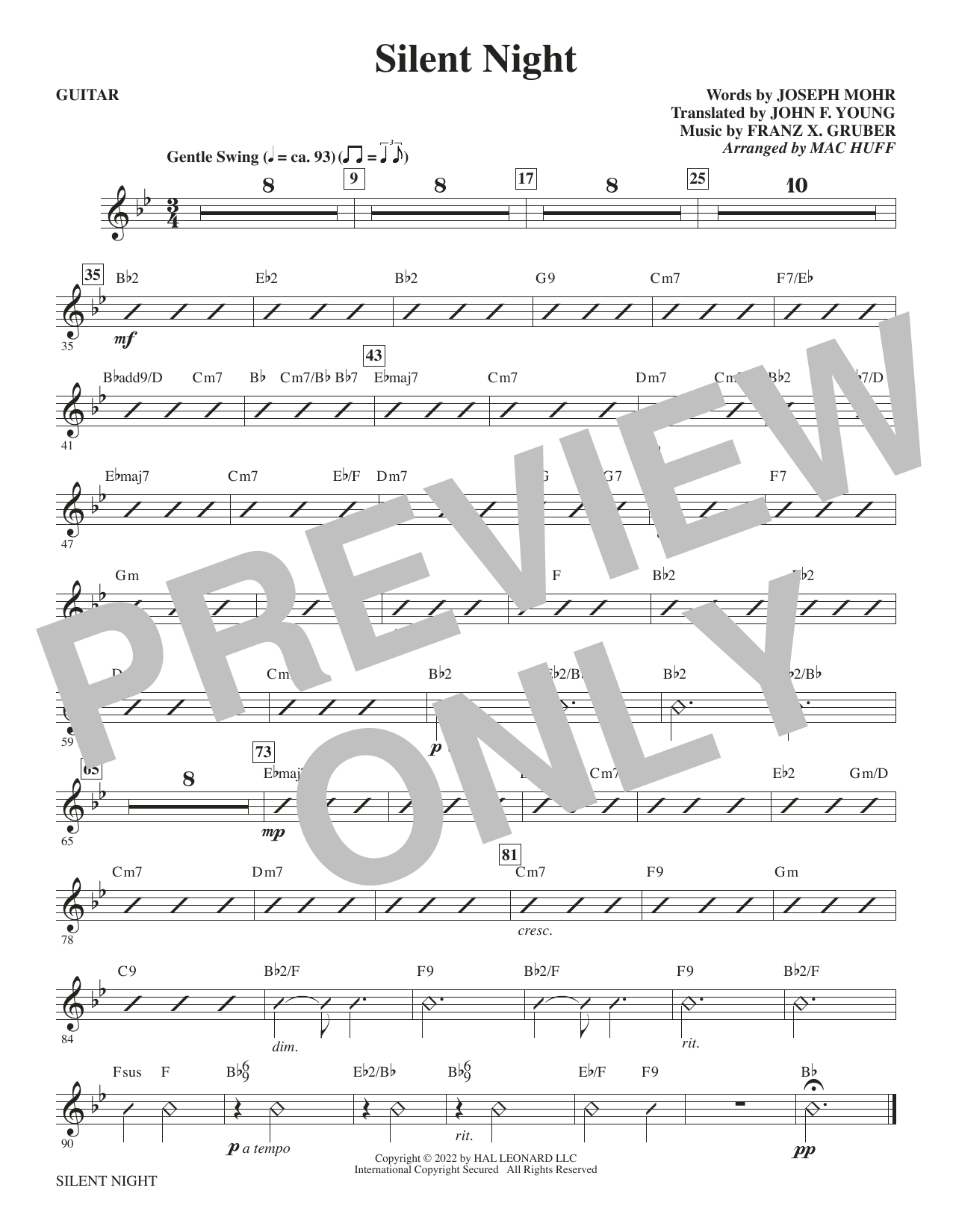

Silent Night (arr. Mac Huff): Choral Instrumental Pak
By Franz X. Gruber / Arranged by Mac Huff
Item: 35-PK01181464
$15.00
Pickup currently not available
Buy Extra Parts (Digital PDF Download)
Parts Added to Cart!
Description
A fresh harmonization along with a piano accompaniment that offers motion and support, this new setting of the traditional carol will shine a new light the music. Traditional harmonies return near the end which opens the door for a sing a long if you desire.


Silent Night (arr. Mac Huff): Choral Instrumental Pak isn't in MakeMusic Cloud just yet...but it could be. Let us know you'd like to see it, and you'll help shape what comes next. In the meantime, start a free trial and dive into thousands of interactive titles your students can play along with today.
Request This Title
Tell us you want it.
Start Your Free Trial
Explore everything that's ready to play right now.
Sample Audio
No sample audio found.
Sample Video
No sample videos found.
Additional Details
Publisher:
Hal Leonard
SKU:
35-PK01181464
More about this title
About the Composer: Franz X. Gruber
Franz Xaver Gruber (1787-1863) was an Austrian organist and composer whose most enduring contribution came almost by accident. On Christmas Eve 1818, he composed the melody for "Stille Nacht" (Silent Night) in just a few hours, creating music that would become one of the world's most beloved carols. Though he wrote numerous other works across his career, this single composition transcended borders and languages to become a standard of Christmas observance in churches, concert halls, and homes worldwide.
For music educators, Gruber's melody represents an ideal teaching text. Its simplicity masks profound emotional depth, and its universal recognition makes it both accessible to students and meaningful to audiences. The tune's stepwise motion and moderate range have made it a foundation for countless arrangements across centuries, offering endless possibilities for exploration in harmony, orchestration, and interpretive choice.
Why we love this
Mac Huff's reimagining respects the carol's essential character while giving it genuine harmonic interest and forward motion through the accompaniment. The strategic return to traditional harmonies creates a powerful moment of recognition near the end, making this arrangement feel both fresh and rooted in the carol's heritage. For directors seeking a Christmas selection that sounds contemporary without abandoning the music's spiritual center, this setting offers exactly that balance.
What to expect
Hushed and reverent at its core, yet animated by harmonic color and accompaniment energy that prevents the piece from feeling static. The new setting brings unexpected warmth and motion to a melody many singers and listeners know by heart, creating a sense of rediscovery. When the familiar harmonies return, there is genuine comfort in recognition.
Who it's for
Choirs seeking a Christmas selection that honors tradition while offering contemporary arranging sophistication. Directors programming mixed ensembles with piano support will find Huff's accompaniment both supportive and artistically engaging. This works equally well as a concert piece or as part of a community sing experience.
How to get the most out of it
- Balance the new harmonies in the vocal lines against the piano's driving motion; the accompaniment should propel the piece forward without overwhelming the choir's fundamental simplicity.
- When the traditional harmonies return, allow the texture to settle noticeably. This shift should feel like an arrival, not an accident.
- If you plan to open the piece for audience participation, prepare your singers to confidently hold their parts while others join on the melody; precision here prevents the piece from unraveling.
How to use it
Position this as your final selection on a Christmas concert, allowing the potential for community participation to transform the ending into a shared moment. Alternatively, program it early in a holiday set to establish both the season's reverence and your choir's musical sophistication. The arrangement's moderate length and technical accessibility make it ideal for ensemble that balances ambition with the realities of December scheduling.
Skills your students will build
- Singing secondary harmonies against a familiar melody
- Interpreting dynamic and textural contrast between arranged and traditional sections
- Balancing choir tone with piano accompaniment that provides harmonic support rather than doubling