
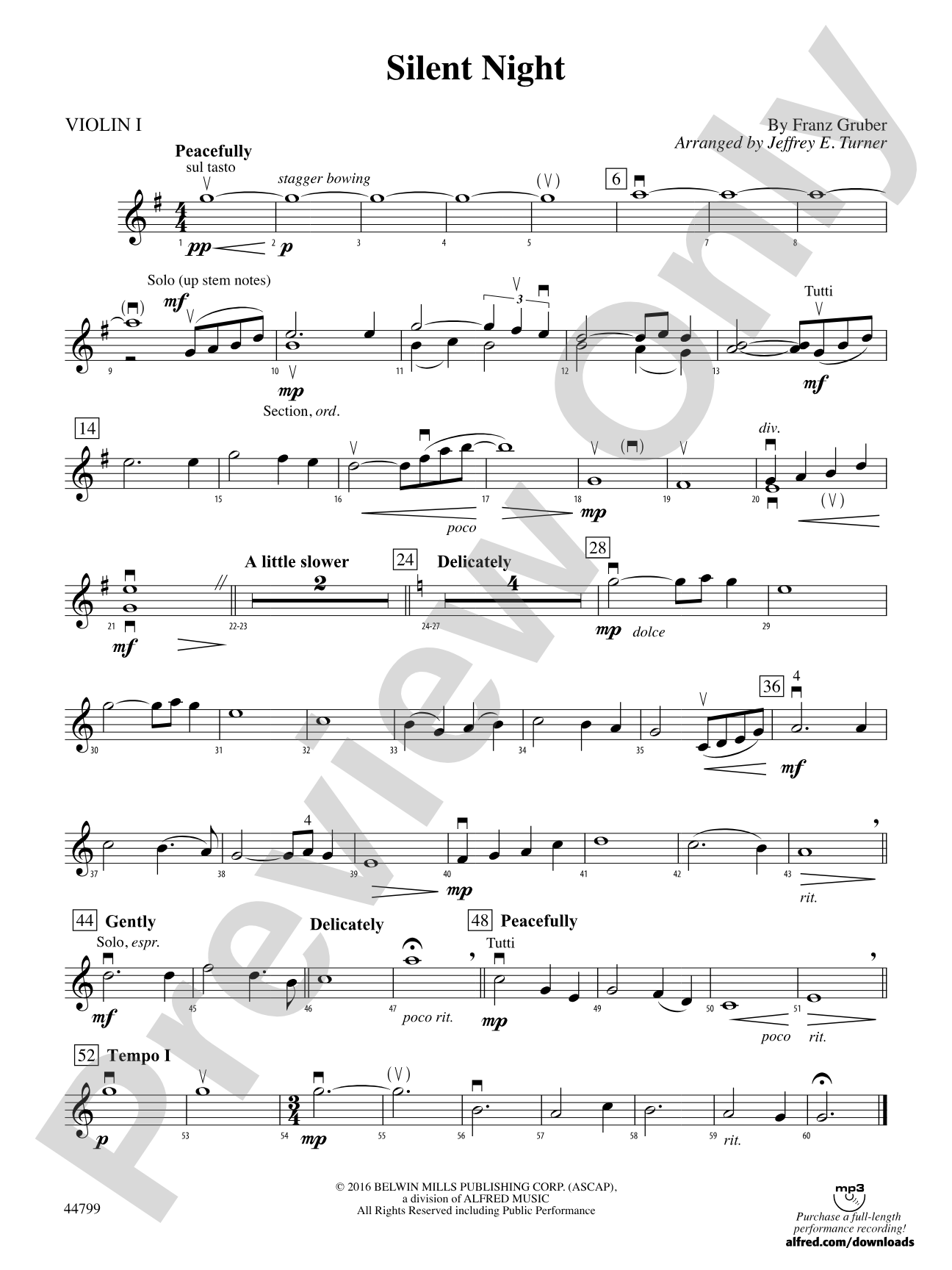

Silent Night: 1st Violin
By Franz Gruber / arr. Jeffrey E. Turner
Grade: 2.5
Item: 00-PC-0017316_VN1
$7.99
Pickup currently not available
Description
A joyful departure from tradition, now set in 4/4 time by Jeffrey Turner, this fresh setting of the beloved carol is sure to add sparkle to any holiday celebration. Across the silent night, the blazing star of a solo cello beacons. A violinist follows, and the glory of a string orchestra suddenly bursts across the heavens. A twinkling piano announces that a child has been born unto the world; then, the high strings enter like angels singing from above. With its ending in 3/4, sure to put a smile on everyone's face, there's never been a happier birthday. (3:20) This title is available in MakeMusic Cloud.


Don't just read it, hear it, play along with it, and watch your students grow with it. In MakeMusic Cloud, Silent Night: 1st Violin comes alive with professional accompaniment, adjustable tempo, and built-in practice tools that turn solo practice into real progress.
Open in the Player
Jump straight in and assign it today.
Start Your Free Trial
Open this title and explore the full library in minutes.
Sample Audio
1
Audio File
--:--
0:00
0:00
Sample Video
Additional Details
Series:
Belwin Intermediate String Orchestra
Publisher:
Alfred Music
Page Count:
76
SKU:
00-PC-0017316_VN1
More about this title
About the Composer: Franz Gruber
Franz Gruber (1787–1863) was an Austrian organist and composer whose modest output belies his outsized influence on music history. Born in Hochburg-Ach, Upper Austria, Gruber spent most of his life as a schoolteacher and church musician in the Salzburg region, composing primarily sacred choral works and instrumental pieces for local performance.
In 1818, Gruber composed the melody to "Stille Nacht" (Silent Night) at the behest of his parish priest, pairing it with Josef Mohr's recently written poem. The carol's gentle, singable melody and profound simplicity ensured its rapid spread across Europe and eventually the world. Today, Silent Night ranks among the most recorded and recognized songs ever written, a testament to Gruber's gift for melodic clarity and emotional directness.
Why we love this
Turner's reinvention of this carol in 4/4 time (concluding in 3/4 for a charming, unexpected twist) breaks the familiar hypnotic spell without losing the melody's essential peace. The orchestration unfolds with genuine theatrical appeal: a soloistic cello introduction, answering violin, then full string texture with piano commentary. This Grade 2.5 arrangement rewards young orchestras with manageable technical demands while offering enough textural variety and dramatic arc to keep audiences fully engaged throughout.
What to expect
Intimate and reverent at the outset, with the cello meditation establishing quiet wonder. The arrangement gradually gathers joy and energy, moving from soloist to ensemble with an almost choreographed sense of entry and building texture. The unexpected shift into 3/4 time at the close feels like a gentle surprise, warm and celebratory rather than disorienting.
Who it's for
String orchestra directors seeking a carol arrangement that honors tradition while offering fresh interpretive possibilities. Young orchestras at the Grade 2.5 level will find technically accessible parts that still require focused attention to balance, blend, and ensemble unity.
How to get the most out of it
- Balance the opening cello solo so it carries the melody with warmth and presence; the string sections should support rather than compete during this intimate opening.
- Shape the entrance of the full orchestra (when 'the glory of a string orchestra suddenly bursts across the heavens') with careful dynamic control, building from the cello and violin soloists rather than jumping abruptly to full volume.
- Observe the meter shift to 3/4 at the ending with clear conducting; this rhythmic surprise delights audiences and requires the ensemble to stay together through the transition.
- Allow the piano part its moment in the texture when it announces 'that a child has been born unto the world'; it shouldn't fade into accompaniment but rather shine as a storytelling voice.
How to use it
This works beautifully as a standalone concert opener that immediately establishes a festive mood, or as a centerpiece in a holiday program mixing sacred and secular selections. The memorable melody and reasonable rehearsal demands make it an ideal choice when you need a polished, crowd-pleasing carol without sacrificing musical substance.
Skills your students will build
- Balancing solo and ensemble texture
- Playing melodically in a supporting role (accompanying the soloist)
- Managing meter changes (4/4 to 3/4 transition)
- Sustaining warm, connected string tone across phrase lengths
- Listening across sections for blend and intonation stability