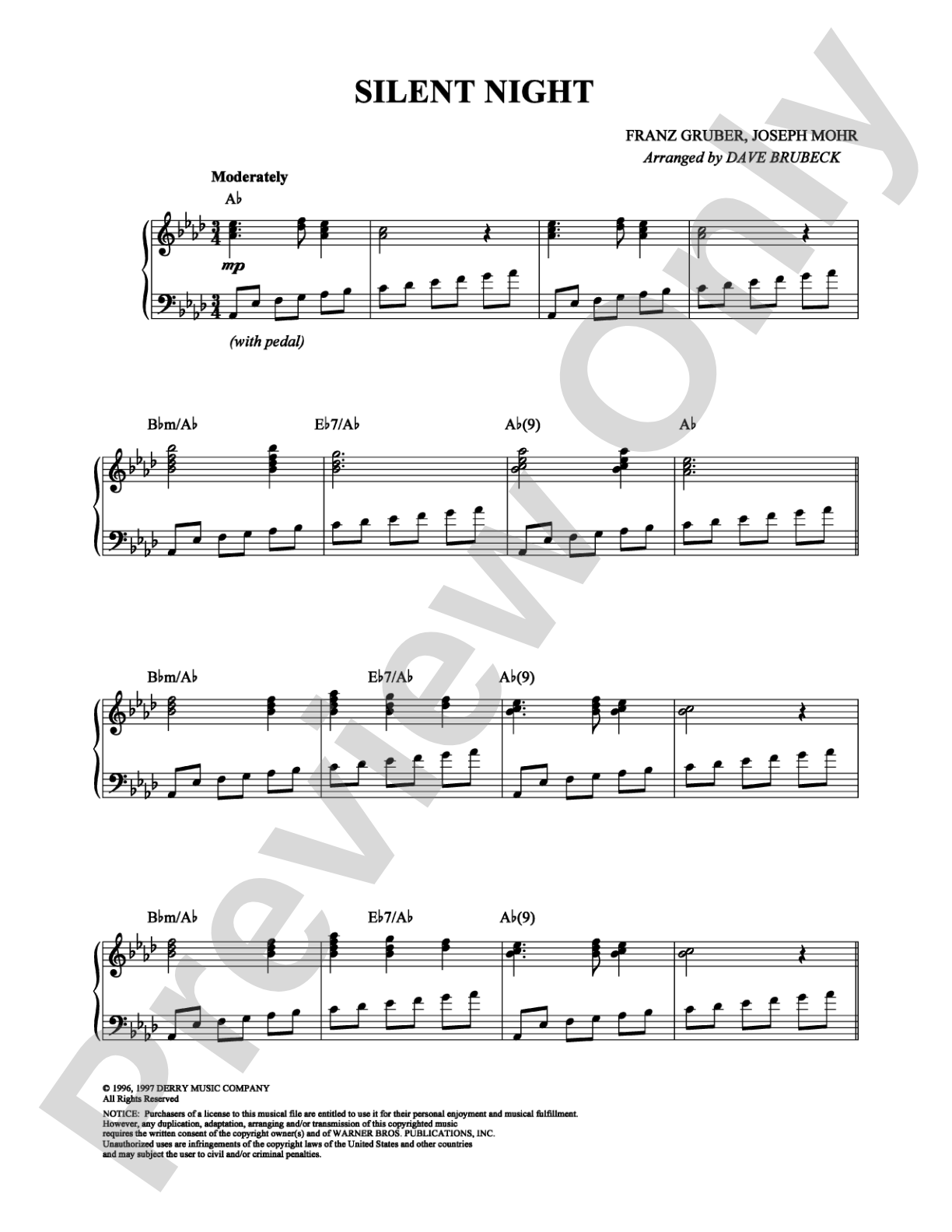
Silent Night: Piano Digital Sheet Music

Silent Night: Piano Digital Sheet Music

Franz Gruber, Joseph Mohr, Dave Brubeck

Item: 00-PS-0009812

Digital Download
$3.99
Description

Silent Night: Piano Digital Sheet Music isn't in MakeMusic Cloud just yet...but it could be. Let us know you'd like to see it, and you'll help shape what comes next. In the meantime, start a free trial and dive into thousands of interactive titles your students can play along with today.

Sample Audio
No sample audio found.
Sample Video
Additional Details
SKU: 00-PS-0009812

More about this title

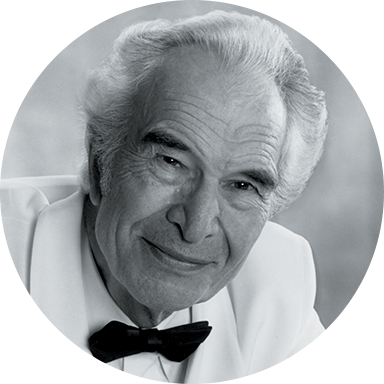
About the Artist: Dave Brubeck

Dave Brubeck

Dave Brubeck brought jazz and classical music together with equal fluency, composing works across nearly every genre from piano solos to large orchestral pieces. His studies with Darius Milhaud at Mills College shaped his approach to blending vernacular American jazz language with European compositional tradition. Beyond his prolific output as a composer, Brubeck was a transformative force in jazz performance and recording, most famously leading the Dave Brubeck Quartet and creating the landmark album Time Out, the first jazz recording to sell over a million copies.

Throughout his career, Brubeck earned recognition as both a musician and cultural ambassador. He received the Grammy Lifetime Achievement Award, the Presidential Medal of the Arts, and was inducted into the American Classical Music Hall of Fame in 2003. His sacred works, including the mass To Hope! and the oratorios The Voice of the Holy Spirit and Beloved Son, have been performed by major orchestras and choral ensembles worldwide. Brubeck's legacy extends beyond his recordings to his role in breaking racial barriers in mid-20th-century American music and demonstrating that jazz and classical forms could enrich one another.

Why we love this

Brubeck's jazz sensibility brings freshness to a familiar holiday standard. His arrangement balances harmonic sophistication with accessibility, making it engaging for audiences who know the carol inside out while remaining playable for pianists who want to explore jazz voicings without drowning in complexity.

What to expect

Warm and reflective, with the gentle sophistication of a late-night piano bar rather than a concert hall. Brubeck's jazz sensibility softens the hymn's solemnity while respecting its reverence, creating something that feels both timeless and modern.

Who it's for

Pianists with intermediate to advanced jazz vocabulary or classical pianists curious about crossing into jazz idiom. It works well for holiday recitals, seasonal concerts, or church services seeking a contemporary jazz arrangement of a beloved carol.

How to get the most out of it

  • Pay close attention to the notated swing feel and rhythmic phrasing. Jazz articulation differs from classical legato, so the score will guide you on which notes to place slightly behind the beat.
  • Explore the harmonic language by letting chord extensions breathe. Brubeck's jazz harmony is richer than traditional hymnal voicings; allow listeners to hear the color.
  • Use the recorded performance as a rhythmic reference if available separately. Hearing Brubeck's own interpretation of tempo and swing will anchor your approach to the style.

How to use it

Include this in a holiday concert's second half to shift the mood from traditional carols to contemporary interpretations. It pairs naturally with other Brubeck pieces or other jazz-classical crossover works, and works equally well as a standalone recital piece during the Christmas season.

Skills your students will build

  • Swing feel and jazz rhythmic phrasing
  • Interpreting jazz harmonic voicings and extensions
  • Balancing written notation with idiomatic jazz interpretation
  • Navigating hybrid classical-jazz repertoire

You May Also Like