
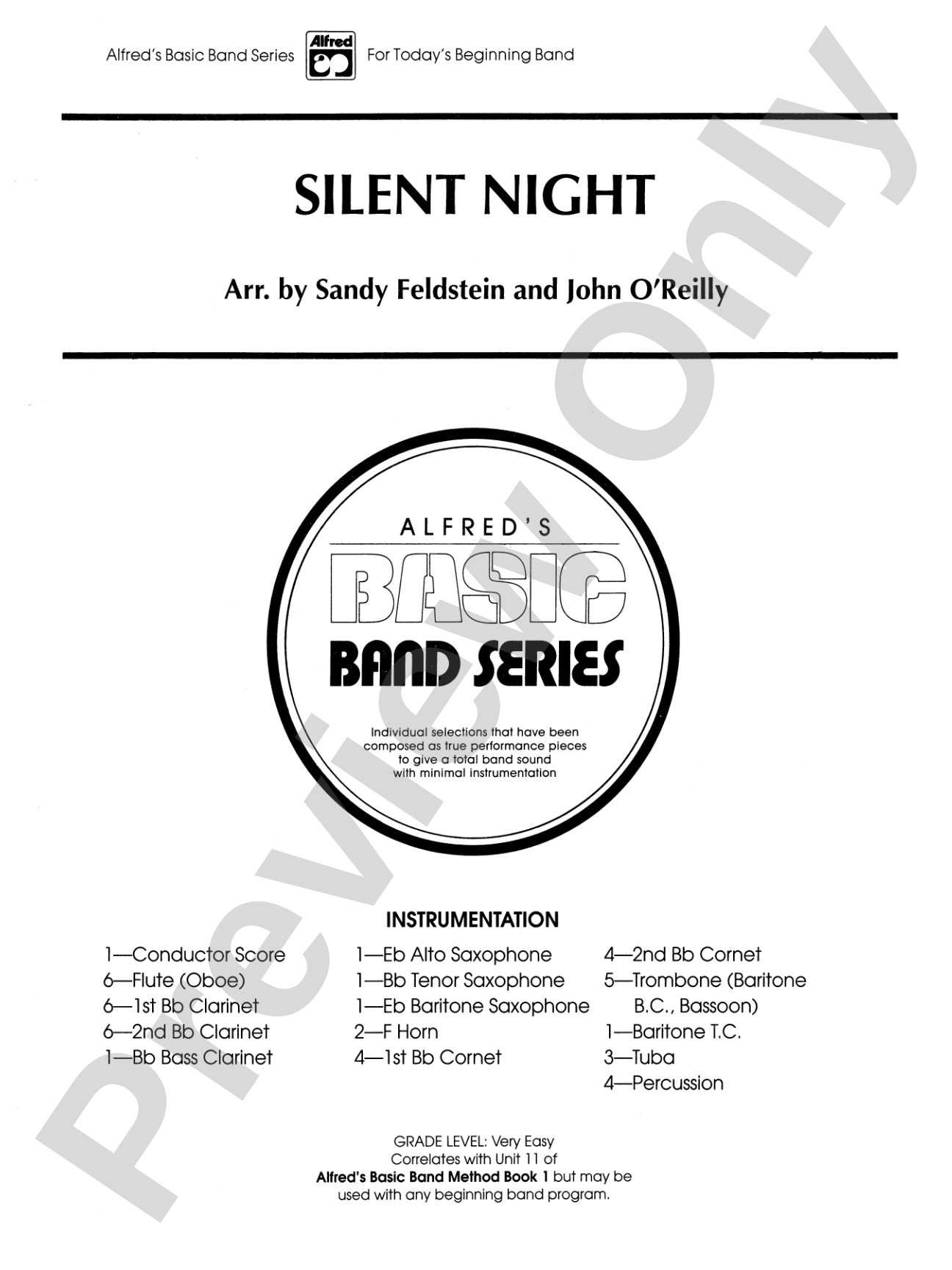

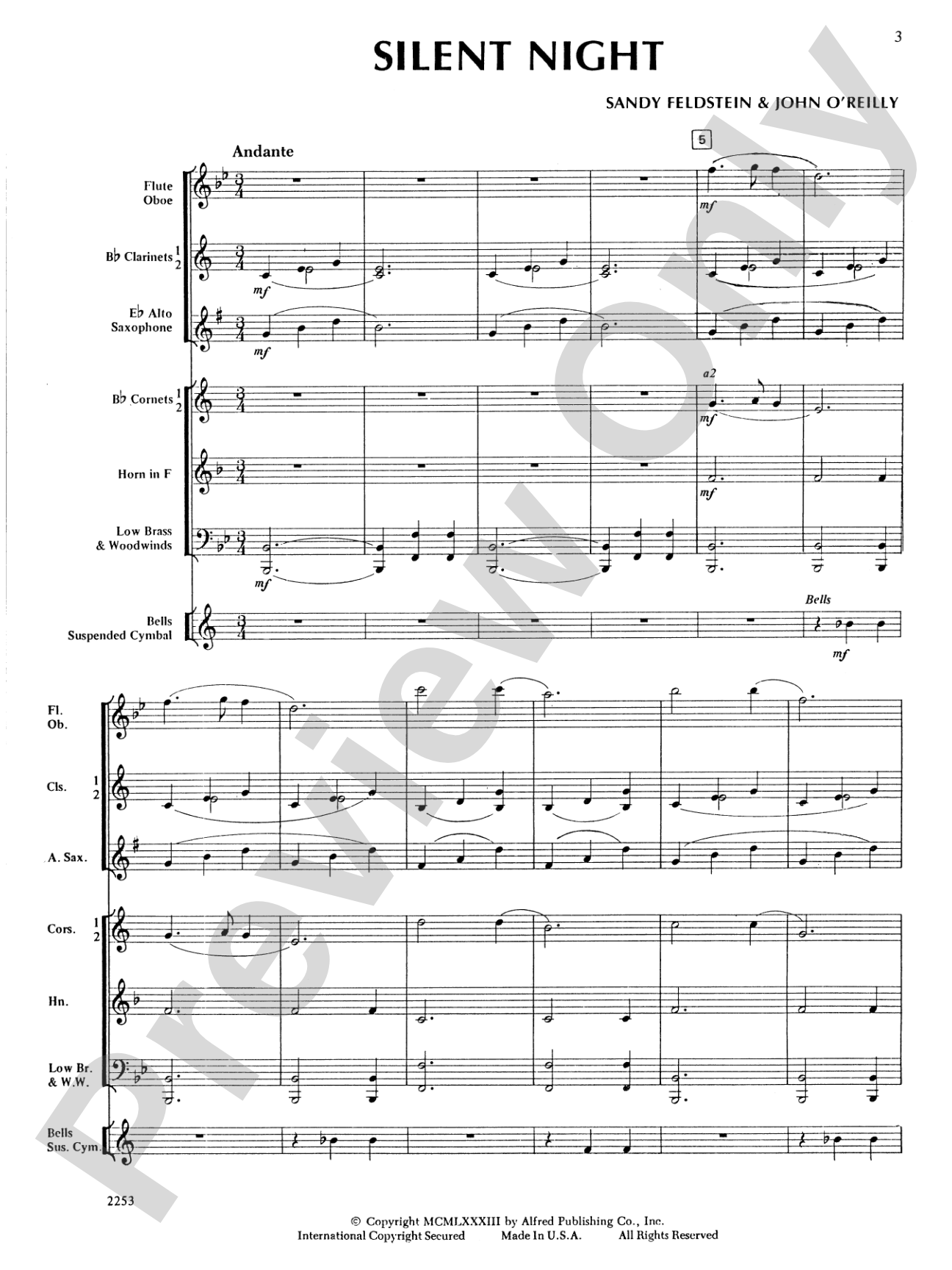
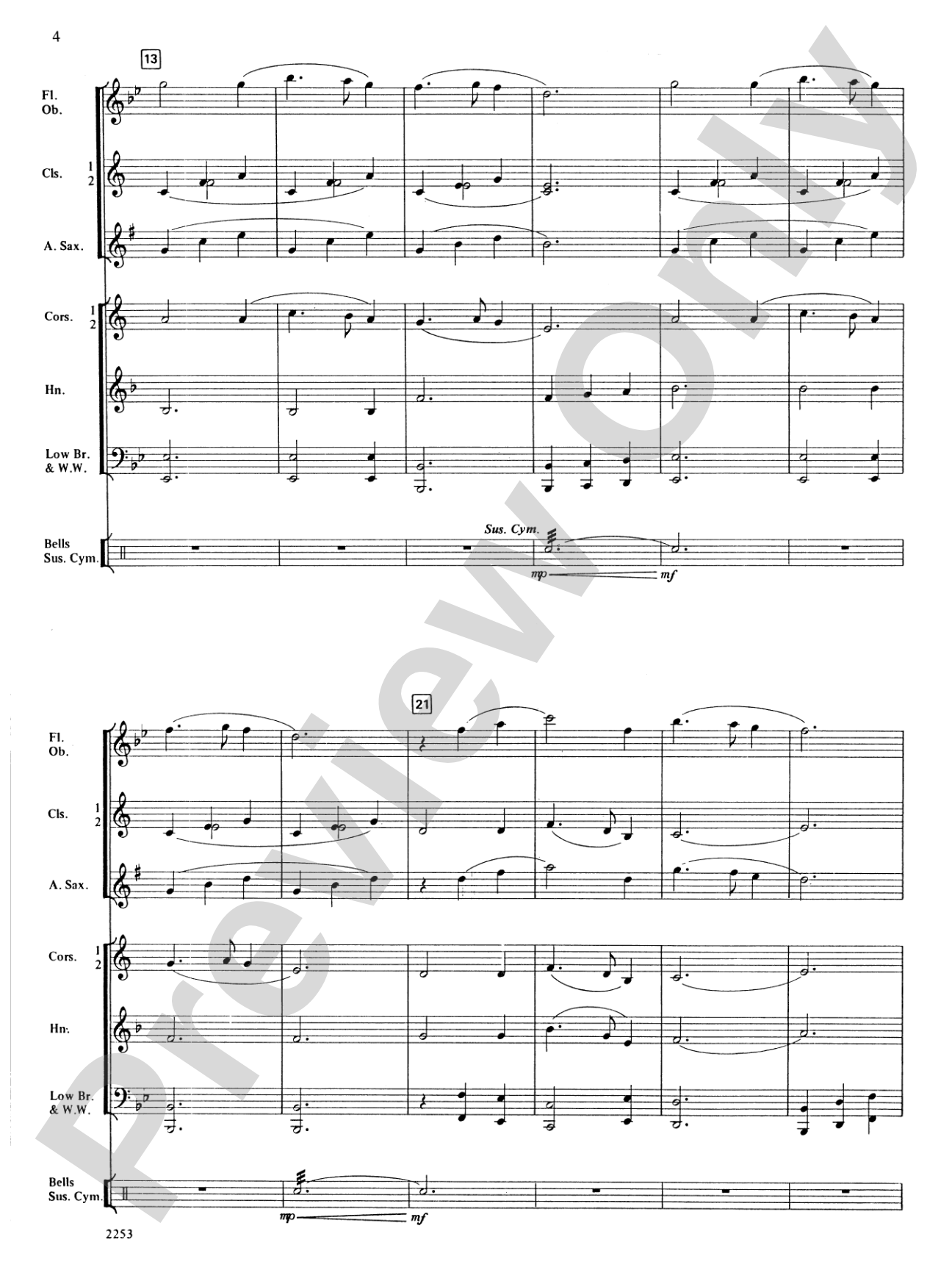
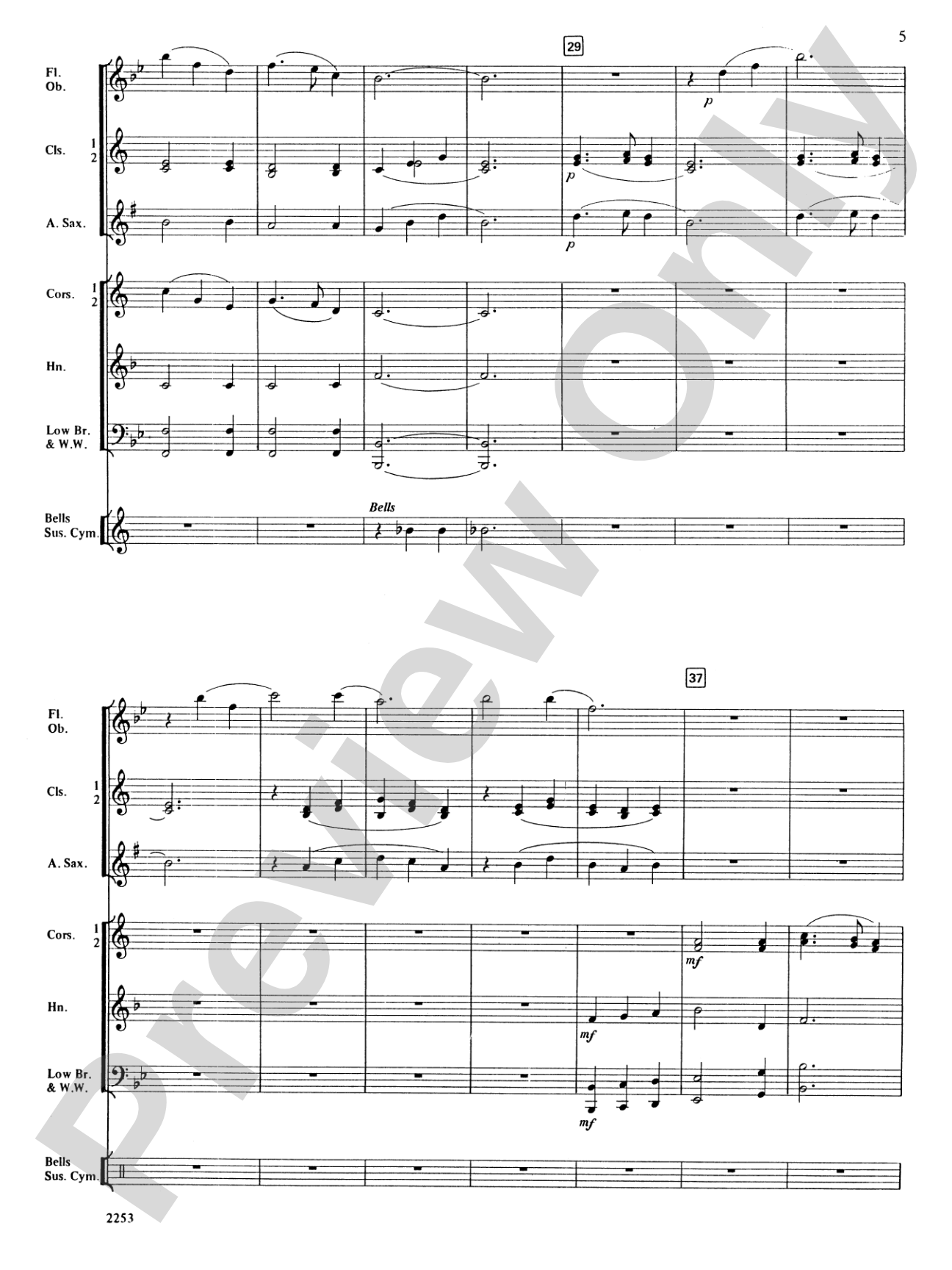
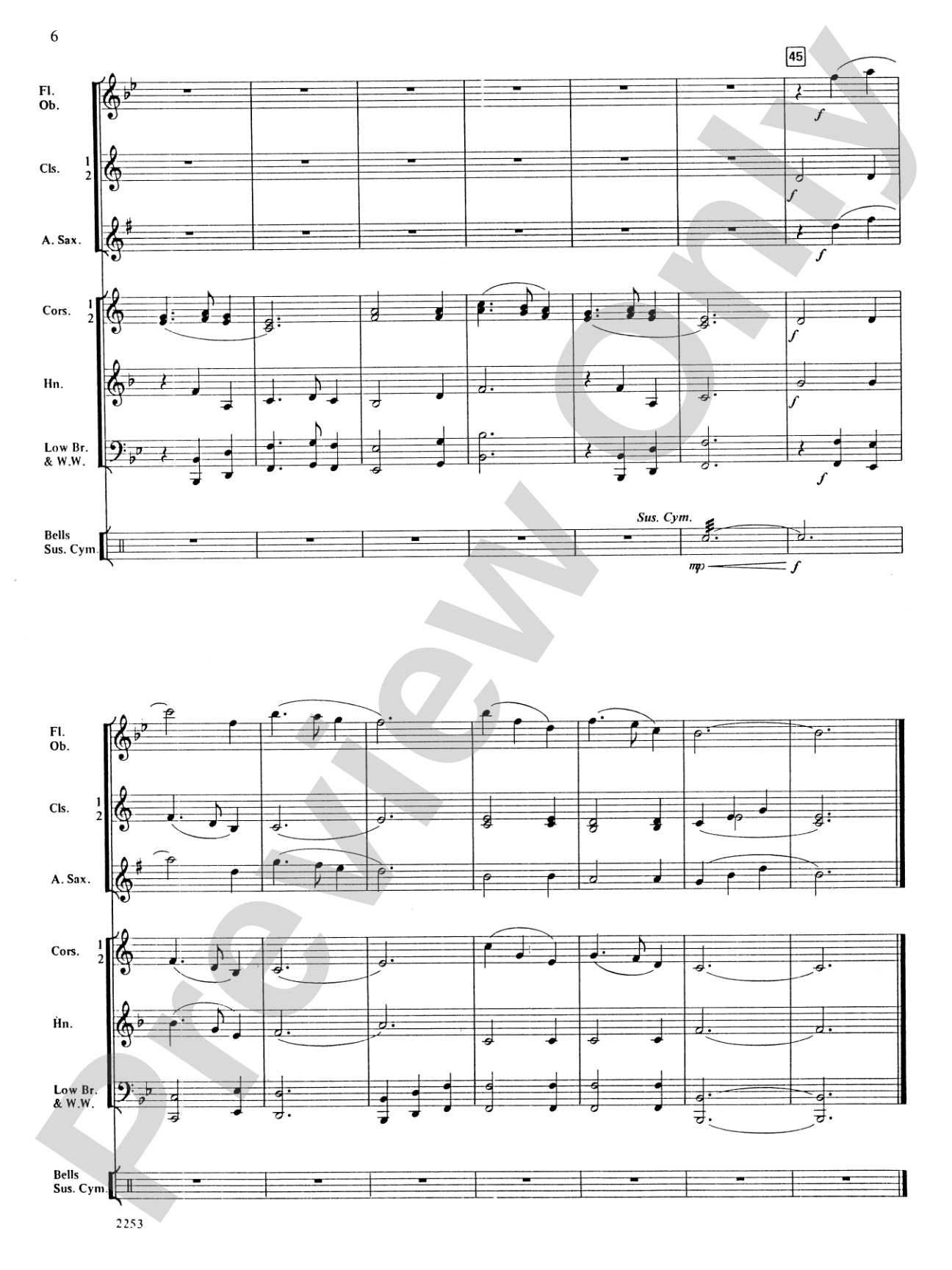



Silent Night: Concert Band Conductor Score & Parts
Arr. Sandy Feldstein and John O'Reilly
Grade: 1 (Very Easy)
Item: 00-PK-0000600

$42.00
Pickup currently not available
Buy Extra Parts (Digital PDF Download)
| Product | Price | Quantity |
|---|---|---|
| Silent Night: Score | $5.00 | |
| Silent Night: Flute | $3.00 | |
| Silent Night: 1st B-flat Clarinet | $3.00 | |
| Silent Night: 2nd B-flat Clarinet | $3.00 | |
| Silent Night: B-flat Bass Clarinet | $3.00 | |
| Silent Night: E-flat Alto Saxophone | $3.00 | |
| Silent Night: B-flat Tenor Saxophone | $3.00 | |
| Silent Night: E-flat Baritone Saxophone | $3.00 | |
| Silent Night: 1st F Horn | $3.00 | |
| Silent Night: 1st B-flat Cornet | $3.00 | |
| Silent Night: 2nd B-flat Cornet | $3.00 | |
| Silent Night: 1st Trombone | $3.00 | |
| Silent Night: Baritone T.C. | $3.00 | |
| Silent Night: Tuba | $3.00 | |
| Silent Night: 1st Percussion | $3.00 |
Parts Added to Cart!
Description


Don't just read it, hear it, play along with it, and watch your students grow with it. In MakeMusic Cloud, Silent Night: Concert Band Conductor Score & Parts comes alive with professional accompaniment, adjustable tempo, and built-in practice tools that turn solo practice into real progress.
Open in the Player
Jump straight in and assign it today.
Start Your Free Trial
Open this title and explore the full library in minutes.
Sample Audio
No sample audio found.
Sample Video
No sample videos found.
Additional Details
Series:
Basic Band Series
Publisher:
Alfred Music
Page Count:
92
SKU:
00-PK-0000600
More about this title
About the Arranger: Sandy Feldstein
Sandy Feldstein has shaped generations of young musicians through accessible, well-crafted band arrangements. His work with the Basic Band Series demonstrates a deep understanding of what beginning ensemble players need: music that sounds satisfying to perform while respecting the technical limitations of the earliest stages of band development.
Fieldstein's arrangements prioritize clarity and musicality over unnecessary complexity. His scoring consistently allows each section to contribute meaningfully, building confidence in young players while maintaining the integrity of beloved melodies.
Why we love this
This arrangement captures the reverent, familiar beauty of the carol while staying firmly within the reach of Grade 1 musicians. The scoring distributes the melody thoughtfully across the ensemble, giving every section a chance to shine rather than leaving the weight on a single voice. Directors will appreciate that it sounds polished and appropriate for a winter concert without requiring extensive rehearsal time.
What to expect
Warm and reverent, with the quiet dignity that belongs to this timeless melody. The arrangement allows space for the carol's contemplative character to emerge, inviting listeners into the quiet beauty of the original rather than competing with it through elaborate orchestration.
Who it's for
Beginning concert bands performing at the first-year level will find this within their technical and musical grasp. Directors building early winter programs need repertoire that sounds mature and intentional while remaining accessible to musicians with only months of experience.
How to get the most out of it
- Balance the melody carefully between first clarinets and first trumpets so neither section overwhelms the other; encourage them to listen across the ensemble.
- Shape the phrases with gentle dynamic swells rather than holding notes at a single volume; this carol benefits from subtle breathing that feels musical, not mechanical.
- Use the full band judiciously; let softer sections breathe with reduced instrumentation, then add voices as the arrangement builds to create a sense of growth.
- Keep the tempo steady and moderate; this is a carol meant for reflection, not a march. Resist the urge to rush through it.
How to use it
Slot this into the reflective moment of a winter concert, perhaps following an upbeat holiday selection. It pairs naturally with other Grade 1 sacred or seasonal pieces and works equally well as a stand-alone offering or as part of a thematic program celebrating musical heritage.
Skills your students will build
- Sustaining legato lines without volume fluctuation
- Balance and blend within small ensemble sections
- Responding to dynamic and tempo direction without visual exaggeration
- Shaping phrases musically across multiple measures