

Signature Solos, Book 1: 9 All-New Piano Solos by Favorite Alfred Composers: Piano
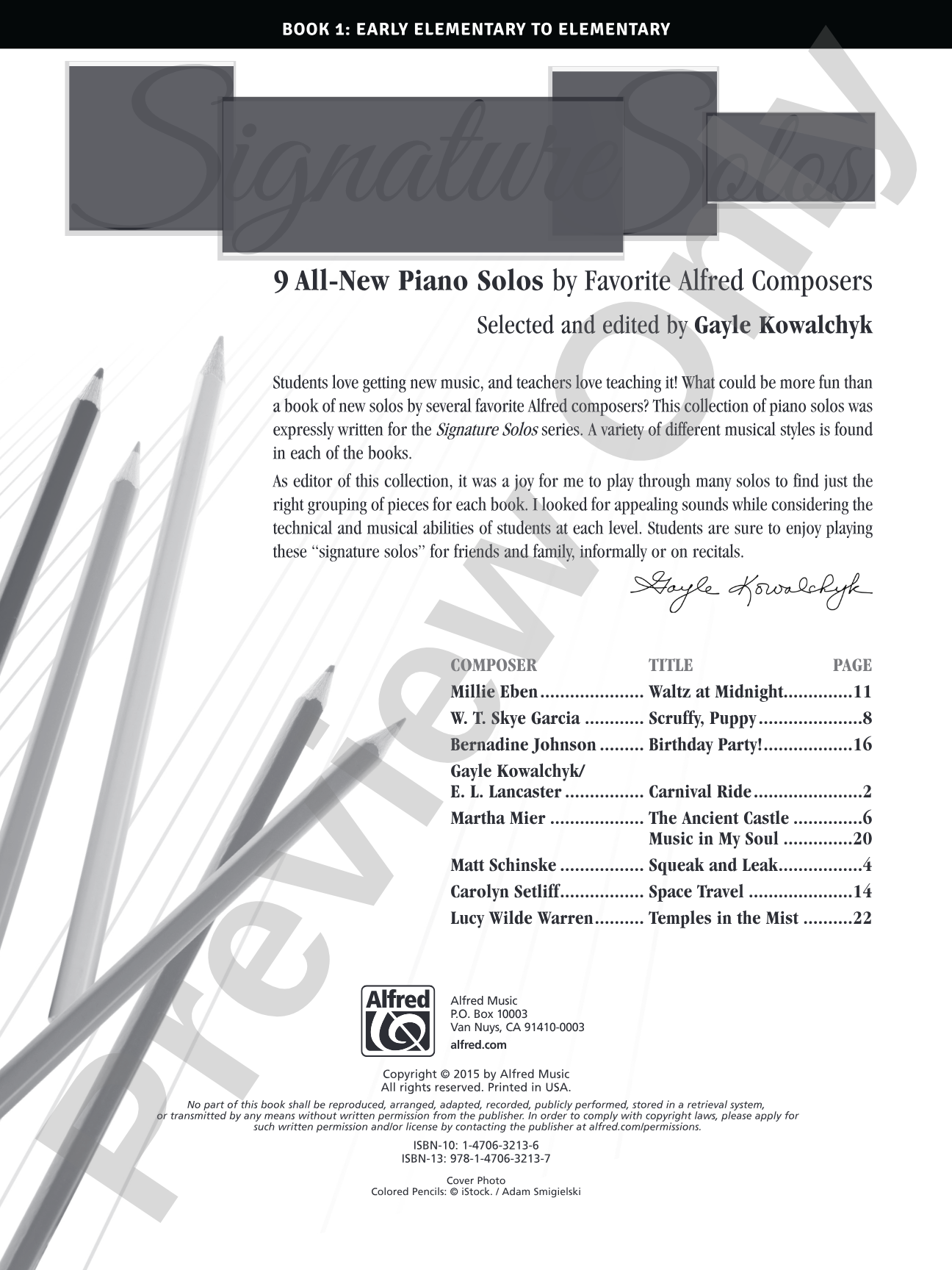
9 All-New Piano Solos by Favorite Alfred Composers
Selected and edited by Gayle Kowalchyk
Level: Early Elementary / Elementary
Item: 00-PB-0000542

$7.99
Pickup currently not available
Related Items
Signature Solos, Book 1: Piano Book |
$7.99
|
View |
Description
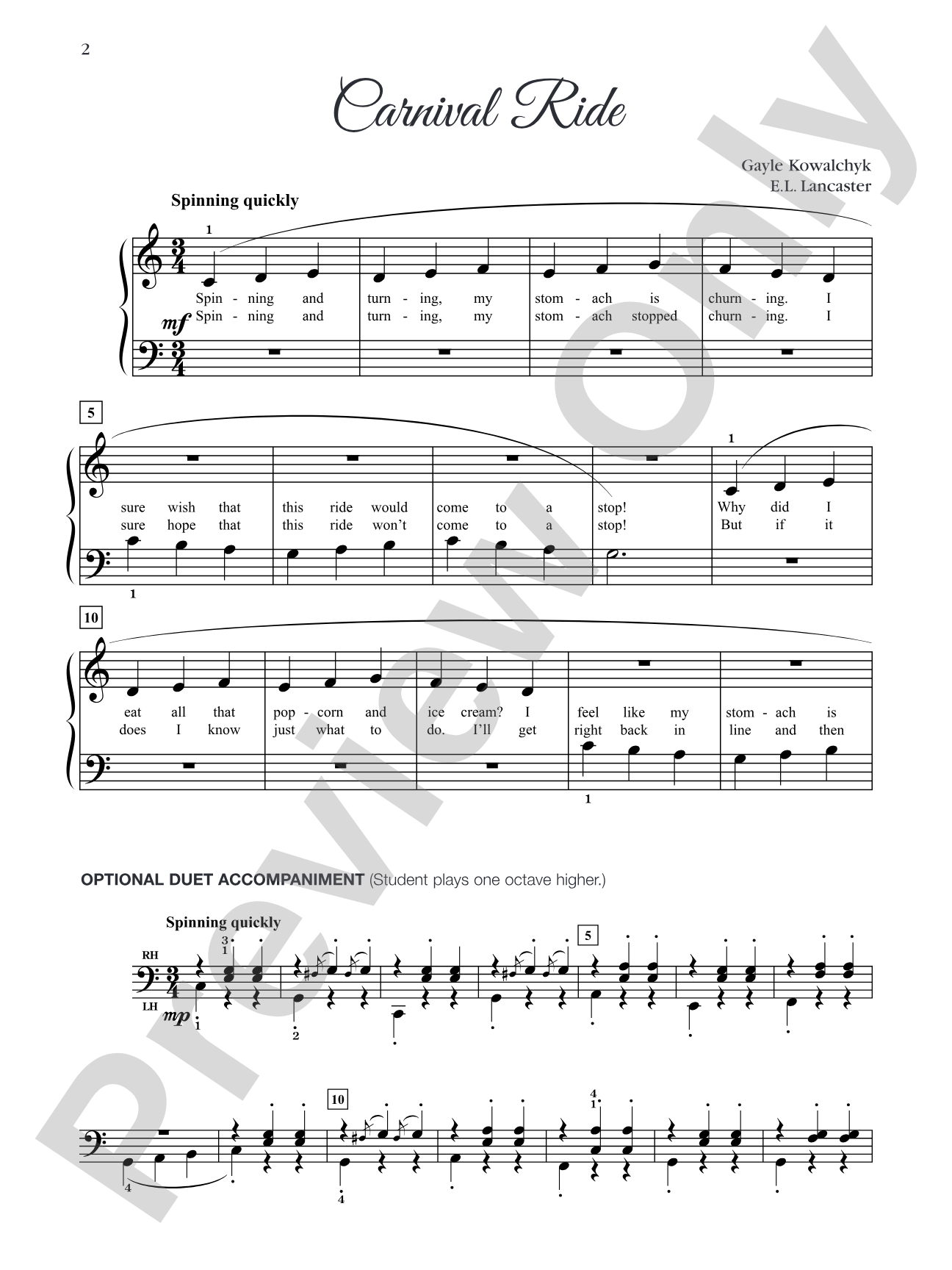
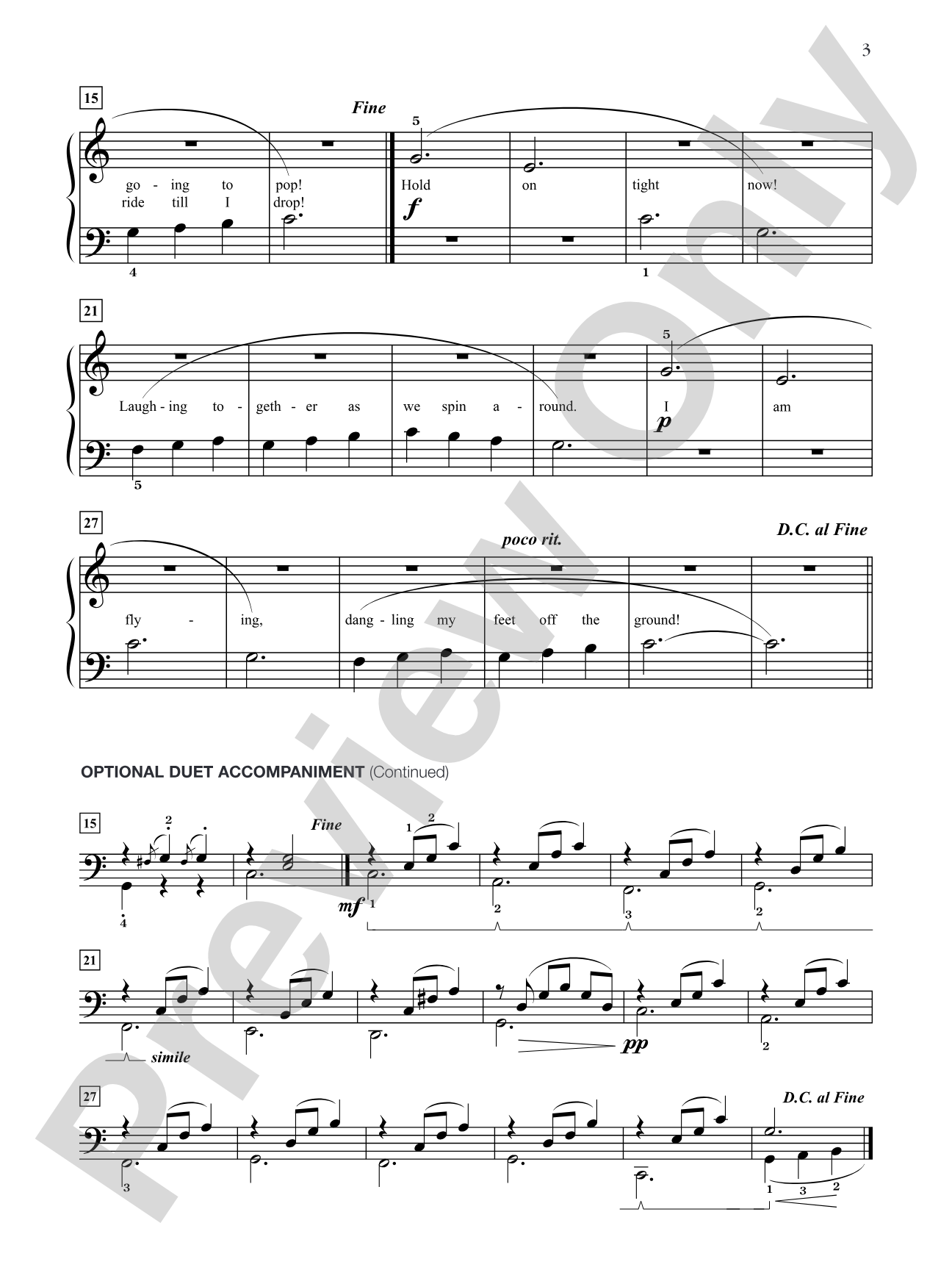
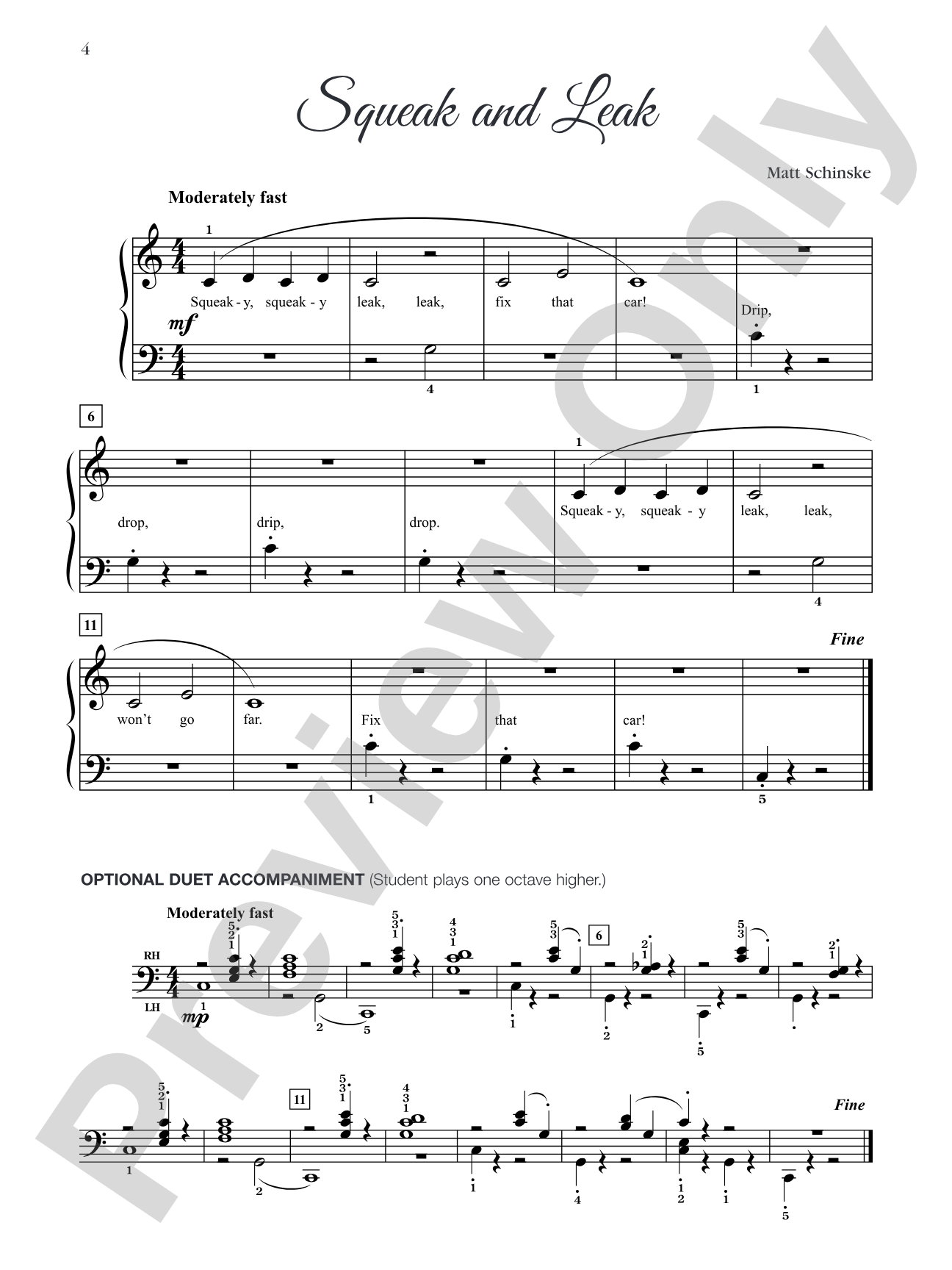
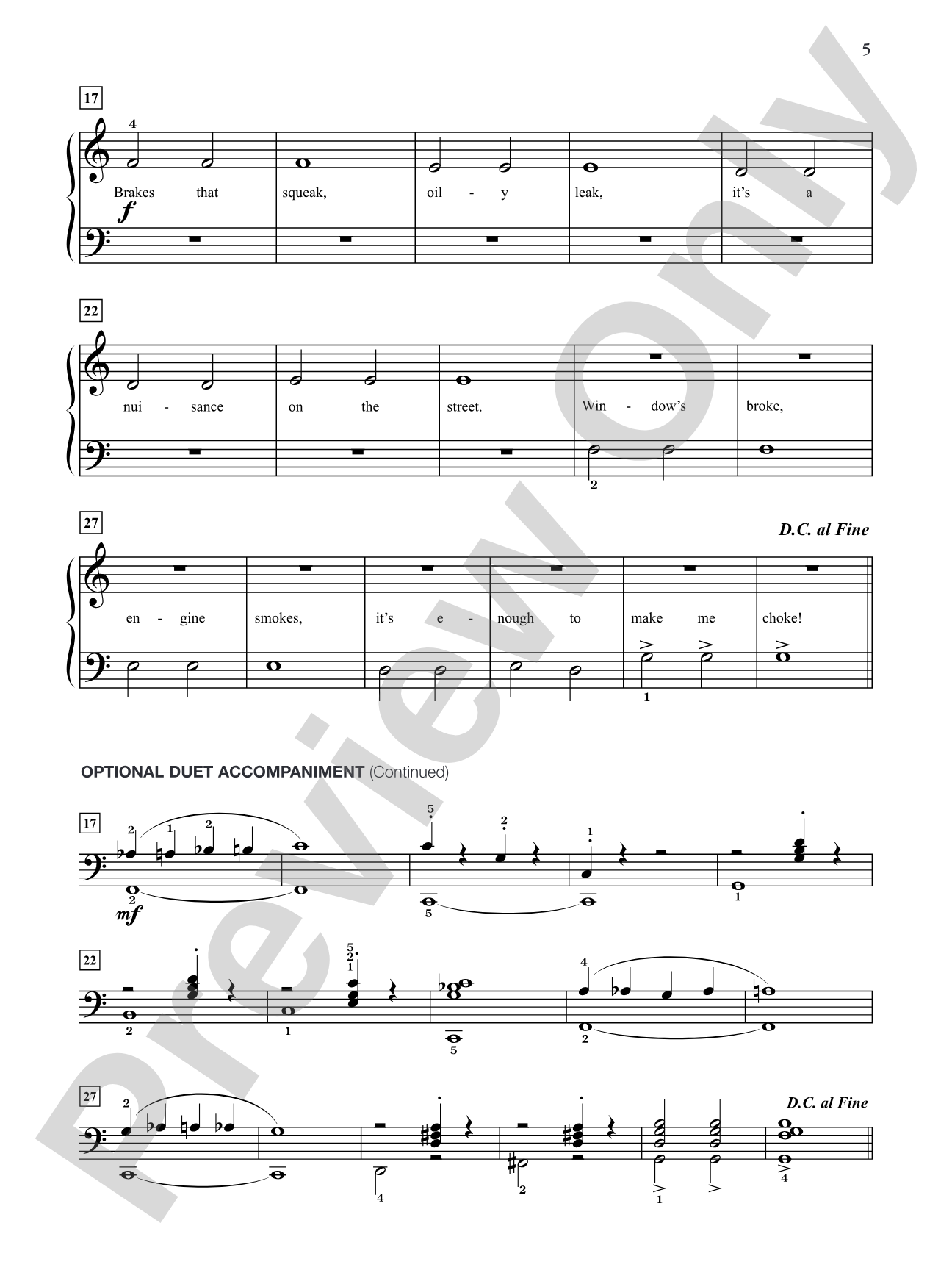
Each collection in the Signature Solos series includes all-new piano solos by favorite Alfred Music composers in a variety of musical styles. Every solo was written for its appealing sound and ability to further the technical and musical growth of the student. These solos can be played either formally in recitals or informally for friends and family! Titles: Waltz at Midnight (Millie Eben) * Scruffy, Puppy (W. T. Skye Garcia) * Birthday Party! (Bernadine Johnson) * Carnival Ride (Gayle Kowalchyk and E. L. Lancaster) * The Ancient Castle (Martha Mier) * Music in My Soul (Martha Mier) * Squeak and Leak (Matt Schinske) * Space Travel (Carolyn Setliff) * Temples in the Mist (Lucy Wilde Warren). A Federation Festivals 2020-2024 selection.


Don't just read it, hear it, play along with it, and watch your students grow with it. In MakeMusic Cloud, Signature Solos, Book 1: 9 All-New Piano Solos by Favorite Alfred Composers: Piano comes alive with professional accompaniment, adjustable tempo, and built-in practice tools that turn solo practice into real progress.
Open in the Player
Jump straight in and assign it today.
Start Your Free Trial
Open this title and explore the full library in minutes.
Sample Audio
No sample audio found.
Sample Video
No sample videos found.
Additional Details
Series:
Signature Solos
Publisher:
Alfred Music
Page Count:
24
SKU:
00-PB-0000542
More about this title
About the Creator
Signature Solos brings together a roster of composers with deep roots in music education. Millie Eben, Martha Mier, Gayle Kowalchyk, E. L. Lancaster, Lucy Wilde Warren, and the other contributors represented here have spent decades writing for young pianists, understanding exactly what captures their imagination while building genuine musicianship.
Each composer in this collection writes with a clear pedagogical purpose alongside artistic vision. They know the early elementary student's hand size, reading level, and emotional range. Their solos avoid condescension while celebrating the joy of discovery that comes with learning piano.
Why we love this
This collection balances accessibility with genuine musical substance. Nine different composers bring distinct voices to the early elementary level, so students encounter varied compositional approaches rather than a formulaic sound, and teachers get real variety for student recitals without sacrificing pedagogical purpose.
What to expect
A musical scrapbook of childhood moments and imagination. These solos sparkle with accessible melodies and rhythms that let young hands feel accomplished while exploring castles, carnival rides, puppies, and outer space through sound.
Who it's for
Early elementary piano students ready to perform complete pieces beyond method book exercises. This collection works for private lesson studios, group classes, and young pianists preparing recital material or festival selections.
How to get the most out of it
- Assign one solo per student and let them choose which piece speaks to them. Ownership of repertoire choice builds confidence in early performers.
- Record informal performances and share them with family. These solos work beautifully in informal settings, so encourage students to play for friends and relatives between lessons.
- Explore the title imagery before learning the notes. Asking students what they imagine when they hear "The Ancient Castle" or "Space Travel" connects physical technique to musical storytelling from the start.
How to use it
Perfect for end-of-semester student recitals or informal studio showcases where mixed repertoire celebrates individual progress. These pieces also serve as strong festival selections and supplement method books by offering concrete performance goals alongside technique building.
Skills your students will build
- Reading and executing simple rhythmic patterns across multiple staves
- Playing with dynamic contrast (soft and loud sections within a single piece)
- Hand position and finger independence in early elementary contexts
- Connecting melodic phrases to expressive intent
- Sight-reading and learning new repertoire with minimal technical barriers