
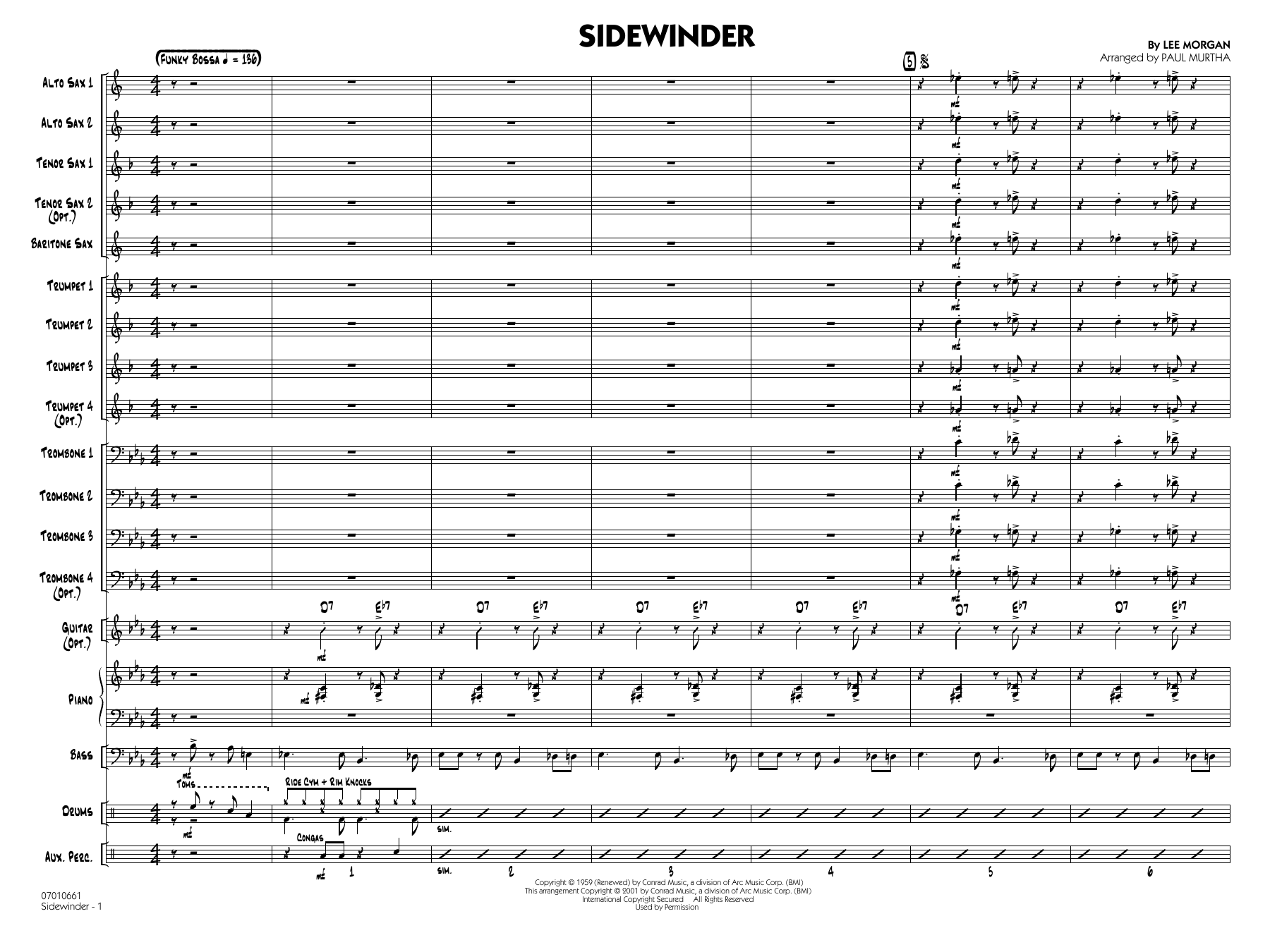

Sidewinder (arr. Paul Murtha): Jazz Ensemble Conductor Score & Parts
By Lee Morgan / Arranged by Paul Murtha
Grade: 2
Item: 35-PK01565830
$45.00
Pickup currently not available
Buy Extra Parts (Digital PDF Download)
Parts Added to Cart!
Description
There aren't that many jazz standards written in a rock style, and this is one of the absolute best! Now available for younger bands with this great new chart by Paul Murtha. Enjoy great flexibility with the Easy Jazz Ensemble series! Playable with 4 saxes, 3 trumpets, 3 trombones and rhythm.


Sidewinder (arr. Paul Murtha): Jazz Ensemble Conductor Score & Parts isn't in MakeMusic Cloud just yet...but it could be. Let us know you'd like to see it, and you'll help shape what comes next. In the meantime, start a free trial and dive into thousands of interactive titles your students can play along with today.
Request This Title
Tell us you want it.
Start Your Free Trial
Explore everything that's ready to play right now.
Sample Audio
No sample audio found.
Sample Video
No sample videos found.
Additional Details
Publisher:
Hal Leonard
SKU:
35-PK01565830
More about this title
About the Composer: Lee Morgan
Lee Morgan stands as one of jazz's most influential hard bop trumpeters, known for his soulful tone and memorable melodic sensibility. His compositional voice blended funk-inflected grooves with accessible harmonic structures, making his work ideal for educational ensembles seeking authentic jazz repertoire that doesn't compromise musicality.
Why we love this
Paul Murtha's adaptation captures the infectious swagger of the original while stripping away unnecessary complexity. Grade 2 ensembles rarely get material this groovy that also demands genuine musicianship from every section.
What to expect
A cool, swaggering walk through a jazz club where the groove matters more than flashy technique. The tune sits naturally under the fingers, leaving room for rhythmic interpretation and the kind of relaxed confidence that defines great jazz playing.
Who it's for
Young jazz ensembles hungry for real standards that don't sound like educational compromise. Directors teaching Grade 2 students who need exposure to blues changes, swing articulation, and the discipline required to support soloists.
How to get the most out of it
- Keep the rock feel grounded in the rhythm section. The drums should lock into a light shuffle, and the bass needs to anchor the blues changes with conviction.
- Balance the horn sections carefully during the head. Saxes and trumpets both carry important material, so dial back the volume slightly from whoever plays second to let the melody shine.
- Lean into the laid-back tempo. Sidewinder works best when the ensemble resists rushing, letting the groove breathe naturally.
- Use the ensemble's dynamic contrast to highlight form changes. When the soloists take over, pull back the backgrounds so they feel like genuine supporting accompaniment, not a wall of sound.
How to use it
Feature this in a jazz concert focused on blues and funk standards, pairing it with other accessible hard bop repertoire. It also works beautifully as a centerpiece for a youth jazz festival where younger ensembles need repertoire that audiences immediately recognize and enjoy.
Skills your students will build
- Playing behind a soloist with appropriate textural restraint
- Phrasing and articulation in swing feel
- Blues changes and harmony
- Groove maintenance and rhythmic stability
- Section balance and blend in jazz voicings