Si Ne Wa Sheet Music Preview

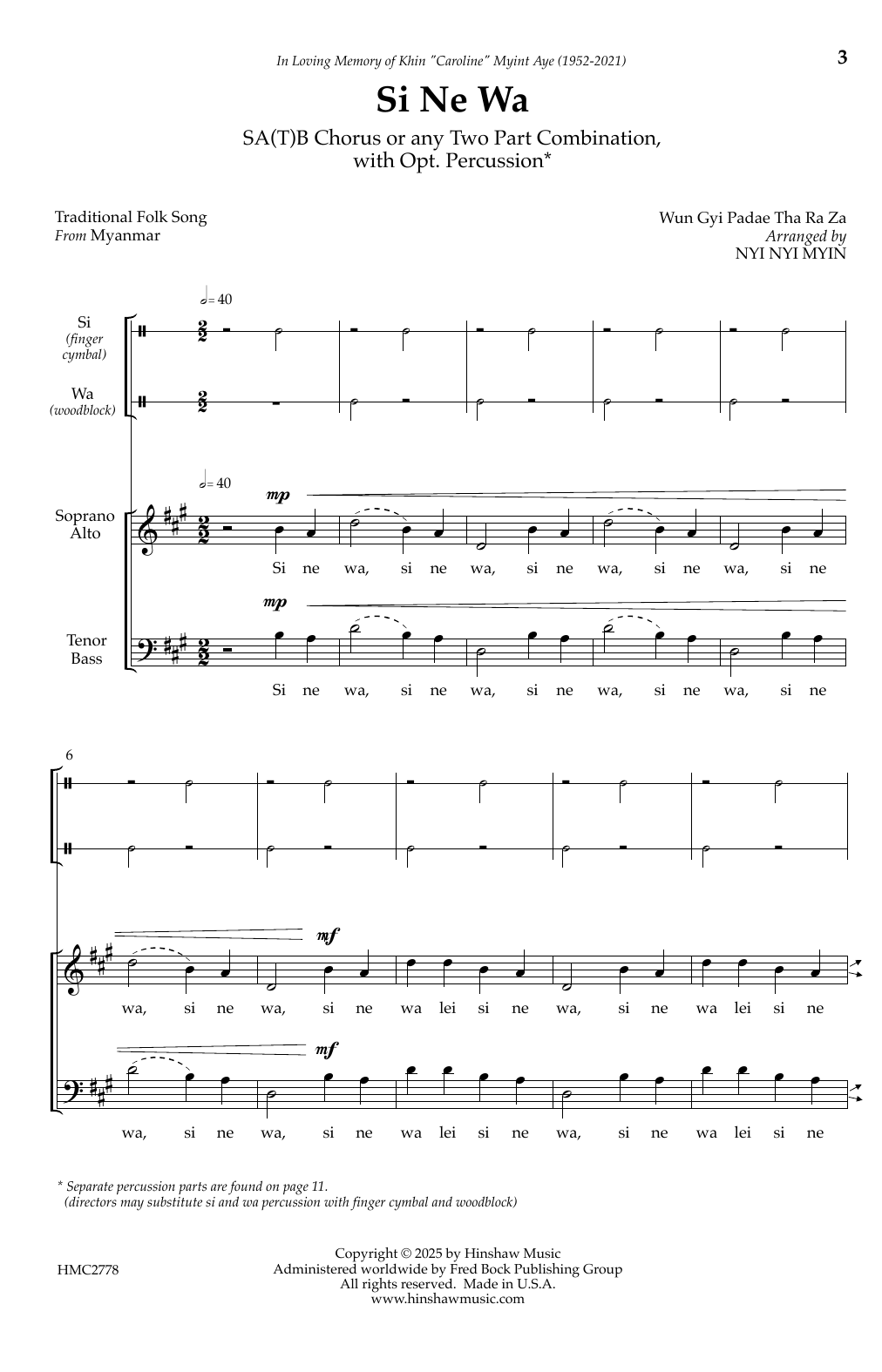
Si Ne Wa: SATB Choral Octavo

Arranged by Nyi Nyi Myin

Item: 35-DS01602837

Digital Download
$3.35
Description

Si Ne Wa: SATB Choral Octavo isn't in MakeMusic Cloud just yet...but it could be. Let us know you'd like to see it, and you'll help shape what comes next. In the meantime, start a free trial and dive into thousands of interactive titles your students can play along with today.

Sample Audio
No sample audio found.
Sample Video
Additional Details
Publisher: Hal Leonard
Page Count: 11
SKU: 35-DS01602837

More about this title

Why we love this

Myin's arrangement brings a fresh approach to this traditional material, honoring its origins while creating something immediately singable for contemporary SATB ensembles. The piece works equally well as a concert opener that engages audiences or as a vehicle for exploring world music traditions within your core repertoire.

What to expect

The piece carries an intimate quality that invites listeners into a specific cultural moment. Its eleven pages allow space for genuine musical development and emotional nuance rather than quick impact.

Who it's for

High school and college choirs seeking repertoire that expands their musical horizons beyond European traditions. This octavo works for ensembles comfortable with unfamiliar melodic or harmonic language and directors who program with cultural intentionality.

How to get the most out of it

  • Pay attention to any rhythmic or harmonic elements that reflect the source culture; these details often anchor the musical character and deserve rehearsal time proportional to their expressive weight.
  • Balance the four parts carefully during sectional rehearsals so that no voice dominates when the texture thickens.
  • Consider how this piece sits within your overall concert arc; its character will inform what can follow effectively.

How to use it

Situate this as a concert highlight rather than filler; its distinctiveness rewards a slot where audiences can settle into something genuinely different. It pairs well alongside other world music arrangements or as a bridge between classical and contemporary programming.

Skills your students will build

  • Reading and intonating non-traditional harmonic language
  • Respecting cultural context and stylistic authenticity in arrangement
  • Balancing four-part homophonic texture with clarity and blend

You May Also Like