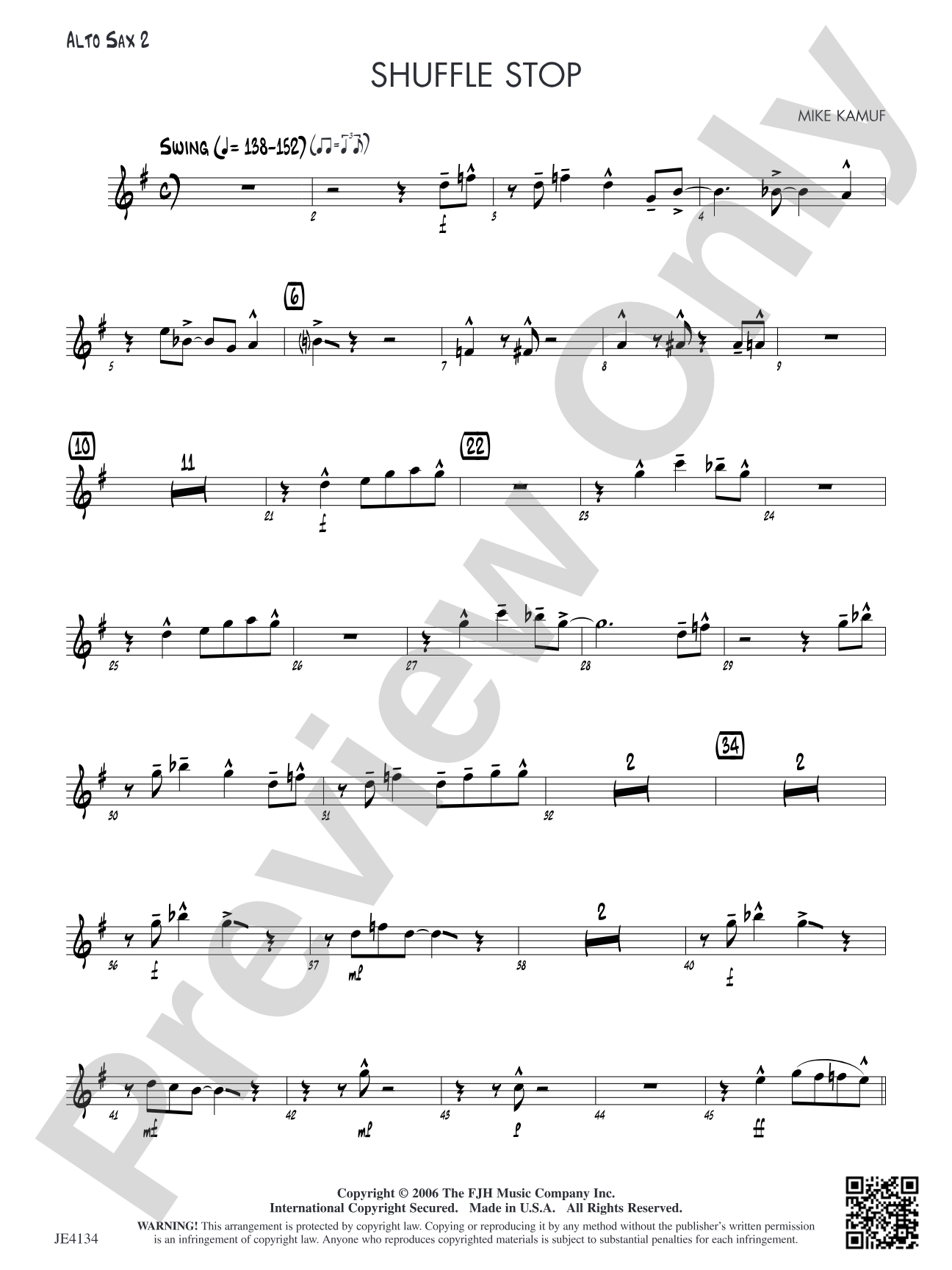
Middle school director and jazz trumpeter Mike Kamuf offers this medium-tempo blues set over a shuffle groove. After a big full-ensemble opening, the chart moves into the infectious yet simple melody. A stop-time begins a chorus-long dialogue between brass and saxes, providing players an excellent opportunity to focus on time, keeping the groove steady and in the pocket. Solos are provided for alto and trumpet, but feel free to open this one up to let more of your students solo over the blues!
Discover MakeMusic Cloud: thousands of interactive titles your students can play along with today.
Mike Kamuf brings both classroom experience and performing chops to his jazz writing. A practicing jazz trumpeter and middle school director, he understands the balance between pedagogical clarity and genuine musical engagement that young ensemble players need.
Why we love this
Kamuf builds in real ensemble responsibility without overwhelming your section leaders. The stop-time brass and sax dialogue forces players to listen, count, and maintain pocket time rather than hiding in the full sound, making this a teaching moment that feels like a real performance feature.
What to expect
Infectious and grounded. The shuffle groove carries everything forward with uncluttered ease, while the stop-time exchange snaps the energy into focus. It swings without pretension and invites players into the conversation rather than asking them to sit back.
Who it's for
Grade 2 jazz ensembles ready to engage with stop-time concepts and blues soloing. Directors looking for a confident melody vehicle that doubles as a rhythm section and ensemble listening workout.
How to get the most out of it
Isolate the stop-time section in rehearsal without the drums first. Have brass and saxes trade 4-bar phrases while a student counts off the shuffle feel to lock in the groove expectation before adding the rhythm section.
Let your soloists play through the changes in sectionals before the full run-through. Knowing they have space to stretch over a simple blues form builds confidence and improvisation comfort.
Emphasize the "pocket" language during the dialogue section. Young players often rush or drag stop-time; frame it as a trust exercise where each section listens to the other's air and space.
Consider rotating soloists through alto and trumpet parts in different rehearsals or performances. The open door to additional soloists makes this a recurring feature piece in your calendar year.
How to use it
Pair this with a second blues or shuffle tune to build a mini-set for a jazz concert or school assembly. Its medium tempo and clear structure make it an ideal bridge piece between uptempo and ballad numbers, or a confident opener that settles the room into the swing feel.
Skills your students will build
Maintaining steady time within a shuffle groove under stop-time conditions
Trading improvised solos over a 12-bar blues form
Ensemble listening and responding to other sections' rhythmic choices
Balancing groove pocket awareness with melodic clarity in full ensemble statements
You May Also Like
Scan to Complete Your Purchase
Use your phone's camera to scan the code below
You'll log in on your phone and the order will be added to your account