Show Us Thy Mercy Sheet Music Preview

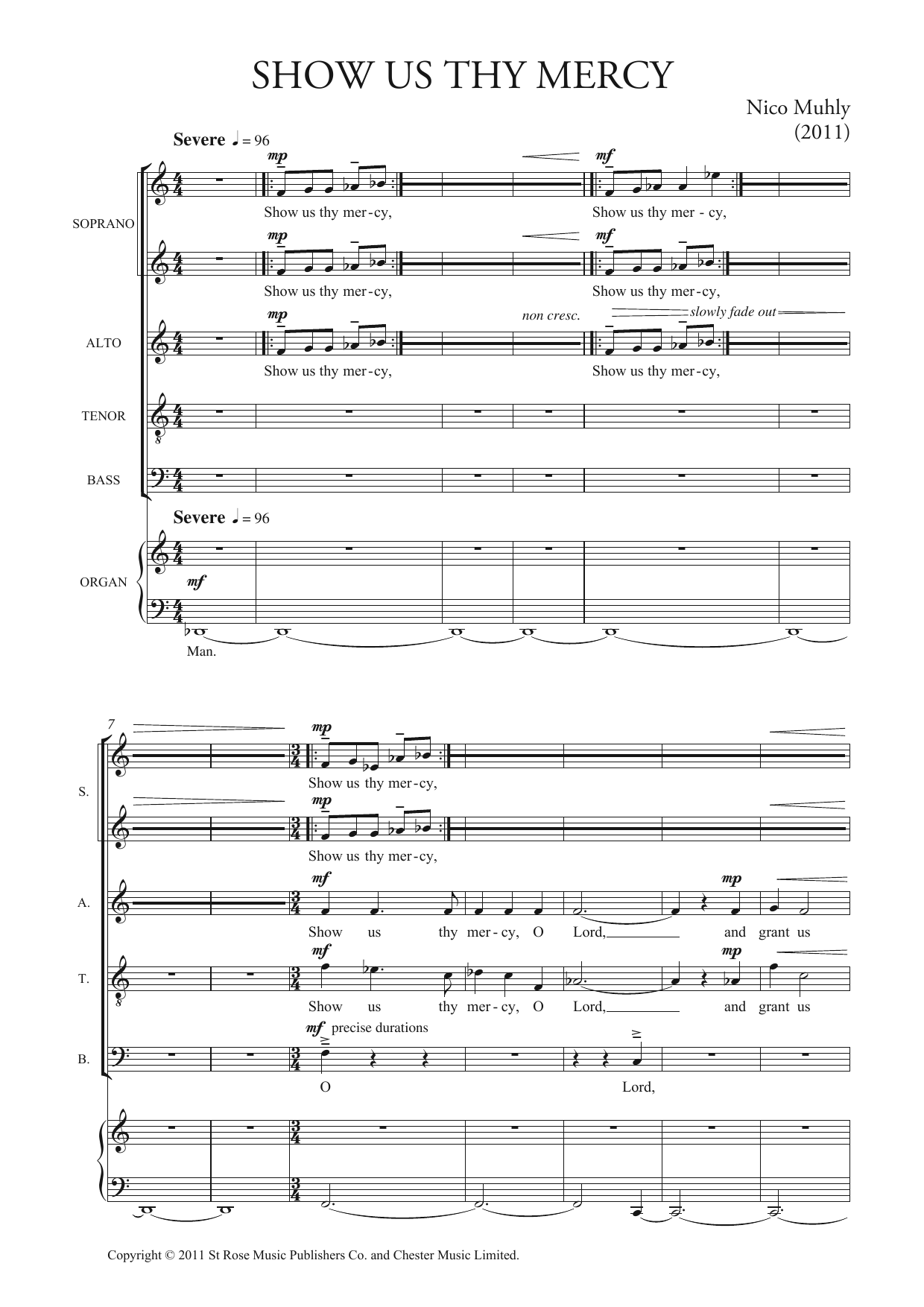
Show Us Thy Mercy: SATB Choral Octavo

As performed by Nico Muhly

Item: 35-DS00362162

Digital Download
$2.99
Description

Show Us Thy Mercy: SATB Choral Octavo isn't in MakeMusic Cloud just yet...but it could be. Let us know you'd like to see it, and you'll help shape what comes next. In the meantime, start a free trial and dive into thousands of interactive titles your students can play along with today.

Sample Audio
No sample audio found.
Sample Video
Additional Details
Publisher: Hal Leonard
Page Count: 10
SKU: 35-DS00362162

More about this title

About the Artist: Nico Muhly

Nico Muhly is an American composer whose work spans opera, orchestral music, and choral writing. He studied at Columbia University and has become known for his ability to blend contemporary compositional techniques with emotional directness, making his music accessible without sacrificing sophistication.

Muhly's choral writing is particularly valued in educational settings because it respects the intelligence of singers while remaining performable by ensembles at various levels. His pieces often explore the intersection of text and music with precision and lyrical sensitivity.

Why we love this

Muhly brings a contemporary harmonic language to sacred text that feels neither archaic nor alienating. The piece sits at a sweet spot where the writing is interesting enough to engage mature musicians but remains accessible enough that preparation doesn't become overwhelming.

What to expect

The music unfolds with a contemplative quality that asks listeners to sit with vulnerability. Muhly's harmonies create moments of unexpected warmth alongside passages of austere beauty, reflecting the emotional terrain of a plea for compassion.

Who it's for

This piece suits choirs with solid reading skills and experience navigating contemporary harmony. It works well for ensembles preparing a concert that includes both traditional and modern sacred music.

How to get the most out of it

  • Balance the text clarity against harmonic density by rehearsing passages with exaggerated diction first, then gradually restoring the full harmonic texture.
  • Pay attention to how Muhly uses register shifts between voice parts; these changes often signal phrase boundaries and help shape the architecture of longer sections.
  • Let the harmonic language breathe by resisting the urge to smooth out moments of dissonance. The tension is intentional.

How to use it

Consider pairing this with other modern sacred settings to create a thematic program exploring how composers address mercy and forgiveness. It also serves as an excellent bridge piece between traditional liturgical music and experimental choral writing.

Skills your students will build

  • Reading contemporary harmonic language with accidentals and chromatic movement
  • Maintaining tuning across non-functional chord progressions
  • Shaping long phrases with text as the primary expressive guide
  • Balancing independence in SATB writing with ensemble cohesion

You May Also Like