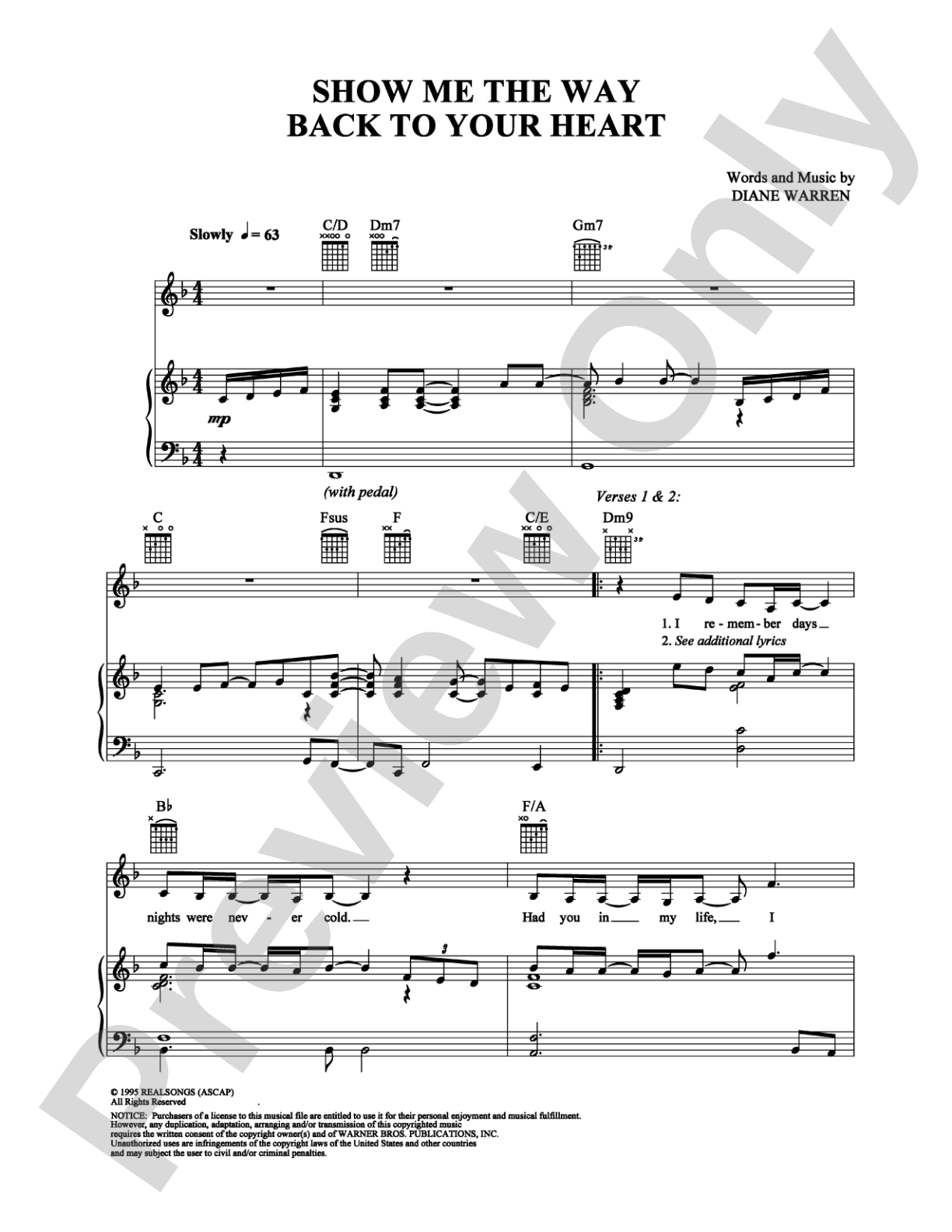
Show me the way back to your heart: Piano/Vocal/Chords Digital Sheet Music

Show me the way back to your heart: Piano/Vocal/Chords Digital Sheet Music

Diane Warren, Brian McKnight

Item: 00-PS-0006219

Digital Download
$3.99
Description

Show me the way back to your heart: Piano/Vocal/Chords Digital Sheet Music isn't in MakeMusic Cloud just yet...but it could be. Let us know you'd like to see it, and you'll help shape what comes next. In the meantime, start a free trial and dive into thousands of interactive titles your students can play along with today.

Sample Audio
No sample audio found.
Sample Video
Additional Details
SKU: 00-PS-0006219

More about this title

About the Artist: Brian McKnight

Brian McKnight emerged as one of R&B's most consistent voices in the 1990s, known for his smooth baritone and sophisticated arrangements that blended soul sensibility with contemporary production. His career spans multiple decades as a recording artist, songwriter, and producer, establishing him as a significant figure in adult contemporary and R&B genres.

Why we love this

This arrangement captures the vulnerability and restraint that make McKnight's vocal writing so effective in the classroom. Students engage with genuine contemporary songcraft here, not a simplified version, which means the emotional payoff feels earned rather than manufactured.

What to expect

The piece carries the emotional directness of a contemporary ballad, grounded in soulful phrasing and harmonic warmth. Its appeal lies in understated sincerity rather than technical display.

Who it's for

Vocalists working in contemporary, R&B, and adult contemporary repertoire will find this arrangement accessible and musically rewarding. Piano accompanists can use this format to support singers in studio, recital, or informal performance settings.

How to get the most out of it

  • Shape the vocal line through subtle dynamics rather than dramatic range shifts; McKnight's style favors restraint and control over melodic display.
  • Use the chord symbols to guide harmonic accompaniment choices that complement rather than double the vocal melody.
  • Allow space in the piano part for the vocalist to breathe naturally; resist the urge to fill every measure with accompanying figures.

How to use it

This works well in recitals showcasing contemporary American songwriting or in programs that intentionally blend classical and popular vocal traditions. It can also serve as a bridge piece between art song and musical theater selections.

Skills your students will build

  • Interpreting lead sheet notation and chord symbols
  • Balancing vocal phrasing with harmonic accompaniment
  • Stylistic flexibility in contemporary ballad performance
  • Collaborative communication between vocalist and pianist

You May Also Like