
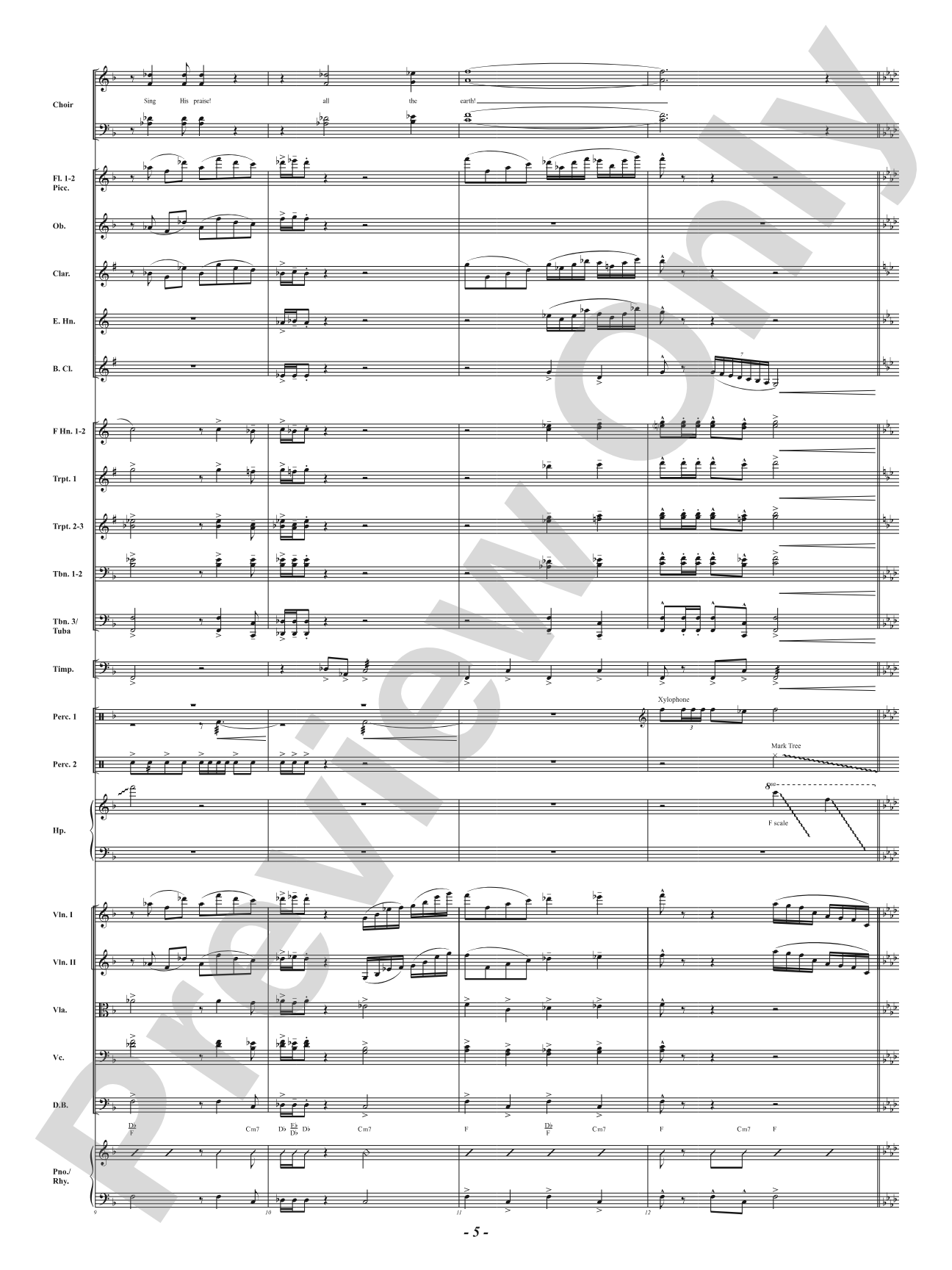
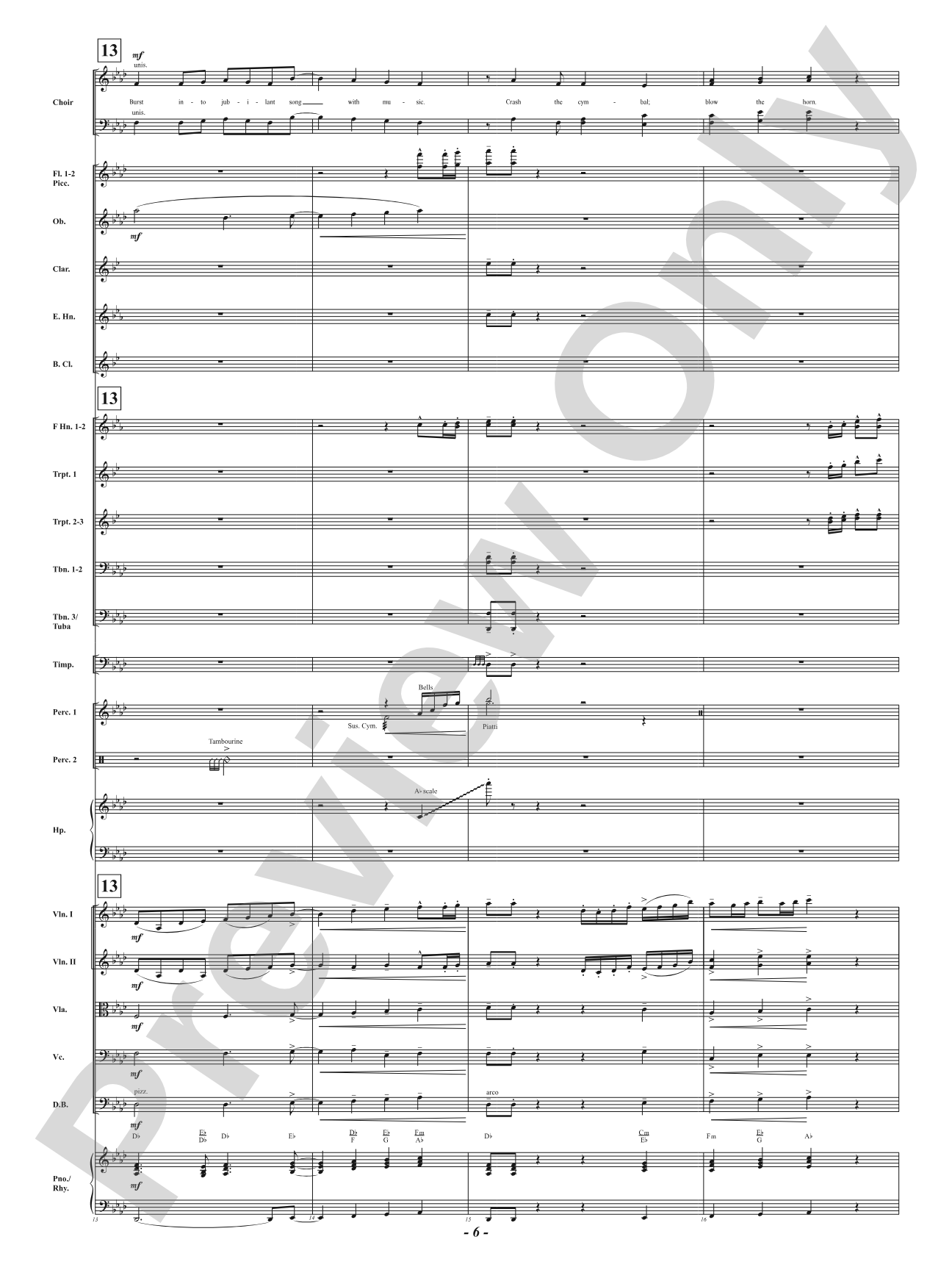
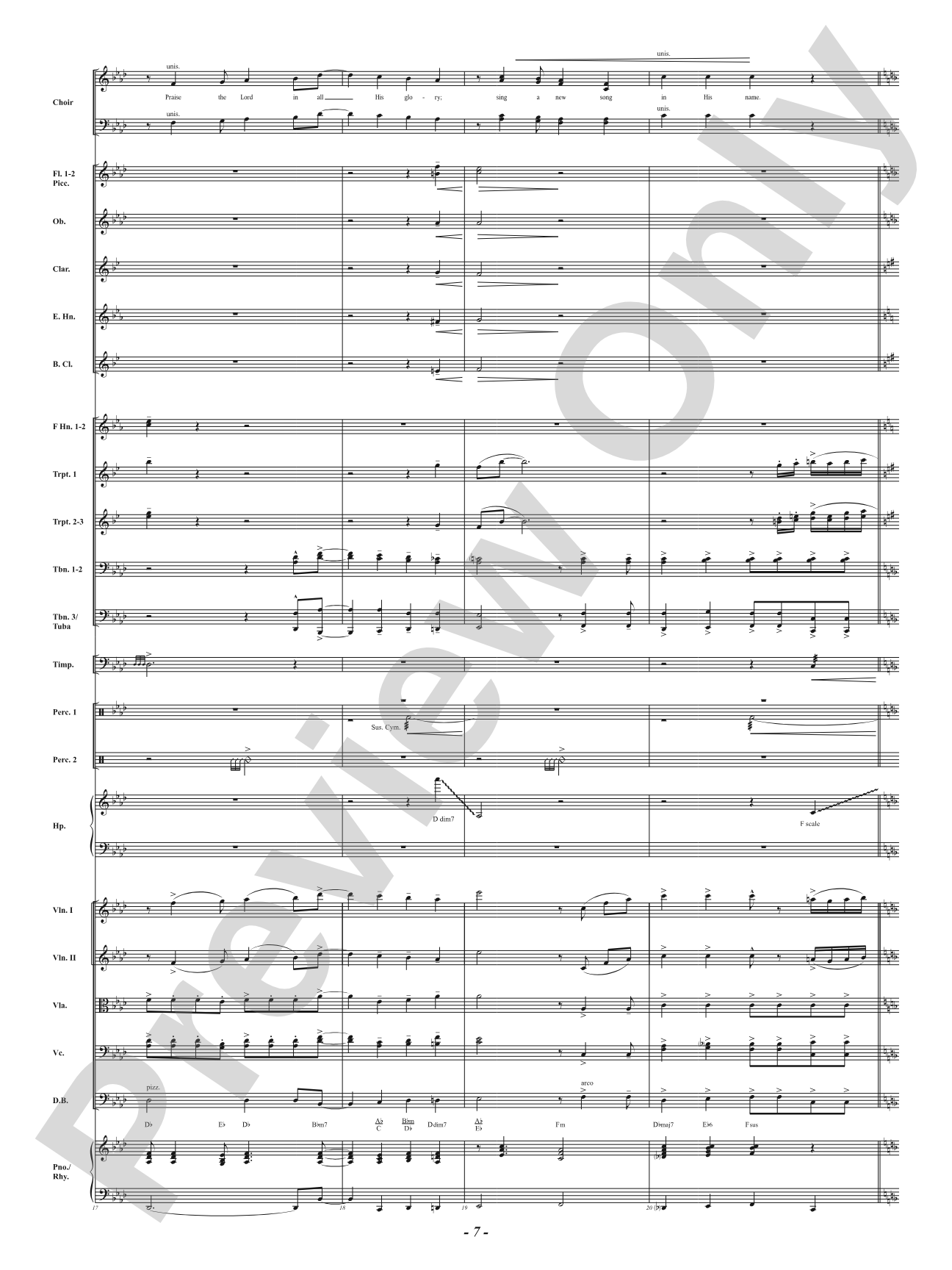
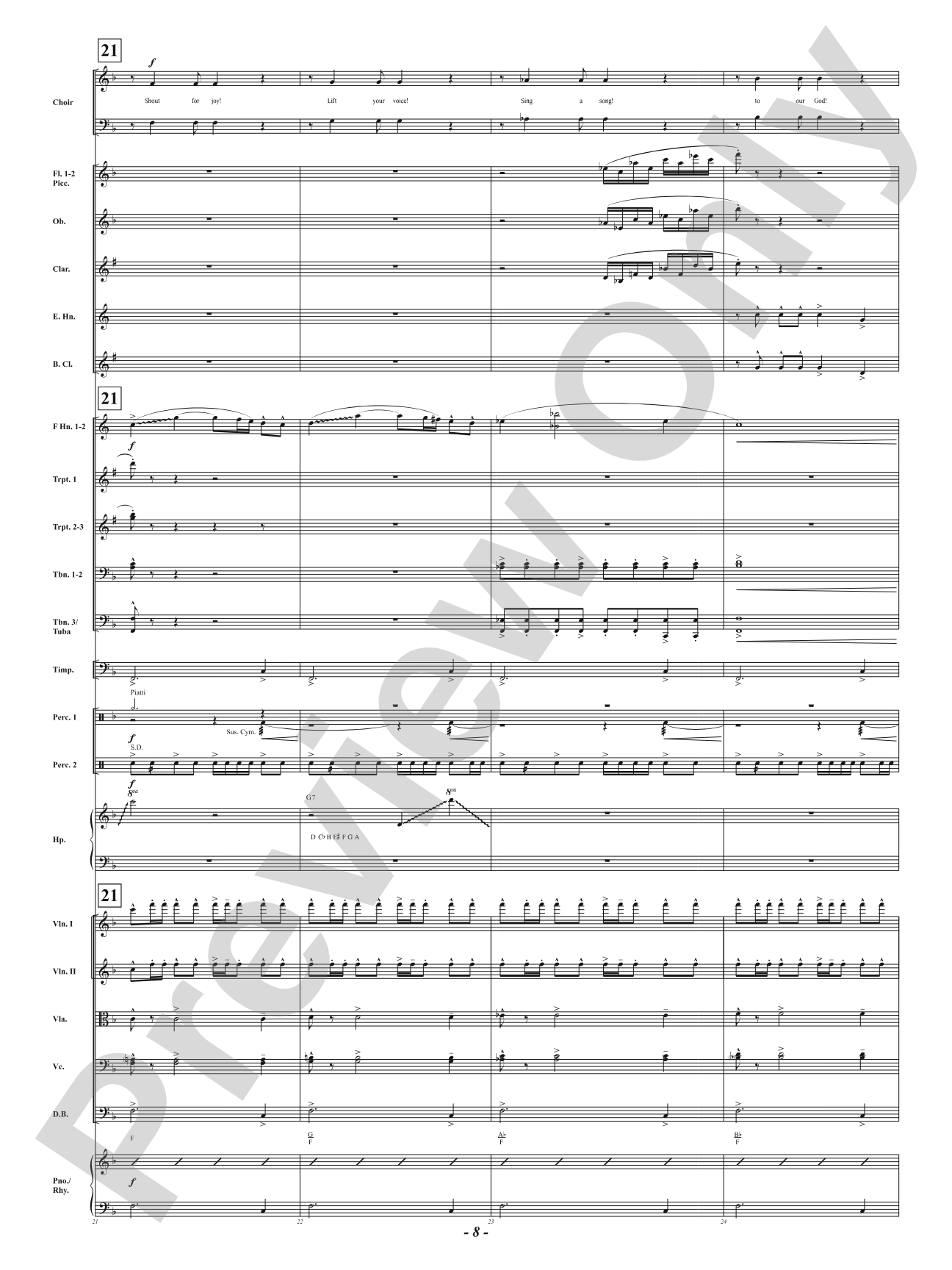
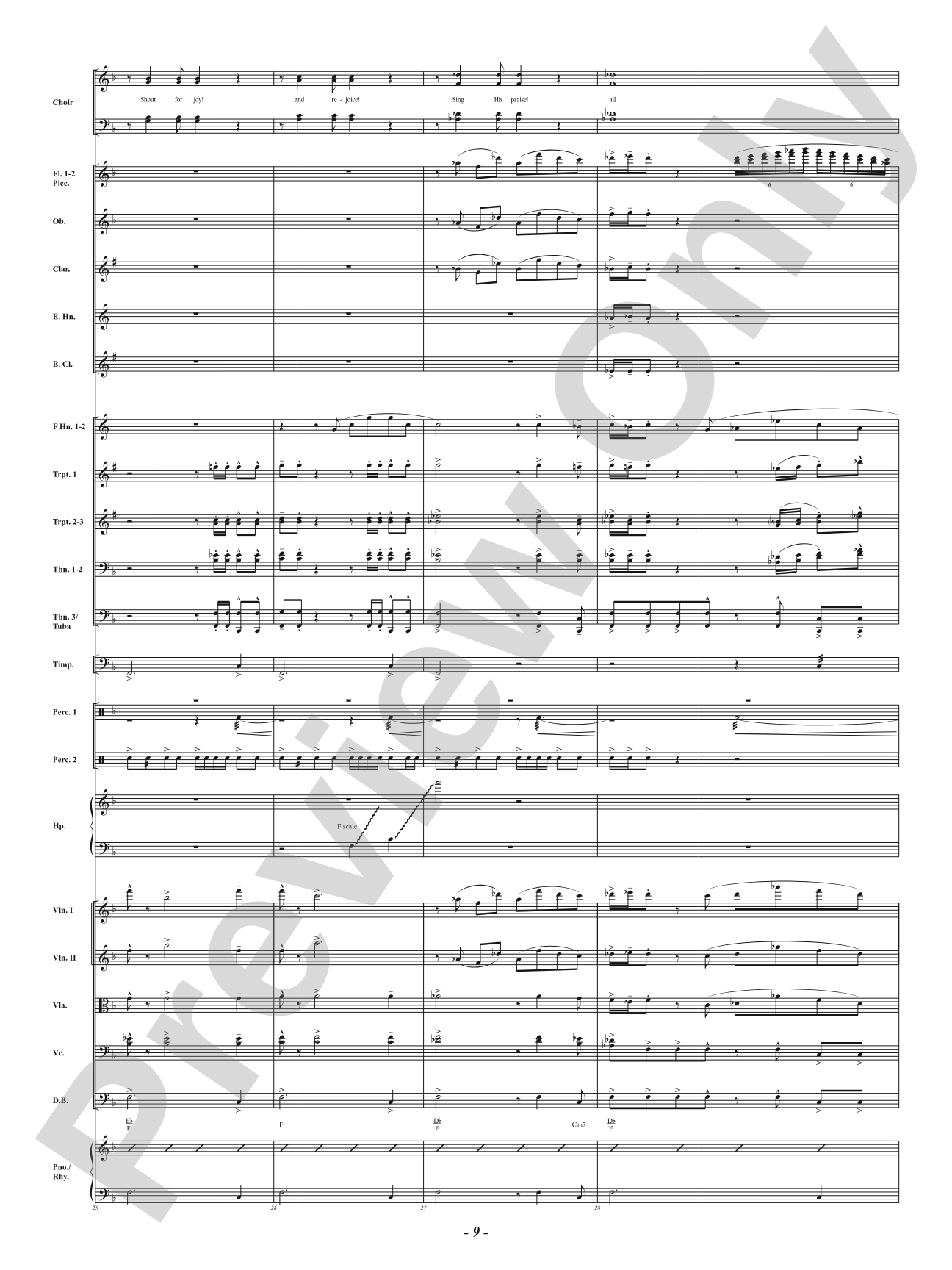
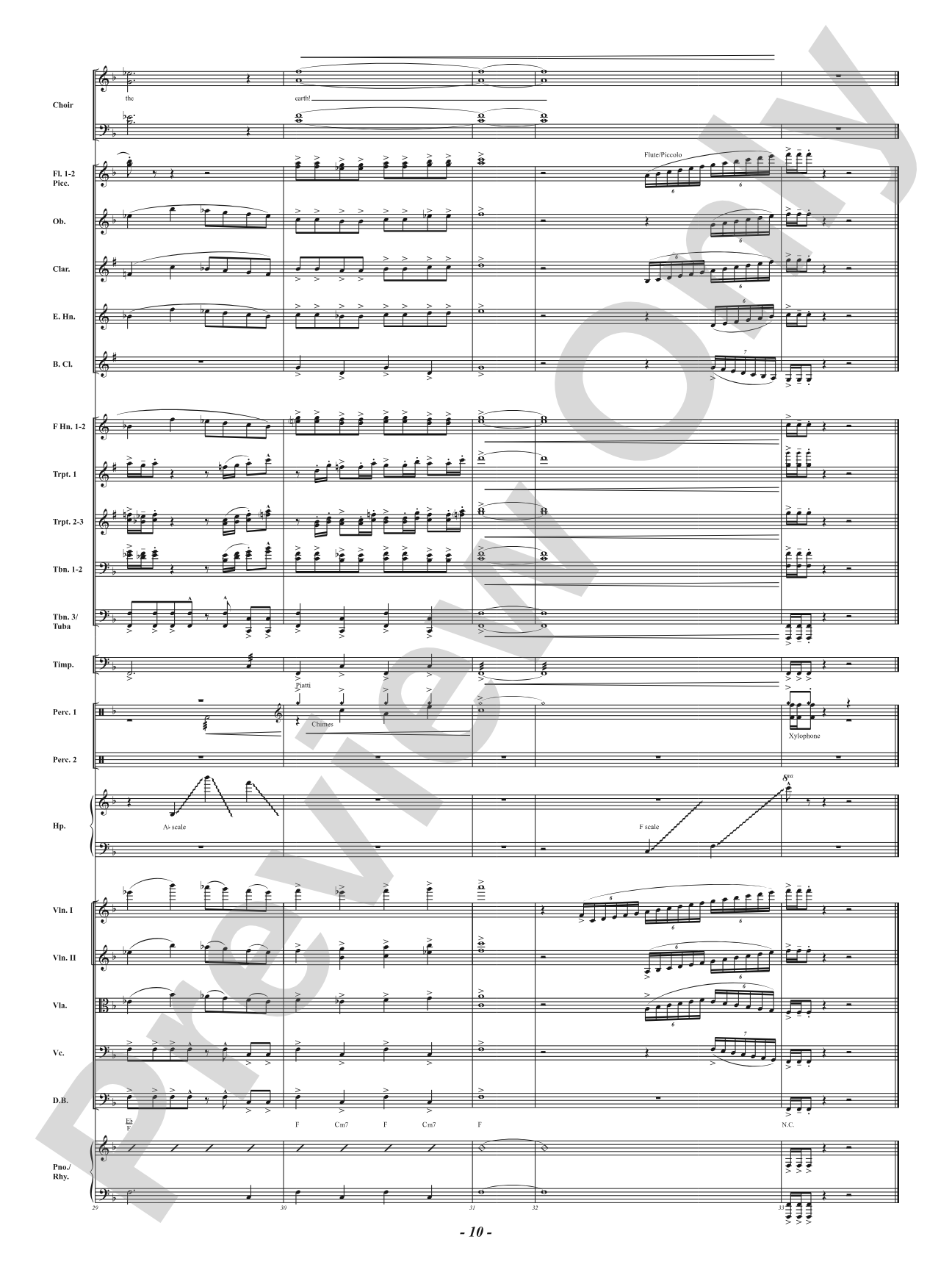



Shout for Joy: Full Orchestra Conductor Score & Parts
By Derric Johnson
Grade: 5
Item: 98-PK-RWS2386
$120.00
Pickup currently not available
Buy Extra Parts (Digital PDF Download)
| Product | Price | Quantity |
|---|---|---|
| Shout for Joy: Score | $15.00 | |
| Shout for Joy: Choir | $3.99 | |
| Shout for Joy: 1st, 2nd Flute, and Piccolo | $3.99 | |
| Shout for Joy: Oboe | $3.99 | |
| Shout for Joy: 1st B-flat Clarinet | $3.99 | |
| Shout for Joy: English Horn | $3.99 | |
| Shout for Joy: B-flat Bass Clarinet | $3.99 | |
| Shout for Joy: 1st & 2nd F Horns | $3.99 | |
| Shout for Joy: 1st B-flat Trumpet | $3.99 | |
| Shout for Joy: 2nd & 3rd Trumpet | $3.99 | |
| Shout for Joy: 1st & 2nd Trombones | $3.99 | |
| Shout for Joy: Trombone 3/Tuba | $3.99 | |
| Shout for Joy: Timpani | $3.99 | |
| Shout for Joy: 1st Percussion | $3.99 | |
| Shout for Joy: 2nd Percussion | $3.99 | |
| Shout for Joy: Harp | $3.99 | |
| Shout for Joy: 1st Violin | $3.99 | |
| Shout for Joy: 2nd Violin | $3.99 | |
| Shout for Joy: Viola | $3.99 | |
| Shout for Joy: Cello | $3.99 | |
| Shout for Joy: String Bass | $3.99 | |
| Shout for Joy: Piano/Rhythm | $3.99 |
Parts Added to Cart!
Description
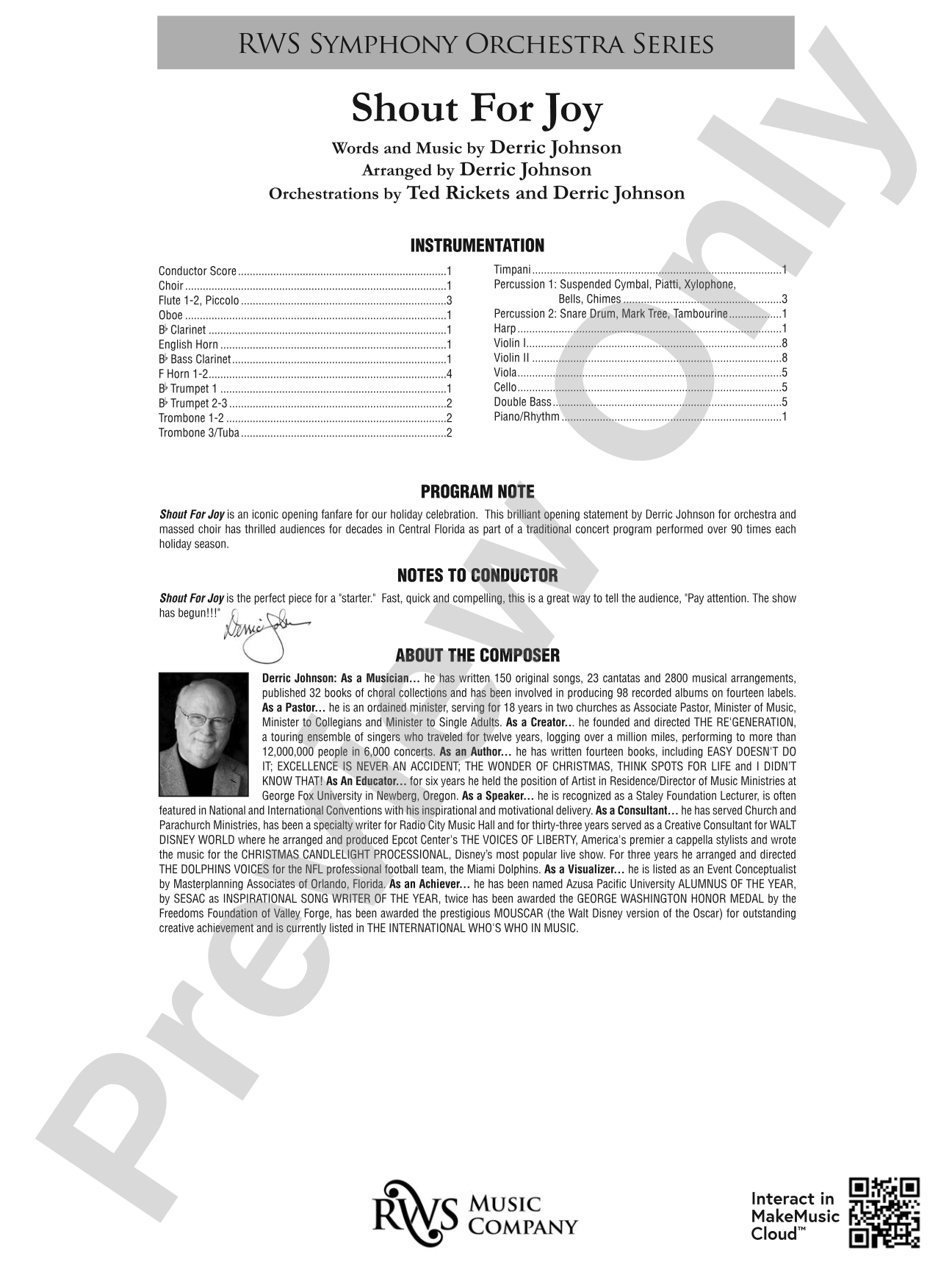
Shout For Joy is a brilliant opening statement for your holiday celebration. This magnificent fanfare for orchestra and massed choir by Derric Johnson has thrilled audiences for decades in Central Florida as part of a traditional concert program that is performed over 90 times each Holiday season.
Original Item#: RWS-2386-00


Original Item#: RWS-2386-00
Shout for Joy: Full Orchestra Conductor Score & Parts isn't in MakeMusic Cloud just yet...but it could be. Let us know you'd like to see it, and you'll help shape what comes next. In the meantime, start a free trial and dive into thousands of interactive titles your students can play along with today.
Request This Title
Tell us you want it.
Start Your Free Trial
Explore everything that's ready to play right now.
Sample Audio
No sample audio found.
Sample Video
No sample videos found.
Additional Details
Series:
RWS - Symphony Orchestra
Publisher:
RWS Music Company
SKU:
98-PK-RWS2386
More about this title
About the Composer: Derric Johnson
Derric Johnson has established himself as a composer whose work resonates deeply within educational and community music settings. His compositions demonstrate a keen understanding of what makes orchestral writing both accessible and thrilling for young musicians, balancing technical clarity with genuine musical substance.
Why we love this
Johnson crafts an opening piece that commands attention without demanding virtuosity. The fanfare idiom gives orchestras immediate impact and confidence, and the integration of massed choir transforms a concert moment into a genuine celebration that audiences remember.
What to expect
Shout for Joy erupts with genuine celebration. The fanfare texture and harmonic language communicate joy and festivity immediately, with the choir's entry amplifying the sense of communal gathering. This is music designed to lift spirits and set a festive tone for everything that follows.
Who it's for
Conductors programming a holiday concert who want an opening number that energizes both performers and audience. This score works for orchestras at the Grade 5 level with access to a prepared choir, whether that's a school ensemble, community singers, or festival participants.
How to get the most out of it
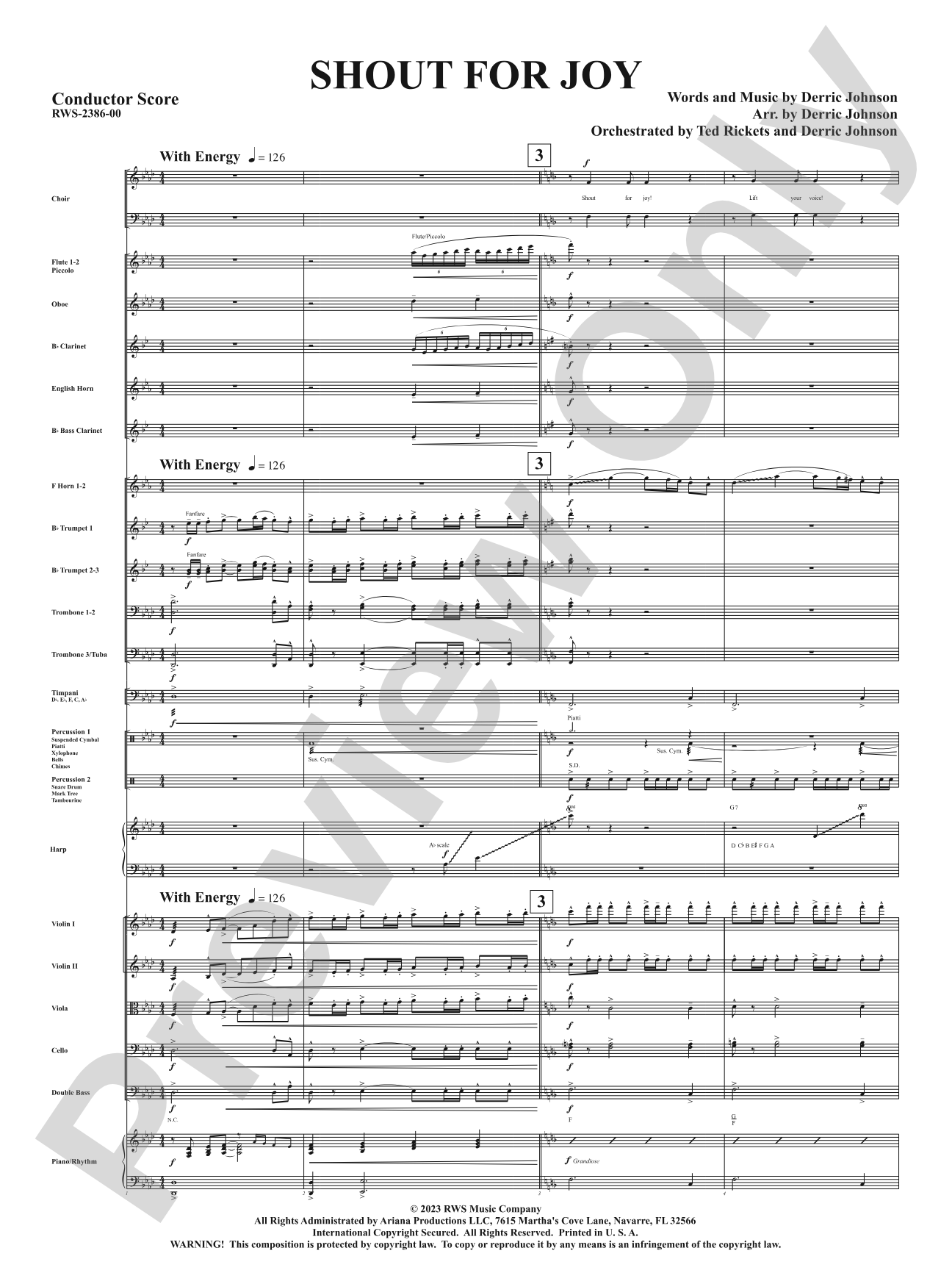
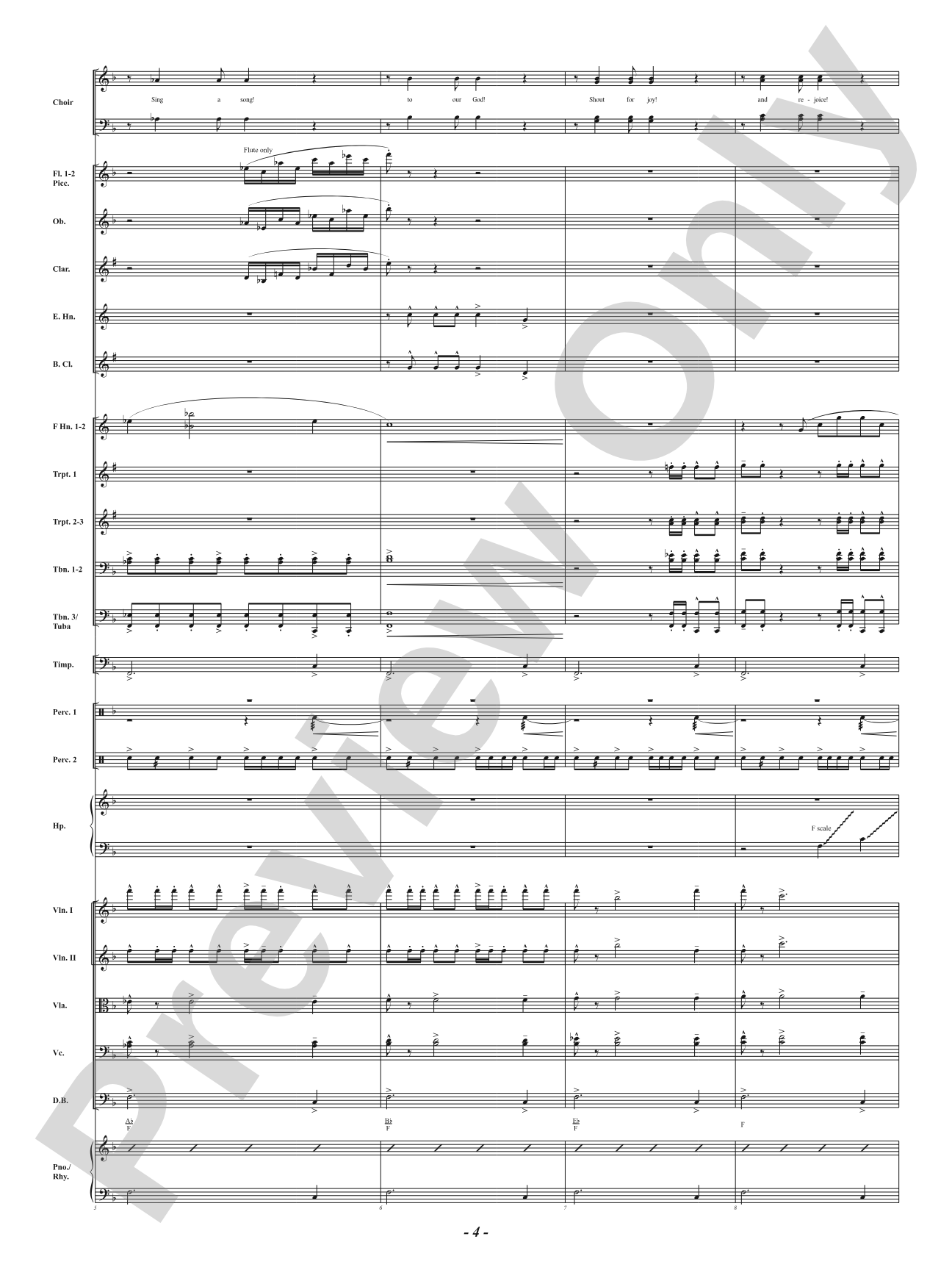
- Establish clear visual contact with the choir from the first measure. The conductor score coordinates two distinct ensembles, so precise cueing prevents the choir from entering ahead of the orchestra's harmonic foundation.
- Balance the full ensemble gradually. Allow woodwind and brass fanfare figures to shine initially, then layer in strings and percussion rather than doubling everything at once.
- Shape the phrasing across the full orchestra and choir as a single unified gesture. Resist the urge to break momentum between orchestral sections and choral entries.
- Work with your choir separately on their entrance cues before the full rehearsal. Singing against an energetic orchestral fanfare requires confidence and clear understanding of where their line sits rhythmically.
How to use it
Open your holiday concert with this piece. Its immediate energy and accessibility make it ideal for capturing audience attention, and the choral involvement signals that this will be a shared celebration rather than a passive listening experience. The fanfare style also creates a natural bridge between a concert overture tradition and contemporary holiday programming.
Skills your students will build
- Balancing multiple independent ensemble sections (orchestra and choir) while maintaining ensemble cohesion
- Reading and executing articulate fanfare figures across the full orchestra
- Responding to clear conductor cueing in a complex score
- Sustaining energy and pitch through longer note values in both orchestral and choral parts
- Coordinating attacks and releases across woodwind, brass, string, and percussion sections