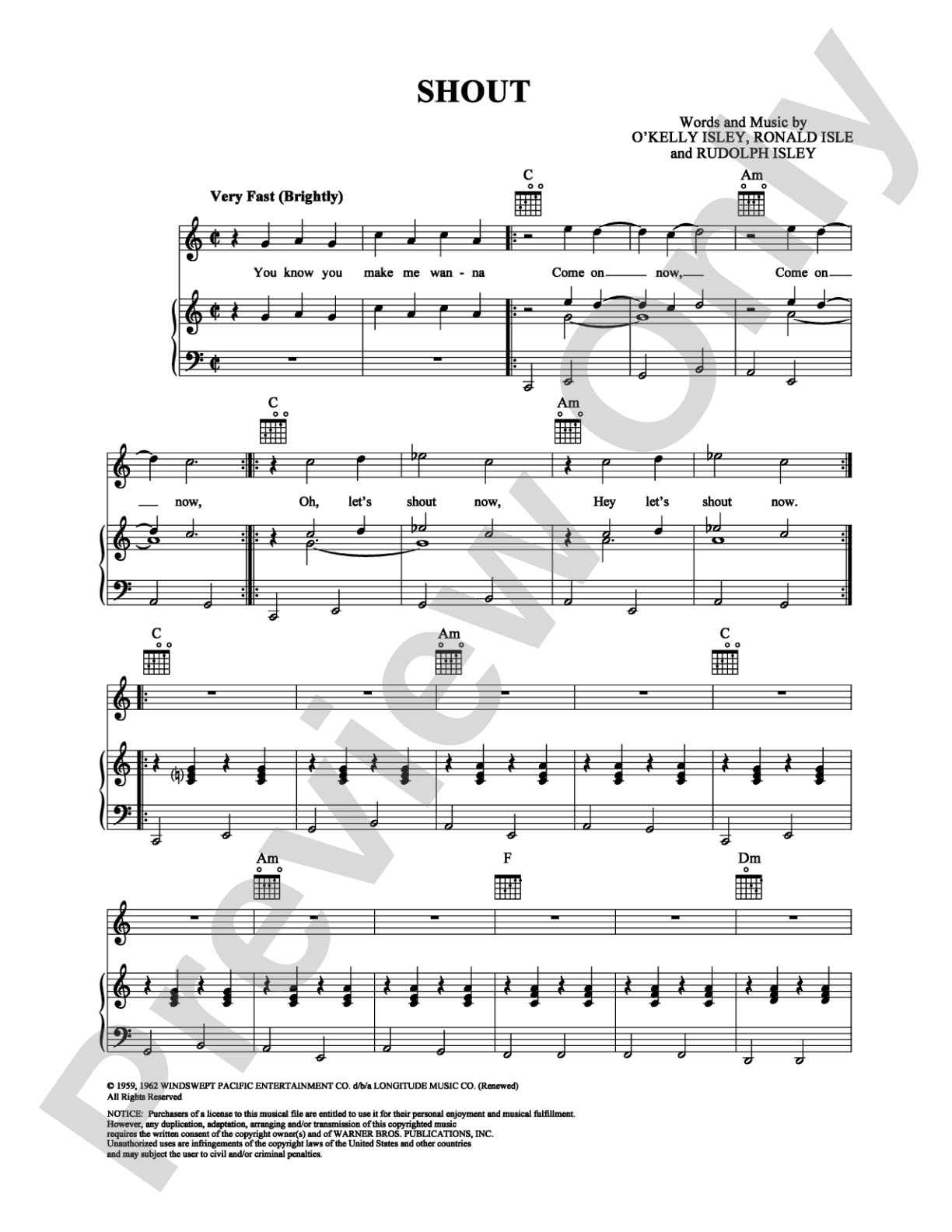
Shout: Piano/Vocal/Chords Digital Sheet Music

Shout: Piano/Vocal/Chords Digital Sheet Music

O'Kelly Isley, Ronald Isley, Rudolph Isley, The Isley Brothers, Joey Dee and the Starlighters

Item: 00-PS-0009101

Digital Download
$2.95
Description

Shout: Piano/Vocal/Chords Digital Sheet Music isn't in MakeMusic Cloud just yet...but it could be. Let us know you'd like to see it, and you'll help shape what comes next. In the meantime, start a free trial and dive into thousands of interactive titles your students can play along with today.

Sample Audio
No sample audio found.
Sample Video
Additional Details
SKU: 00-PS-0009101

More about this title

About the Artist: The Isley Brothers

The Isley Brothers emerged from Cincinnati in the late 1950s and became one of the most influential and enduring acts in American popular music. Ronald, Rudolph, and O'Kelly Isley built their reputation on a foundation of soul, funk, and rock that spanned decades, working with legendary producers and collaborators while maintaining creative control over their sound. Their ability to evolve with changing musical trends while staying rooted in groove and vocal authenticity made them essential voices across multiple generations of listeners.

"Shout," co-written with Joey Dee and the Starliters, became one of their signature recordings and a staple of celebration and movement across countless venues and gatherings. The track's infectious energy and call-and-response structure exemplify the Isley Brothers' talent for creating music that invites participation and joy from everyone in the room.

Why we love this

"Shout" delivers immediate, undeniable engagement. The call-and-response foundation and rhythmic drive make this a natural choice for building ensemble cohesion and teaching singers how to lock into a groove while maintaining melodic clarity and harmonic awareness. Directors appreciate repertoire that energizes singers and audiences alike without requiring extended vocal range or technical complexity.

What to expect

Immediate, propulsive joy. The piece radiates celebration and movement, with a rhythm that makes standing still difficult and a melodic hook that embeds itself instantly in memory. There's an infectious call-and-response quality that feels like an invitation to join rather than simply observe.

Who it's for

Singers and pianists preparing pop repertoire for recitals, student performances, or casual ensemble sessions. This recording is equally useful for jazz singers, contemporary vocal students, and pianists building a contemporary accompaniment library. The accessibility of the arrangement makes it suitable for intermediate to advanced amateur performers.

How to get the most out of it

  • Nail the rhythmic pocket by treating the piano part as a steady metronome for the ensemble; lock the singers' entrances to the keyboard groove rather than allowing them to float ahead or behind.
  • Shape the call-and-response sections with clear vocal leadership; the solo voice needs presence and conviction to draw the ensemble response, not just volume.
  • Keep the energy consistent across repetitions. As the piece builds, resist the urge to accelerate; let the layering of voices and intensity of dynamics create excitement instead.
  • Balance the vocal melody against the piano's rhythmic motion; the accompaniment should support without overwhelming the singers' ability to project the hook.

How to use it

Program "Shout" when you need to shift the energy in a concert or recital, especially as a closer or penultimate selection. The piece works beautifully in a pop or contemporary vocal showcase, or as a bridge between classical and popular styles in a mixed repertoire performance. It's also ideal for student recitals where pianists accompany singers in non-traditional settings.

Skills your students will build

  • Maintaining groove and rhythmic precision while singing melodically over a consistent accompaniment pattern
  • Executing call-and-response phrasing with clarity and ensemble coordination
  • Reading chord symbols and understanding how piano voicing supports vocal melody
  • Building dynamic and timbral contrast across musical repetition
  • Connecting to a pop and soul tradition that values feel and pocket as much as pitch accuracy

You May Also Like